
A ship repair yard in the Arabian Gulf had a critical dry-dock project. They needed specific marine steel plates delivered fast to meet a tight client deadline. A delay in steel delivery would mean a huge penalty and lost reputation for the yard.
This success story details how we delivered certified marine steel plates to a major shipyard in Saudi Arabia. We overcame logistical hurdles, ensured strict quality compliance, and provided full documentation, enabling the shipyard to complete their repair project on schedule and strengthen their trust in our supply chain.
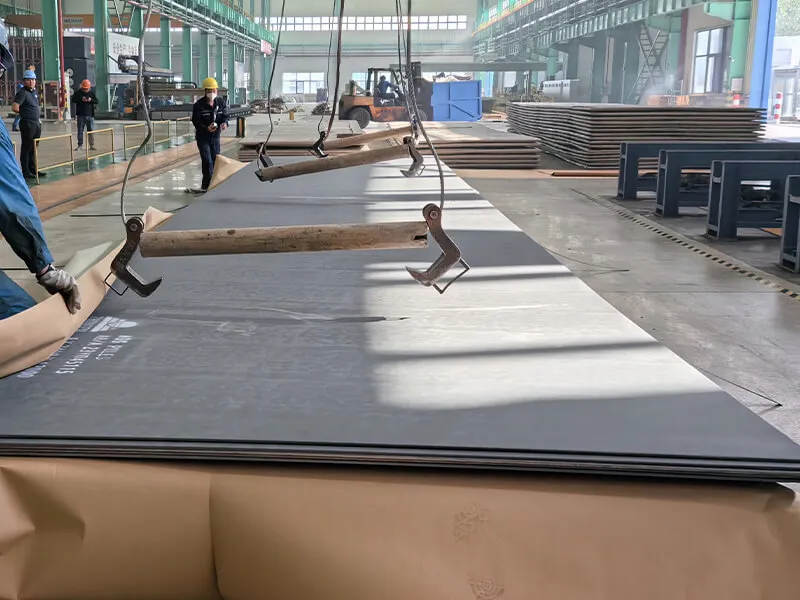
The Middle East is a strategic hub for ship repair and offshore operations. Shipyards there demand reliability above all else. When they place an order, they need a supplier who understands the urgency and the strict standards of the maritime industry. Let me share the details of this delivery and explore the broader context of global shipbuilding.
Which is the largest shipyard in Saudi Arabia?
You are sourcing steel for a project in Saudi Arabia. Knowing the major players helps you understand the market scale and the quality standards required. The largest yard sets the benchmark for the region.
The largest shipyard in Saudi Arabia is the Arabian Gulf-based Saudi Aramco Jubail Shipyard. However, for repair, maintenance, and conversion, the Arab Shipbuilding and Repair Yard (ASRY) in Bahrain is the historically dominant and largest facility in the broader Gulf region, serving Saudi and international clients.
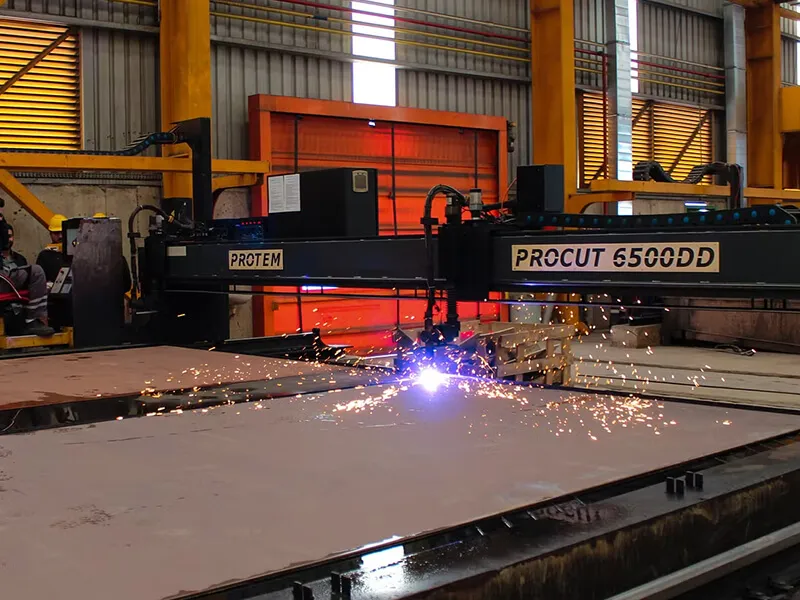
Understanding the Gulf’s Maritime Industrial Landscape
The title of "largest" depends on how you measure it: by physical size, workforce, dry-dock capacity, or revenue. Saudi Arabia’s maritime industry is growing fast, driven by its Vision 2030 to become a global logistics hub. Let’s look at the key facilities.
The Major Players in Saudi Arabia and the Gulf
- Saudi Aramco Jubail Shipyard (SAJS): This is a new, massive facility. It focuses on constructing new offshore support vessels (OSVs), rigs, and large commercial ships. It is a joint venture with international partners and represents the future of Saudi newbuilding.
- The Arab Shipbuilding and Repair Yard (ASRY): Located in Bahrain, this yard is a stone’s throw from Saudi’s Eastern Province. For decades, it has been the Gulf’s premier repair and conversion center. It handles VLCCs, bulk carriers, and offshore units. Many Saudi-based ship owners use ASRY.
- Other Key Yards: The Dammam Shipyard and the Zamil Offshore Yard are also significant players for repairs and offshore construction within Saudi Arabia.
Why This Matters for a Steel Supplier
The scale and type of work at these yards dictate their steel needs.
- Newbuilding Yards (like SAJS): They require large, scheduled volumes of prime grade steel (AH/DH/EH series) for hull construction. Orders are planned years in advance.
- Repair & Conversion Yards (like ASRY): Their needs are unpredictable and urgent. They need smaller batches of specific grades for hull patches, renewals, and structural modifications. Speed and flexibility are more important than bulk volume.
Our client in this story was a contractor working with a major repair yard in the Eastern Province. They did not need 10,000 tons for a new ship. They needed 50 tons of specific AH36 and DH36 plates in various thicknesses for hull repairs on a tanker. The "largest" yard might not have been the end user, but the standards of the region’s largest players filter down to all suppliers. Any steel coming into the Gulf for marine use must meet international class standards and have impeccable documentation.
Shipyard Capabilities and Typical Steel Procurement
| Shipyard | Primary Focus | Typical Steel Need Profile | Implications for Suppliers Like Us |
|---|---|---|---|
| Saudi Aramco Jubail (SAJS) | Newbuilding, Offshore Construction. | Large, predictable volumes of plates and sections. Long-term framework agreements. | Requires deep mill relationships for scheduled production. Less need for urgent, small batches. |
| ASRY (Bahrain) | Repair, Conversion, Maintenance. | Urgent, varied batches. High mix of grades and sizes. Need for precise cutting/profiling. | Requires a flexible inventory or fast mill reaction. MOQ flexibility and express shipping options are key. |
| Regional Repair Yards (Dammam, etc.) | General repair, offshore service. | Small to medium batches, standard grades (A, AH32, AH36). | Values reliable lead times and clear communication. Often works through local contractors/fabricators. |
| Fabrication Shops (Our Client Type) | Sub-contract work for the above yards. | Project-based orders. They need a supplier who can match the yard’s strict quality and doc requirements. | Must act as a seamless extension of the fabricator’s supply chain. Provide full certification for traceability. |
For our success story, the steel was destined for a fabricator serving the repair market. The pressure was high because the end client (the shipyard and the ship owner) would not accept delays. Our knowledge of the region’s logistics—shipping to Dammam port, understanding clearance procedures—was as important as our steel quality. Delivering to the Middle East isn’t just about price; it’s about understanding the pace and precision required in a market dominated by high-value assets like tankers and offshore rigs.
Which 3 countries build 93% of ships worldwide?
You might wonder why a Chinese company is supplying steel to the Middle East. The global shipbuilding map is highly concentrated. Understanding this concentration explains global trade flows and where the real volume demand for marine steel originates.
The three countries that build approximately 93% of the world’s ships by tonnage are China, South Korea, and Japan. China is the undisputed leader in total output, South Korea leads in high-value complex vessels, and Japan is a major builder of bulk carriers and specialized ships.

The Triumvirate of Global Shipbuilding: A Steel Consumption Perspective
This staggering concentration is not an accident. It is the result of decades of industrial policy, skilled labor pools, and massive, efficient supply chains. For a marine steel supplier, this fact shapes everything.
Why These Three Dominated
Each country developed a strategic advantage.
- China: Achieved dominance through massive scale, government support, and a complete domestic supply chain, including steel. Chinese yards excel at standard vessel types like bulk carriers and containers where cost is a primary factor.
- South Korea: Focused on technological leadership and complex, high-value vessels: LNG carriers, ultra-large container ships (ULCS), and advanced offshore units. Their steel often requires higher specifications.
- Japan: Pioneered efficiency and quality in shipbuilding. They remain strong in bulk carriers, car carriers, and some specialized gas carriers. Japanese mills produce some of the world’s highest-quality marine steel.
The Impact on the Global Marine Steel Market
This concentration creates two distinct markets:
- The Direct Domestic Market: The vast majority of steel for Chinese, Korean, and Japanese newbuilds is sourced from their own domestic mills (Baosteel, POSCO, JFE, Nippon Steel). The supply chains are tightly integrated.
- The International & Aftermarket: This is where companies like ours operate. Our market includes:
- Ship Repair & Conversion: Every ship, no matter where it’s built, needs repair. Yards in the Middle East, Southeast Asia, and Europe need steel, and they source globally.
- Newbuilding in Emerging Yards: Smaller yards in Vietnam, the Philippines, Turkey, and yes, the Middle East, that are building ships but lack integrated domestic steel supply.
- Component Fabrication: Companies that make parts (like hatch covers, foundations) for ships being built in the big three countries sometimes source steel internationally for cost or specific grade reasons.
Where the Demand Is: Newbuild vs. Repair & Conversion
It’s crucial to look beyond the newbuild headline number.
| Market Segment | Dominant Region | Steel Demand Character | Opportunity for International Suppliers |
|---|---|---|---|
| Newbuilding (90%+ of tonnage) | China, Korea, Japan (Integrated). | Enormous volume, steady demand, dominated by local mills. | Very limited. Mainly for specialty grades or when local mills are at capacity. |
| Repair & Maintenance (Global) | Global, with hubs in Middle East (ASRY), SE Asia (Singapore), Europe. | Fragmented, urgent, small-batch, high-mix. Requires certification and traceability. | Significant. This is our core market. Yards need reliable global suppliers who can deliver certified material fast. |
| Conversion & Offshore | Korea, China, SE Asia, Middle East. | Project-based, requires high-grade steels (API, EH36/40). | Good opportunity for suppliers with access to high-grade mills and project logistics expertise. |
| Regional Newbuilding (Emerging) | Vietnam, Philippines, Turkey, Saudi Arabia. | Growing volume, but yards lack scale to command mill priority. | Strong opportunity. These yards need partners who can provide mill-grade steel with full docs, acting as their procurement arm. |
Our client in Saudi Arabia is part of this "international aftermarket." The ship they were repairing was likely built in one of the big three countries. But after 10-15 years of service, it needs steel replaced during a survey in the Gulf. The original Korean or Japanese mill won’t sell 50 tons directly to a Saudi repair shop. That’s our role. We bridge the gap between the massive production capacity in East Asia and the urgent, specific needs of the global maritime aftermarket. We provide the same certified quality, but with the service and logistics tailored for a project in the Middle East, not a mega-yard in Shanghai.
Where is Asry Shipyard?
ASRY is a legendary name in Gulf shipping. If you work in maritime in the Middle East, you know ASRY. Its location is strategic, making it a natural hub for ship repair in the region.
The Arab Shipbuilding and Repair Yard (ASRY) is located in the Kingdom of Bahrain, on a man-made island in the Arabian Gulf. It is situated very close to the major shipping lanes and the oil-producing Eastern Province of Saudi Arabia, making it a geographically perfect hub for regional maritime activity.
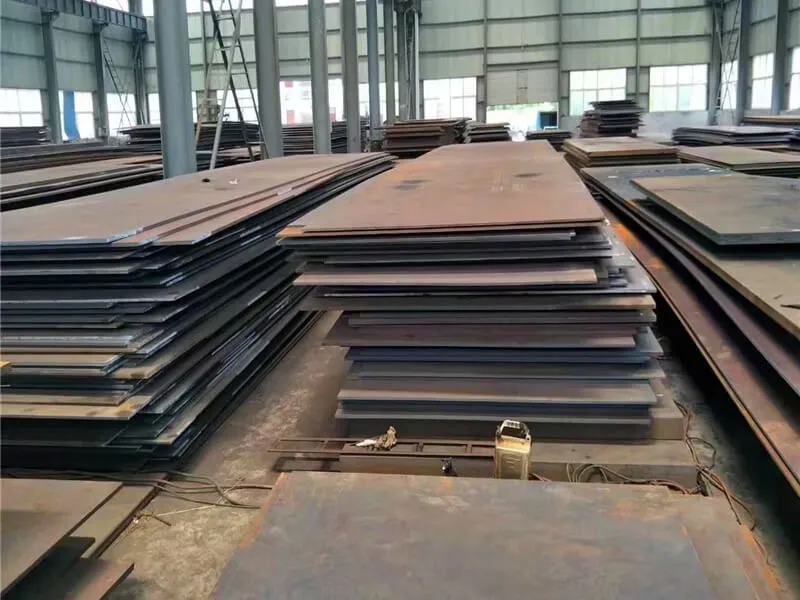
ASRY: The Gulf’s Repair Powerhouse and Its Supply Chain
ASRY is more than a location; it is an institution. Understanding its position helps explain the flow of materials and services in the region.
The Strategic Geography
Bahrain is a small island nation connected to Saudi Arabia by the King Fahd Causeway. ASRY’s location on a dedicated island gives it:
- Deep-Water Access: It can accommodate the world’s largest vessels, including VLCCs and ULCS.
- Proximity to Saudi Arabia: The Eastern Province (Dammam, Al Khobar, Dhahran) is just a short drive or causeway crossing away. This makes ASRY the de facto repair yard for the Saudi oil and shipping industry.
- Position on Major Trade Routes: It sits astride key routes in and out of the Gulf, making it a convenient stop for vessels in transit.
ASRY’s Role in the Regional Supply Chain
ASRY does not operate in isolation. It is the center of a local ecosystem of service providers and fabricators.
- ASRY’s Direct Operations: They manage the dry docks, cranes, and major repair work.
- Network of Contractors and Fabricators: For specialized work like steel renewal, piping, or electrical work, ASRY engages local and international contractors. These contractors are the ones who actually purchase the steel and materials.
- Logistics Hub: The port of Bahrain and the causeway to Saudi Arabia facilitate the movement of people, equipment, and materials like our steel plates.
Our client, Gulf Metal Solutions, is an example of such a contractor/fabricator. They may not be ASRY itself, but they perform work for yards like ASRY or for offshore projects in the region. When they order steel, the delivery destination is often a warehouse in Dammam, Saudi Arabia. From there, the steel is fabricated into pieces and then transported across the causeway to Bahrain for installation on a ship in ASRY’s dock. This cross-border logistics is a normal part of doing business in the Gulf.
The Procurement Pathway for a Repair Project at ASRY
Let’s trace how steel moves from a mill to a ship in ASRY.
| Step | Actor | Action | Our Role as Steel Supplier |
|---|---|---|---|
| 1. Project Award | Ship Owner / Manager. | Awards a repair package to ASRY for a specific vessel. | N/A |
| 2. Work Package Outsourcing | ASRY Planning Dept. | Divides the work. A "steel renewal" package is given to a contractor like Gulf Metal Solutions. | N/A |
| 3. Material Procurement | Contractor (Gulf Metal Solutions). | Needs to buy the exact grade/thickness of steel per the spec. They search for a reliable international supplier. | We are found via Google/SEO. We provide a competitive quote for certified AH36/DH36 plates. |
| 4. Order Fulfillment | Us (Yichen). | We source from mill, manage SGS inspection, pack, and ship to Dammam Port, Saudi Arabia. | We handle all China-side export and provide clean docs for Saudi customs. |
| 5. Logistics & Fabrication | Contractor’s Logistics & Workshop. | Clear steel at Dammam, truck to their workshop, cut and fabricate the renewal pieces. | Our accurate documentation (MTRs, CoO) speeds up Saudi customs clearance. |
| 6. Final Installation | Contractor’s Team at ASRY. | Transport fabricated pieces to Bahrain, weld onto the vessel in ASRY’s dry dock. | Our steel’s consistent quality and chemistry ensure problem-free welding on-site. |
Knowing that ASRY is in Bahrain, but that its supply chain flows through Saudi Arabia, is critical. It means we must be experts in shipping to Saudi ports (like Dammam), understanding Saudi customs regulations, and providing the correct documentation for re-export to Bahrain if needed. Our success in delivering to "a Middle East shipyard" depends on this granular knowledge of the region’s geography and trade flows.
What are the grades of marine steel plates1?
The shipyard’s specification sheet listed "AH362" and "DH363." For the project to succeed, every single plate we delivered had to match these grades exactly. Understanding marine steel grades is the fundamental language of shipbuilding and repair.
Marine steel plates are graded by strength and toughness. Common grades include ‘A’ (mild steel), and the high-tensile ‘AH/DH/EH/FH’ series where the letter indicates toughness level (A=low, F=highest) and the number (32, 36, 40) indicates minimum yield strength4 in kgf/mm². For example, DH36 has a yield strength of 355 MPa and good toughness at 0°C.
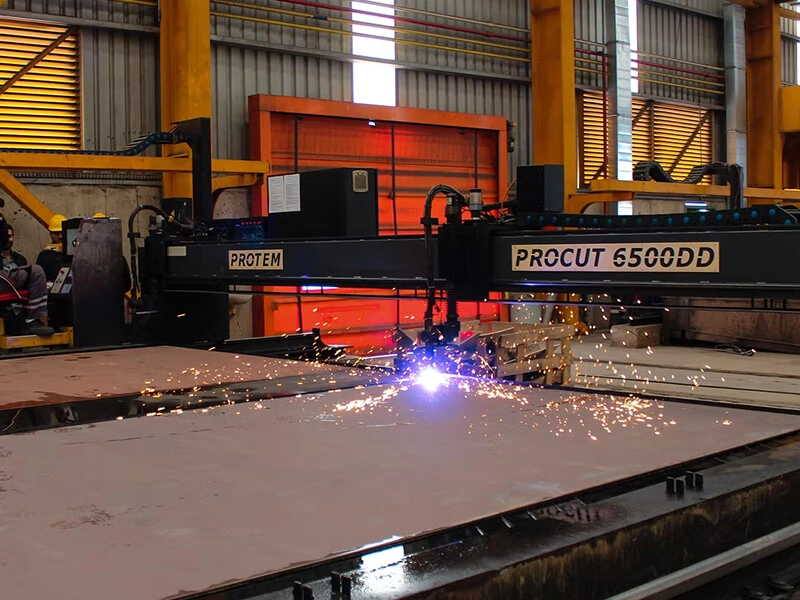
Decoding the Grade System: Strength, Toughness, and Application
The grade is a coded instruction. It tells the shipbuilder the steel’s mechanical properties and thus where on the ship it can be used. Getting the grade wrong is not an option.
The Two-Part Code: Letter and Number
The system is logical but must be understood.
- The Number (32, 36, 40): This refers to the minimum yield strength4. 36 means 36 kgf/mm², which is approximately 355 N/mm² or 355 MPa. Higher number = stronger steel.
- The Prefix Letter (A, B, D, E, F): This refers to the impact toughness5 (notch ductility) and the test temperature.
- A: No Charpy V-notch impact test requirement. Basic grade.
- B: Tested at room temperature (20°C).
- D: Tested at 0°C. Good for most ocean-going vessels.
- E: Tested at -20°C. For colder waters.
- F: Tested at -40°C or -60°C. For Arctic service.
So, DH363 means: Minimum Yield Strength of 355 MPa, with verified toughness at 0°C.
The "H" Designation and Other Symbols
- The ‘H’: Stands for "High tensile strength." Grades without ‘H’ (like A, B, D) are mild steels with yield strength around 235 MPa.
- Additional Suffixes: You might see ‘N’ (Normalized) or ‘AR’ (As-Rolled). Normalizing improves toughness and is common for thicker plates of higher grades.
Grade Selection Logic for Shipbuilding and Repair
The choice of grade follows rules based on the ship’s size, service area, and the location on the hull.
| Grade | Typical Yield Strength | Key Property | Primary Application on a Ship |
|---|---|---|---|
| Grade A | 235 MPa | General purpose, good weldability6. | Internal structures, non-critical bulkheads, secondary brackets. |
| Grade AH32 | 315 MPa | Moderate strength increase. | Smaller vessels, or less critically stressed areas of larger ships. |
| Grade AH362 / DH363 | 355 MPa | The industry workhorse. DH has better toughness. | Main deck plating, bottom plating, side shells of most ocean-going vessels. Our project used these. |
| Grade EH36 / FH36 | 355 MPa | Superior low-temperature toughness. | Ships trading in cold waters (North Atlantic, Arctic). Ice-class vessels. |
| Grade AH40 / DH40 / EH40 | 390 MPa | Higher strength for weight saving. | Critical areas of large container ships, high-strength applications. |
| Grade A500 / A516 | Varies | Pressure vessel grades. | For tanks, boilers, and pressure-containing parts on a ship. |
For our client’s repair project, the grade was not their choice. It was dictated by the original vessel’s construction drawings and the rules of the classification society7 (e.g., ABS, LR). If the original bottom plate was DH363, the replacement plate must be DH363. You cannot replace it with cheaper AH32. The society surveyor will check the mill certificate against the spec before approving the repair.
This is why our process is meticulous. When we source DH363 plates:
- The mill’s certificate must show the actual yield strength is above 355 MPa.
- It must show the actual Charpy impact test8 values at 0°C meet the minimum requirement.
- The chemical composition must be within limits to ensure weldability6.
- The SGS inspector verifies all this data matches the physical plates being shipped.
Delivering the correct grade is the baseline. Delivering it with the verified proof that allows a classification society7 surveyor to sign off on the repair is the real service. That’s what "success" means in a marine steel delivery: enabling our client to pass their inspection and get the ship back to sea on time.
Conclusion
Delivering marine steel to a Middle East shipyard demands more than a shipment. It requires understanding regional hubs like ASRY, providing certified grades like DH36, and executing reliable logistics under tight deadlines.
-
Explore the importance of marine steel plates in shipbuilding and their specific applications. ↩
-
Learn about the properties and applications of AH36 grade in marine construction. ↩ ↩
-
Understand the unique features of DH36 steel and its role in shipbuilding. ↩ ↩ ↩ ↩ ↩ ↩
-
Discover how minimum yield strength affects the performance of marine steel in ships. ↩ ↩
-
Find out why impact toughness is crucial for marine steel used in harsh environments. ↩
-
Understand the importance of weldability in choosing the right marine steel for repairs. ↩ ↩
-
Learn how classification societies ensure safety and compliance in marine construction. ↩ ↩
-
Explore the significance of the Charpy impact test in assessing steel toughness. ↩