
You order a batch of marine L-shaped steel for your shipbuilding project. The steel arrives. But the Mill Test Certificate is incomplete. The classification society rejects it. Your project stops.
Marine L-shaped steel procurement faces four major challenges: incomplete Mill Test Certificates (MTC) and class society approval delays, dimensional inconsistencies that cause fit‑up problems and production stoppages, logistics and shipping disruptions that push delivery back by weeks, and cost volatility combined with unreliable suppliers. Each challenge can delay your vessel delivery by months.
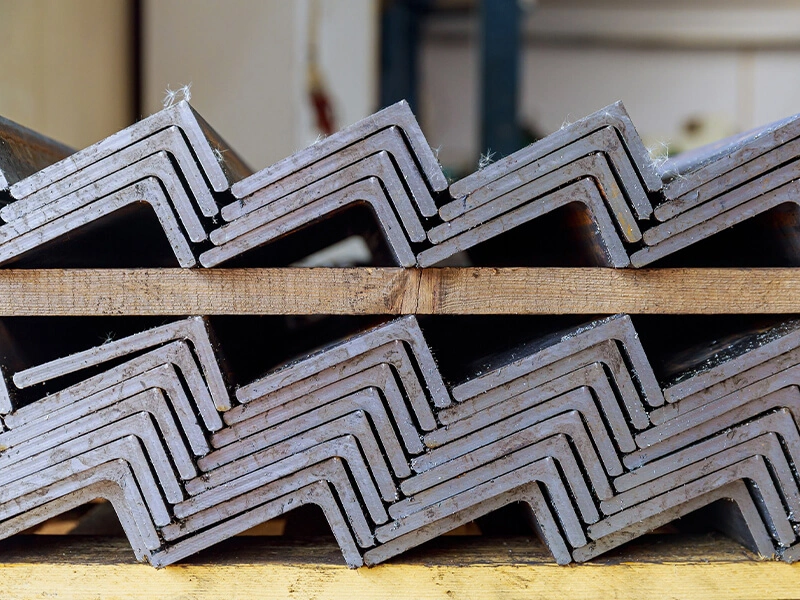
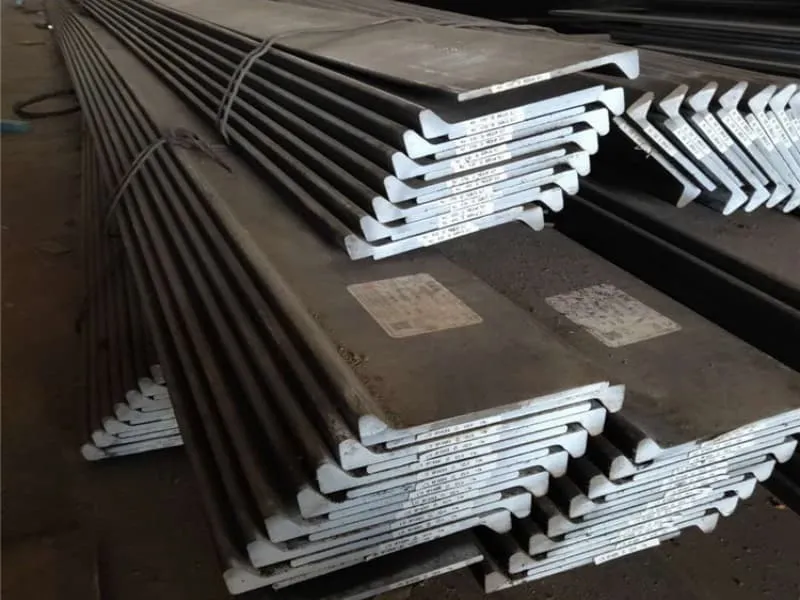
I supply marine L-shaped steel through my company, with long‑term cooperation with certified mills and fast delivery from Liaocheng, Shandong. I talk to shipyards, fabricators, and wholesalers in Vietnam, Mexico, Qatar, and Saudi Arabia every day. The stories are always the same: procurement challenges that should have been avoidable end up costing time and money. Let me walk you through the four most common problems and how to avoid them.
Why Do Incomplete Mill Test Certificates and Class Society Approvals Delay Marine L-Shaped Steel Procurement?
Your steel arrives at the yard. The Mill Test Certificate is incomplete. The class society surveyor will not approve it. You cannot use the steel until the paperwork is fixed.
Incomplete Mill Test Certificates (MTC) and missing class society approvals delay marine L-shaped steel procurement because the classification society (CCS, ABS, DNV, or LR) requires full traceability and verified test results. A compliant MTC is not just proof of steel quality; it is the core document reviewed by classification society surveyors[reference:0][reference:1]. Without it, the steel cannot be installed. Customs may hold the shipment. The shipyard cannot start work. The delay can be days or weeks.
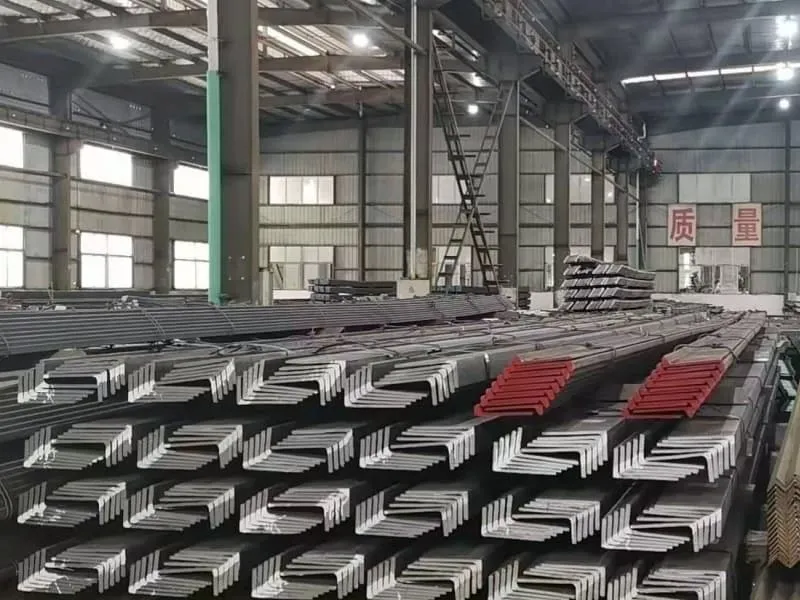
The documentation trap that stops your project
Let me explain what goes wrong and how to avoid it.
What is an MTC and why does it matter? An MTC is the quality assurance document issued by the steel mill. It records the chemical composition, mechanical properties (yield strength, tensile strength, elongation, impact toughness), traceability information (heat number, batch number, plate number), and the classification society surveyor stamp or approval number[reference:2]. For marine L-shaped steel, which is used as stiffeners, gussets, stringer supports, and secondary framing in shipbuilding[reference:3], the MTC must be complete and accurate. If it is not, the class society will reject the material.
Common MTC issues I see every week:
- Missing class society logo or approval number. Some certificates only say "meets standard" without an actual approval number[reference:4].
- Heat number or batch number missing or mismatched with the steel stamp. The MTC must match the physical steel[reference:5].
- Chemical composition values missing or outside the required limits[reference:6].
- Mechanical properties (yield strength, tensile strength) below the required values[reference:7].
- Missing surveyor stamp. This is critical. The certificate must have the class society surveyor’s signature or electronic stamp[reference:8].
- No traceability statement linking the certificate to the specific plates[reference:9].
Real story from a customer in Saudi Arabia. He ordered a batch of marine L-shaped steel from a supplier he had not vetted. The steel arrived. The MTC was missing the CCS surveyor stamp. The classification society would not approve it. The steel sat at the yard for three weeks while he chased the supplier for the correct documentation. His project was delayed by a month. He now buys only from suppliers who provide complete MTCs with every shipment.
Customs clearance delays. Incomplete MTC documentation can also cause customs clearance delays. The steel sits at the port while you sort out the paperwork. If the documentation is wrong, the shipment can be rejected and returned. I have seen this happen to customers in Vietnam and Mexico.
My advice on avoiding documentation delays:
- Ask for a sample MTC before you order. Verify it meets the class society requirements.
- Work only with suppliers who understand classification society documentation.
- Inspect the MTC against the steel when it arrives. Do the four‑point check: heat number, batch number, dimensions, and quantity[reference:10].
- If you are unsure, hire a third‑party inspection company (like SGS) to verify the documentation before the steel ships.
A compliant MTC is not just a piece of paper. It is your proof that the steel is fit for the vessel. Without it, your project stops.
How Do Dimensional Inconsistencies in L-Shaped Steel Cause Fit-Up Problems and Production Stoppages?
Your welders start fitting the L-shaped steel. The pieces do not line up. The legs are the wrong length. The angle is off. You have to stop and rework everything.
Dimensional inconsistencies in marine L-shaped steel cause fit‑up problems and production stoppages because the steel must meet precise tolerances on leg lengths, thickness, straightness, and squareness. Marine L-shaped steel has specified tolerances on height of web, width of flange, web thickness, flange thickness, camber, out‑of‑square, flatness, and length[reference:11]. When these tolerances are exceeded, the pieces do not fit together. Welders spend hours grinding, shimming, or cutting. Production stops. Rework costs mount.
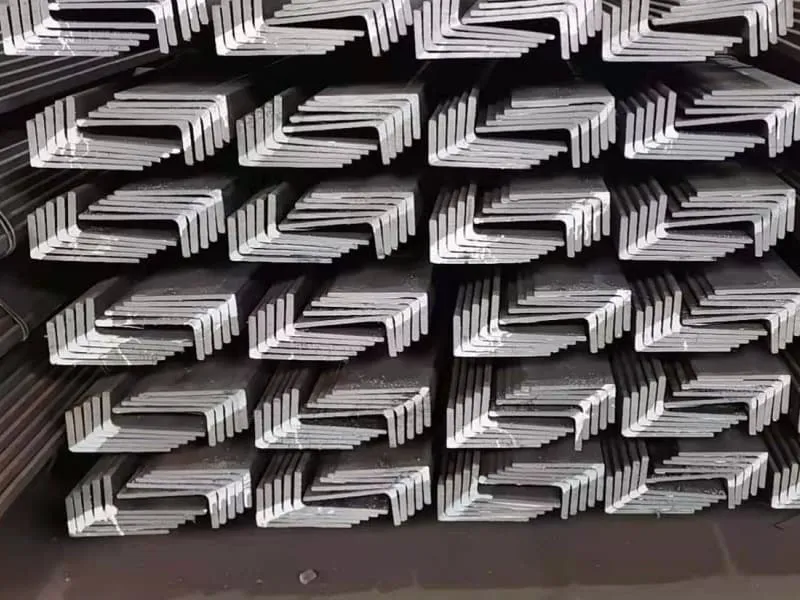
When the steel does not fit
Let me explain why dimensional accuracy is so critical in shipbuilding.
What are the tolerances for marine L-shaped steel? Marine L-shaped steel (also called ship angle steel or marine angle steel) comes in leg lengths from 40mm to 400mm (equal or unequal) and thicknesses from 6mm to 40mm[reference:12]. The tolerances are specified in standards like ISO 657/18 and include limits on height of web, width of flange, web thickness, flange thickness, camber, out‑of‑square, flatness, and length[reference:13][reference:14]. These tolerances are not optional. They are the difference between a structure that fits together and one that does not.
What happens when the tolerances are exceeded? Small dimensional errors ripple into major issues once the parts are assembled[reference:15]. If the leg length is off by 5mm, the piece does not align with the connecting member. If the out‑of‑square is excessive, the weld joint is not properly aligned. If the camber is too high, the piece does not sit flat against the plate. The welder has to force the piece into position. Forced fit‑up creates stress concentrations. It weakens the structure. And it takes time.
The cost of poor fit‑up. Fit‑up problems consume welding crew time. Instead of moving forward with the planned work, the crew is grinding, shimming, and forcing pieces into place. The production line slows down. Other crews are idle because they cannot start their work until the fit‑up is complete. A shipyard in Vietnam received a batch of L-shaped steel where the leg lengths varied by 5‑10mm. Every piece had to be individually measured and sorted. The fit‑up took twice as long as planned. The shipyard lost 4 weeks of production.
Welding problems from poor fit‑up. Inadequate fit‑up leads to inadequate weld size or penetration, which compromises load capacity. Excessive distortion can pull members out of alignment and affect downstream fit‑up. Bolted and welded connections are particularly sensitive to dimensional accuracy. Improper hole alignment or excessive fit‑up gaps may result in difficult or forced fit‑up on site[reference:18]. The welds fail inspection. More rework. More delay.
Real story from a fabricator in Qatar. He ordered marine L-shaped steel from a low‑cost supplier. The steel arrived with inconsistent leg lengths. The fit‑up was a nightmare. His welding crew spent 3 weeks reworking the connections. The project was delayed by 6 weeks. He told me he would never buy from that supplier again. He now buys from us because we provide consistent quality and complete documentation.
My advice on avoiding dimensional problems:
- Work only with suppliers who can provide certified material with documented tolerances.
- Ask for the dimensional inspection report before the steel ships.
- Inspect a sample of the steel when it arrives. Check the leg lengths, thickness, straightness, and squareness.
- If you are unsure, hire a third‑party inspection company to verify the dimensions before you accept the shipment.
Dimensional accuracy is not a nice‑to‑have. It is a must‑have. One bad batch of L-shaped steel can stop your entire production line.
What Are the Logistics and Delivery Challenges When Sourcing Marine L-Shaped Steel Internationally?
You order steel from overseas. The supplier says it will ship in 4 weeks. Then a geopolitical crisis hits. The shipping route is disrupted. Your steel is stuck on a ship in the middle of the ocean.
Logistics and delivery challenges when sourcing marine L-shaped steel internationally include shipping route disruptions (like the Strait of Hormuz), port closures or reduced operations, customs clearance delays, freight rate volatility, and insurance complications. Geopolitical conflicts can cause shipping routes to be rerouted, ports to close, and freight costs to double[reference:19][reference:20]. Ships that have already departed may be diverted to alternative ports[reference:21]. The result: your steel arrives weeks or months late, and your project is delayed.
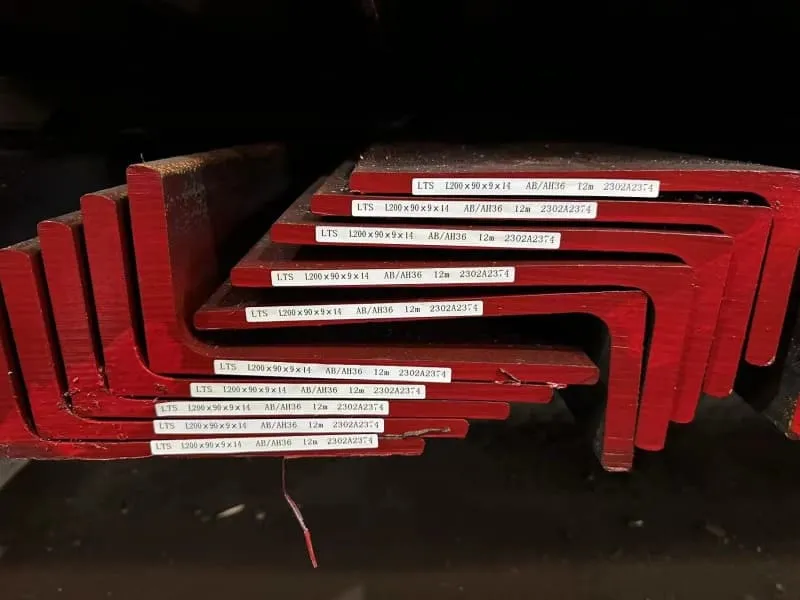
When the supply chain breaks
Let me explain the logistics risks that can sink your project.
Geopolitical disruptions. The Strait of Hormuz is a key route for steel cargoes moving from Asia to the Middle East[reference:22]. When the US‑Iran conflict escalated in early 2026, shipping through the strait was disrupted[reference:23]. Multiple ports in the Gulf region were affected. Bahrain suspended port activities. Jebel Ali Port halted operations due to a fire[reference:24]. Ships that had departed Chinese ports were advised to divert and discharge at alternative ports outside the strait[reference:25]. Some Chinese mills stopped issuing new export offers to Gulf buyers entirely[reference:26].
Port closures and reduced operations. When a key port closes or reduces operations, your steel cannot be unloaded. It sits on the ship. The ship may be redirected to another port, adding days or weeks to the journey. In some cases, the steel is unloaded at a port far from its destination. Then it must be transported overland. That adds cost and time.
Freight rate volatility. When shipping routes are disrupted, freight rates spike. During the Gulf disruption, freight rates for shipments to the region rose by around $10/mt[reference:27]. In some cases, freight to the Middle East reached $50‑60[reference:28]. These cost increases eat into your budget. And they are unpredictable.
Insurance complications. Marine insurers may cancel war risk coverage due to escalating tensions[reference:29]. If your cargo is in a conflict zone, you may not be insured. Or you may have to pay higher premiums. This adds cost and risk.
The supply chain is global and fragile. Modern shipbuilding depends on just‑in‑time delivery of highly technical and often globally sourced materials.
Real story from a customer in the Middle East. He ordered marine L-shaped steel from a supplier. The order was confirmed. The steel was loaded onto a ship. Then the Gulf conflict escalated. The ship was diverted to an alternative port. The steel sat there for 3 weeks while he arranged overland transport. The delivery was 6 weeks late. His project was delayed. He now works with suppliers who have multiple shipping options and can adapt to disruptions.
My advice on managing logistics risks:
- Work with suppliers who have experience with international shipping and can navigate disruptions.
- Build buffer time into your schedule. Do not assume the steel will arrive on time.
- Consider using a freight forwarder who can monitor shipments and provide alternatives.
- Ask your supplier about their contingency plans for shipping disruptions.
- If possible, order steel early and store it at your yard. The cost of storage is less than the cost of a delay.
Logistics is the hidden risk in international procurement. Plan for it.
How Can You Manage Cost Volatility and Supplier Reliability in Marine L-Shaped Steel Projects?
Steel prices go up. Then they go down. Then they go up again. Your supplier cannot deliver on time. You are stuck between rising costs and an unreliable supplier.
You can manage cost volatility and supplier reliability in marine L‑shaped steel projects by locking in prices early, diversifying your supplier base, verifying supplier credentials (certified mills, class society approvals, references), and building long‑term relationships with reliable partners. Steel tariffs, geopolitical tensions, and supply shortages can cause steel prices to spike[reference:34][reference:35]. Relying on a single supplier increases vulnerability[reference:36]. The cheapest supplier is not always the best value.
How to protect your project from price spikes and bad suppliers
Let me share strategies that work.
Cost volatility: the real risk. Steel prices are influenced by tariffs, geopolitical tensions, and supply shortages. U.S. steel tariffs have increased the cost of imported steel, raising overall material costs for shipbuilders[reference:37]. Tariffs can create cost uncertainty for marine manufacturers[reference:38]. Steel supply disruptions have slowed down shipyards[reference:39]. A customer in India told me his steel costs went up 25% in one year because of tariffs and supply shortages. He had not locked in his prices. He lost money on the project.
Supplier reliability: the hidden cost. Many shipyards and fabricators struggle with domestic steel quality and certification. Domestic steel makers often cannot consistently meet quality, certification, availability, and delivery timelines. This forces them to source from overseas. But overseas suppliers come with their own risks. If you do not vet the supplier, you can end up with substandard material and incomplete documentation. A customer in Mexico received a shipment of marine L-shaped steel that failed inspection. The supplier would not take it back. The customer had to absorb the cost and reorder from a different supplier.
The importance of supplier diversification. Relying on a single supplier for critical parts increases vulnerability[reference:40]. If that supplier fails, there is no quick alternative[reference:41]. I recommend having at least two approved suppliers for marine L-shaped steel. This gives you leverage on price and a backup if one supplier has issues.
How to vet a supplier. Before you order, ask these questions:
- Do you have long‑term cooperation with certified mills?
- Can you provide a complete MTC with every shipment?
- Do you support third‑party inspection (like SGS)?
- Can you provide references from customers in my region?
- What is your typical delivery time?
- Do you have a contingency plan for shipping disruptions?
The value of long‑term relationships. Building a relationship with a reliable supplier pays off. You get better pricing, priority on orders, and faster response when issues arise. Our customer Gulf Metal Solutions in Saudi Arabia told us: "The steel company was the first supplier to respond within two hours, and maintained this rapid response speed throughout the entire delivery process. The product quality is stable, and the packaging is the best among all the packaging for ship plates we have received so far."
My advice on managing cost and reliability:
- Lock in prices early. Do not wait until the last minute.
- Build supplier diversification into your plan. Have at least two approved suppliers.
- Vet every supplier before you order. Check their credentials, references, and track record.
- Build long‑term relationships with suppliers who deliver quality and reliability.
- Do not choose the cheapest supplier. Choose the one who gives you the best total value.
Conclusion
Marine L-shaped steel procurement faces four challenges: incomplete MTC documentation, dimensional inconsistencies, logistics disruptions, and cost volatility. Vet your suppliers and plan ahead.