
You have received a shipment of bulb flat steel, but the final inspection reveals problems that threaten your entire project timeline. The pressure to fix this is immense.
The most common quality issues in bulb flat steel supply include poor surface finish like cracks and pitting, inaccurate dimensions that fall outside standard tolerances, and problems with material traceability caused by improper handling and storage.
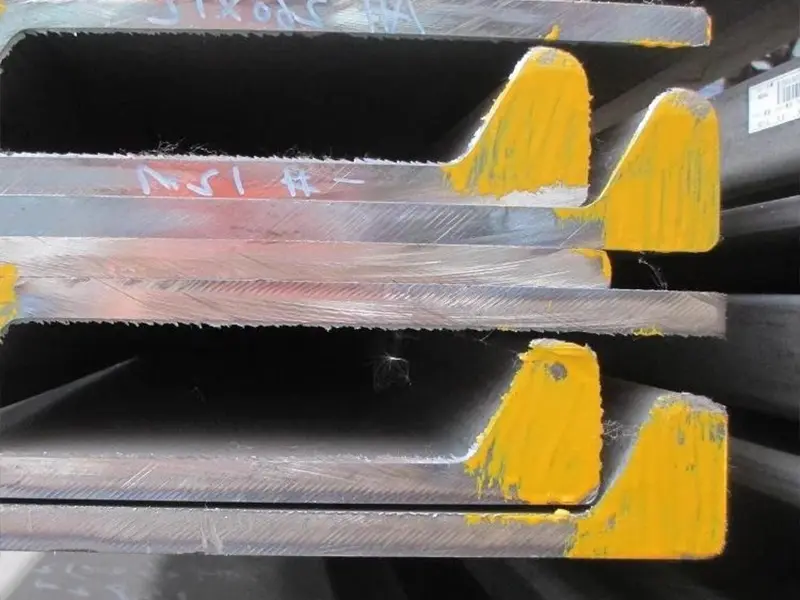
As a supplier who works closely with project contractors and shipyards every day, I see these problems far too often. They don’t just cause delays; they directly impact the safety and integrity of the final structure. Understanding these issues is the first step to avoiding them, so let’s break down what goes wrong and why.
What are the common defects for structural steel works?
Leading paragraph:
You are in the middle of a critical welding process when you suddenly spot an unexpected flaw on the steel surface. Stopping now means project delays.
Snippet paragraph:
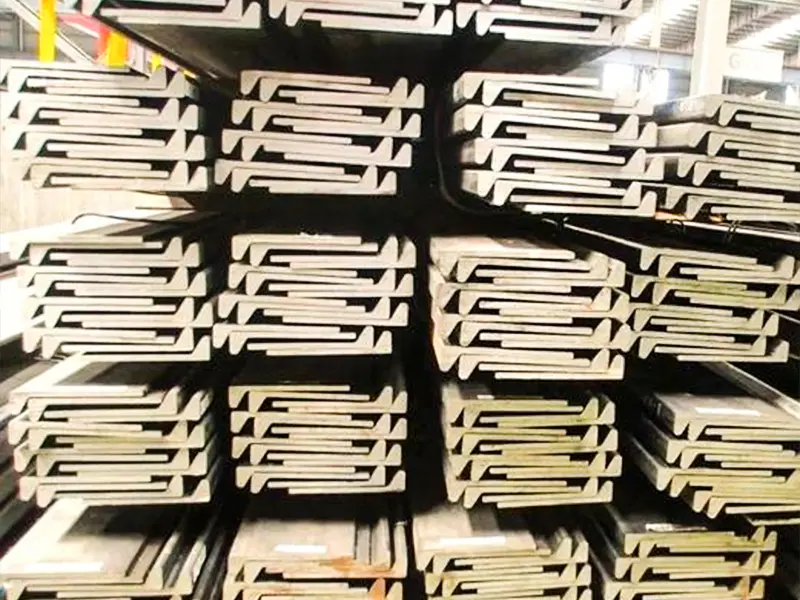
The most frequent defects in structural steel are surface defects1 like cracks2, laminations3, and pitting, along with internal flaws such as porosity4 and inclusions5 that weaken the material’s structural integrity.
Dive deeper paragraph:
When we talk about defects in structural steel, especially for critical applications like shipbuilding, we need to look beyond just what the eye can see. The problems usually fall into two main categories: surface defects and internal defects6.
Surface Defects
These are the first red flags you will notice during a visual inspection. They are not just cosmetic issues. They can become stress concentration points that lead to cracks over time.
- Cracks: These can appear as tiny hairline fractures or more obvious splits. They often happen during the cooling process after rolling if the steel cools too fast or unevenly.
- Laminations: This looks like a seam or a split running parallel to the steel’s surface. It is essentially a separation within the steel itself. Imagine it like a book where the pages are not properly glued together. When you weld across a lamination, it can cause the layers to pull apart, leading to weld failure.
- Pitting and Scabs: These are small, shallow cavities or rough, raised patches on the surface. They usually form due to impurities trapped in the steel during the rolling process or from severe rusting. For marine applications, pitting is a nightmare because it creates a perfect starting point for corrosion.
Internal Defects
These defects are hidden beneath the surface. You cannot see them without special equipment like ultrasonic testing. They are often more dangerous because they go undetected until the material is under stress.
- Porosity: This refers to small gas pockets trapped inside the steel. Think of it like air bubbles in ice. These voids reduce the effective cross-sectional area of the steel, making it weaker.
- Inclusions: These are non-metallic particles, like sulfides or oxides, trapped within the steel matrix. They act as internal stress risers. If a steel plate has too many inclusions, its fatigue life—how long it can handle repeated stress—drops significantly.
For a project like a bulk carrier, a single internal inclusion in a critical structural member can lead to catastrophic failure after years of service. That is why relying on mills with strict quality control and supporting your orders with third-party SGS inspections is not an extra cost; it is a necessary part of risk management. In my experience, clients like Gulf Metal Solutions from Saudi Arabia made the switch to our supply chain precisely because they were tired of finding these hidden defects after the steel had already been cut and fabricated.
What affects the quality of steel?
Leading paragraph:
You have ordered steel from a reliable mill, but the final product feels different. The performance is not what you expected. What changed?
Snippet paragraph:
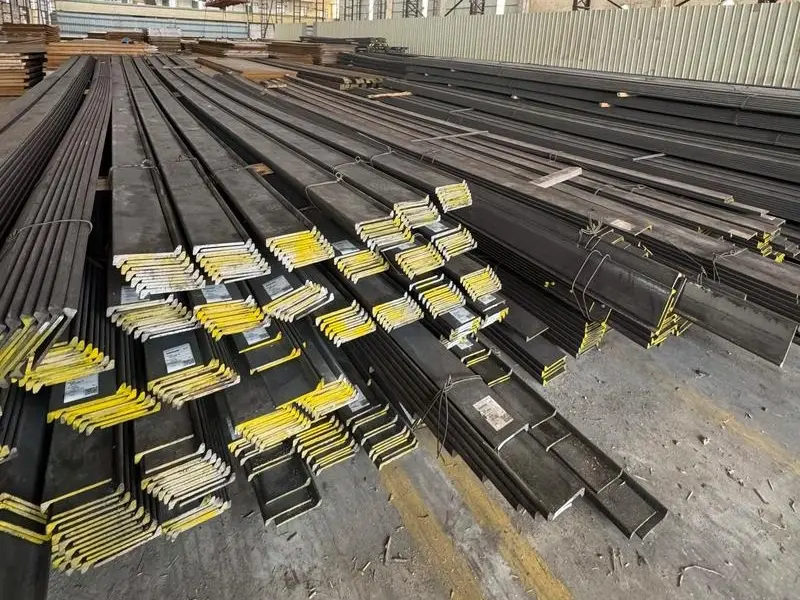
The quality of steel is primarily determined by its chemical composition, the specific manufacturing process used, and the consistency of heat treatment and rolling temperatures applied during production.
Dive deeper paragraph:
Steel is not a simple, uniform material. Its final quality is the result of a complex recipe and a precise cooking method. When you work with suppliers who do not have direct mill partnerships, you lose control over these critical factors. Let’s look at the two main factors that dictate steel quality.
This is the recipe. The base is iron, but the magic comes from the alloying elements and, just as importantly, the impurities. For marine steel and bulb flat steel, the composition must meet strict classification society standards like LR, DNV, or ABS.
| Element | Impact on Quality |
|---|---|
| Carbon (C) | The strength hardener. Too little, and the steel is weak. Too much, and it becomes brittle and hard to weld. |
| Manganese (Mn) | Increases strength and toughness. It is a critical element for structural steel. |
| Sulfur (S) | A harmful impurity. It causes "hot shortness," meaning the steel becomes brittle at high temperatures. This leads to cracking during welding. |
| Phosphorus (P) | Another harmful impurity. It increases strength but drastically reduces toughness, making the steel brittle, especially in cold temperatures. |
A common problem in the market is the use of scrap steel with unknown origins. If a mill does not have a precise control system, the levels of sulfur and phosphorus can exceed the allowed limits. You might get a plate that passes a simple visual check but fails a Charpy V-notch impact test. For a ship operating in the North Atlantic, this is a disaster waiting to happen.
The recipe is one thing, but how you cook it is another.
- Rolling Temperature3: The steel must be rolled within a specific temperature range. If the temperature is too high, you get a coarse grain structure, which reduces toughness. If it is too low, you risk creating internal stresses and surface cracks.
- Heat Treatment4: Processes like normalizing or thermo-mechanical controlled processing (TMCP) are used to refine the grain structure and improve mechanical properties. Steel that is not properly normalized can have inconsistent hardness and poor weldability.
This is why my company only works with certified mills. We do not just take a mill’s word for it. We track the mill certificates and, for critical projects, we arrange for SGS inspections5 before the steel even leaves the port in Qingdao or Tianjin. You are not just buying steel. You are buying the assurance that the recipe and the cooking process were followed exactly.
Geometric Tolerances and Dimensional Deviations?
Leading paragraph:
Your fabricators are struggling to fit the steel beams together. The gaps are too large, and the welds are uneven. Your project is grinding to a halt.
Snippet paragraph:
Geometric tolerances1 refer to acceptable variations in shape, like straightness2 and flatness, while dimensional deviations are errors in actual size, such as thickness or web height, both of which can cause severe fit-up problems during fabrication.
[^3] dimensions with caliper for tolerance check](https://cnmarinesteel.com/wp-content/uploads/2026/01/Flat-steel-ball97.webp)
Dive deeper paragraph:
This is one of the most frustrating issues for any workshop. You can deal with a little surface rust, but when the steel does not fit the design, you have a serious problem. Dimensional and geometric deviations are not small errors. They are costly delays.
The Impact on Fabrication
Imagine you are building a ship’s hull. The design calls for a specific bulb flat steel profile to be welded to a plate. If the web height is 2mm taller than the standard, the entire alignment is off. The fabricators now have to spend hours grinding, shimming, or re-cutting parts to make it work. This adds labor costs and eats into your profit margin.
Common Dimensional Deviations
- Thickness: This is a classic issue. Some suppliers sell steel as "nominal" thickness, which is often thinner than the ordered size. For example, a 10mm plate might actually be 9.5mm. This reduces the strength of the structure and may cause it to fail a classification society inspection.
- Web Height and Flange Width: For bulb flat steel, the height of the web (the vertical part) and the shape of the bulb are critical. Any deviation here changes the section modulus, which is a measure of the beam’s strength.
- Length: Being a few millimeters too short is a non-starter. It makes the steel unusable for its intended position.
Common Geometric Deviations
- Straightness: Steel should be straight. Bow or camber (a curve along the length) makes it impossible to automate welding processes. A slight curve might be fixable, but a severe bow means the entire piece is scrap.
- Twist: This is a spiral distortion along the length. A twist4ed beam is extremely difficult to secure and weld properly.
- Flatness: Steel plates should be flat. If a plate has a "wavy" surface or a pronounced buckle, it creates a poor fit-up for the structures welded on top of it.
How to Protect Your Project
The best way to avoid these problems is to set clear expectations from the start. Do not assume the steel will meet the standard. Ask for the specific tolerance standards5 (like EN 10034 or JIS G 3192) that the mill will follow. When I work with clients like project contractors in Vietnam or Mexico, we always confirm these tolerances in the proforma invoice. We also offer to send photos or videos of the material being measured before it is packed. This transparency prevents the "surprises" that derail a project schedule. You need a supplier who understands that a 1mm deviation here can mean a 10-hour delay in your workshop.
Traceability, Handling, and Storage Issues?
Leading paragraph:
You have the steel on site, but the mill certificates do not match the material numbers stamped on the steel. Now you cannot prove its grade to the surveyor.
Snippet paragraph:
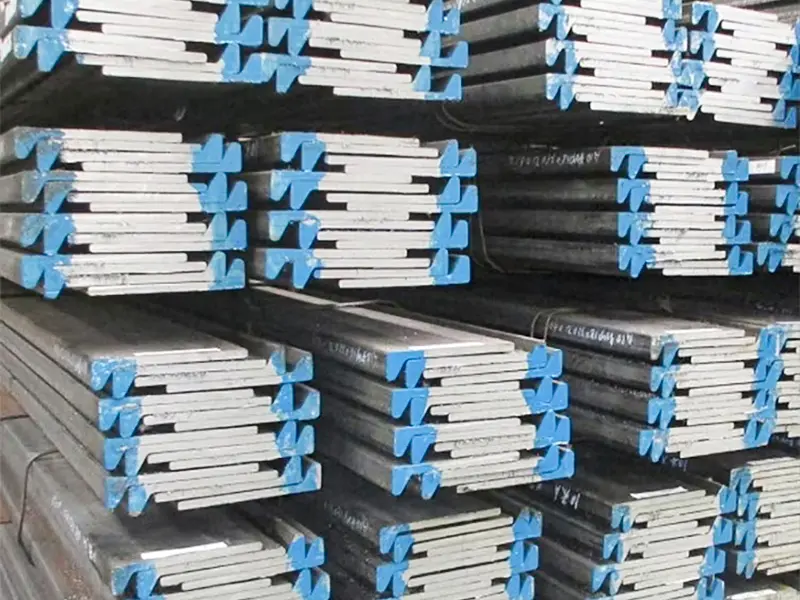
Traceability issues1 arise when material identification is lost, while improper handling and storage2 cause physical damage like bending, twisting, and excessive corrosion, making the steel unfit for its intended use.
Dive deeper paragraph:
These issues are often overlooked during the purchasing phase, but they are the ones that cause the most headaches during project execution and final inspection. They are the administrative and logistical side of quality, and they are just as important as the metallurgy.
The Traceability Nightmare
Every piece of certified steel should have a unique heat number3 stamped on it. This number connects the physical steel back to the mill certificate, which proves its chemical and mechanical properties.
The problem occurs when:
- The stamps are not applied clearly or are applied to a part of the steel that gets cut off during fabrication.
- The supplier mixes batches from different heats to fill an order, but does not properly document which piece belongs to which certificate.
- The supplier uses "mill certificates" from a different batch to cover the entire shipment.
For a project that requires classification society approval (like for a tanker or bulk carrier), this is a deal-breaker. If the surveyor cannot trace a piece of steel back to a valid certificate, they will reject it. I have seen entire containers of steel returned because of traceability failures4.
To solve this, we follow a strict process. When we process an order for bulb flat steel, we assign a dedicated export sales rep who ensures the heat numbers are recorded at the mill. We then share this list with the client before shipping. For clients like Gulf Metal Solutions, who valued stable quality, this attention to traceability gave them the confidence to move forward with larger orders for L-shaped steel.
Handling and Storage Damage
How the steel is handled between the mill and your workshop matters as much as how it was made.
- Improper Handling: Using chains or slings without proper padding can cause deep gouges and bending. Dropping bundles of bulb flat steel can permanently twist or bow the profiles.
- Poor Storage: Steel stored directly on the ground will collect moisture and rust rapidly. If it is stored outdoors without proper separation, different grades can get mixed up, causing traceability loss. In humid environments like Southeast Asia, improper storage5 can turn a clean shipment into a rusted mess in just a few weeks.
My Approach to This
I always advise my clients to ask for photos of the material being loaded. See how it is packed. Is it blocked and braced to prevent movement? Are the lifting points protected? When we ship from our warehouses in Liaocheng, Shandong, we ensure the steel is properly bundled, the tags are secure, and the packaging is designed to withstand the journey to places like Dammam or Manila.
A clean, well-organized shipment tells you a lot about the supplier’s overall discipline. If they care about how it looks and how it is tracked, they probably cared about how it was made, too.
Conclusion
Quality issues in bulb flat steel supply are not just about defective material; they are about project delays, safety risks, and financial loss. Choosing a supplier with strict mill partnerships and clear quality processes is your best defense.
-
Understanding traceability issues can help you avoid costly mistakes in your projects. ↩ ↩ ↩ ↩
-
Learn how handling and storage practices can impact the integrity of your steel materials. ↩ ↩ ↩ ↩
-
Discover the importance of unique heat numbers in ensuring steel quality and compliance. ↩ ↩ ↩
-
Explore the serious implications of traceability failures to safeguard your projects. ↩ ↩ ↩ ↩
-
Find out how to properly store steel to maintain its quality and prevent damage. ↩ ↩ ↩ ↩
-
Internal defects can lead to catastrophic failures; knowing them helps in risk management and quality assurance. ↩