
The term "marine steel" instantly makes you think of huge ships. However, are you limiting your vision? Let’s explore a wider world where this tough material performs surprisingly well.
Marine steel plates are not just for ships. They are high-strength, corrosion-resistant steel grades, primarily used in shipbuilding for hulls and structures. Their unique properties make them vital for many other demanding applications, especially in coastal and industrial environments.
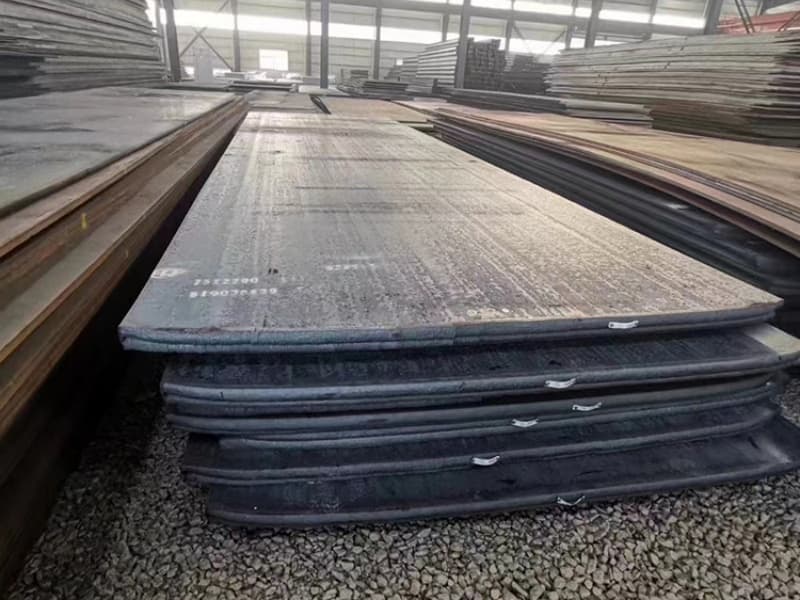
Most people know we supply steel for shipyards. But recently, a fabricator from Saudi Arabia contacted us, not for a ship, but for a massive desalination plant project along the Red Sea coast. This request opened my eyes to the vast, often unseen, world beyond the shipyard. The story of marine steel is much bigger than you might think. Let’s dive into its core and discover its hidden potential.
What is a marine steel plate?
You need steel for a project near the sea, but regular steel rusts too fast. This is a serious problem. Marine steel plate is the solution designed specifically to fight this battle.
A marine steel plate is a specialized steel product engineered for use in marine environments. It resists corrosion from saltwater, offers high strength and toughness, and meets strict international certification standards for maritime applications.
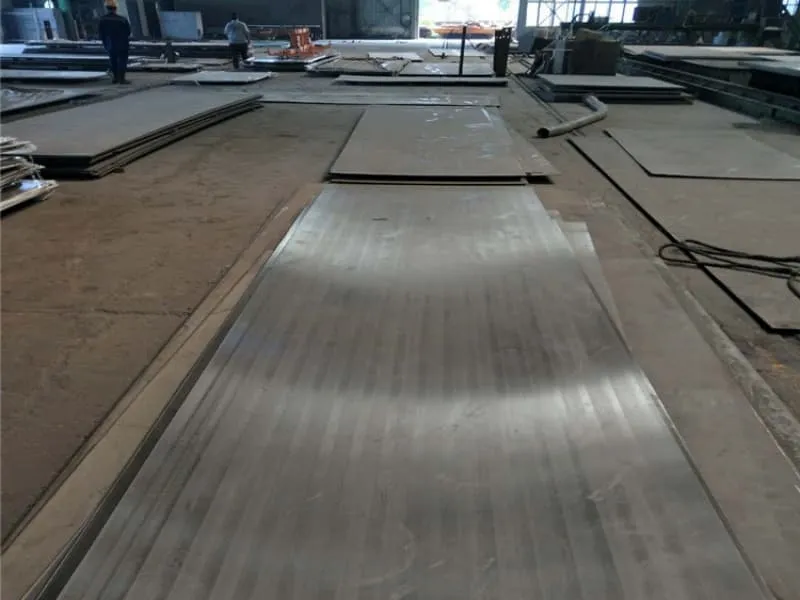
To truly understand marine steel, we need to break down what makes it different. It’s not a single type of steel, but a category defined by its performance under specific, harsh conditions.
The Core Properties That Define Marine Steel
The value of marine steel comes from a combination of key properties. Ordinary steel would fail quickly in seawater. Marine steel is built to last. Here are the main features:
| Property | Why It Matters for Marine Use | Common Challenge It Solves |
|---|---|---|
| Corrosion Resistance | This is the most critical feature. Seawater and salt spray cause rapid rust (corrosion). Marine steel has chemical compositions and sometimes coatings to slow this down. | Prevents structural weakening and reduces maintenance costs on offshore platforms or coastal buildings. |
| High Strength & Toughness | Structures face constant stress from waves, wind, and heavy loads. The steel must be strong but not brittle; it must bend, not snap, under impact. | Ensures the safety and integrity of ship hulls, oil rig legs, and harbor cranes. |
| Good Weldability | Most marine structures are assembled by welding. The steel must weld easily without developing cracks or losing its properties in the welded area. | Allows for efficient and safe construction of complex structures like ship bodies and offshore modules. |
| Certification Compliance | Marine projects require steel that meets specific international standards (like ABS, DNV, LR, BV). This guarantees quality and traceability. | Provides assurance to shipowners, insurers, and port authorities that the material is fit for purpose. |
More Than Just Chemistry: The Fabrication Factor
People often think the magic is only in the chemical recipe of the steel—elements like copper, chromium, and nickel added for corrosion resistance. While this is true for grades like AH36 or DH36, the complete picture involves fabrication and service.
First, the manufacturing process is tightly controlled. Mills use specific rolling and heat treatment methods to achieve the required mechanical properties. Second, the application environment dictates the choice. A plate fully immersed in seawater has different needs than one in the splash zone (tidal area), which suffers the most corrosion. Sometimes, additional protection like paint systems or cathodic protection is used alongside the steel itself.
From my experience, a client in the Philippines once ordered S355J2W grade steel (a weathering steel) for a seaside warehouse structure. While not a classic "marine" grade like those for ship hulls, its enhanced atmospheric corrosion resistance was perfect for that coastal, but not fully submerged, application. This shows that "marine application" is a spectrum, and the right steel depends on the exact conditions.
Which type of steel is most commonly used in shipbuilding due to its strength and durability?
Choosing the wrong steel for a ship can lead to disaster. Shipbuilders cannot afford to compromise on material strength and reliability. So, what is their go-to choice?
High-strength, low-alloy (HSLA) steels, specifically grades like AH36, DH36, and EH36, are most common in shipbuilding. These grades offer an excellent balance of strength, toughness, weldability, and cost, making them the standard for most commercial vessel hulls and structures.
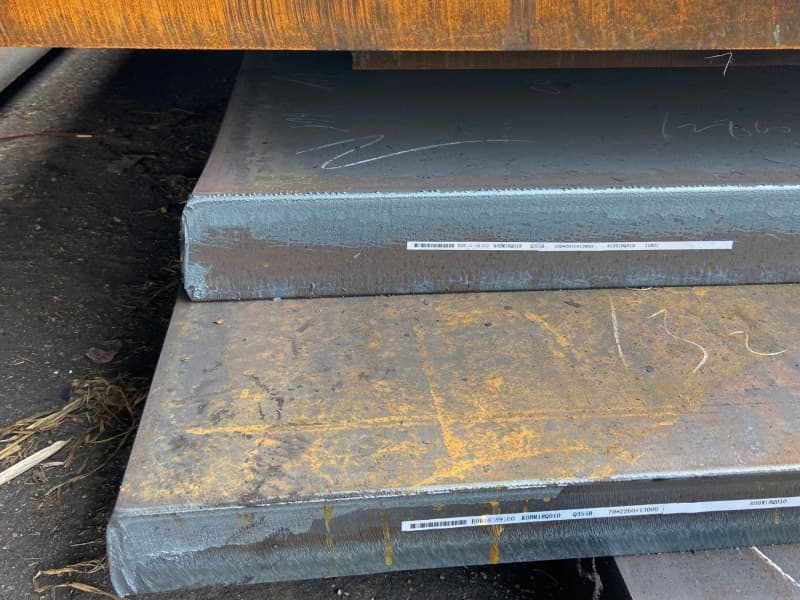
These "36" grades are the workhorses of the industry, but the alphabet prefix (A, D, E) is crucial. It indicates the steel’s toughness level, which is its ability to absorb energy at different temperatures.
Understanding the "Grade Code": Strength and Toughness
The common naming system tells a clear story. Let’s break it down using a table:
| Grade Code | Key Characteristic | Primary Application Area |
|---|---|---|
| AH36 | "A" stands for ambient temperature toughness. It meets basic impact test requirements at room temperature. | Used for internal structures and parts of the hull not subject to extreme stress or very cold conditions. It is the most economical option. |
| DH36 | "D" stands for low-temperature toughness. It performs well in impact tests at temperatures as low as -20°C. | Used for the main hull structure, especially in vessels operating in cooler climates. It provides a higher safety margin. |
| EH36 | "E" stands for extra-low temperature toughness. It is tested for impact resistance at -40°C. | Used for critical areas of ice-class vessels, Arctic supply ships, or the most stressed parts of large container ships and tankers. |
The number "36" refers to the minimum yield strength of 355 MPa (36 kilograms-force per square millimeter). There are also higher-strength versions like AH40/DH40/EH40 with a yield strength of 390 MPa, used where weight savings are critical.
Why Aren’t Other Strong Steels Used?
You might ask, why not use stainless steel everywhere for maximum corrosion resistance? Or even stronger alloys? The answer is a balance of factors.
Cost is a major one. HSLA steels like AH36 provide tremendous performance at a fraction of the cost of stainless steel or specialty alloys. Weldability is another. These steels are specifically designed to be welded easily on a massive scale in shipyards. More complex alloys often require strict and expensive welding procedures. Availability is also key. Grades like AH36/DH36 are produced in massive quantities by certified mills worldwide, ensuring a stable supply chain for shipbuilders.
Our client, Gulf Metal Solutions in Saudi Arabia, primarily uses AH36 and DH36 plates for fabricating components for offshore service vessels and harbor structures. They value the consistent quality and certification (like ABS approval) we provide, as it eliminates guesswork and project delays. For them, and for most of the industry, these HSLA grades represent the proven, reliable core of marine construction.
Where are steel plates used?
Steel plates are everywhere in heavy industry, but their use is often invisible. Think about the skeleton of a skyscraper or the body of a truck—these structures rely on thick, strong plates.
Steel plates form the primary structural framework in construction, heavy machinery, and transportation. They are used in building beams, bridges, pressure vessels, mining equipment, and the chassis of trucks and cranes, providing essential strength and support.
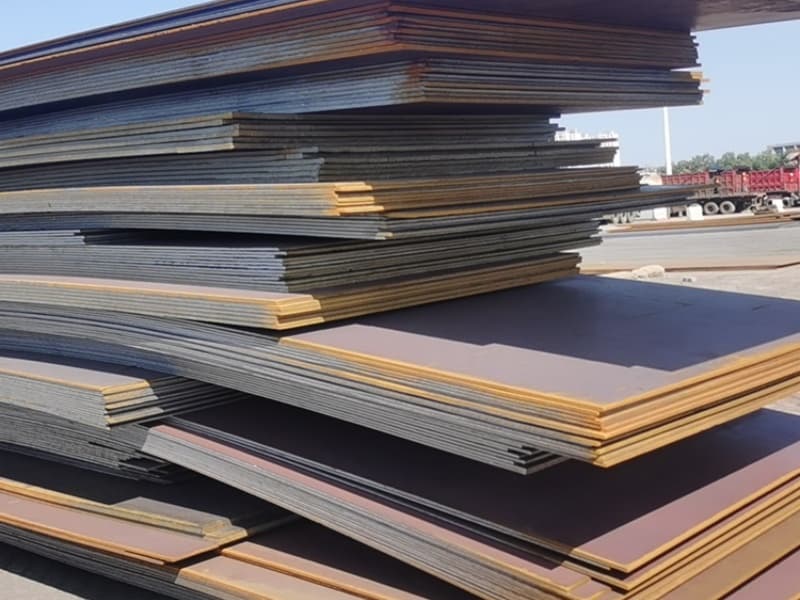
The applications are so broad that it’s easier to categorize them by industry sector. From massive, static structures to moving machines, steel plates are the fundamental building block.
A Sector-by-Sector Look at Steel Plate Applications
To see the full picture, let’s organize the uses into a clear table. This shows how versatile this basic product form truly is.
| Industry Sector | Typical Applications | Why Steel Plates Are Chosen |
|---|---|---|
| Construction & Infrastructure | High-rise building cores, bridge girders, stadium roofs, transmission towers, prefabricated modules. | Offers unmatched load-bearing capacity. Plates can be cut and welded into custom shapes (I-beams, box columns) to meet precise engineering needs. |
| Heavy Machinery & Mining | Excavator arms, bulldozer blades, crane booms, mining truck bodies, crusher liners. | Withstands extreme abrasion, impact, and bending forces. High-strength and wear-resistant grades are used here. |
| Pressure Vessel & Energy | Boilers, reactors, heat exchangers, storage tanks for oil/gas/chemicals, wind turbine towers. | Must contain high pressure safely. Requires plates with specific purity, strength, and welding characteristics to prevent catastrophic failure. |
| Transportation | Truck chassis, rail car underframes, ship hulls (as discussed), military vehicle armor. | Provides a rigid foundation that can handle dynamic loads, vibration, and, in some cases, ballistic protection. |
| Industrial Fabrication | Factory flooring, workbenches, machine bases, industrial silos, agricultural equipment. | Serves as a durable, stable, and customizable platform for heavy-duty operations. |
The Link to Marine Steel: Overlapping Demands
Notice how many of these applications—pressure vessels, offshore wind towers, harbor cranes—overlap with marine or coastal environments. This is where specialized marine steel plates come into play beyond shipbuilding.
A standard construction plate might work for an inland building, but use it for a seaside power plant’s water intake structure, and it will corrode rapidly. That’s when you specify a marine-grade plate, perhaps with enhanced corrosion resistance (like a "weathering" steel) or a full certification for offshore service. The application determines the grade.
For example, we supplied S355G10+M steel plates (a grade for pressure purposes with specified impact properties) to a client in Vietnam for manufacturing heat exchangers on a floating production storage and offloading (FPSO) vessel. While the primary function was pressure containment, the marine location necessitated a grade that also guaranteed toughness in a seagoing environment. This blending of functional and environmental requirements is common in advanced steel plate applications.
What are the marine applications of stainless steel?
Stainless steel is famous for its shine and rust resistance. In the harsh marine world, this isn’t just about looks; it’s about survival in the most corrosive spots on a vessel.
In marine contexts, stainless steel is used for critical components that face severe corrosion and require hygiene or low maintenance. Key applications include ship propellers, shafts, railings, piping systems for saltwater, kitchen galley equipment, and chemical tanker linings.
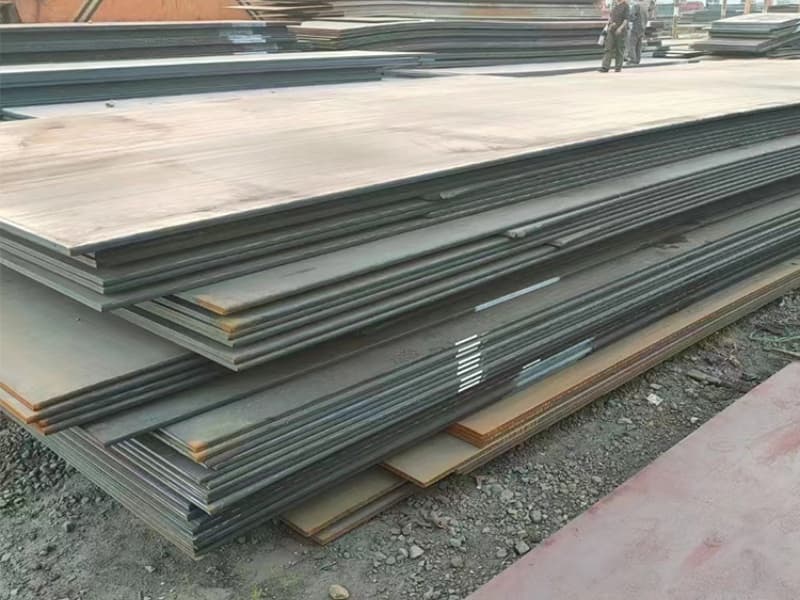
While carbon steel forms the ship’s body, stainless steel handles the toughest jobs. It’s the specialist called in where standard steel would fail quickly.
Diving into Specific Stainless Steel Marine Uses
Stainless steel isn’t a single material. Different grades (like 304, 316, 2205 Duplex) are chosen for different jobs based on their resistance to specific types of corrosion. Here’s a breakdown:
| Application Area | Why Stainless is Essential | Typical Stainless Steel Grade Used |
|---|---|---|
| Propulsion & Steering | Propeller shafts, rudder stocks, and components in seawater pumps. These parts are constantly in seawater and under high stress. | Grade 316L (Marine Grade): Contains molybdenum for enhanced resistance to pitting corrosion from chlorides in seawater. |
| Deck Equipment & Safety | Railings, cleats, ladders, winches. Exposed to constant salt spray and physical wear, needing to stay strong and look presentable with minimal upkeep. | Grade 316 or 304: 316 for harsher exposure, 304 for less severe areas. Both offer good general corrosion resistance. |
| Piping & Valves | Systems handling seawater for cooling, ballast, or firefighting. Internal pipe corrosion can lead to leaks and system failure. | Grade 316L Seamless Tubes: Standard for seawater lines. For more aggressive conditions, Duplex (2205) steel is used for its higher strength and better chloride resistance. |
| Living Quarters & Galley | Sinks, countertops, food preparation areas, sanitary fittings. Hygiene is paramount, and surfaces must be easy to clean and sterilize. | Grade 304: Perfect for its excellent hygiene properties, formability, and good corrosion resistance in interior environments. |
| Specialized Cargo Tanks | Chemical tankers carrying corrosive liquids. The tank lining must not contaminate the cargo and must resist chemical attack. | High-grade Austenitic (316L) or Duplex Stainless: Selected based on the specific chemicals being transported. |
The Critical Choice: Grade 316 vs. Grade 304
A common question from fabricators is: "Can we use 304 instead of 316 to save cost?" For marine applications, this is a risky compromise.
Grade 304 is an excellent general-purpose stainless steel. However, it lacks molybdenum. In marine environments, chloride ions from salt can cause pitting corrosion—small, deep holes that penetrate the metal. Molybdenum in Grade 316 dramatically increases resistance to this type of attack. Using 304 for a seawater-exposed railing might lead to unsightly rust stains and potential weakening within a few years, while 316 would last decades.
One of our clients, a manufacturer of marine fittings in Mexico, learned this the hard way with a previous supplier. They received 304-grade bars labeled as 316 for making cleats. The parts began to show rust spots within months on customer yachts. Since switching to us, we provide full material certification (MTC) with each batch of 316 steel, ensuring they get exactly what they pay for and protecting their reputation. In the marine world, the right grade isn’t a suggestion; it’s a specification for longevity and safety.
Conclusion
Marine steel plates are the unsung heroes of the coastal and industrial world. Their journey extends far beyond the shipyard, building everything from offshore energy platforms to the pipes in desalination plants, proving that strength forged for the sea serves many masters.