
Last quarter, three clients from Mexico, Qatar, and Thailand all asked the same urgent question: "Should we buy more steel now or wait?" Their uncertainty reveals a market at a turning point. Understanding the forces at play is no longer optional for staying competitive.
The global marine steel plate market from 2025–2026 will be shaped by green shipping demands pushing for higher-strength, lighter materials, regional supply chain diversification away from traditional hubs, and volatile raw material costs influenced by geopolitics and carbon pricing policies, making strategic sourcing critical.
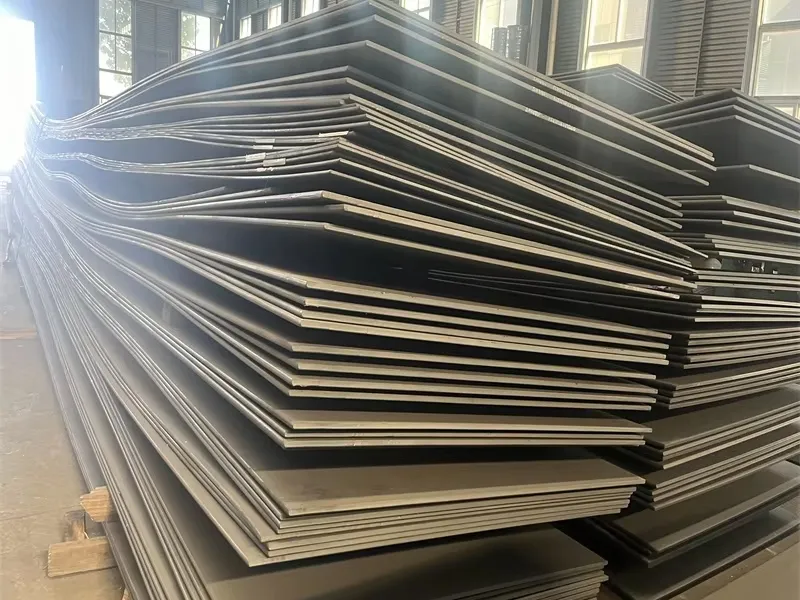
To navigate these trends, you need more than just price forecasts. You must understand the core materials themselves—what defines them, what makes them suitable, and how their properties align with future demands. Let’s start with the foundation.
What is a marine steel plate1?
In my warehouse, a marine steel plate1 looks similar to any other heavy plate. But the similarity ends there. Using a standard construction plate in seawater is a guaranteed recipe for premature failure and massive cost. The difference is in the chemistry and the certification2.
A marine steel plate1 is a flat-rolled steel product specifically designed and certified for use in shipbuilding and offshore structures. Its key features include controlled chemical composition for weldability and toughness, high corrosion resistance3 for seawater exposure, and mandatory certification from classification societies like ABS, DNV, or LR.
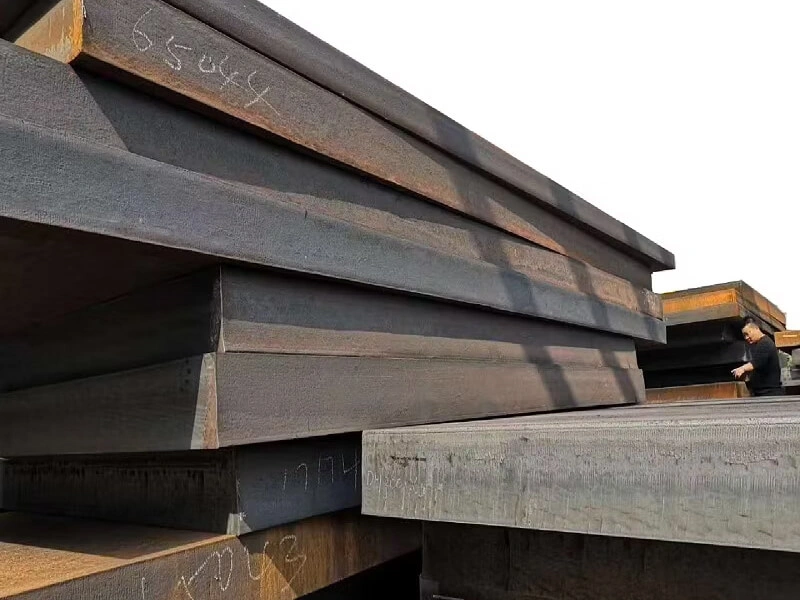
Defining it is simple. Understanding why it must be this way is crucial for procurement and design decisions. Let’s look under the surface.
Beyond the Surface: The Mandatory Specifications of Marine Plate
A marine plate is not a single product. It is a family of materials engineered to survive in one of the most hostile environments on Earth: the ocean. The first defining element is its chemical composition4. Regular steel has carbon, iron, and some impurities. Marine steel has carefully added alloys. Elements like Manganese (Mn) increase strength. Silicon (Si) helps with deoxidation during manufacturing. But the critical additions are for toughness and corrosion resistance3. Small amounts of elements like Niobium (Nb), Vanadium (V), and sometimes Copper (Cu) and Chromium (Cr) are added. These form fine carbides that strengthen the steel and improve its resistance to corrosion from saltwater.
The second, non-negotiable element is certification2. This is the legal and safety passport for the plate. A marine plate must be produced in a mill approved by major classification societies (Class). Each plate, or batch of plates, is tested extensively. The mill provides a Mill Certificate5, but more importantly, a Class Surveyor witnesses the testing or reviews the data and issues a Certificate of Compliance for that specific standard (e.g., ABS Grade AH36). This certificate follows the plate through its entire life. For a buyer like Gulf Metal Solutions in Saudi Arabia, this certificate is as important as the plate itself. It is their proof of quality and compliance to their shipyard clients.
Third, we must consider grades and applications6. Not all marine plates are the same strength. They are categorized into Normal Strength (Grades A, B, D, E) and High Strength (Grades AH32, DH36, EH40, FH550). The letter often indicates the minimum service temperature (E is for -40°C, for example). The number indicates the minimum yield strength in MPa (AH36 has a yield strength of 355 MPa). Choosing the right grade is a direct cost and performance decision. Using a higher grade than needed wastes money. Using a lower grade risks structural failure.
Here is a basic breakdown of common marine plate grades and their primary use:
| Grade Category | Common Examples | Key Property | Typical Ship Application |
|---|---|---|---|
| Normal Strength | Grade A, Grade B, Grade D | Good weldability, basic toughness. | Internal structures, non-critical bulkheads, superstructures in milder climates. |
| Higher Strength | AH32, DH36, EH40 | Higher yield strength (315, 355, 390 MPa), better toughness. | Mainstream choice for hull plating, decks, and primary frames of tankers, bulk carriers, and container ships. |
| Extra High Strength | FH550, FH690 | Very high yield strength (550, 690 MPa), requires special welding. | Weight-critical areas like large container ship hatch coamings, advanced offshore wind turbine monopiles. |
| Arctic Grade | Grade E, Grade F | Exceptional impact toughness at very low temperatures (down to -60°C). | Ice-going vessels, offshore platforms in Arctic regions. |
As we look to 2025-2026, the demand is shifting towards the higher end of this table. Shipowners want lighter ships to save fuel and reduce emissions. This drives demand for more High-Strength Steel (HSS) and even Extra High-Strength Steel (EHSS). However, this trend also increases complexity in welding and fabrication, a key challenge for the supply chain.
Is 304 or 316 stainless steel1 marine grade?
I get this question almost weekly, usually from clients working on yacht fittings or chemical tanker interiors. There’s a big misconception here. People hear "stainless steel" and think it’s automatically perfect for the sea. The truth is more selective.
316 stainless steel1 is commonly considered "marine-grade" due to its addition of Molybdenum2 (Mo), which significantly improves resistance to pitting and crevice corrosion3 in chloride environments like seawater. 304 stainless steel lacks Molybdenum2 and is generally not recommended for prolonged direct seawater immersion.
Calling 316 "marine-grade" is useful shorthand, but it can be dangerously oversimplified. The suitability depends entirely on the specific marine application and conditions.
Understanding the "Why" Behind the Molybdenum2 Difference
Both 304 and 316 are austenitic stainless steels. They get their corrosion resistance from a thin, invisible layer of chromium oxide that forms on the surface. This layer "passivates" the steel, protecting it from rust. In a clean, atmospheric environment, both perform well. However, seawater is full of chloride ions. These ions are aggressive. They can attack and break down that passive layer, especially in areas with low oxygen, like under a barnacle, in a tight crevice, or beneath a deposit of silt.
This breakdown causes localized pitting corrosion4 or crevice corrosion3. Once a pit starts, it can propagate rapidly, hidden from view. This is where Molybdenum2 (Mo) in 316 stainless steel1 (typically 2-3%) becomes the hero. Molybdenum2 strengthens the passive film. It makes it much more stable and resistant to attack by chlorides. It raises the "pitting resistance equivalent number" (PREN). Simply put, 316 can withstand harsher, more stagnant chloride conditions than 304.
But here is the critical insight from the field: Even 316 has limits. For permanent immersion in seawater, especially in warm, stagnant, or polluted water, even 316 can suffer from crevice corrosion3 over time. For the most demanding marine applications—like propeller shafts, underwater fasteners, or desalination plant components—even higher grades like 316L5 (low carbon for welding), 317L (more Mo), or duplex steels6 like 2205 are used.
Let’s compare their roles in a real marine context:
| Application Context | Is 304 Suitable? | Is 316 Suitable? | More Suitable Alternative (if needed) |
|---|---|---|---|
| Deck Hardware (cleats, rails) | Yes, for inland/coastal with frequent rinsing. | Yes, preferred for offshore/ocean-going. Better long-term appearance. | Powder-coated carbon steel for cost. |
| Boat Interior (galley, trim) | Yes, excellent. No saltwater immersion, good hygiene. | Yes, but often overkill for interior dry spaces. | 304 is the standard, cost-effective choice. |
| Underwater Fittings | No. High risk of rapid pitting and failure. | Conditional. Okay for short-term, clean, fast-moving water. Risk in stagnant areas. | For permanent immersion: Use 316L5, 2205 Duplex, or nickel-copper alloys. |
| Chemical Tanker Lining | No. Vulnerable to many chlorides and acids. | Yes, commonly used for many cargoes. But not for all chemicals. | Specialist alloys like Hastelloy for aggressive acids. |
| Exhaust Manifolds (hot salt spray) | No. Vulnerable to stress corrosion cracking. | Yes, standard choice. Handles heat and salt spray well. | Sometimes specialized cast alloys. |
The market trend we see is a growing, but careful, use of 316 and similar grades. As ship operators focus on reducing maintenance and lifetime cost, the upfront investment in more corrosion-resistant materials for key components increases. However, for the primary hull structure—the vast majority of a ship’s weight—carbon marine steel7 (like AH36) with a robust paint system remains the only economically viable choice. The trend is about using the right material in the right place, not universally switching to stainless.
Is 316 steel marine grade?
This question sounds like the last one, but it focuses on the term "marine grade" itself. In the industry, this term is not a formal standard like "ABS AH36." It’s a marketing and practical label that needs careful interpretation.
Yes, 316 stainless steel is widely called "marine-grade stainless steel1." However, it is crucial to know that this is a general commercial term, not a specific certification. For critical structural marine applications, certified carbon steel plates2 (e.g., to ABS, LR standards) are required, not just "marine-grade" stainless.
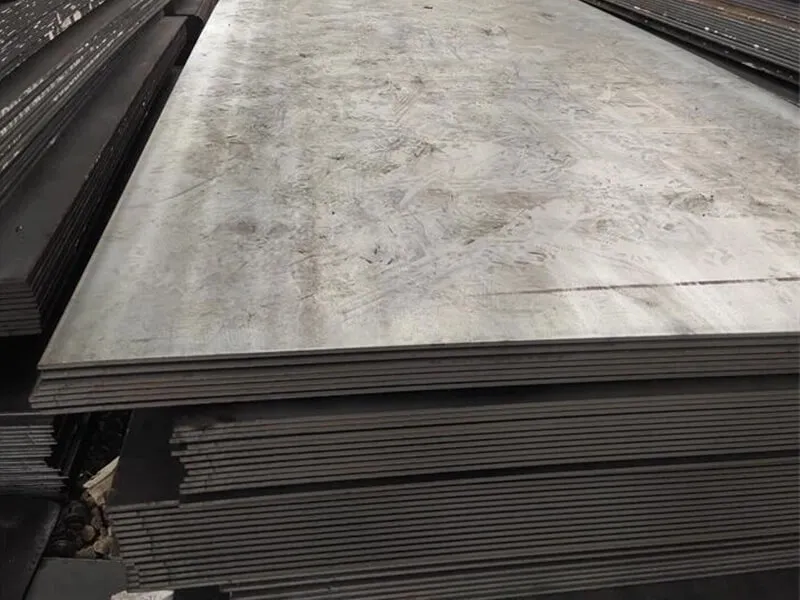
The confusion between a descriptive label and a certified material standard is a common source of error. Understanding this distinction protects your projects.
Certification vs. Description: Navigating the Terminology
When we say a carbon steel plate is "marine grade," we mean it has been produced, tested, and certified to a precise set of published rules by an independent classification society. The certificate is a legal document that traces the plate back to its heat of steel. This system exists because the consequences of failure in a ship’s hull are catastrophic.
The term "marine-grade" for 316 stainless steel operates in a different space. There is no global class society standard that says "316 = Marine Grade." Instead, it is a consensus term based on its superior performance in marine environments compared to other common stainless steels like 304. You can buy 316 stainless steel bar that is certified to an ASTM standard3 (like A276), but that standard only confirms it is 316 chemistry and meets certain mechanical properties. It does not certify its fitness for a specific marine structural purpose.
This leads to two important realities for buyers:
- For Non-Structural Marine Components: Using 316 stainless is often the correct and smart choice. Handrails, pulpits, cleats, tank fittings, and instrument housings benefit from its corrosion resistance4. In these cases, specifying "marine-grade 316" is perfectly valid to ensure you don’t get sent the cheaper 304.
- For Primary Ship Structure: You would never specify "marine-grade 316" for the hull. You would specify the exact grade, thickness, and most importantly, the class certification5, such as "ABS Grade EH40 Steel Plate, 25mm thickness, with ABS Certificate." Here, "marine grade" is implicit in the ABS certification.
A key trend for 2025-2026 is the increasing formalization and demand for traceability even for non-structural materials. Yacht builders and offshore equipment manufacturers are increasingly asking for material test certificates6 (MTCs) for their 316 stainless purchases as well, to ensure they are getting genuine 316 with the proper molybdenum content. This push for documented quality across all materials is a direct response to past issues with substandard or mislabeled metals entering the supply chain.
Why is AR500 steel1 so strong?
AR500 steel1 plates are incredibly hard. A client once showed me a worn-out truck bed made from ordinary steel, next to an AR500 bed that looked almost new after the same use. The difference was stunning. But this strength comes from a specific process, not from being "marine grade."
AR500 steel1 is so strong because it is an abrasion-resistant steel2 hardened to a Brinell hardness3 of approximately 500 HB. This extreme hardness is achieved through a specific heat treatment process4 (quenching and tempering) and a carefully balanced alloy composition, making it highly resistant to wearing and gouging, not necessarily to the corrosive marine environment.
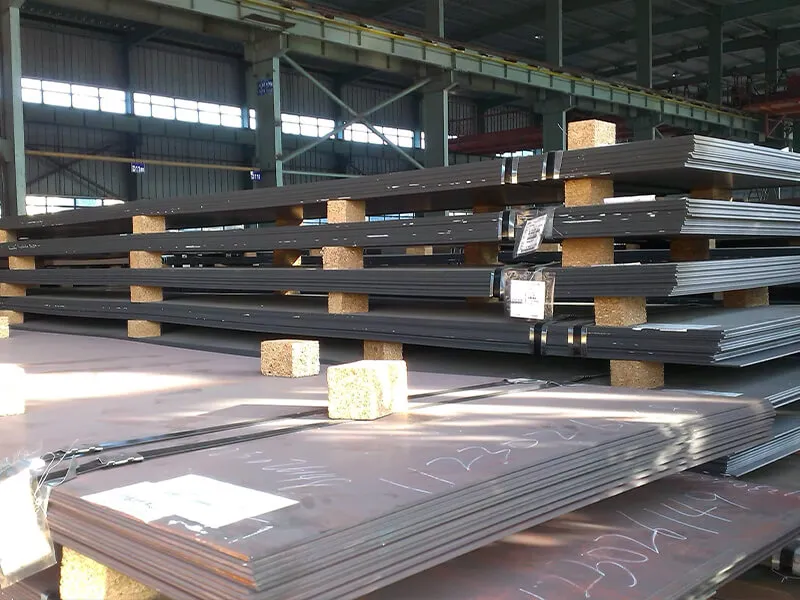
Its strength is for a very specific type of battle: abrasion. Understanding why it works reveals why it’s often not the right choice for most marine applications, despite its impressive name.
The Science and Trade-Offs of Abrasion Resistance
AR500’s "500" refers to its Brinell hardness3 number. For comparison, a typical marine steel plate like ABS AH36 has a hardness around 150 HB. AR500 is more than three times harder on this scale. This hardness is what allows it to resist materials sliding, scraping, or impacting against it.
The strength is engineered in two main ways. First, the alloy composition. AR500 has higher levels of carbon and alloys like boron, chromium, and manganese compared to standard structural steel. These elements allow it to achieve a very hard microstructure when heat-treated. Second, and most critical, is the heat treatment. The steel is heated to a very high temperature and then rapidly cooled (quenched). This forms an extremely hard but brittle structure called martensite. To reduce some brittleness and add toughness, it is then reheated to a lower temperature (tempered). The precise control of this "quench and temper" process is what gives AR500 its unique combination of high hardness and usable toughness.
However, this design has significant trade-offs:
- Weldability: AR500 is very difficult to weld without special procedures (pre-heat, specific electrodes, post-heat). Improper welding can create cracks in the heat-affected zone (HAZ).
- Formability: It cannot be bent or formed easily like normal shipbuilding plate. It is meant to be used as flat, wear-resistant liners.
- Corrosion Resistance: AR500 itself is not corrosion-resistant. It will rust like any carbon steel unless painted or coated. It lacks the specific alloying for marine corrosion resistance5.
So, where does AR500 fit in the marine world? Its use is niche but critical:
- Dredging Equipment: Cutter heads, pump liners, and hopper wear plates on dredgers.
- Bulker Handling: Liners in grab buckets, conveyor systems, and hold corners where abrasive cargoes like ore, coal, or sand are loaded/unloaded.
- Offshore Mining: Equipment subjected to sand and slurry abrasion.
For 2025-2026, the demand for specialized steels like AR500 is linked to specific industrial and offshore mining activities, not general shipbuilding. The trend is towards application-specific steel solutions. Buyers need to match the material property (hardness for abrasion, toughness for structure, alloy for corrosion) to the exact service condition. Using AR500 for a ship’s hull would be a costly and inappropriate mistake, just as using standard AH36 in a high-wear dredge pump would lead to rapid failure.
Conclusion
Navigating the 2025–2026 marine steel market requires understanding both macro trends and micro-level material properties. Success lies in sourcing the right certified grade for each specific application from a responsive, knowledgeable partner.
-
Explore the unique properties of AR500 steel to understand its applications and benefits in various industries. ↩ ↩ ↩ ↩ ↩ ↩ ↩ ↩ ↩ ↩
-
Find out the benefits of abrasion-resistant steel and its importance in high-wear environments. ↩ ↩ ↩ ↩ ↩ ↩ ↩ ↩ ↩
-
Learn about Brinell hardness to grasp how it affects material strength and suitability for different applications. ↩ ↩ ↩ ↩ ↩ ↩ ↩ ↩
-
Discover the heat treatment process to understand how it enhances steel properties like hardness and toughness. ↩ ↩ ↩ ↩
-
Explore the importance of corrosion resistance in steel selection to make informed choices for marine environments. ↩ ↩ ↩ ↩ ↩
-
Understand the significance of material test certificates in ensuring the quality and traceability of steel products. ↩ ↩ ↩
-
Understand the economic advantages of using carbon marine steel for ship structures. ↩