
When you build a ship that costs millions of dollars, the last thing you want is for the steel plates to fail at sea. I have seen this fear in the eyes of my clients from Vietnam to Saudi Arabia.
The rules set by classification societies directly decide which marine steel plate you can use for your project. These rules are the technical foundation for ship design, construction, and maintenance [citation:2]. They tell us exactly what grade of steel, what thickness, and what manufacturing process is acceptable for a specific vessel type.
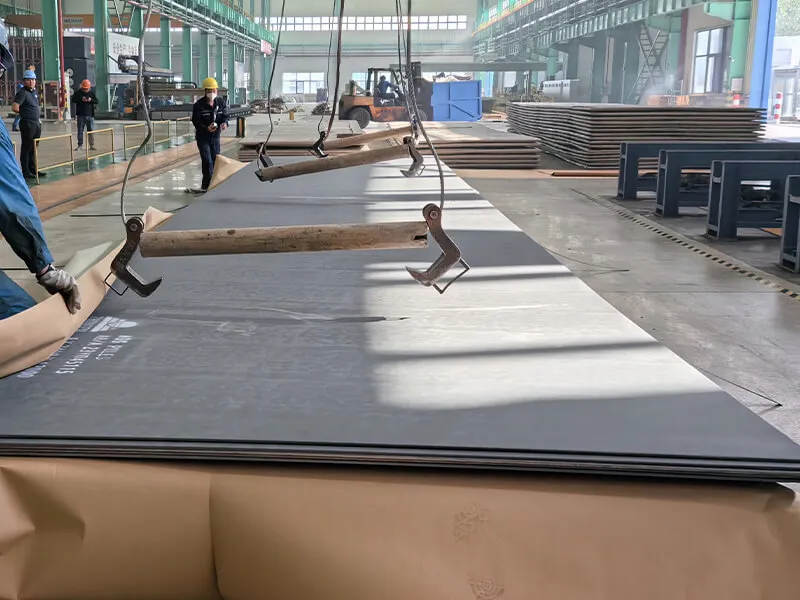
You might think choosing steel plate is simple. You pick a grade, and you buy it. But I have learned from my work with Gulf Metal Solutions in Saudi Arabia and other big importers that the process is much deeper. If you pick the wrong plate based on classification rules, your project stops. The shipyard rejects your material. You lose money. Let me walk you through how these rules work and why they matter to your bottom line.
What is the role of classification society in the marine industry?
I meet many buyers who are confused about who actually makes the rules for ships. They think it is just the government. But that is not the whole picture.
Classification societies are the technical watchdogs of the shipping world. They set and verify the technical standards for building ships and offshore structures to make sure they are safe for use at sea [citation:6].
[^1] logo and member organizations](https://cnmarinesteel.com/wp-content/uploads/2026/01/Marine-steel-plate-30.webp)
The Difference Between Rules and Law
You have to understand a key point here. Classification societies are not the same as government authorities. They are non-governmental organizations [citation:8]. I explain it to my clients like this:
| Aspect | Classification Society | Flag State (Government) |
|---|---|---|
| What they do | Create technical rules for ship structure and systems [citation:2] | Adopt international conventions like SOLAS and MARPOL [citation:2] |
| Their Tool | Class Rules1 [citation:2] | National Laws and Regulations |
| Who pays | The shipowner pays the class for surveys | The shipowner pays fees to the government |
| Outcome | Classification Certificate | Statutory Certificates (Safety, Pollution Prevention) |
Why We Need a Global Standard
Imagine if every country had its own rule for steel strength. A ship built in China would not be allowed to dock in the US. That would be chaos. This is why the International Association of Classification Societies2 (IACS) exists. They bring together the top societies like ABS, DNV, Lloyd’s Register, and our own China Classification Society (CCS) [citation:1].
IACS creates what they call Unified Requirements (URs) [citation:1]. My suppliers in Liaocheng must follow these requirements when they roll the steel. For example, the IACS has developed Common Structural Rules3 (CSR) specifically for big ships like bulk carriers and oil tankers [citation:1]. These rules harmonize standards globally so a plate certified by CCS in China is also accepted by ABS in the USA.
A Real Story from the Port
I remember talking to a buyer from a big project in Qatar. He was stressed. His previous supplier sent plates that looked fine, but the mill test certificates did not match the specific requirements of his classification society. The plates were stuck at the port. He had to pay for new tests and wait weeks.
This is why at our company, we always ask: "Which class is your vessel registered with?" before we quote. We have long-term cooperation with certified mills in China. We make sure the steel chemistry, the mechanical properties, and the markings all match the specific class rules from day one. This saves our clients from that port disaster.
What is classification society as per Solas?
When I talk to new clients, especially from Mexico or the Philippines, they sometimes mix up SOLAS with the classification societies2. So let me clear that up.
SOLAS is the big international law for safety at sea. Classification societies are the technical experts that help governments make sure ships follow that law [citation:1].
SOLAS Sets the Goal, Class Shows the Way
Think of it like building a house. SOLAS is the building code from the city. It says the house must be fire-resistant and structurally sound. The classification society is the team of engineers and inspectors who check the materials and the construction to prove the house meets the code.
The SOLAS convention, or the International Convention for the Safety of Life at Sea, is the most important treaty for merchant ships [citation:2][citation:7]. It covers everything from fire safety to lifeboats. But SOLAS does not usually say things like "this steel must have 400 MPa yield strength." That level of detail is in the classification society rules.
Flag states (the country where the ship is registered) often do not have the technical staff to inspect every new ship. So, they "authorize" or "recognize" classification societies to do this job for them [citation:2][citation:7].
When a classification society surveyor comes to our mill in Liaocheng, they are often doing two things at once:
- Class Survey: Checking the steel meets their own rules (like ABS Rules or CCS Rules).
- Statutory Survey: Checking the steel meets the requirements of SOLAS on behalf of the flag state administration. They then issue certificates like the SOLAS Cargo Ship Safety Construction Certificate3/pages/international-convention-for-the-safety-of-life-at-sea-(solas),-1974.aspx)1 Cargo Ship Safety Construction Certificate [citation:2].
How This Affects Your Steel Order
For you as a buyer, this means the steel must comply with both. When you ask me for marine steel plate4, I need to know the flag state and the class. A ship sailing under the Panamanian flag, classed with BV, needs steel approved by BV that also meets Panama’s SOLAS requirements. It sounds complex, but for us, it is just another day at the office. We handle the paperwork so you do not have to.
What do Classification Societies provide for ships and offshore structures?
Many people think classification is just a piece of paper. But from my daily work, I see it is a full system of technical control that follows the steel from the mill to the shipyard.
Classification societies provide a complete package of technical rules, design approval, and physical inspections to ensure the ship or offshore platform is built and maintained to a high standard [citation:3][citation:8].

Breaking Down the Services
When I prepare a quotation for a client like Gulf Metal Solutions, I know exactly what the class society will require from us, the material supplier. Here is what they provide that touches my business directly:
- Technical Rules and Standards2: This is the foundation. They publish their "Rules & Guides" [citation:3]. For example, the Chinese standard GB/T 712-2022 covers structural steel for ships [citation:10]. But the classification society rules might add extra requirements for things like impact testing at colder temperatures or stricter limits on chemical elements.
- Plan Approval1: Before we even roll the steel, the shipyard’s design, which includes the steel grades and thicknesses we supply, must be approved by the class. They check the calculations to make sure the plates are strong enough.
- Material Certification3: This is where we come in. The class society certifies the actual materials. They have a list of approved mills. We work with those mills. When we produce plates for you, a surveyor from the class (like DNV or RINA) will visit the mill. They witness the testing, check the heat numbers, and review the manufacturing process. Only then do they stamp the mill certificates.
- Surveys During Construction4: After we deliver the steel to the shipyard in Dammam or Ho Chi Minh City, the class society surveyors are there. They check the plates as they are cut and welded. They make sure the steel we supplied matches the approved design and is in perfect condition.
- Periodic Surveys5: This happens years after the ship is built. Every few years, the class surveyor goes back on board. They check the hull thickness. If the steel is corroding too fast, they might order repairs. This is why the quality of the base plate is so important.
The Supplier Connection
I tell my clients that choosing us is choosing an easier path through this process. We are not just selling steel. We are selling compliance. Our long-term cooperation with certified mills means the surveyor knows the factory. The paperwork is smooth. We offer SGS inspection support as an extra layer of trust. For a project-based distributor in Saudi Arabia, this stability is gold. They know when the steel arrives, it will pass the class surveyor’s inspection at the shipyard, and they will get paid on time.
How to check vessel classification society?
Sometimes a client calls me and says, "Zora, I have an old ship for recycling, but I want to know its history. What class was it under?" Or a new buyer wants to verify a supplier. It is a smart move.
You can check a vessel’s classification society2 by using the free online databases or mobile apps provided by the major societies, or by checking the official documents on the ship itself [citation:4][citation:9].
[^2] app interface](https://cnmarinesteel.com/wp-content/uploads/2026/01/Marine-steel-plate-27.webp)
Easy Ways to Find Out
If you need this information, it is easier than you think. I have done this many times myself.
- Use the Official Apps and Websites: Most major classification societies have free tools. For example, the China Classification Society (CCS) has a mobile app [citation:4]. You can search for a ship by its name or its official IMO number. The app will show you the ship’s record, its class status, and even the inspection history.
- Check the Ship’s Documents: Every commercial ship carries a set of classification certificates on board. These are official documents that state which society is classifying it. The certificates are usually posted on the bridge or in the engine control room.
- Look at the Load Line on the Hull: If you are standing at a port, look at the side of the ship. You will see a circle with a line through it (the Plimsoll mark). Next to it, there are usually letters. These letters tell you the society. For example, "AB" for American Bureau of Shipping, "LR" for Lloyd’s Register, or "NK" for Nippon Kaiji Kyokai [citation:9].
- Contact the Flag State Administration3: Some flag states, like Sri Lanka, publish lists of recognized societies on their official websites [citation:9]. You can also contact them directly for vessel registration details.
A Tip from My Experience
When we ship steel to a new client, especially in places like Myanmar or Romania, we always confirm their classification society at the beginning. We put it on the commercial invoice and the packing list. This helps their customs clearance and ensures the material is easily identifiable for their end customer. It is a small step that prevents big confusion later.
Conclusion
Classification society rules are the blueprint for choosing marine steel plates. They decide the grade, the strength, and the quality you need to build a safe and insurable ship.
-
The China Classification Society provides essential tools for checking vessel status. Discover their app and online resources for easy access. ↩ ↩ ↩
-
Understanding a vessel’s classification society is crucial for verifying its history and compliance. Explore this link for detailed resources. ↩ ↩ ↩ ↩
-
Contacting the Flag State Administration can provide official vessel registration details. Find out how to reach them for accurate information. ↩ ↩ ↩ ↩
-
Learn about the critical inspections that ensure compliance and quality during the shipbuilding process. ↩ ↩
-
Discover the significance of these surveys in maintaining ship safety and integrity over time. ↩