
You need strong steel for your ship. But now, you also need steel that helps the planet. This new demand is turning our entire industry upside down.
Green shipbuilding isn’t just a trend; it’s a complete shift in how ships are designed and built, forcing a fundamental reevaluation of the steel at their core. To compete, you must understand how new environmental rules and sustainability goals are directly changing the type of marine steel plate you should source.
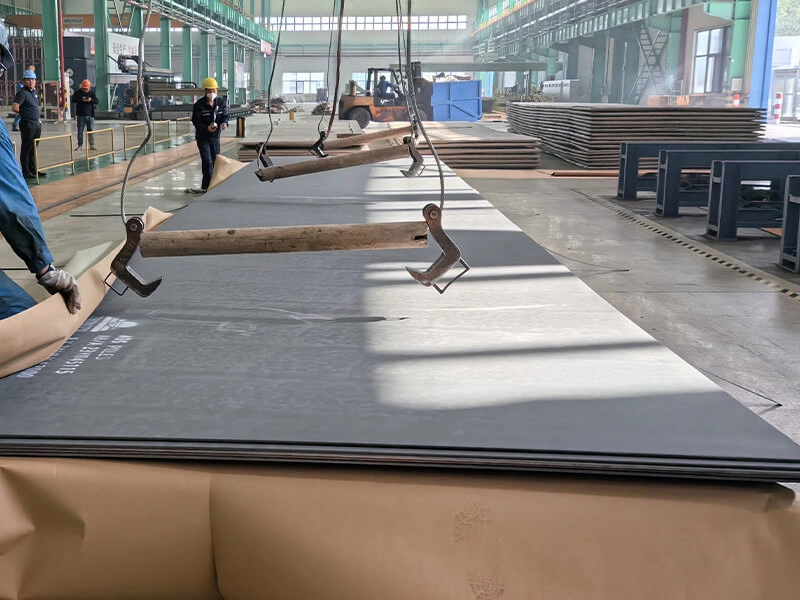
The move towards eco-friendly vessels is more than paint and fuel. It starts with the very bones of the ship—the steel plates. As a supplier working with mills and global clients, I’ve seen this shift firsthand. The questions my clients ask have changed. They’re no longer just about price and tensile strength. Now, the conversation is about lifecycle analysis, recyclability, and carbon footprint. Let’s break down exactly what this means for your next procurement decision.
What is green shipbuilding1?
Imagine building a ship that not only carries cargo but also carries a promise to the ocean. That’s the heart of green shipbuilding1. It’s a practical response to strict new rules and a smarter way to build for the future.
Green shipbuilding is the practice of designing, constructing, and operating vessels to minimize environmental impact. This is achieved by using sustainable materials2 like advanced marine steel, improving energy efficiency3, and reducing emissions and waste throughout the ship’s entire lifecycle.
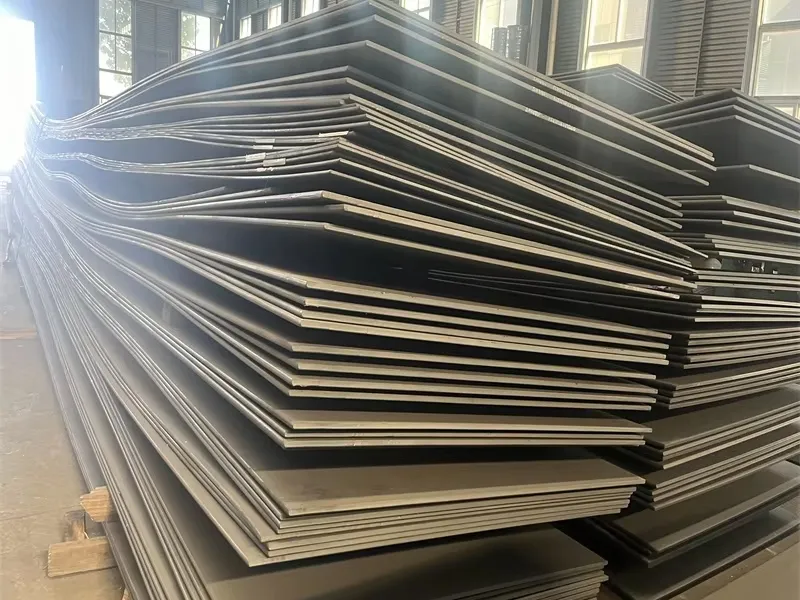
Beyond a Buzzword: The Tangible Demands of Green Shipbuilding
Green shipbuilding isn’t a single action. It’s a multi-layered approach that puts new, specific demands on every component, especially the steel. From my discussions with partners in Saudi Arabia and Mexico, the pressure comes from two main directions: international regulations and commercial advantage.
First, look at the rules. The International Maritime Organization4 (IMO) has set ambitious targets to cut the carbon intensity of international shipping by at least 40% by 2030. This trickles down to ship classification societies like DNV, ABS, and LR, which now have notations for "Green Passport5" or "Sustainable Ships." To get these class approvals, the ship’s materials, including all steel, must be documented for their environmental profile. You can’t just show a mill certificate anymore; you might need to provide data on the steel’s recycled content or its production emissions.
Second, there’s market force. Charterers and end consumers are choosing greener logistics. A ship built with sustainable practices and materials can command better rates and attract more business. This makes the initial investment in better steel a strategic financial decision, not just a compliance cost.
For us as suppliers, this changes everything. We must source from mills that are transparent about their production processes. The standard AH36/DH36 plate is still used, but now clients ask: "What’s the energy consumption per ton to produce this steel?" or "Can you provide a Material Declaration for EU Ship Recycling Regulation compliance?" This transparency is becoming as important as the mechanical properties themselves.
Let me give you a simple table to show the shift in priorities:
| Traditional Shipbuilding Priority | Green Shipbuilding Priority | Impact on Steel Selection |
|---|---|---|
| Lowest Initial Cost | Lower Total Lifecycle Cost | Focus shifts to steel with higher corrosion resistance, reducing maintenance and repainting costs over 30 years. |
| Meeting Minimum Class Rules | Exceeding Standards for Green Certification | Requires steel from mills with environmental management certifications (like ISO 140016) and verifiable low-emission production. |
| High Strength-to-Weight | High Strength, Low Weight, AND High Recyclability | Favors steel grades and chemistries that are easier to separate and recycle at the end of the ship’s life, without toxic elements. |
| Fast Delivery | Responsible Sourcing with Documentation | Needs full traceability from the mill, including the source of raw materials (iron ore, scrap) to prove sustainable sourcing. |
This new landscape is why we work closely with certified mills. We ensure the marine steel plate we supply doesn’t just make a strong ship, but also supports your project’s green credentials from day one.
Which type of steel is most commonly used in shipbuilding due to its strength and durability?
You need a workhorse, a reliable foundation that won’t fail at sea. For decades, the answer has been clear and consistent, chosen for its perfect balance of toughness and practicality.
High-strength, low-alloy (HSLA) steel1, specifically grades like AH36/DH36/EH362, is the most common type used in modern shipbuilding. Its excellent strength, good weldability3, and proven toughness at low temperatures make it the default choice for the hull structures of most commercial vessels.
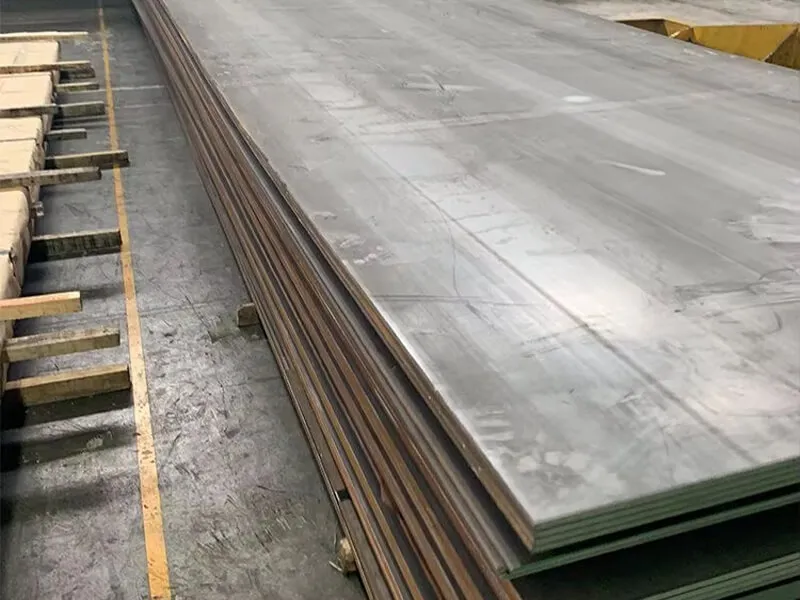
The Reign of HSLA Steel and Its Evolution for a Greener Era
The dominance of AH/DH/EH grade steel is no accident. Let’s break down why it won, and how it’s now being adapted. The "A," "D," and "E" denote different toughness levels (quality grades), with "A" for ambient temperatures, "D" for low temperatures, and "E" for very low temperatures. The number "36" refers to the minimum yield strength in ksi (kilopounds per square inch), which is about 355 MPa. This creates a family of steels that are incredibly versatile.
Its strength allows for thinner plates to be used, which can reduce the ship’s overall weight. A lighter ship needs less fuel to move, which is a direct link to the green shipbuilding goals of reducing emissions. However, the traditional production of this steel involves significant energy. This is where the evolution happens.
Mills are now optimizing the production process for HSLA steel to lower its carbon footprint4. This includes using more electric arc furnaces (EAF)5 that melt recycled scrap steel, as opposed to basic oxygen furnaces (BOF) that rely primarily on iron ore. EAF steel production generally has a lower carbon emission. So, when you now ask for AH36 plate, a forward-thinking question is: "Is this from an EAF or BOF route?" The alloying elements are also being refined. By carefully controlling micro-alloying elements like niobium, vanadium, and titanium, mills can achieve the required strength with less carbon content. Lower carbon means better weldability3 and a slightly lower environmental impact from production.
Furthermore, the durability of these steels directly supports sustainability. A hull made of quality AH36/DH36 that lasts 30 years without major structural repair is inherently more sustainable than one that needs early replacement or constant fixing. Corrosion resistance is key here. While painting systems are primary, the steel’s own composition plays a role. Some advanced HSLA steels are now paired with new-generation coatings that last longer, reducing dry-docking times and the environmental hazard of paint removal and reapplication.
In essence, the common HSLA steel is not being replaced overnight. Instead, it is being reinvented. It remains the backbone because of its proven performance, but its "green credentials" are being enhanced at the production stage. For buyers, this means you must look deeper at the mill’s process. The grade name is the same, but the environmental profile of two batches of AH36 from different mills can be very different. Our role is to connect you with mills that are on this optimization path, ensuring the steel you rely on is also aligned with future regulations.
Is steel environmentally friendly and sustainable?
Steel feels permanent and heavy, which might seem opposite to "green." But the truth is more nuanced. Steel’s story is one of permanent strength meeting circular potential.
Yes, steel is fundamentally sustainable due to its unmatched recyclability1. It can be recycled endlessly without loss of its key properties. The marine steel plate in a retired ship can become part of a new building, a bridge, or a car, creating a true circular economy and drastically reducing the need for new raw materials.

A Critical Look at Steel’s Green Paradox
To call steel "environmentally friendly" requires honesty. We must separate the material’s inherent potential from the impact of its production. This is a critical distinction for green shipbuilding.
The Good: The Circular Superpower.
Steel is the world’s most recycled material. The recycling rate for steel in many applications is over 90%. For ships, the Hong Kong International Convention for the Safe and Environmentally Sound Recycling of Ships mandates responsible recycling. This means a well-designed ship made of marked, traceable steel plates (like the ones we supply with proper documentation) can be efficiently dismantled. The steel is then melted in an Electric Arc Furnace2 (EAF). This process uses up to 75% less energy than making new steel from iron ore. So, the end-of-life phase of marine steel is a major sustainability win. This recyclability1 is a core reason why steel remains the material of choice—it future-proofs the asset.
The Challenge: The Carbon-Intensive Production.
The problem is at the beginning-of-life. Traditional steelmaking, especially via the Blast Furnace-Basic Oxygen Furnace (BF-BOF) route, is energy-intensive and a significant source of global CO2 emissions. Producing one ton of crude steel can emit around 1.8 tons of CO2. This is the paradox: a material with a perfect end-of-life loop can have a very heavy upfront environmental cost.
The Path Forward: How the Industry is Responding.
This is where the real change is happening, and it’s crucial for B2B buyers to understand:
- Green Steel: Mills are investing in "green steel3" production. This involves replacing coal with hydrogen (H2) as the reducing agent in the ironmaking process. The byproduct is water, not CO2. While large-scale production is still growing, it’s the clear endgame.
- EAF Ascendancy: As mentioned, EAF production using scrap is far cleaner. Specifying steel from EAF mills is a direct way to lower the carbon footprint4 of your project today.
- Carbon Capture: Major mills are piloting carbon capture5, utilization, and storage (CCUS) technologies to trap emissions from existing plants.
- Efficiency Gains: Continuous improvements in process efficiency are reducing energy use per ton of steel year by year.
What This Means for Your Procurement:
As a buyer, you are not powerless. Your choice of supplier and mill directly influences the sustainability of your steel. You should ask:
- What is the production route (EAF vs. BOF) for this plate?
- Can you provide an estimated carbon footprint4 data sheet?
- Does the mill have an Environmental Product Declaration6 (EPD)?
By demanding this transparency, you push the entire chain toward greener practices. The steel itself is sustainable in its lifecycle. Our job, together, is to make its production phase more environmentally friendly. Choosing a supplier who prioritizes mills with green investments is a strategic business decision for your own ESG (Environmental, Social, and Governance) goals.
What are the grades of marine steel plates1?
Navigating steel grades can feel like reading a secret code. But this code holds the key to your ship’s safety, performance, and now, its environmental compliance. Understanding them is non-negotiable.
Marine steel plates are graded by classification societies (like ABS, LR, DNV) based on strength, toughness, and intended use. Common grades include General Strength (A, B, D, E) and Higher Strength (AH32/36/40, DH32/36/40, EH32/36/40), where the letter indicates toughness and the number indicates yield strength2.
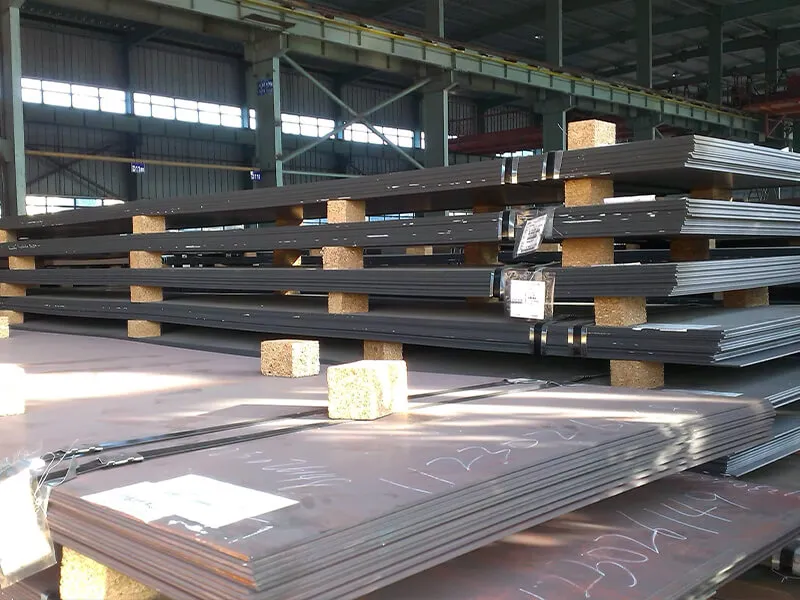
Decoding the Grade System: From Basic Compliance to Optimized Selection
The grade system is a precise language that ensures the right steel is in the right place on a ship. Let’s dive deeper into what these letters and numbers mean, and how green shipbuilding is adding new layers to this selection process.
The Foundation: General Strength vs. Higher Strength.
- General Strength Grades3 (A, B, D, E): These are carbon-manganese steels. They are used for less critical parts of the hull where stresses are lower. The difference is in impact toughness at low temperatures. ‘A’ is for normal temperatures, ‘B’ offers slightly better toughness, ‘D’ for low temperatures, and ‘E’ for very low temperatures (arctic operations).
- Higher Strength Grades4 (AH32/36/40, etc.): These are the HSLA steels we discussed. The ‘H’ stands for High strength. The number (32, 36, 40) is the minimum yield strength2 in kgf/mm² (approximately 315, 355, 390 MPa). They allow for thinner, lighter plates, directly contributing to fuel efficiency—a key green metric.
The New Dimension: "Green" Grades and Notations.
Classification societies have introduced new notations that sit alongside traditional grades. These aren’t new steel chemistries, but rather application rules and documentation requirements that make the ship greener. For example:
- DNV’s "ECO" notation: Covers optimal hull design for efficiency, but also encourages the use of materials with a reduced environmental impact5. This pushes you to choose steel from mills with a verified lower footprint.
- "Green Passport6" (IMO): Requires an inventory of all materials used in the ship’s construction. This means every single steel plate must be meticulously tracked and documented by grade, batch, and mill origin. Your supplier’s ability to provide this traceability is critical.
Selecting the Right Grade: A Balancing Act.
Choosing a grade is an optimization exercise between cost, safety, and now, environmental impact5. Using a higher-strength grade (e.g., AH40 instead of AH36) might use less material, saving weight and fuel. But it might be more expensive and energy-intensive to produce. The "greenest" choice is the one that minimizes the total environmental impact5 over the ship’s life.
Here is a more detailed breakdown of common grades and their modern considerations:
| Grade Category | Typical Grades | Key Properties & Traditional Use | Green Shipbuilding Considerations |
|---|---|---|---|
| General Strength | A, B, D, E | Good weldability, lower cost. Used for internal structures, non-critical hull areas. | Ensure even these grades come with full traceability for the Ship Recycling Inventory. Consider their recyclability7 (excellent, as they are simple steels). |
| Higher Strength | AH32, DH32, EH32 | Yield strength ~315 MPa. Good balance for many midsize vessels. | Can thinner plates of AH32 vs. Grade A lead to enough weight savings to justify potential higher production carbon? Lifecycle analysis is needed. |
| Higher Strength | AH36, DH36, EH36 | Yield strength ~355 MPa. The industry workhorse for main hulls of container ships, bulk carriers. | Focus here. Demand EPDs or carbon data. This is your biggest volume, so its production method has the largest environmental impact5. Opt for EAF-produced8 where possible. |
| Higher Strength | AH40, DH40, EH40, FH40 | Yield strength ~390 MPa or higher. For critical areas of large vessels, ice-class ships. | Highest strength allows for greatest weight reduction (fuel savings). However, production is more complex. The net environmental benefit must be calculated per design. |
| Special Applications | Arctic Grades (e.g., ABS Grade E), Corrosion-Resistant (CR) Grades | Extreme low-temperature toughness, or enhanced resistance to corrosion. | Arctic grades enable efficient Arctic routes (shorter distances). CR grades extend coating life, reduce maintenance waste. Both can offer long-term green benefits. |
My insight from working with clients like Gulf Metal Solutions is that the conversation has moved from "We need 500 tons of AH36" to "We need 500 tons of AH36 for an ECO-classed vessel, please provide mill EPDs and confirm traceability documentation9." Knowing the grades is the first step. The second, now essential step, is understanding the environmental profile behind each grade from your specific supplier.
Conclusion
Green shipbuilding is redefining marine steel from a commodity to a strategic, eco-conscious choice. Your selection now directly shapes a vessel’s compliance, efficiency, and legacy.
-
Explore this link to understand the different grades of marine steel plates and their applications in shipbuilding. ↩ ↩ ↩ ↩ ↩ ↩
-
Explore the concept of yield strength and its significance in selecting the right marine steel grade. ↩ ↩ ↩ ↩ ↩
-
Learn about General Strength Grades and their importance in ship construction for less critical parts. ↩ ↩ ↩ ↩ ↩
-
Discover the benefits of Higher Strength Grades and how they contribute to fuel efficiency in vessels. ↩ ↩ ↩ ↩ ↩
-
Learn how to evaluate the environmental impact of different marine steel grades for sustainable shipbuilding. ↩ ↩ ↩ ↩ ↩ ↩ ↩
-
Understand the Green Passport’s role in tracking materials for environmental compliance in ship construction. ↩ ↩ ↩
-
Discover the importance of recyclability in marine steel grades and its impact on environmental sustainability. ↩
-
Find out how EAF-produced steel can reduce environmental impact in marine applications. ↩
-
Learn why traceability documentation is crucial for ensuring compliance and sustainability in shipbuilding. ↩