
You are watching the offshore energy sector transform. Wind farms are being built in deeper waters. Oil and gas platforms are being upgraded. Floating production vessels are in high demand. Every one of these structures relies on a common component: marine L sections. The connection between offshore engineering and steel demand is direct and growing. Understanding this link helps you anticipate market shifts.
Offshore engineering drives demand for marine L sections through the construction of fixed and floating platforms, offshore wind turbine foundations, and support vessels. These structures require large quantities of certified L-shaped steel for framing, stiffening, and connections. As offshore projects move into deeper, harsher environments, the need for high-strength, corrosion-resistant L sections increases significantly.
The offshore environment is unforgiving. It demands steel that is strong, tough, and reliable. L sections are everywhere in these structures. To understand why, we must first understand what an L section is in precise technical terms.
What is an L-section1?
You are reviewing the material take-off for an offshore platform. The document lists "L-section1, 150x90x12, DH36." You need to order this material. But do you know exactly what it is? The term "L-section1" is precise. It tells you the shape, the dimensions, and the material. Understanding this definition is the foundation of correct procurement.
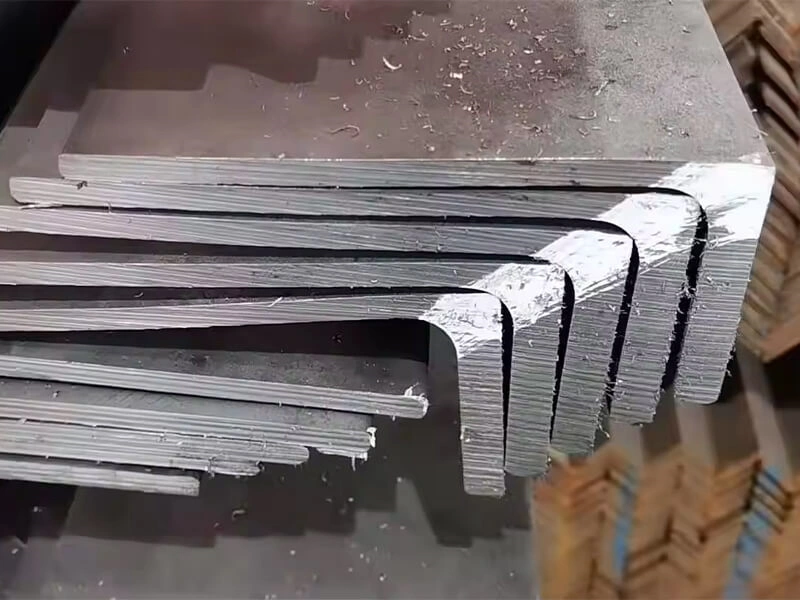
An L-section1, also known as an angle section, is a hot-rolled steel profile2 with two legs meeting at a 90-degree angle. It is defined by its leg lengths (equal or unequal) and its thickness. It is a primary structural component used for framing, bracing, and stiffening in offshore structures, ships, and buildings. It is produced to international standards3 and certified for marine use.
The Technical Definition of an L-Section
For procurement and engineering purposes, an L-section1 is defined by several key parameters.
1. The Geometric Parameters.
- Leg Lengths (A and B): These are the lengths of the two perpendicular legs. They can be equal (e.g., 100mm x 100mm) or unequal (e.g., 150mm x 90mm).
- Thickness (t): This is the thickness of the steel in both legs. It is constant for the entire section.
- Root Radius (r1): The inside corner where the two legs meet has a specified radius. This reduces stress concentration.
- Toe Radius (r2): The outer tips of the legs are often slightly rounded.
- Linear Mass: The weight per meter, calculated from the cross-sectional area and the density of steel (7.85 g/cm³). This is used for structural calculations and logistics planning.
2. The Production Standard.
L-section1s are not made to random dimensions. They are produced to international standards3 that define the exact dimensions and tolerances.
- EN 10056-1 & 24: European standard for equal and unequal angles.
- ASTM A6 / A6M: American standard for rolled structural steel bars, plates, shapes, and sheet piling.
- JIS G 3192: Japanese standard for dimensions, mass, and permissible variations of hot-rolled steel sections.
- GB/T 706: Chinese standard for hot-rolled steel sections.
3. The Material Grade.
The shape is only half the story. The material grade5 defines the steel’s properties.
- Strength: Specified by yield strength (e.g., 235 MPa for Grade A, 355 MPa for AH36).
- Toughness: Specified by impact testing temperature (e.g., 0°C for AH, -20°C for DH, -40°C for EH).
- Weldability: Controlled by chemical composition, especially the Carbon Equivalent (CE).
4. The Specification Format.
A complete L-section1 specification includes all these elements. For example:
- "L 150x90x12, EN 10056-1, Steel Grade S355J2+N" means an unequal L-section1, 150mm long leg, 90mm short leg, 12mm thick, produced to European standard, made from S355J2+N steel (normalized, with impact testing at -20°C).
My Insight from the Field
A client in Qatar sent us an inquiry for "L-section1, 150x90x12." That was it. We asked: "Which standard? Which steel grade? For what application?" They replied that it was for an offshore platform, needed DH36 grade, and should conform to EN 10056. By asking these questions, we were able to provide an accurate quote for the correct material. If we had assumed a standard or grade, we might have quoted for the wrong product. This taught me that a complete specification includes shape, dimensions, standard, and grade. Any missing piece is a risk.
What size is L section steel1?
You are designing a new structure. You need to select an L-section size. There are hundreds of possibilities. How do you choose? The answer lies in understanding standard sizes2. Using standard sizes2 saves time, money, and ensures availability. Non-standard sizes2 mean custom rolling, long lead times, and high costs.
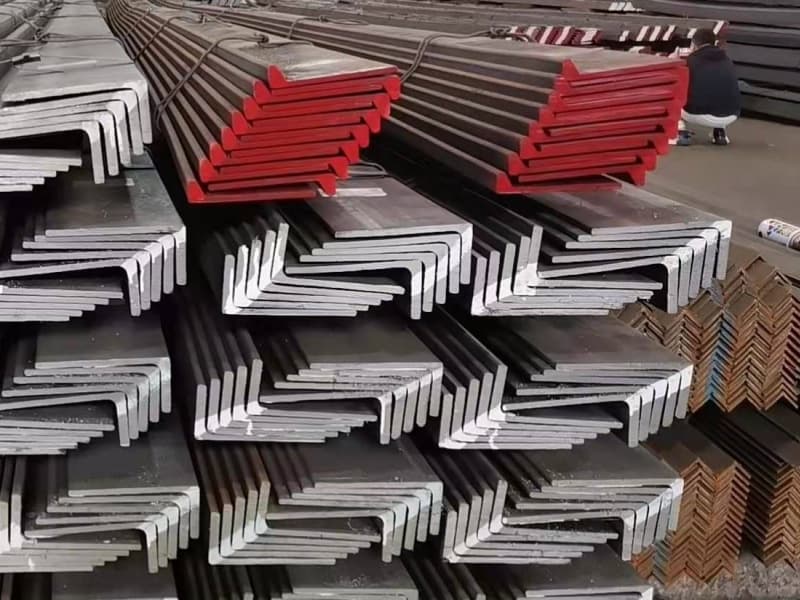
L section steel1 comes in a wide range of standard sizes2. Equal angles typically range from 20x20x3mm up to 250x250x35mm. Unequal angles3 range from 30x20x3mm up to 200x100x15mm and larger. The specific sizes available depend on the manufacturing standard (EN, ASTM, JIS) and the mill’s rolling schedule4. For marine applications5, common sizes for hull stiffening are in the 100mm to 200mm leg length range.
Navigating the World of L-Section Sizes
Size selection is a balance between structural requirements6 and commercial availability.
1. The Range of Standard Sizes.
Standards like EN 10056 provide extensive tables of standard sizes2. Here is a simplified overview:
| Size Category | Leg Length Range (mm) | Thickness Range (mm) | Typical Applications |
|---|---|---|---|
| Small Equal Angles | 20 – 50 | 3 – 6 | Light brackets, supports, frames. |
| Medium Equal Angles | 60 – 100 | 5 – 12 | General ship framing, deck stiffeners. |
| Large Equal Angles | 120 – 250 | 8 – 35 | Primary structure, heavy framing. |
| Small Unequal Angles | 30×20 – 75×50 | 3 – 8 | Edge beams, specific connections. |
| Medium Unequal Angles | 80×60 – 150×90 | 6 – 12 | Hull stiffeners, deck beams. |
| Large Unequal Angles | 150×100 – 200×150 | 10 – 16 | Primary framing, heavy connections. |
2. The Concept of "Rolling Schedule."
Mills do not roll every size all the time. They have a "rolling schedule4" that cycles through popular sizes. For example:
- Common Sizes (High Demand): 100x100x10, 150x90x12, 75x75x6 are often rolled frequently. They are usually available with short lead times.
- Less Common Sizes: 80x80x6, 130x65x8 may be rolled less frequently, perhaps every few months.
- Non-Standard Sizes: If you need a size not in the standard tables, it requires a custom roll, which is expensive and has a long lead time (6 months or more).
3. Selecting Sizes for Offshore Projects.
For offshore engineering, size selection is driven by structural analysis.
- Strength Requirements: The section must provide the required section modulus.
- Spacing and Plate Compatibility: The leg length must work with the stiffener spacing and the plate thickness.
- Availability: Whenever possible, designers select sizes that are commonly rolled to ensure timely procurement.
4. The Procurement Implication.
When you are sourcing L-sections, it helps to know the market.
- Ask the Supplier: "Is this size regularly rolled? What is the typical lead time?"
- Consider Alternatives: If your specified size has a 6-month lead time, ask the designer if a slightly different, more common size can be used. The property tables in the standard allow you to compare section moduli and find a substitute.
- Plan Ahead: For large projects, book mill capacity early for the sizes you need.
My Insight from the Field
A client in Malaysia designed an offshore platform using a non-standard L-section size: 160x100x10. This size was not in the EN standard. They needed a custom roll. The lead time was 8 months, and the cost was 40% higher than a standard size. We worked with their design team to find a standard substitute: 150x90x12 had a very similar section modulus. They re-ran their calculations and approved the change. The material was delivered in 3 months at a standard price. This experience taught me that designer-supplier collaboration early in the project can save time and money. The best time to discuss size availability is during design, not after the order is placed.
What is the L section girder1?
You see the term "L section girder1" in a specification for a heavy offshore structure. This sounds like a massive component. But is it the same as an L-section? Or is it something different? Understanding this term helps you visualize the scale and application of these profiles in large-scale engineering.
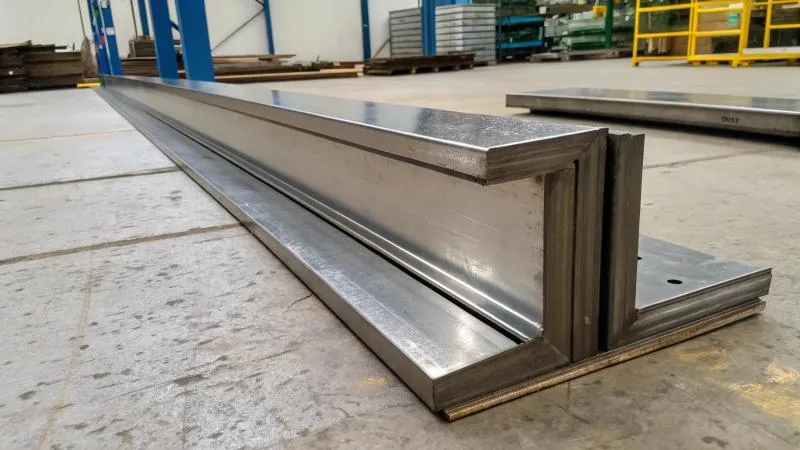
An L section girder1 is a large structural beam that uses L-shaped sections (angles) as part of its construction. It is typically a fabricated girder2 made by welding L-sections3 to a web plate, rather than a single rolled section. For example, a built-up plate girder might have L-shaped angles welded to the top and bottom of a steel plate to create a flange. This is common in heavy offshore applications where standard rolled beams are not large enough.

Fabricated Girders: When Rolled Sections Are Not Enough
In massive structures like offshore platforms4, the forces are enormous. Standard rolled sections may not provide the required capacity. Engineers then design fabricated girder2s.
1. What is a Fabricated Girder?
A fabricated girder2 is built up from individual steel plates and sections welded together. It is custom-designed for its specific load and span.
- The Web: A flat steel plate forms the vertical part of the girder.
- The Flanges: These are the top and bottom horizontal parts that resist bending. They can be made from:
- Flat plates: Welded directly to the web.
- L-sections3 (angles): Welded to the web to create a flange with a built-in stiffener. The vertical leg of the angle adds stiffness to the flange.
- T-sections: Another option for flanges.
2. Why Use L-Sections in a Fabricated Girder?
Using L-sections3 as flanges offers advantages:
- Built-In Stiffness: The vertical leg of the angle acts as a stiffener for the flange, preventing it from buckling under compression.
- Connection Points: The protruding leg of the angle provides a convenient place to connect other structural members, like cross-bracing or secondary beams.
- Availability: For very large girders, the required flange size may not be available as a rolled beam. Fabricating from plate and L-sections3 allows for any size.
3. Applications in Offshore Engineering.
- Jacket Structure Legs: The main legs of a fixed platform jacket are often fabricated from heavy plate, with internal and external stiffeners made from L-sections3.
- Deck Beams: The primary beams supporting the deck of an offshore platform are often large fabricated girder2s, with L-sections3 used as flange stiffeners.
- Crane Girders: Offshore cranes that lift heavy equipment run on girders that are often fabricated from plate with L-section rails.
My Insight from the Field
We supplied a large quantity of heavy L-sections3 to a fabricator in the Middle East. They were building a massive fabricated girder2 for a offshore platform deck. The L-sections3 were welded to the top and bottom of 100mm thick web plates to create flanges that were over 1 meter wide. The client’s quality manager explained that using L-sections3 for the flanges saved them from having to roll custom heavy plates, which would have been more expensive and time-consuming. This project showed me that L-sections3 are not just for small stiffeners. In offshore engineering, they are also key components in the largest fabricated structures.
What is the angle section1 L section2?
You are talking to an engineer from Europe. They say "angle section1." You talk to a supplier in Asia. They say "L section2." Are they talking about the same thing? Usually, yes. But sometimes, there are subtle differences in meaning. Understanding these nuances helps you communicate clearly across different regions and industries.
The terms "angle section1" and "L section2" are generally used interchangeably to refer to the same product: a hot-rolled steel profile with an L-shaped cross-section. "Angle section" is the more traditional and widely used term in engineering and construction. "L section2" is a more descriptive, shape-based term that is also common, especially in international trade and technical drawings3. Both refer to the same family of products.

A Closer Look at Terminology: Angle vs. L
While they are often synonyms, context can matter.
1. Angle Section: The Traditional Engineering Term.
- Usage: This is the standard term in most engineering codes, textbooks, and classification society rules. You will find "angle" in the index of any steel design manual.
- Derivation: The term comes from the shape forming an "angle" (90 degrees). It is part of a family of "structural shapes4" that includes beams, channels, and tees.
- Sub-types: "Equal angle" and "unequal angle5" are the precise sub-categories.
2. L Section: The Descriptive, Shape-Based Term.
- Usage: This term is very common in technical drawings3, material lists, and international trade. The "L" prefix on a drawing (e.g., "L 100x100x10") immediately tells the reader the shape .
- Derivation: It is simply a description of the shape: it looks like the letter L.
- Advantage: It is unambiguous. Even someone who does not know the term "angle" will understand "L-shaped."
3. When the Difference Might Matter.
- In Some Standards: A few older or regional standards might use "L-section" to refer specifically to a section with equal legs, reserving "angle" for unequal? This is rare, but it highlights the need for clear communication.
- In Fabrication: A fabricator might say "L-section" for the rolled profile and "angle" for a piece cut from plate and bent. But this is not standard.
- The Safe Approach: Use both terms together or clarify with dimensions. For example: "Angle section (L-section), 150x90x12, DH36." This leaves no doubt.
4. Table: Terminology Across Contexts.
| Context | Preferred Term | Example |
|---|---|---|
| Engineering Design Codes | Angle section | "Design of angle section1 members in tension." |
| Technical Drawings | L section2 (prefix) | "L 100x100x10" |
| Procurement / Supply | Angle steel or L-section | "Need 20 tons of marine angle steel, 150x90x12." |
| Casual Conversation | L-shaped steel or angle | "We use a lot of L-shaped steel for stiffeners." |
My Insight from the Field
A client in Romania sent us a tender document that used the term "corner section" throughout. We had to ask for clarification. It turned out they meant angle section1. The translation from Romanian had created a new term. By asking, we avoided quoting for the wrong product. This experience taught me that when it comes to terminology, never assume. If a term is unfamiliar or ambiguous, ask. It is better to clarify before quoting than to explain after delivering the wrong material.
Conclusion
Offshore engineering drives strong demand for marine L sections. From standard rolled angles to massive fabricated girders, these versatile profiles are essential for structures that must withstand the harshest marine environments.
-
Understanding the definition of angle section is crucial for clear communication in engineering and construction. ↩ ↩ ↩ ↩ ↩ ↩ ↩ ↩ ↩ ↩ ↩ ↩ ↩ ↩ ↩ ↩ ↩ ↩ ↩
-
Exploring the meaning of L section helps in interpreting technical drawings accurately, ensuring proper material specifications. ↩ ↩ ↩ ↩ ↩ ↩ ↩ ↩ ↩ ↩ ↩ ↩ ↩ ↩ ↩ ↩
-
Mastering the reading of technical drawings is vital for accurate procurement and project execution. ↩ ↩ ↩ ↩ ↩ ↩ ↩ ↩ ↩ ↩ ↩ ↩ ↩ ↩ ↩
-
Discovering various structural shapes can enhance your knowledge of construction materials and their applications. ↩ ↩ ↩ ↩ ↩
-
Learning about equal and unequal angles is essential for selecting the right structural shapes for engineering projects. ↩ ↩ ↩
-
This resource outlines the essential structural requirements to consider when selecting steel sections. ↩