
Are your steel invoices suddenly higher than your budget allows — and do you know why?
Rising material costs are reshaping L-shaped steel procurement through 2026. Steel mill product prices jumped 20.7% year-over-year, driven by 50% U.S. tariffs, an Iran-U.S.-Israel conflict, and surging energy and shipping costs that have increased steel angle logistics by 25-30%.
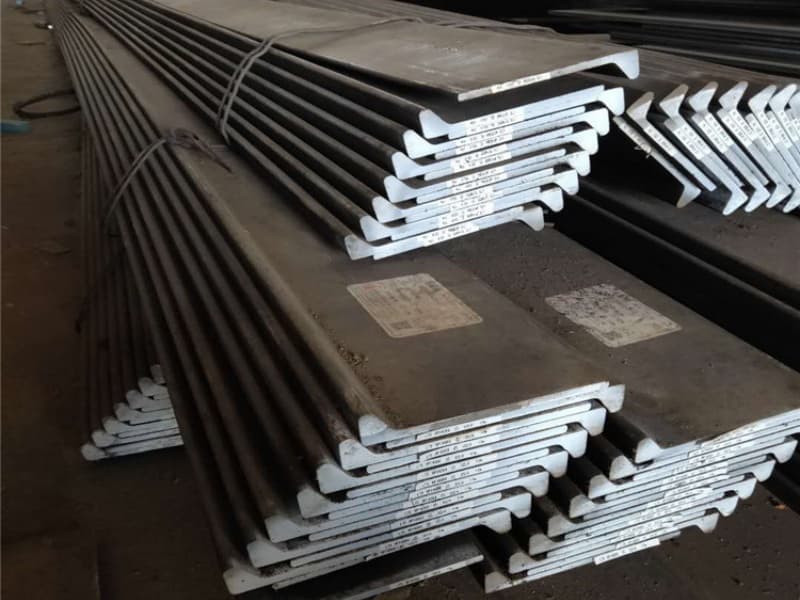
I have been in the marine steel business for years. I work with shipbuilders, fabricators, and project contractors across Asia, the Middle East, and beyond. And I can tell you this: the cost environment for L-shaped steel has changed dramatically. If you are still budgeting the way you did in 2024, you are already behind.
Let me walk you through what is driving these increases and how you can adapt.
What Is Driving the Sharp Rise in L-Shaped Steel Prices Through 2026?
Have you watched your L-shaped steel costs climb month after month — and wondered what is causing the surge?
Mild steel angle prices are rising sharply through 2026. The U.S. producer price index for steel mill products jumped 20.7% from January 2025 to January 2026, the largest year-over-year increase since 2022. Structural sections like L-shaped steel are tracking this broader trend closely.
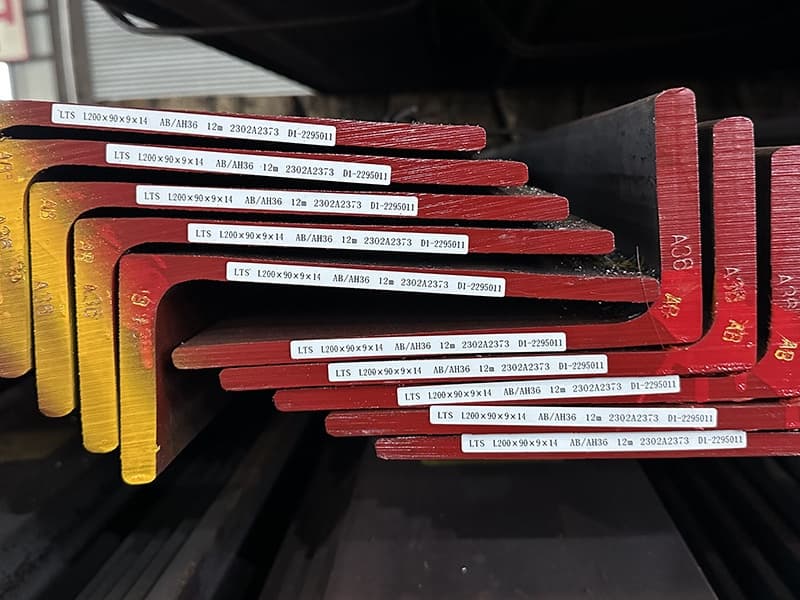
What do the price numbers tell us?
Let me share the key data points. The numbers are clear and concerning.
The producer price index for steel mill products rocketed up by 20.7% from January 2025 to January 2026[reference:0]. This is the largest year-over-year increase since the supply-chain disruptions of early 2022[reference:1]. The index for iron and steel increased 10.4% between April 2025 and April 2026, and the steel mill products index rose 13.3%[reference:2].
Steel prices have increased 20.9% year-over-year according to the U.S. Bureau of Labor Statistics, with structural sections like L-shaped steel tracking closely[reference:3]. MS angles — L-shaped structural steel sections used in construction frameworks, tower structures, and general fabrication — are produced through hot rolling of steel billets[reference:4]. When steelmaking costs rise, L-shaped steel prices follow.
Morgan Stanley now forecasts average HRC prices of $1,112 per ton in 2026, $1,012 in 2027, and $900 in 2028. Hot-rolled coil prices in the U.S. reached $1,201.50 per metric ton as of the end of May, more than double the cost of similar products in Southeast Asia ($571)[reference:6].
What is driving these price increases?
Three main forces are pushing L-shaped steel prices higher.
Geopolitical conflict. Mild steel angle prices are rising in Q1 2025 as the Iran-U.S.-Israel conflict drives up steelmaking costs globally[reference:7]. The conflict has disrupted trade flows and increased energy costs. Steel prices have rallied sharply as steady order bookings, higher raw material prices, and increased purchases by traders to hedge against volatility and disruptions amid the ongoing conflict drove the move.
Tariff escalation. In June 2025, tariffs on imported steel and aluminum doubled from 25% to 50% under Section 232[reference:9]. The ripple effects have been hitting hard ever since[reference:10]. A June 2025 Oxford Economics study placed the effective tariff rate on U.S. steel imports at significant levels[reference:11].
Supply tightness. U.S. mills are running at disciplined capacity, keeping supply tight and prices supported[reference:12]. Lead times continue to stretch, spot availability is thin, and in the immediate term import volumes are not sufficient to reduce market pressure[reference:13].
How does this affect L-shaped steel specifically?
L-shaped steel (MS angles) is particularly exposed to these pressures because of how it is made. The rolling mill process for steel angles requires substantial heat and electricity[reference:14]. Energy costs have risen significantly with crude oil exceeding USD 120 per barrel[reference:15].
Construction companies are responding by pre-ordering angles and increasing stockpile levels[reference:16]. This behavior itself creates additional demand pressure and further supports prices.
What should you expect through 2026?
Industry forecasts point to a stable-to-slightly-rising price environment through 2026[reference:17]. The short answer: prices are likely staying elevated[reference:18]. U.S. steel demand is forecast to grow about 1.8% in 2026, driven by pent-up residential construction demand and infrastructure spending[reference:19]. Tariff policy shows no signs of rollback in 2026[reference:20].
Waiting for prices to drop significantly is not a realistic strategy right now[reference:21]. The shipyards and fabricators who plan for continued elevated prices will have the advantage.
How Are Tariffs and Trade Policies Reshaping L-Shaped Steel Procurement Costs?
Are tariffs adding 25% or more to your L-shaped steel costs — and are you even aware of the full impact?
U.S. Section 232 tariffs doubled from 25% to 50% on imported steel and aluminum in June 2025. Steel mill products rose 20.7% year-over-year as a result. For shipbuilders, thick plates account for 20-30% of shipbuilding costs, and Chinese plates are 15-20% cheaper than domestic alternatives.
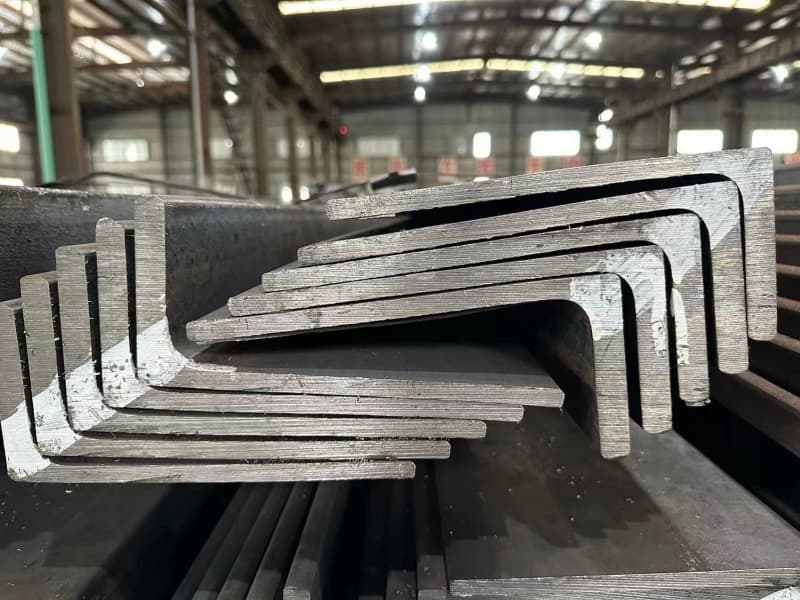
What exactly changed with tariffs?
Let me walk you through the timeline. On June 4, 2025, President Trump signed a proclamation doubling Section 232 tariffs on imported steel and aluminum — jumping from 25% to 50%[reference:22]. The stated goal was to protect domestic steel production and reduce reliance on foreign suppliers[reference:23]. The immediate effect was predictable: import prices surged, and domestic mills followed suit with price increases of their own[reference:24].
The impact has been substantial. As of the end of May, the price of hot-rolled steel coils in the U.S. reached $1,201.50 per metric ton, more than double the cost of similar products in Southeast Asia ($571)[reference:25]. Steel imports have plummeted, allowing domestic prices to outpace global prices[reference:26].
How do these tariffs affect shipbuilders specifically?
Here is where it gets serious for shipbuilders. Thick plates account for 20-30% of shipbuilding costs[reference:27]. Chinese thick plates are priced 15-20% cheaper than Korean domestic alternatives[reference:28].
Korean shipbuilders face a dilemma. HD Korea Shipbuilding, Hanwha Ocean, and Samsung Heavy Industries typically use Chinese thick steel plates at about 20% of their total. Smaller shipyards use even more — about half of their steel comes from China[reference:29]. If U.S. regulations targeting Chinese steel force these shipyards to reduce their Chinese steel usage, the cost burden will increase significantly[reference:30].
The introduction of new steel tariffs by the United States in 2025 has introduced significant complexities across global marine steel supply chains[reference:31]. Raw material procurement costs have become more volatile, prompting shipyards and structural fabricators to reevaluate sourcing strategies[reference:32]. Many have accelerated diversification efforts toward suppliers in Southeast Asia and the Middle East to mitigate exposure to tariff-related price swings[reference:33].
What other trade policies should you watch?
EU Carbon Border Adjustment Mechanism (CBAM). Exports to the EU will be subject to CBAM costs on iron, steel, and aluminum, requiring carbon documentation including environmental product declarations and mill certifications[reference:34].
U.S. sanctions on Chinese steel. The U.S. plans sanctions on Chinese steel, further complicating South Korea’s shipbuilding industry[reference:35]. If the U.S. strengthens regulations targeting Chinese steel, Korean shipyards that target the U.S. shipbuilding market will have to reduce their dependence on Chinese steel[reference:36].
How does this affect your procurement?
| Tariff/Trade Policy | Impact on L-Shaped Steel Costs |
|---|---|
| U.S. Section 232 (50%) | Direct price increase on imports, domestic mills follow |
| EU CBAM | Carbon documentation costs, potential surcharges |
| U.S. sanctions on Chinese steel | Supply chain disruption, higher costs for alternatives |
| Tariff uncertainty | Delayed project starts, higher bid pricing |
Higher input prices mean higher construction costs[reference:37]. Nonresidential construction spending in the U.S. peaked at $791 billion in December 2023 and fell to $729.3 billion in March 2026, down 2.1% from March 2025[reference:38]. The decline is partly due to higher material costs making fewer projects pencil out[reference:39].
What should you do?
I tell my clients the same thing. Do not assume tariffs will go away. They are likely here to stay for the foreseeable future[reference:40]. Plan for higher costs. Diversify your sourcing. And work with suppliers who can help you navigate the complexity.
Why Are Energy, Logistics, and Raw Material Costs Amplifying the Price Surge?
Are you factoring in the 25-30% increase in shipping costs — and the 47% jump in coking coal prices — into your L-shaped steel budget?
Energy costs for steel angle production have risen significantly with crude oil exceeding USD 120 per barrel. Shipping costs for steel angles from Asian exporters to Middle Eastern and African markets have increased 25 to 30%. Iron ore prices are up 22.5% and coking coal is up 47% this year.
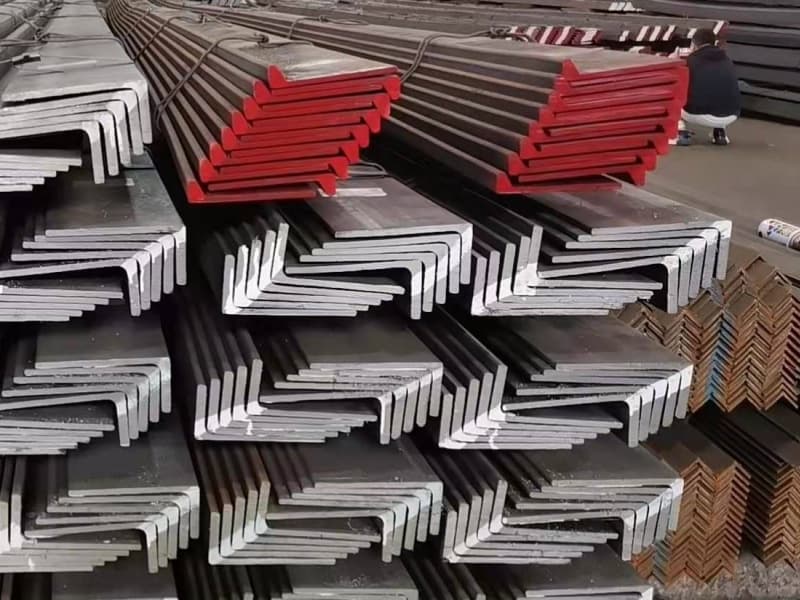
What is happening with energy costs?
The rolling mill process for steel angles requires substantial heat and electricity[reference:41]. Both of these inputs have become significantly more expensive.
Crude oil has exceeded USD 120 per barrel[reference:42]. Higher energy costs mean higher production costs. And those costs get passed down the supply chain. European energy prices spiked 200% in 2022, raising local flat steel by 30%[reference:43]. We are seeing similar pressures today.
Energy costs are not just a production issue. They are a logistics issue too. Bunker fuel prices jumped from $71.32 to $138.21 at peak on April 7, 2026 — a 93% increase in under 45 days[reference:44].
What is happening with logistics costs?
This is where the impact on L-shaped steel procurement becomes very real. Shipping costs for steel angles from Asian exporters to Middle Eastern and African markets have increased 25 to 30%[reference:45].
Freight rates are surging. Cape-size vessel rates have jumped into the $50,000-$70,000 per day range[reference:46]. A 28-30% surge in global freight costs amid geopolitical tensions, including the escalating West Asia situation, is emerging as the biggest challenge for the steel industry[reference:47].
Supply chain disruption. Ship traffic in the Red Sea decreased by 95%[reference:48]. Turkish steel angle export competitiveness has been affected by elevated shipping costs through the Eastern Mediterranean corridor[reference:49]. Regional steel traders indicate that insurance premiums and freight hikes are being reflected in new offers[reference:50].
Logistics and energy, not commodity prices, are driving cost inflation. The divergence highlights how logistics and energy costs, rather than commodity prices, are driving cost inflation for producers[reference:51].
What is happening with raw material costs?
Steel mills are having to contend with hiked prices of their own. Iron ore prices are up by 22.5% this year and coking coal is also up by 47%[reference:52].
Fitch revised its iron ore price forecast for 2025-2026 to average $100 per ton in 2025, up from its previous projection of $95 per ton[reference:53]. Fitch also raised its coking coal price assumption for 2025 to $185 per ton from $180, reflecting ongoing supply constraints and strong market conditions[reference:54].
Raw material costs are not just about the big two. Stainless steel 304 grade strengthened by about 8% month-on-month and 17% year-on-year in February. Aluminium continues to outperform with LME aluminium rising 10% month-on-month and 27% year-on-year to $3,373 per tonne in March.
How do these costs add up for L-shaped steel?
| Cost Factor | Increase | Impact on L-Shaped Steel |
|---|---|---|
| Crude oil | >$120/barrel | Higher energy for rolling mill process |
| Shipping costs | +25-30% | Higher landed cost for imports |
| Iron ore | +22.5% | Higher steelmaking costs |
| Coking coal | +47% | Higher steelmaking costs |
| Bunker fuel | +93% (peak) | Higher logistics costs |
A 10% iron ore rise increases flat steel prices by $30-50 per ton[reference:57]. Energy costs add further pressure[reference:58].
What should you do?
I tell my clients this. Do not budget based on today’s logistics costs. Budget for higher shipping costs. Factor in raw material volatility. Build a contingency buffer of at least 15-20% for logistics and raw material fluctuations. Work with suppliers who can provide transparent cost breakdowns and who communicate quickly when costs shift.
How Can Shipbuilders Adapt Their Procurement Strategies to Mitigate Rising Costs?
Are you still using the same procurement strategy you used in 2024 — and leaving money on the table?
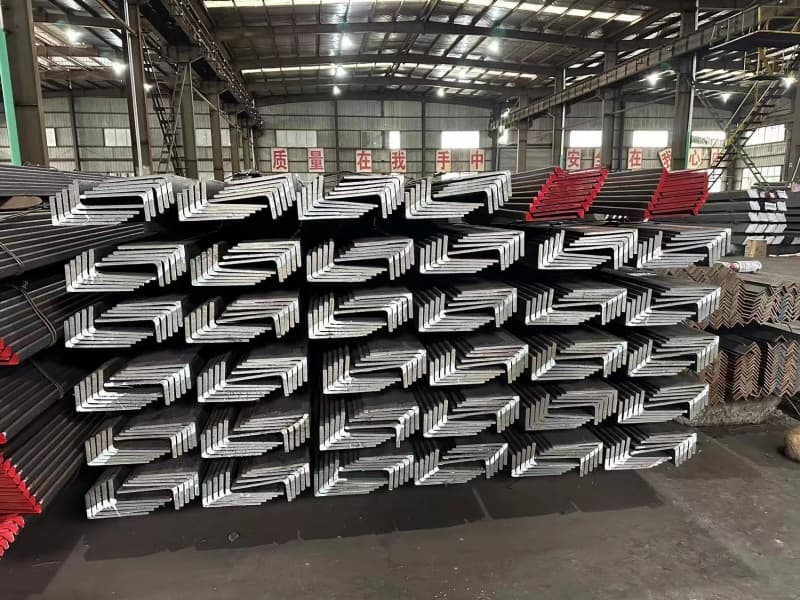
Shipbuilders can mitigate rising L-shaped steel costs through strategic procurement: locking in prices with long-term contracts, diversifying suppliers across regions, implementing MRP for accurate planning, and optimizing designs to reduce steel consumption without compromising structural integrity.
What are the most effective procurement strategies?
Let me share what I have learned from working with successful shipbuilders and fabricators.
Lock in prices with long-term contracts. Many shipbuilders use fixed-price contracts with mills to protect themselves from short-term spikes[reference:59]. Long-term contracts with fixed or index-linked pricing can protect you from price volatility. This is a smart move for large projects.
Diversify your supplier base. Do not rely on a single country or supplier. Many shipyards have accelerated diversification efforts toward suppliers in Southeast Asia and the Middle East to mitigate exposure to tariff-related price swings[reference:60]. If one supplier experiences a disruption or price spike, you have options.
Pre-order and increase stockpile levels. Construction companies are pre-ordering angles and increasing stockpile levels[reference:61]. This protects them from future price increases. While it ties up capital, it can save money if prices continue to rise.
Implement Material Requirement Planning (MRP). MRP has proven effective in enhancing material planning accuracy and cost efficiency[reference:62]. The POQ method is the most cost-efficient for steel plate procurement. MRP helps you order the right quantities at the right time, reducing waste and carrying costs.
How can design optimization reduce steel consumption?
This is where the real savings are. Design optimization is not just about engineering. It is about cost control.
Structural optimization. Stiffened ship panels can be optimized to achieve lighter structures with reduced welding paths[reference:63]. The number of different plates can be reduced from 489 to 351 through optimization. This reduces complexity and cost.
Weight reduction. Structural optimization can reduce steel weight significantly. Optimized masts have achieved a 50% weight reduction and a 36% decrease in body thickness. Corrugated bulkhead design can minimize steel weight using design variables such as the shape and size of the corrugation.
Nesting optimization. The optimization of the nesting system in shipbuilding focuses on the steel plate cutting process. Various nesting algorithms, including heuristic, genetic, simulated annealing, and hybrid algorithms, are essential for minimizing material waste and enhancing efficiency[reference:64]. Better nesting means less scrap. Less scrap means lower material costs.
Design simplification. Standardize and buy into series production[reference:64]. Off-the-shelf designs reduce engineering costs and material waste. An optimized yard layout smooths material movements and workflows, making the most out of available space, capital, and labor[reference:65].
How do these strategies save money?
Let me give you some numbers.
| Strategy | Potential Savings |
|---|---|
| Long-term contracts | Protection from short-term price spikes |
| Supplier diversification | Reduced tariff exposure, competitive pricing |
| MRP implementation | Improved accuracy, reduced waste |
| Structural optimization | Significant steel weight reduction |
| Nesting optimization | Lower material waste, higher efficiency |
Despite the 26% increase in overall newbuild prices, shipbuilders are not making massive profits[reference:66]. This means every dollar saved on steel procurement goes directly to the bottom line.
What should you look for in a supplier?
Based on my experience, here are the qualities that matter most when costs are rising.
| Supplier Quality | Why It Matters |
|---|---|
| Fast response time | When prices shift, you need answers quickly |
| Price transparency | Clear cost breakdowns help you plan |
| Flexible MOQ | You should not have to over-order to get the steel you need |
| Third-party inspection support | SGS or equivalent inspection gives you peace of mind |
| Clear communication | English-speaking support makes a difference |
I learned this lesson working with Gulf Metal Solutions in Saudi Arabia. Before they found us, they dealt with delayed responses and quality inconsistency. After they switched to a supplier who offered dedicated export sales reps, third-party inspection, and flexible MOQ, their experience changed completely.
The feedback they gave us? "The steel company was the first supplier to respond within two hours, and maintained this rapid response speed throughout the entire delivery process. The product quality is stable, and the packaging is the best among all the packaging for ship plates we have received so far."
What is the bottom line?
You cannot control tariffs or global conflicts. But you can control how you buy. Lock in prices. Diversify suppliers. Optimize your designs. And work with partners who communicate clearly and respond quickly. The shipyards that adapt their procurement strategies will weather this cost environment. The ones that do not will struggle.
Conclusion
Rising material costs through 2026 are driven by tariffs, conflict, and surging energy and logistics costs, requiring shipbuilders to adopt strategic procurement and design optimization to stay competitive.