
Is your shipyard facing delays and quality issues with angle steel? A single bad batch can shut down production lines and damage your reputation. Finding a reliable supplier is not just about price; it’s about building a partnership that ensures stability and trust for years to come.
Shipyards build long-term partnerships with angle steel suppliers by moving beyond price-based transactions. They prioritize suppliers with consistent quality, reliable delivery, responsive communication, and technical support. This involves joint planning, transparent processes, and a mutual commitment to meeting the shipyard’s specific project timelines and material specifications.

This strategic approach makes sense, but to implement it effectively, you need a deep understanding of the product itself. Many partnerships fail because buyers and suppliers do not share a common language about the material. Before you can build a strong partnership, you must first answer some basic but critical questions about angle steel. Let’s clarify what it is, what you can do with it, its variations, and how it’s made.
What is an angle in steel?
Do you think of steel angle as a simple "L" shape? That basic shape hides important engineering details that directly affect your ship’s strength and build quality. Not all angles are created equal, and knowing the difference is the first step to specifying correctly.
In steel, an "angle" refers to an L-shaped cross-section, also called angle iron or L-bar. It has two legs of equal or unequal length that meet at a 90-degree angle. This shape provides excellent strength and stiffness along both axes, making it a fundamental building block for frames, brackets, and supports in ship structures.
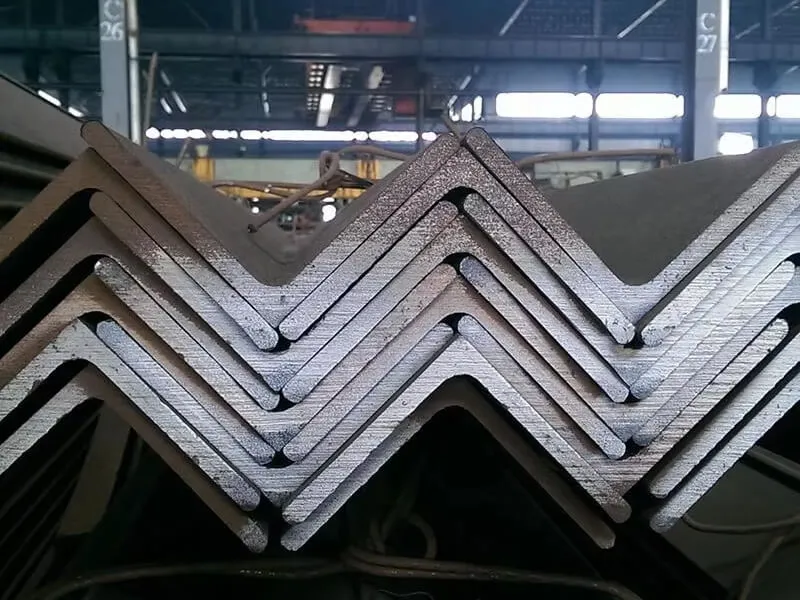
Demystifying the Steel Angle: Dimensions, Standards, and Critical Tolerances
The dictionary definition is simple. However, in a shipyard, every millimeter and every grade matters. An "angle" is defined by a set of precise parameters that you must understand to communicate effectively with your supplier.
First, let’s talk about dimensions and designation. An angle is specified by the lengths of its two legs and the thickness of the material. For example, "L 100 x 75 x 10" means one leg is 100mm long, the other is 75mm long, and the thickness is 10mm. If both legs are equal, it’s an equal angle (e.g., L 100 x 100 x 12). The leg length and thickness determine the angle’s load-bearing capacity1. A common mistake is to order by approximate size. This can lead to angles that are too weak for the application or that don’t fit the design drawings.
Second, we must consider the material grade and standard2. Marine angle steel is not mild steel. It is produced to specific standards that guarantee its properties. Common marine grades include S235JR3, S275JR, and S355JR. The "S" stands for structural steel, the number is the minimum yield strength in MPa, and the letters (JR, J0, J2) indicate the impact toughness at different temperatures. The standard (like EN 100254 or ASTM A36) defines the chemical composition and mechanical test requirements. Ordering an angle without a specified grade and standard is a major risk. You might receive a commercial-grade product that lacks the necessary toughness for a ship operating in cold waters.
Third, and often overlooked, are the geometric tolerances5. These include:
- Leg Length Tolerance: How much the actual leg length can deviate from the ordered size.
- Straightness Tolerance: How much bow or camber is allowed along the length of the angle.
- Squareness of Legs: How close to a perfect 90-degree angle the bend must be.
- Thickness Tolerance: How much the actual thickness can vary.
Why do tolerances matter? Angles that are not straight or square are very difficult to fit and weld accurately. This increases fabrication time6 and can compromise the integrity of the weld. A good supplier controls these tolerances strictly. A poor supplier might deliver angles that are within the very wide limits of a generic standard, causing headaches on your shop floor.
Here is a table comparing key aspects of standard vs. marine-grade angle steel:
| Aspect | Standard Commercial Angle | Marine-Grade Angle (e.g., S355J2) |
|---|---|---|
| Primary Standard | General purpose standards with wide tolerances. | Specific marine/structural standards (EN 100254, ASTM A709). |
| Key Property | Meets basic strength. | Guaranteed yield strength, toughness at low temperature, and weldability. |
| Tolerances | Often loose, focused on cheap production. | Tighter controls on straightness, squareness, and dimensions for easier fabrication. |
| Traceability | Batch certificate at best. | Heat-specific Mill Test Certificate7 (MTC) traceable to the original melt. |
| Common Issue | Inconsistent properties, poor straightness. | Consistent performance, but requires clear specification from the buyer. |
From my experience, this is where partnerships begin. When a shipyard provides a clear, detailed specification, and a supplier consistently meets it, trust is built. Our client Gulf Metal Solutions values this. They know that when they order S355J2 angles from us, they will get the exact grade with the supporting MTCs. This consistency allows their fabricators to work efficiently without unexpected problems.
What can you do with angle iron1?
Are you using angle iron1 only for simple brackets and frames? You are underutilizing a versatile and cost-effective material. In shipbuilding2, its applications are wide-ranging and critical to the vessel’s structural integrity3.
Angle iron is used to create frames, stiffeners, brackets, and support structures4 throughout a ship. It forms the skeleton of bulkheads and decks, provides reinforcement for hatch openings, builds ladder stringers and handrails, and serves as a base for mounting equipment. Its 90-degree shape makes it ideal for creating strong, rigid connections between plates and other structural members.
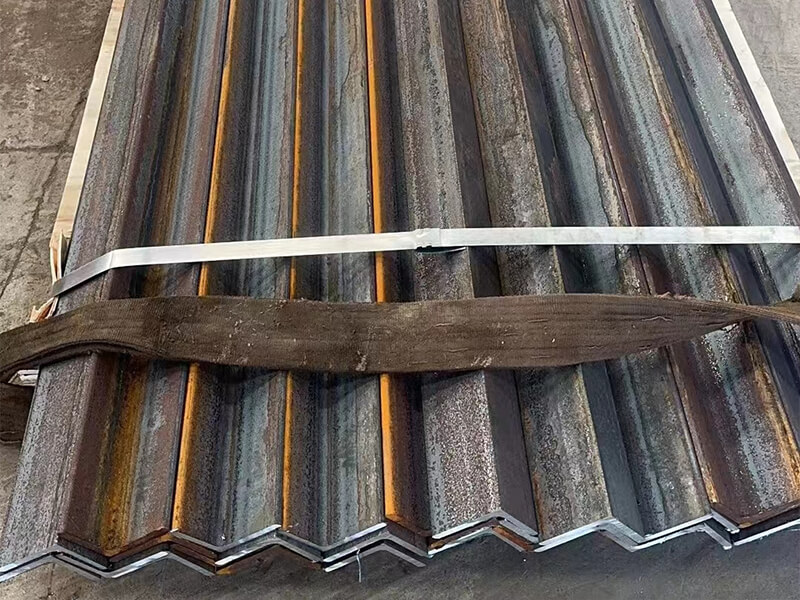
The Versatile Workhorse: A Tour of Angle Iron Applications in a Ship
The simple L-shape is a marvel of engineering efficiency. Let’s take a walk through a ship under construction to see its many roles.
In the Hull Structure:
The primary frames of the ship—the ribs that give the hull its shape—are often made from large angles. These frames are welded perpendicular to the hull plates. The angle’s one leg connects to the plate, and the other leg points inward, providing stiffness. This resists the inward pressure of the water. Longitudinal stiffeners, which run the length of the ship, are also frequently made from angles. They prevent the long plates of the hull from buckling.
In Decks and Bulkheads:
Angles are the go-to material for creating stiffening grids on large, flat surfaces. They are welded to deck plates to distribute the load of cargo or vehicles. On bulkheads (the interior walls), angles create a framework that supports the plate and divides it into smaller, stronger panels. The edges of door and hatch openings are almost always reinforced with angles to handle concentrated stresses.
In Secondary Structures and Outfitting:
This is where angles truly shine in versatility. They are used to fabricate:
- Support Brackets: For piping, cable trays, ventilation ducts, and machinery.
- Ladder Stringers: The two side rails of a ship’s ladder are often made from angles.
- Handrails and Stanchions: Safety rails around deck openings are commonly built from angles.
- Equipment Foundations: Bases for pumps, generators, and winches are fabricated using angles for a strong, weldable frame.
- Temporary Works: Even during construction, angles are used for strong, reusable welding jigs and assembly supports.
The key to maximizing this versatility is design for fabrication5. Angles are easy to cut, drill, and weld. A smart shipyard design office will standardize on a few common angle sizes. This simplifies procurement, reduces waste, and speeds up fabrication. When you partner with a supplier, you can discuss this standardization6. Perhaps you use L 80x80x8 and L 100x100x10 for 80% of your needs. A good supplier can then plan production and stock for you, ensuring better availability and potentially better pricing.
I have seen shipyards waste money and time because their designs called for a unique, odd-sized angle for every small bracket. This creates a procurement nightmare and leaves them with unusable offcuts. A partnership involves the supplier offering advice, like suggesting a standard, readily available size that will work just as well. This practical, problem-solving approach turns a supplier into a valued partner.
What is double angle steel?
Do you need more strength than a single angle can provide but want to avoid heavy, custom fabrications? Double angle steel offers a perfect, efficient solution that balances strength, weight, and ease of construction.
Double angle steel refers to two single angles placed back-to-back or toe-to-toe and connected to form a stronger, more rigid composite section. They are often used as built-up columns1, heavy-duty truss members2, or as strong edge reinforcements in shipbuilding, especially where a single angle lacks sufficient load-bearing capacity.
The Power of Two: Why and How to Use Double Angles
A single angle is strong but has a weakness: it is not symmetrical about its central axis. This can lead to buckling under heavy compressive loads. The double angle configuration solves this problem elegantly.
Why Use a Double Angle?
The main reason is increased load-carrying capacity and stability3. When two angles are paired, they create a section that is much more resistant to buckling, especially under axial compression. Imagine a vertical support column in a ship’s engine room holding up a heavy deck. A single angle might bend sideways. Two angles, properly connected, support each other and act as one much stronger unit. They also provide a balanced section for connections, making it easier to attach beams or plates from both sides.
Common Configurations:
There are two primary ways to configure double angles:
- Back-to-Back: The two angles are placed so their backs (the 90-degree corners) face each other, with a gap between them. This creates an "I"-like shape that is very strong in bending.
- Toe-to-Toe4 (or Starred): The tips of the legs (the toes) are placed together. This is less common but used for specific connection details.
The Critical Role of the Connector:
Two loose angles are not a double angle. They must be intermittently connected5 along their length to act as a single unit. This is typically done with small plates or rods called "stitch plates" or "lacing." The spacing of these connectors is calculated by engineers to ensure the two angles buckle together. In a partnership, a supplier should understand this need. They can provide the angles with consistent dimensions, which is crucial for the fit of these connector plates. Inconsistent leg lengths would make fabrication of the double angle assembly slow and difficult.
Applications in Shipbuilding:
You will find double angles in key high-stress areas:
- Pillar Supports6: Heavy vertical columns supporting multiple decks.
- Truss Members: In large crane pedestals or specialized cargo handling structures.
- Heavy Edge Stiffeners: Reinforcing the edges of large hatch coamings or the openings for ramps on roll-on/roll-off (Ro-Ro) ships.
- Built-Up Beams: For supporting exceptionally heavy localized loads.
For a shipyard, using pre-designed double angle sections can save engineering and fabrication time compared to designing a custom welded plate section. When you discuss such needs with a supplier, they should be able to provide not just the raw angles, but also advice on common practices and even pre-fabricate the stitched assemblies if that fits your workflow. This level of service moves the relationship from simple buying to collaborative problem-solving.
How to make a steel angle?
Do you know how your angle steel is produced? Understanding the manufacturing process helps you identify quality issues, ask the right questions, and appreciate why a consistent production source matters for your long-term supply.
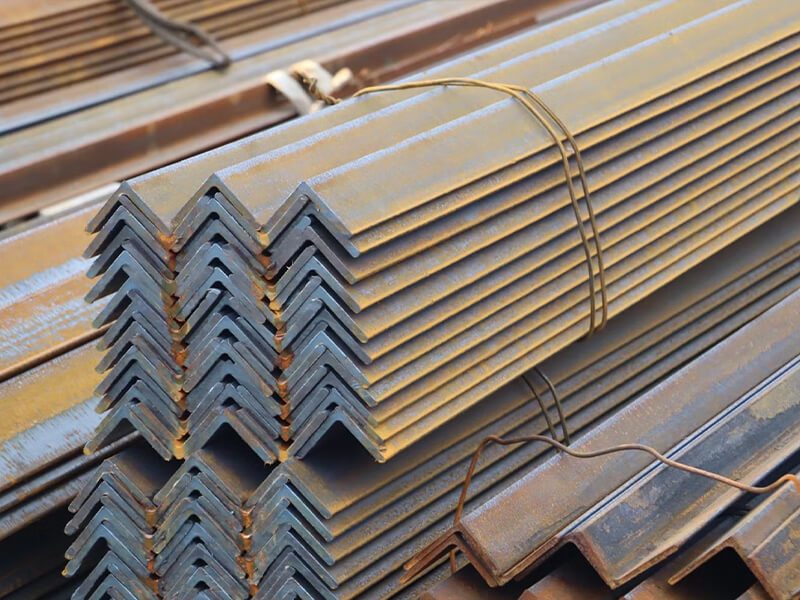
Steel angles are primarily made through a hot-rolling process. A heated steel billet is passed through a series of specially shaped rollers in a rolling mill. These rollers gradually form the billet into the long, L-shaped cross-section. The final product is then cooled, straightened, cut to length, and sometimes surface-treated.
[^1]](https://cnmarinesteel.com/wp-content/uploads/2026/01/Marine-angle-steel-54.webp)
From Billet to Finished Product: A Step-by-Step Look at Angle Production
Knowing the process is power. It helps you understand what can go wrong and what separates a high-quality marine angle from a poor one.
Step 1: The Starting Material – The Billet
The process begins with a steel billet. This is a long, square-section bar of steel that has been continuously cast. Its chemical composition is precisely controlled to meet the required grade (e.g., S355). For marine grades, the steel is "cleaner," meaning it has lower levels of impurities like sulfur and phosphorus, which can weaken the steel.
Step 2: Heating and Rough Rolling
The billet is heated in a furnace to a temperature where the steel becomes plastic (over 1100°C). It is then passed through a series of roughing stands. These stands begin to reduce the cross-sectional area and elongate the steel. At this stage, it looks nothing like an angle.
Step 3: Shape Rolling – The Heart of the Process
The hot, elongated steel enters the angle rolling stands. This is where specialized grooved rollers do the shaping. One set of rollers starts forming the 90-degree corner. Subsequent stands gradually bend and extend the two legs to the required dimensions. The precision of these rollers and the mill’s control over temperature and speed are critical. Worn rollers can produce angles with uneven legs, incorrect thickness, or a rounded instead of sharp corner.
Step 4: Cooling, Straightening, and Cutting
After the final shape is achieved, the long, hot angle moves along a cooling bed. As it cools, it can warp or bend. A key quality step is straightening. The cooled angle passes through a series of rollers that apply pressure to remove any bow or twist. A poorly straightened angle will be a nightmare to fit in a shipyard. Finally, the continuous length is cut by a flying saw to the ordered lengths (e.g., 6 meters, 12 meters).
Step 5: Inspection and Surface Treatment
The angles are inspected for dimensional accuracy2, straightness, and surface defects (like deep rolling marks or scratches). For marine use, they may be shot-blasted to remove mill scale and prepared for painting, or they might be coated with a temporary anti-rust oil.
Why the Production Source Matters for a Partnership:
This process explains why having a long-term cooperation with certified mills is so important. A reliable mill invests in maintaining its rollers and control systems. It has strict procedures for each step. This consistency is what a shipyard needs. If you change suppliers every order based on price, you risk getting angles from a different mill each time. Each mill’s process is slightly different, leading to variations in dimensions, straightness, and even internal metallurgy. These variations disrupt your production flow.
When we supply angles, we source from partner mills we know and trust. We have visited their facilities. We know their quality control checks3. This allows us to give our shipyard partners a consistent product, batch after batch. This consistency is the foundation of a true long-term partnership. It turns the unknown variable of material supply into a known, reliable constant for your project planning.
Conclusion
A strong partnership is built on shared knowledge, consistent quality, and reliable service, not just the lowest price. Understanding your angle steel from specification to production is the first step.
-
Explore this resource to gain a comprehensive understanding of the hot rolling process, essential for quality angle steel production. ↩ ↩ ↩ ↩
-
Understand the significance of dimensional accuracy in steel manufacturing and its impact on the final product’s quality. ↩ ↩ ↩ ↩
-
Delve into the importance of quality control checks in ensuring consistent and reliable steel production. ↩ ↩ ↩ ↩
-
Explore the unique Toe-to-Toe configuration and its specific applications in construction for better design choices. ↩ ↩ ↩ ↩
-
Discover the importance of connection methods in double angle steel for structural integrity and safety. ↩ ↩ ↩
-
Learn how pillar supports enhance structural strength in shipbuilding, ensuring safety and durability. ↩ ↩ ↩
-
Learn about Mill Test Certificates and their role in verifying the quality and traceability of steel products. ↩