
You receive a big shipment of steel plates for a new ship. But how do you know they are good enough to use?
Shipyards start with a careful check of all documents and certificates. Then they measure dimensions, thickness, and flatness. After that, they run visual checks and non‑destructive tests to find any hidden flaws. Bad plates get tagged and sent back for replacement.
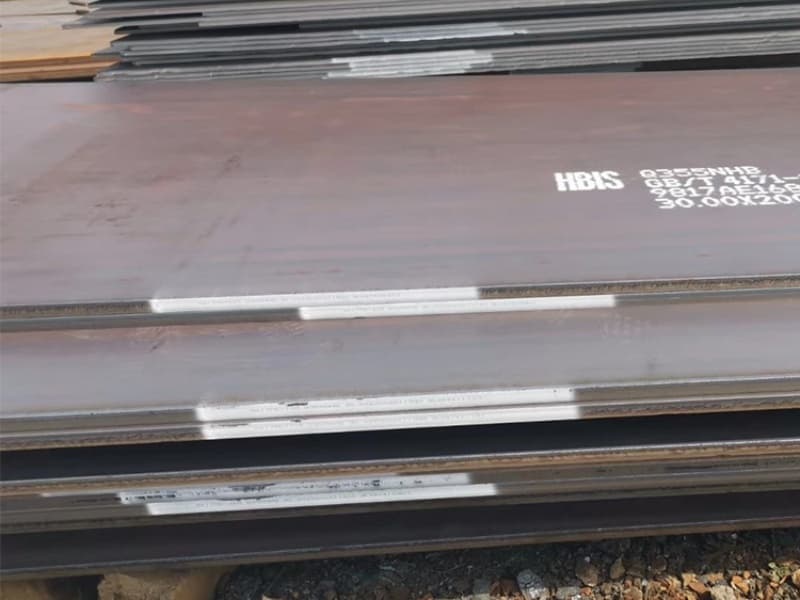
I work with shipyards and steel buyers every day at CN Marine Steel. One of our clients, Gulf Metal Solutions from Saudi Arabia, told me how important a smooth inspection process is for their projects. They used to have problems with delayed responses and inconsistent quality. Now they follow a clear inspection routine. In this post, I will walk you through exactly how shipyards check marine steel plates when they arrive. If you are a buyer or a project manager, this will help you avoid costly surprises.
What Documentation and Certificates Do Shipyards Check First Upon Plate Delivery?
No inspector will touch a single plate before seeing the papers. That is the first rule. So what do they look for?
Shipyards first check the mill test certificate (MTC) to confirm the steel grade, heat number, and mechanical properties. They also verify the packing list, bill of lading, and any class society stamp like ABS or Lloyd’s. The heat number on each plate must match the certificate.
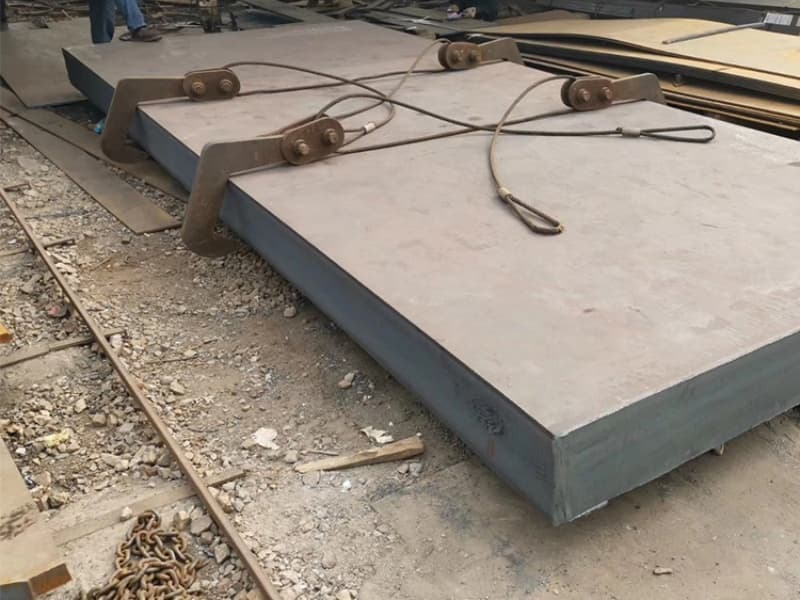
Why documents come before everything else
I have seen shipments arrive with beautiful looking plates. But without the right papers, the shipyard will not even unload them. The reason is simple. A ship’s hull must meet strict safety rules. Classification societies like DNV, ABS, or NK require full traceability. That means every piece of steel must be linked to a specific heat number and a test record.
The Mill Test Certificate (MTC) is the most important document. It tells you:
- Steel grade (like AH36, DH36, or mild steel)
- Heat number (a unique code from the steel mill)
- Chemical composition (carbon, manganese, sulfur, etc.)
- Mechanical properties (yield strength, tensile strength, elongation)
- Impact test results (especially for low‑temperature use)
Without a correct MTC, the steel is just scrap to a class surveyor.
Other key documents include the packing list (shows how many plates and their sizes), the bill of lading (proves ownership), and sometimes a certificate from a third party like SGS. For our shipments to Saudi Arabia or Vietnam, we often include SGS inspection reports. That gives the buyer extra confidence.
How shipyards match documents to physical plates
The process is very direct. An inspector takes the MTC and goes to the stack of plates. He looks at the stencil or stamp on each plate. That stamp has the heat number, grade, and size. He checks that stamp against the MTC. Every number must match. If one plate has a different heat number, it gets separated.
Some shipyards use a checklist like this:
| Document | What to verify | Common problem |
|---|---|---|
| Mill Test Certificate | Grade, heat number, mechanicals | Missing impact values |
| Packing list | Quantity, dimensions, weight | Count mismatch |
| Bill of lading | Port of origin, vessel name | Wrong port name |
| Class certificate | Approval stamp (ABS, DNV, etc.) | Expired or missing stamp |
I remember a case from a buyer in Pakistan. He received 200 plates of AH36. But the MTC showed only 150 plates. The other 50 were from a different heat. Without matching documents, his yard refused to use them. He had to wait three weeks for new papers. That delay cost him money. So always check documents first. It saves a lot of trouble.
How Do Inspectors Verify Plate Dimensions, Thickness, and Flatness Against Purchase Order Specifications?
A certificate can say the plate is 20 mm thick. But what if the steel mill made a mistake? You need to measure it yourself.
Inspectors use a steel tape for length and width, an ultrasonic thickness gauge for precise thickness readings, and a straightedge or feeler gauge for flatness. They take measurements at several points on each plate. Any measurement outside the tolerance range leads to rejection.
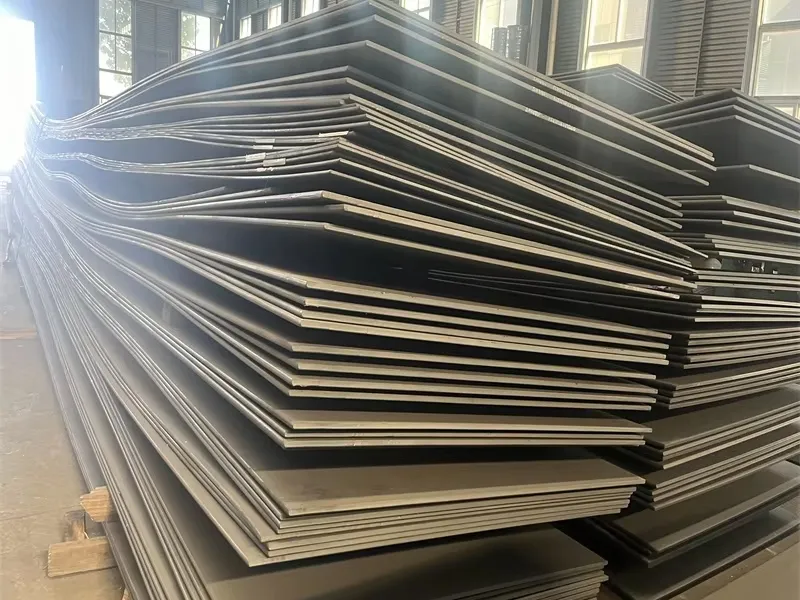
Breaking down each measurement step
Let me explain how shipyards do these checks. It is not complicated, but it must be done with care.
Length and width – The inspector uses a calibrated steel tape. He measures along the longest side and the shortest side. The purchase order will state a nominal size plus a tolerance. For marine plates, typical length tolerance is +3 mm / -0 mm. That means the plate can be up to 3 mm longer than ordered, but never shorter. Width tolerance is similar. I have seen plates that were 5 mm too short. Those plates cannot fit into the designed gap. They are rejected immediately.
Thickness – This is where things get serious. A caliper or a ruler is not enough. Steel plates have slight variations across their surface. So inspectors use an ultrasonic thickness gauge. This device sends a sound wave through the steel and measures how long it takes to bounce back. It gives a reading to 0.01 mm. The inspector takes at least three readings: near the center, near one edge, and near the opposite edge. For a 20 mm plate, the tolerance might be +0.5 mm / -0.2 mm. If any reading is below the minus tolerance, the plate is too thin. A plate that is too thin weakens the hull.
Flatness – Plates can warp during rolling or cooling. A warped plate is hard to weld and creates stress. The inspector places a long straightedge across the plate. He then uses a feeler gauge to measure the gap between the straightedge and the plate. For a typical marine plate, the allowed gap is no more than 5 mm per meter of length. If the gap is larger, the plate is out of flat. Some yards will accept a slightly warped plate if it can be pressed flat. But most will reject severe warping.
Here is a quick reference table for typical tolerances:
| Parameter | Measurement tool | Typical tolerance | Rejection condition |
|---|---|---|---|
| Length | Steel tape | +3 / -0 mm | Shorter than ordered |
| Width | Steel tape | +3 / -0 mm | Shorter than ordered |
| Thickness | Ultrasonic gauge | +0.5 / -0.2 mm | Below lower limit |
| Flatness | Straightedge + feeler | ≤5 mm per meter | Gap >5 mm per meter |
A real example from my work
We once shipped a batch of 25 mm plates to a yard in Mexico. The buyer’s inspector found one plate that measured 24.6 mm in one spot. That was 0.4 mm below the lower limit. He rejected that single plate. The rest passed. We replaced the rejected plate from our stock. The buyer was happy because we responded fast. This shows why measuring matters. A small thickness difference might seem minor. But on a ship, every millimeter counts for strength and weight calculations.
What Visual and Non‑Destructive Tests (NDT) Are Performed to Detect Surface or Internal Defects?
Even if the dimensions are right, a plate can have hidden problems. Rust, cracks, or laminations can sink a ship later.
Inspectors first do a visual check for rust, pitting, lamination, and edge cracks. Then they use non‑destructive tests like magnetic particle inspection (MPI) for surface cracks, ultrasonic testing (UT) for internal flaws, and sometimes dye penetrant for small surface openings.
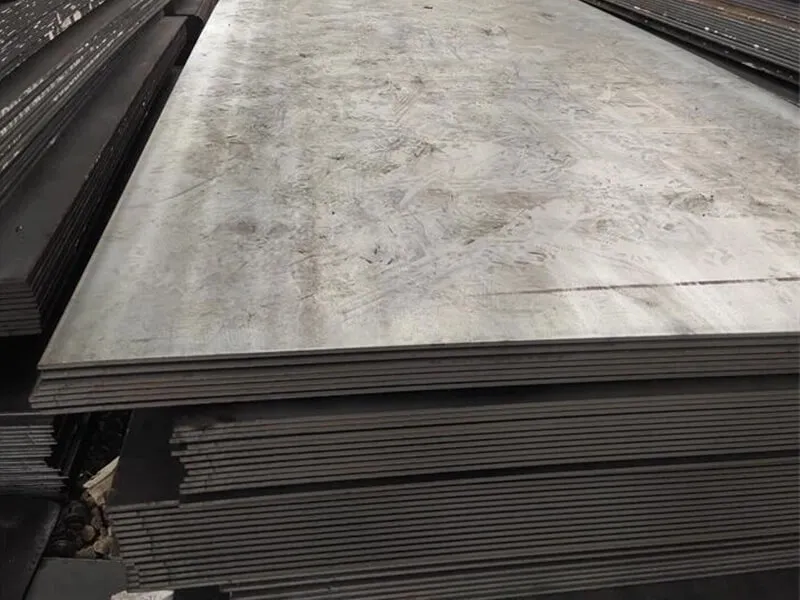
Visual inspection – the first line of defense
Before any fancy equipment, the inspector uses his eyes and a bright light. He looks at the entire plate surface, both sides if possible. He checks for:
- Red rust – Light surface rust is okay if it can be cleaned. Heavy pitting or scaling is not okay.
- Lamination – This looks like a blister or a line on the surface. It means the steel did not bond properly during rolling.
- Edge cracks – The plate edges can have small splits from shearing.
- Rolling marks – Deep grooves or overlaps from the mill rolls.
Any plate with deep pitting or visible lamination is rejected. Surface rust can be cleaned with a grinder or shot blasting. But if the rust has eaten into the steel, that plate fails.
Non‑destructive tests – finding what eyes cannot see
Magnetic particle inspection (MPI) – This test works on steel that is magnetic (most marine steel is). The inspector magnetizes the plate surface and then sprays fine iron particles. If there is a crack, the particles gather at the crack edges. MPI finds very small surface cracks that no eye can see. It is fast and reliable. Shipyards use MPI on high‑stress areas like the edges of plates that will be welded.
Ultrasonic testing (UT) – This is the same tool used for thickness measurement. But UT can also find internal flaws. The inspector moves the probe across the plate. The sound waves bounce back differently when they hit a void or a lamination inside the steel. The UT machine shows a signal on the screen. A trained operator can tell the size and depth of the flaw. For marine plates, any internal flaw larger than 5 mm is usually cause for rejection.
Dye penetrant test – This is a cheaper option. The inspector sprays a red dye on the plate, waits a few minutes, then removes the excess. A developer powder is applied. Any crack or pore will show a red line. This test is good for checking cut edges or drilled holes.
Here is how these tests compare:
| Test | What it finds | Best for | Speed |
|---|---|---|---|
| Visual | Surface rust, lamination, edge cracks | Full plate scan | Very fast |
| MPI | Tiny surface cracks | High‑stress areas | Fast |
| UT | Internal voids, laminations | Whole plate thickness | Moderate |
| Dye penetrant | Surface pores and cracks | Small areas, edges | Slow |
What happens when a defect is found
In my experience, most defects are caught by visual inspection. For example, a shipment we sent to Romania had two plates with edge cracks. The buyer sent photos. We agreed to replace them immediately. For internal flaws found by UT, the entire heat number may be put on hold. The supplier then must provide an explanation and a new certificate. This is why we always offer SGS inspection support. A third party gives an extra layer of trust.
How Are Rejected Plates Tagged, Documented, and Returned or Replaced by the Supplier?
So a plate fails inspection. What happens next? The process is clear and must be followed to avoid arguments.
Rejected plates are marked with a bright red tag or painted stripe. The inspector fills out a non‑conformance report (NCR) with the heat number, defect description, and photos. The supplier then either issues a credit note, sends a replacement, or arranges a return at their own cost.
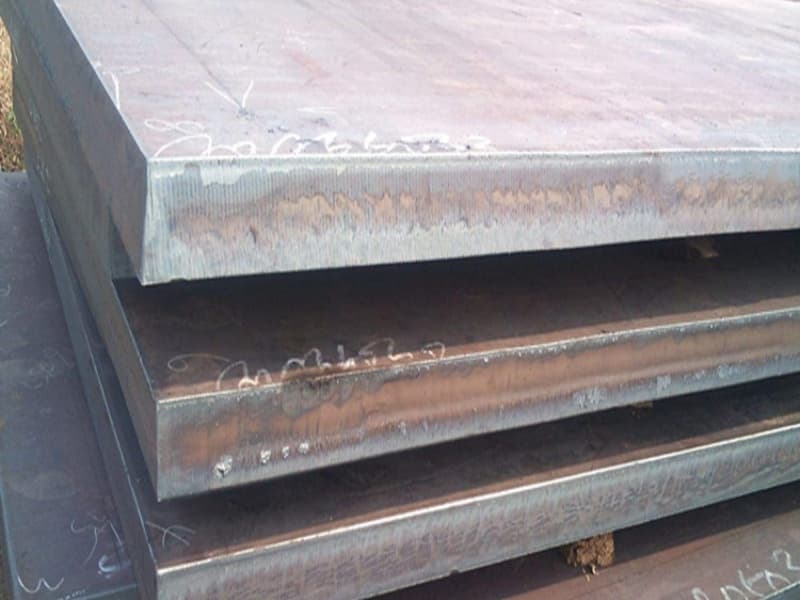
The tagging and documentation steps
First, the inspector physically marks the bad plate. No one should accidentally use it. The most common method is a red tag tied through a pre‑drilled hole or a strip of red spray paint across the plate. Some yards also use a sticker that says "REJECTED – DO NOT USE". This tag includes the date, the inspector’s initials, and the reason for rejection.
Next, the inspector fills out a Non‑Conformance Report (NCR) . This is a formal document. It contains:
- The purchase order number
- The heat number and plate ID
- The measurement or test that failed (e.g., thickness too low, lamination found)
- The exact values (e.g., 19.5 mm instead of 20 mm)
- Photos or test printouts
- The inspector’s signature
The NCR is sent to the buyer’s project manager and to the supplier (that is me or another steel company). The NCR creates a clear record. Without an NCR, a supplier can argue that the rejection was not justified.
How replacement or return works
Once the NCR is accepted, the supplier has three main choices:
1. Credit note – The supplier gives a refund for the rejected plates. The buyer keeps the scrap steel for other uses (like temporary walkways). This is fast and cheap for both sides.
2. Replacement shipment – The supplier sends new plates of the correct grade and size. The buyer can use the good plates from the original shipment. The replacement plates arrive later. This is common when the rejected plates are a small part of a large order.
3. Return for full refund – The supplier pays for return shipping. The buyer sends the bad plates back. This is rare for heavy steel plates because shipping costs are high. It only happens for very expensive plates or when the supplier wants to investigate a mill problem.
In my business, we prefer the credit note or replacement option. Returns are too slow. We also keep extra stock in our warehouse in Liaocheng. That allows us to send replacement plates within a few days. For example, a client in Thailand once rejected five plates due to pitting. We sent new plates by air freight (at our cost) to keep their project on schedule. That is how we build trust.
A tip for buyers from my experience
Always take photos of rejected plates before moving them. Keep the tags on until the supplier agrees to a solution. And make sure the NCR is sent within the claim period stated in your contract (usually 14 to 30 days). If you wait too long, the supplier may refuse responsibility. I have seen this happen with cheap suppliers. At CN Marine Steel, we accept claims within 30 days and respond within 24 hours. That is the standard our clients expect.
Conclusion
A good incoming inspection checks papers, measures size, tests for hidden flaws, and tags bad plates. This process keeps ships safe and suppliers honest.