
You picked the wrong angle steel once. Your welders complained. Your surveyor rejected it. Now your budget is bleeding.
Shipyards select marine angle steel by first checking dimensions against approved drawings, then verifying mill certificates meet class rules, next matching grade to hull location, and finally performing random tests on incoming batches.
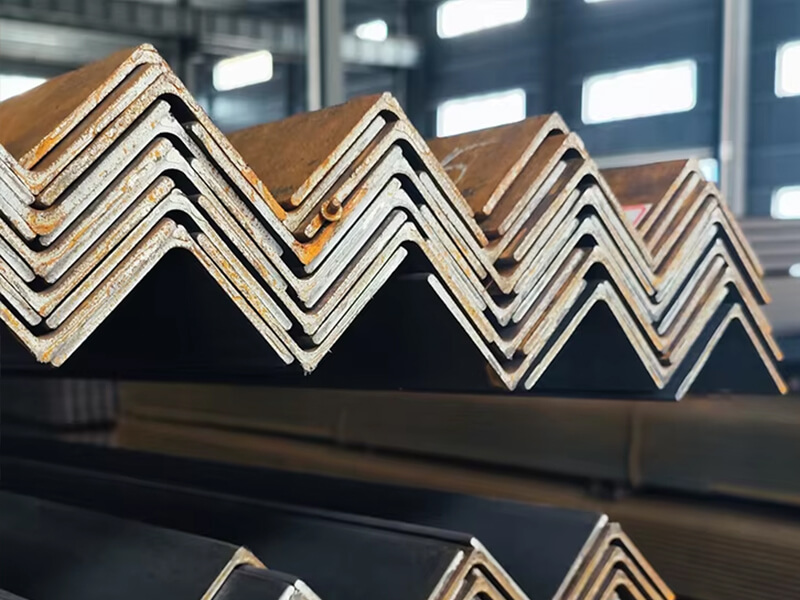
I have supplied marine angle steel to shipyards in Vietnam, Saudi Arabia, and the Philippines. Every yard has its own checklist. But the core steps are always the same. Let me walk you through exactly what they look for. I learned these steps from talking to quality managers and from my own clients like Gulf Metal Solutions. This knowledge will help you supply the right material the first time.
What Dimensions and Tolerances Do Shipyards Check First in Marine Angle Steel?
Do you know how much a 1mm deviation in leg length1 can cost? It can stop an entire assembly line.
Shipyards first check the leg length, leg thickness2, root radius, and straightness of marine angle steel3 against the tolerance limits4 set by standards like JIS G3192 or EN 10056, and they reject any piece that falls outside these limits.
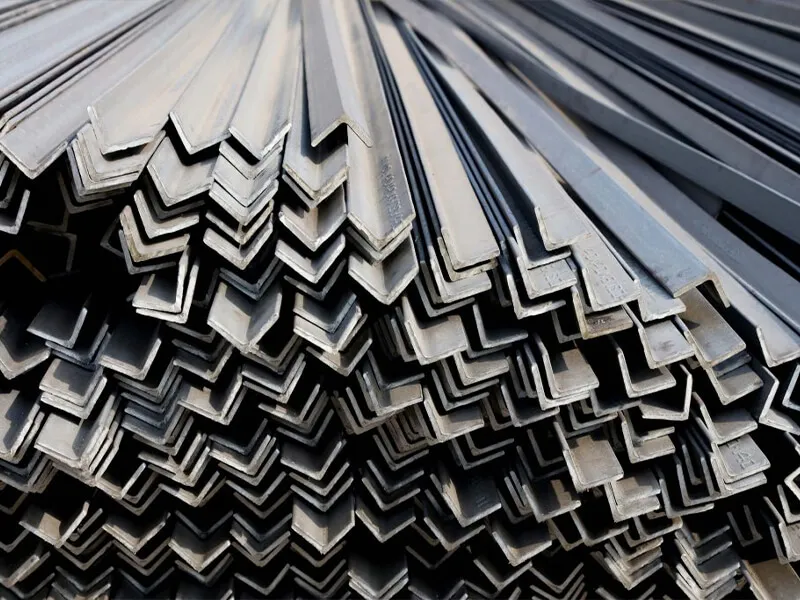
The three critical dimensions that matter most
I once sent a shipment of 150x90x9mm angle steel to a buyer in Malaysia. The mill certificate said everything was perfect. But the shipyard’s quality control5 found a problem. The actual leg length was 148mm on the long leg, not 150mm. That 2mm difference meant the angle did not fit into the prefabricated bracket. The yard had to grind every single bracket. That took three extra days.
So let me break down what shipyards measure first.
Leg length. This is the distance from the root (the inside corner) to the toe (the edge). For equal angles, both legs must be the same length. For unequal angles, the long leg and short leg must match the drawing. Standard tolerance is usually plus/minus 1.5mm for legs under 100mm, and plus/minus 2mm for legs over 100mm. Some classification societies allow plus/minus 1mm for critical areas.
Leg thickness. This is the thickness of the steel. A 9mm angle that measures 8.5mm loses strength. Shipyards measure thickness at three points along the leg. The tolerance is typically plus/minus 0.3mm to plus/minus 0.5mm depending on the standard. Anything thinner than the minimum gets rejected immediately.
Root radius. This is the curved inner corner where the two legs meet. Many buyers forget about it. But shipyards check it. A root radius6 that is too small creates stress concentration. A radius that is too large reduces the flat bearing surface. Standard equal angle has a root radius of about 1.5 to 2 times the thickness.
Here is a typical tolerance table I share with my clients:
| Dimension | Standard tolerance (JIS) | Typical shipyard acceptance range |
|---|---|---|
| Leg length (≤100mm) | ±1.5mm | ±1.0mm |
| Leg length (>100mm) | ±2.0mm | ±1.5mm |
| Leg thickness (≤10mm) | ±0.4mm | ±0.3mm |
| Leg thickness (>10mm) | ±0.5mm | ±0.4mm |
| Straightness (per meter) | ≤2mm | ≤1.5mm |
| Twist (per meter) | ≤2mm | ≤1mm |
Straightness and twist are just as important
A bent angle is useless. Shipyards lay each piece on a flat table. They run a straight edge along the length. If the gap under the straight edge exceeds 2mm per meter, the piece is rejected. For long pieces over 6 meters, the total bow cannot exceed 5mm.
Twist is even worse. Imagine holding one end of the angle and rotating the other end. That is twist. Shipyards check twist by putting the angle on two supports. They measure the height difference at the corners. A twist of more than 1mm per meter is often rejected.
I remember a shipment to Qatar. The mill rolled a batch of 100x75x6mm angles. They looked fine. But when the shipyard laid them out, 30% had a twist of 3mm per meter. The yard refused the whole batch. We had to send a replacement from another mill. The lesson? Always ask your supplier for straightness and twist7 test reports before shipping.
How shipyards measure on site
They do not trust your certificate alone. They use a steel ruler, a vernier caliper, a digital protractor, and a straight edge. Some large yards use laser measurement tools8. They randomly pick 5-10 pieces from each bundle. If one piece fails, they test 20 more. If more than 5% fail, the whole batch is rejected.
So as a supplier, you must control these dimensions at your mill. I work with mills in Liaocheng that use automatic laser gauges during rolling. They reject out-of-tolerance pieces before they even reach the cooling bed. That saves everyone time.
How Do Shipyards Verify That Marine Angle Steel Meets Classification Society Rules?
Do you think a mill certificate1 is enough? Shipyards do not. They have seen fake certificates. They want proof.
Shipyards verify class rules by checking that the angle steel comes from a mill approved by the classification society2 (like DNV, ABS, LR, BV, or NK), that the mill certificate includes a valid stamp and heat number, and that the material markings match the certificate for every single piece.
[^3] mill certificate at shipyard](https://cnmarinesteel.com/wp-content/uploads/2026/01/Marine-angle-steel-58.jpg)
The three layers of verification
A client in Romania once bought marine angle steel from a cheap trader. The trader gave him a mill certificate that looked real. The shipyard’s surveyor took one look and said, "This is fake. The mill number does not exist in DNV’s database." The client lost $45,000. He came to me after that. Now he follows my three-layer verification system4.
Layer 1 – Mill approval. Each classification society publishes a list of approved mills. For example, DNV has a "Rolling Mills Approved" list. ABS has its "Approved Steel Mills" list. A mill can only produce class-certified steel if it is on that list. Shipyards check this first. If your mill is not approved, your angle steel cannot be used for classed vessels. Period.
Layer 2 – Certificate authenticity. A real mill certificate has:
- The mill’s name and logo
- A unique certificate number
- The heat number of the steel batch
- The grade (e.g., AH36, D32)
- Mechanical test results (yield, tensile, elongation)
- Chemical composition (C, Mn, Si, P, S)
- The classification society’s stamp or approval code
Shipyards call the classification society to verify the certificate number. Or they check online databases. Some yards now use QR codes that link directly to the mill’s test records.
Layer 3 – Physical marking. Every piece of marine angle steel must be stamped or painted with:
- The mill’s name or logo
- The heat number
- The grade symbol
- The classification society mark (e.g., ABS, DNV, LR)
These markings must match the certificate. Shipyards randomly pick pieces and compare the markings. If a single piece has a different heat number, that piece is rejected. If many pieces have mismatches, the whole batch is suspect.
A real example from Saudi Arabia
Gulf Metal Solutions ordered marine angle steel from us for a newbuild project. They needed ABS grade A angles. We sourced from our partner mill in Shandong. The mill is ABS approved. We provided the mill certificate with heat number 2208-451. Before shipping, we took photos of the stamp markings on the steel. We sent these photos to Gulf Metal Solutions. Their surveyor checked the photos against the ABS online database. Everything matched. When the steel arrived in Dammam port, the yard’s inspector did a random check. He picked 10 pieces. All markings matched the certificate. The steel was accepted in one day.
That is how verification should work. Fast and painless.
What to do if a certificate is lost or damaged
It happens. A bundle gets wet. The paint marking fades. Or the certificate paper gets lost in transit. Shipyards will not accept the steel without proof. So here is my advice: Before shipping, take clear photos of the markings on each bundle. Save digital copies of all mill certificates. Send these files to the buyer by email. Then even if the paper is lost, the buyer has digital evidence. I have saved many shipments this way.
Which Grades of Marine Angle Steel Are Most Commonly Used for Different Hull Sections?
Do you use grade A1 for the whole ship? That is safe. But it is also expensive and heavy. Different hull sections need different grades.
The most common marine angle steel grades2 for newbuild projects are grade A for non-critical areas like superstructure, grade B or D for midship sections, and grade AH363 or DH36 for high-stress areas like the bottom and sheer strake, with each grade offering a specific balance of strength and toughness.
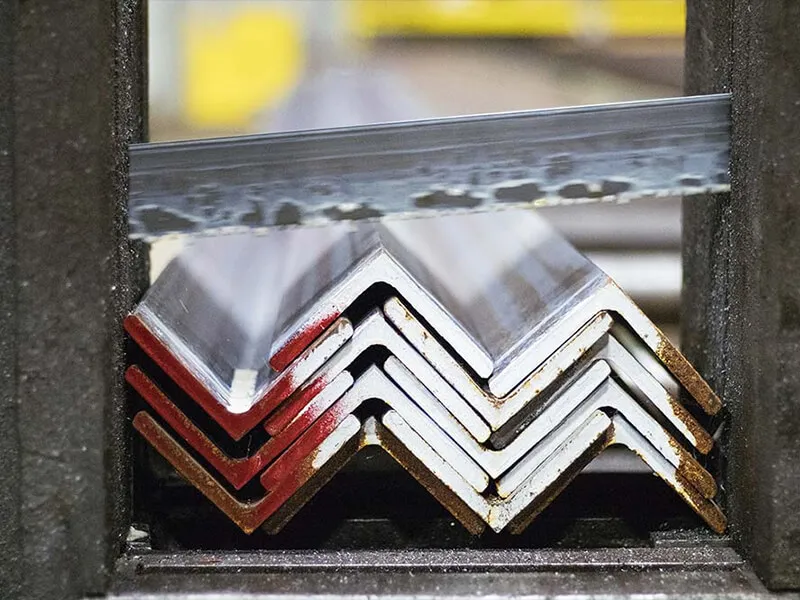
Matching grade to location saves weight and cost
I worked with a shipyard in Thailand building a 5,000 DWT cargo vessel. The designer originally specified grade A for everything. I asked him to review. We found that the bottom longitudinal angles could use AH36. That allowed us to reduce the thickness from 10mm to 8mm. The vessel became 12 tons lighter. Fuel efficiency improved by 1.5%. The client was happy.
So let me show you the typical grade selection by hull section.
Superstructure and deckhouses. These areas are above the waterline. They experience lower stress. Grade A is common here. Grade A has a minimum yield strength4 of 235 MPa. It works well for temperatures above 0°C. For vessels operating in cold regions, grade B or D may be required.
Midship side shells and longitudinal bulkheads. These areas face bending stress. Grade D or E is common for large vessels. For smaller vessels, grade B works. Grade D has better toughness at 0°C. Grade E works down to -40°C.
Bottom shell and bottom longitudinal. These areas face the highest stress. They also face impact from grounding. Grade AH36 (yield 355 MPa) or DH36 is typical. Using higher strength steel here allows thinner plates and angles. That reduces weight.
Sheer strake (the top row of side shell plates). This area connects the side shell to the deck. It sees high stress. Grade D or DH36 is common.
Bilge area (the curved bottom corner). This area faces complex stress. Grade D or E is typical for large ships.
Here is a reference table for a typical ocean-going bulk carrier:
| Hull section | Typical grade | Yield strength (MPa) | Why this grade |
|---|---|---|---|
| Superstructure | A | 235 | Low stress, low cost |
| Upper side shell | B | 235 | Moderate stress, good weldability |
| Lower side shell | D | 235 | Better toughness for colder water |
| Bottom shell | AH36 | 355 | High strength, reduces thickness |
| Bottom longitudinals | AH36 | 355 | High fatigue resistance |
| Bilge | D or DH36 | 235 or 355 | Complex stress, needs toughness |
| Sheer strake | DH36 | 355 | High stress at deck connection |
| Transverse bulkheads | A or B | 235 | Vertical load only |
| Engine room foundation | AH36 | 355 | Vibration and high load |
What about impact toughness5?
This is where many buyers get confused. Grade A has no specified impact toughness. It is only tested for chemical and tensile properties. Grade B has impact testing at 0°C. Grade D at -20°C. Grade E at -40°C. For vessels that sail in cold climates6 (like the North Sea or Baltic Sea), you need grade D7 or E. For tropical routes, grade A or B is fine.
I had a client in the Philippines who ordered grade A for a vessel that later sailed to Japan in winter. The surveyor flagged it. The angle steel was too brittle for the cold waters. He had to replace all critical angles with grade D. That cost him double. So always ask: Where will this vessel sail?
How to choose between ordinary strength and high strength
Ordinary strength (grades A, B, D, E) has yield strength of 235 MPa. High strength (AH32, DH32, AH36, DH36) has 315-355 MPa. The rule is simple: Use high strength steel8 where the stress is high and the space is tight. For example, in the bottom longitudinals, using AH36 lets you use a smaller angle (like 120x80x8 instead of 150x90x10). That saves weight and cost. But high strength steel costs more per ton. So you have to do the math.
From my experience, for vessels over 10,000 DWT, using AH36 for the bottom and sheer strake saves 5-8% of the total steel weight. The extra cost per ton is offset by the lower tonnage. So net cost is often neutral or slightly lower.
How Do Shipyards Test Incoming Marine Angle Steel for Quality and Consistency?
You trust the mill certificate. The shipyard does not. They will cut your steel and test it themselves. Are you ready for that?
Shipyards test incoming marine angle steel1 by taking random samples from each heat number, sending them to an independent lab for chemical analysis2 and mechanical testing (tensile and bend), and also performing visual inspection3 for surface defects like laminations, cracks, or excessive rust.
[^4]ing](https://cnmarinesteel.com/wp-content/uploads/2026/01/Marine-angle-steel-44.jpg)
The four tests that catch bad steel
I once supplied marine angle steel to a yard in Pakistan. The mill certificate looked perfect. But the yard did their own test. The yield strength came back at 220 MPa, not 235 MPa. The mill had accidentally mixed some off-grade billets. We had to replace 40 tons. That was a costly lesson. Now I encourage all my clients to do incoming testing5. It protects everyone.
Test 1 – Chemical analysis. The lab cuts a small piece from the angle. They grind it to a fine powder. Then they use a spectrometer to measure carbon (max 0.21% for grade A), manganese (0.6-1.2%), silicon (0.15-0.35%), phosphorus (max 0.035%), and sulfur (max 0.035%). If the carbon is too high, the steel becomes hard to weld. If manganese is too low, the strength drops.
Test 2 – Tensile test. The lab machines a standard round or flat sample from the angle. They pull it until it breaks. They measure yield strength, tensile strength, and elongation. For grade A, yield must be at least 235 MPa, tensile 400-520 MPa, and elongation 22% minimum. If the sample breaks below these numbers, the whole heat number is rejected.
Test 3 – Bend test. The lab bends a sample 180 degrees around a mandrel. The mandrel diameter is typically 2 to 3 times the thickness. The sample must not show cracks on the outside of the bend. This test checks ductility. If the steel cracks, it is too brittle.
Test 4 – Visual and ultrasonic inspection. Shipyard workers look for surface defects. Laminations (layers inside the steel) show up as lines on the surface. Cracks appear as fine lines. Excessive pitting rust is also rejected. For critical areas, the yard uses ultrasonic testing6 to check for internal voids or delaminations.
Here is a typical incoming test frequency I see in medium-sized shipyards:
| Test type | Sample frequency | Who performs it | Typical pass rate |
|---|---|---|---|
| Visual inspection | 100% of pieces | Yard QC | 98% |
| Dimensional check | 5-10% of pieces per heat | Yard QC | 95% |
| Chemical analysis | 1 sample per heat number | Third-party lab | 99% |
| Tensile test | 1-2 samples per heat number | Third-party lab | 98% |
| Bend test | 1 sample per heat number | Third-party lab | 99% |
| Ultrasonic test | Only for critical areas | Certified NDT technician | 99% |
What happens when a test fails?
The shipyard follows a standard procedure. First, they take two more samples from the same heat number. They test those. If both pass, the heat is accepted. If one fails, they take four more samples. If any of those fail, the entire heat number is rejected. The rejected steel must be removed from the yard. The supplier pays for replacement plus shipping.
I have been through this twice. Both times, the mill admitted fault and sent new steel at no charge. But the delay cost my client time. So now I do pre-shipment testing. Before any marine angle steel leaves our warehouse in Shandong, I hire SGS to take samples and test them. I send the SGS report7 to the buyer. This builds trust. Gulf Metal Solutions now asks for SGS reports on every order.
How to reduce testing surprises
The best way is to work with mills that have their own internal labs. The mill I partner with in Liaocheng tests every heat number twice – once during rolling and once before shipping. They keep records for five years. When a shipyard wants to see test history, I can provide it within one hour. That is the kind of transparency that keeps buyers coming back.
Also, I advise my clients to agree on the testing method before signing the contract. Some yards use ISO standards. Others use ASTM or JIS. The test results can vary slightly between methods. So put it in writing: "Incoming inspection will follow ISO 6892 for tensile testing." That avoids arguments later.
Conclusion
Shipyards check dimensions, verify class rules, match grades to hull sections, and test incoming steel. Get these four steps right, and your supply will be trusted.
-
Explore this link to understand the significance and uses of marine angle steel in shipbuilding. ↩ ↩ ↩ ↩
-
Learn about the detailed process of chemical analysis and its importance in ensuring steel quality. ↩ ↩ ↩ ↩
-
Understand the methods and significance of visual inspection in identifying surface defects. ↩ ↩ ↩
-
Discover the critical role of tensile testing in assessing the strength and durability of materials. ↩ ↩ ↩
-
Learn why incoming testing is essential for maintaining high standards in steel supply. ↩ ↩ ↩
-
Explore the advanced techniques of ultrasonic testing for detecting internal flaws in steel. ↩ ↩ ↩
-
Discover how SGS reports enhance trust and transparency in the supply chain. ↩ ↩ ↩
-
High strength steel can save weight and cost; find out when to use it for optimal vessel performance. ↩ ↩