
You have ordered marine angle steel for a critical project. The material arrives. The Mill Test Certificates look perfect. But your class surveyor takes one look and says, "I need to verify this." Without independent verification, you are trusting the supplier’s word. Third-party inspection bridges that trust gap. It provides objective evidence that your steel meets specifications.
Third-party inspection supports marine angle steel compliance by providing independent verification at key stages. An inspector from an accredited organization (like SGS, Bureau Veritas, or Lloyd’s Register) visits the mill or warehouse, inspects the material, witnesses tests, and verifies documentation. They issue a report confirming that the steel meets the specified grade, dimensions, and certification requirements. This gives buyers and class societies confidence that the material is compliant.
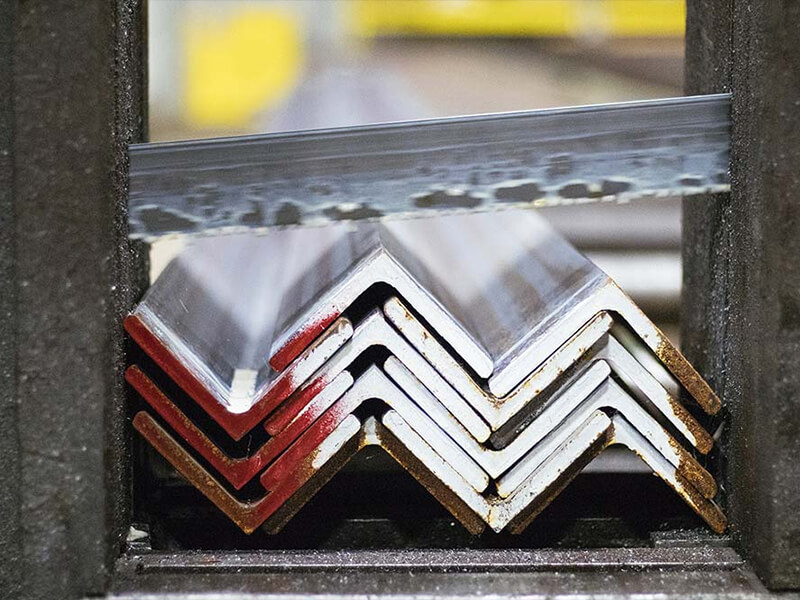
Third-party inspection is not just about catching defects. It is about preventing problems before they reach your yard. To understand how it works, we must understand the product itself. Let’s start with the basics.
What is angle steel1?
You are explaining to a new inspector what they will be checking. They need to know the product. Angle steel is simple in shape but complex in its requirements. A clear definition is the starting point for any inspection.
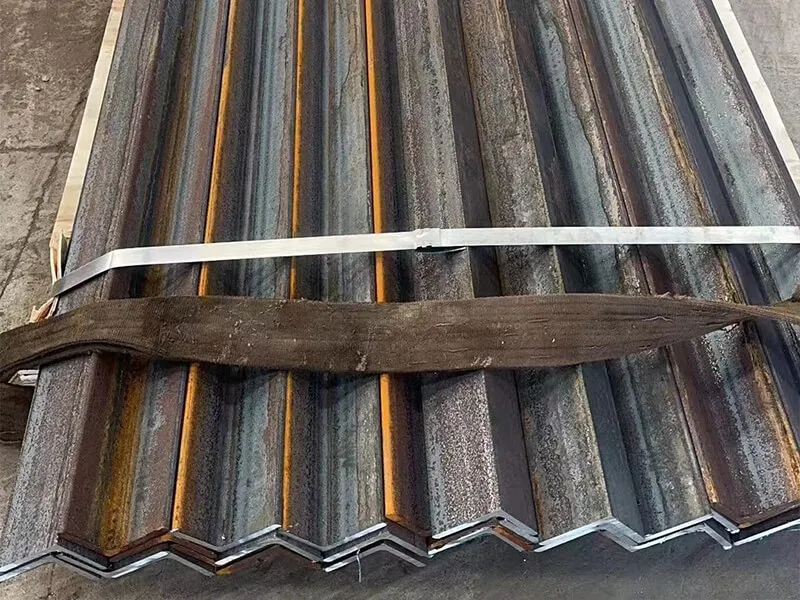
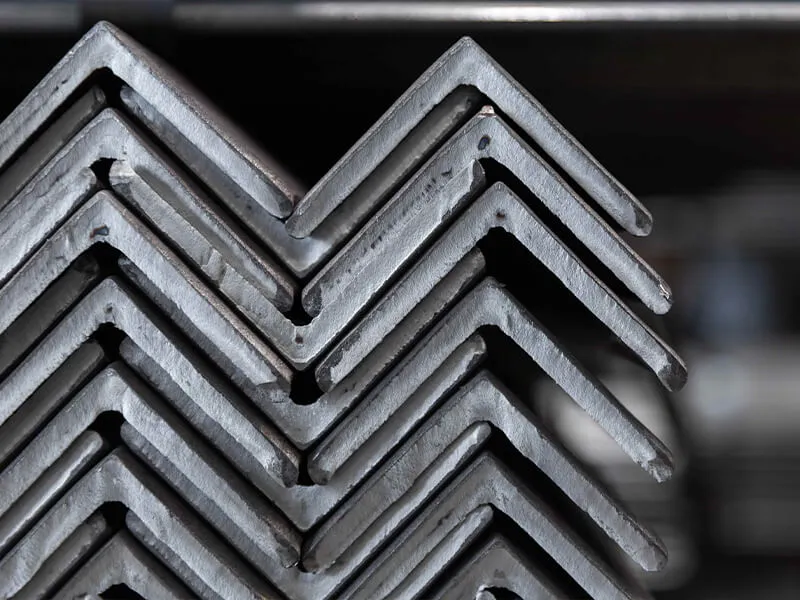
Angle steel, also known as L-shaped section steel, is a hot-rolled steel profile with two legs meeting at a 90-degree angle. It is defined by its leg lengths (equal or unequal) and its thickness. For marine use2, it must meet specific grade requirements (e.g., AH36, DH36) and be certified by a classification society (ABS, LR, DNV). The inspector’s job is to verify that the physical material and its documentation match the ordered specification.
What Third-Party Inspection Verifies
An inspector checks multiple aspects of the product.
| 1. Dimensional Verification. | Feature | What Inspector Checks | Tolerance (Example) |
|---|---|---|---|
| Leg Length (A, B) | Measure with calipers | ± 2mm for legs up to 100mm | |
| Thickness (t) | Measure at multiple points | ± 0.5mm for thickness up to 10mm | |
| Included Angle | Check with protractor or square | 90° ± 2° | |
| Straightness | Visual and straightedge | 0.4% of length | |
| Length | Measure total length | As per order, +50mm/-0mm typical |
2. Visual Inspection.
- Surface Defects: Cracks, laminations, deep scratches, or excessive scale.
- End Condition: Clean cuts, no damaging shear burrs.
- Markings: Each piece should be marked with grade, heat number, and manufacturer’s ID.
3. Documentation Verification.
- Mill Test Certificate3: Does it match the material? Heat numbers, grade, and test results.
- Traceability: Can the inspector trace the physical piece back to the certificate?
4. Sampling for Testing.
If required, the inspector may select samples for independent testing (chemical analysis, tensile tests, impact tests) to verify the mill’s results.
My Insight from the Field
A client in Saudi Arabia (Gulf Metal Solutions) specifically requested SGS inspection on their first order with us. The inspector spent two days at the mill, checking dimensions, verifying markings, and reviewing certificates. He found one small issue: a bundle of angles had a missing heat number stamp on one piece. We corrected it before shipment. The client received the material with confidence. That first order built trust that has lasted for years. This is the value of third-party inspection4.
What’s the weight of a 40x40x5 steel angle?
You are planning shipping. You need to know the total weight. The inspector will also check weight as part of verification. The theoretical weight1 is a baseline. The actual weight, measured by the inspector, confirms that the material is within tolerance.
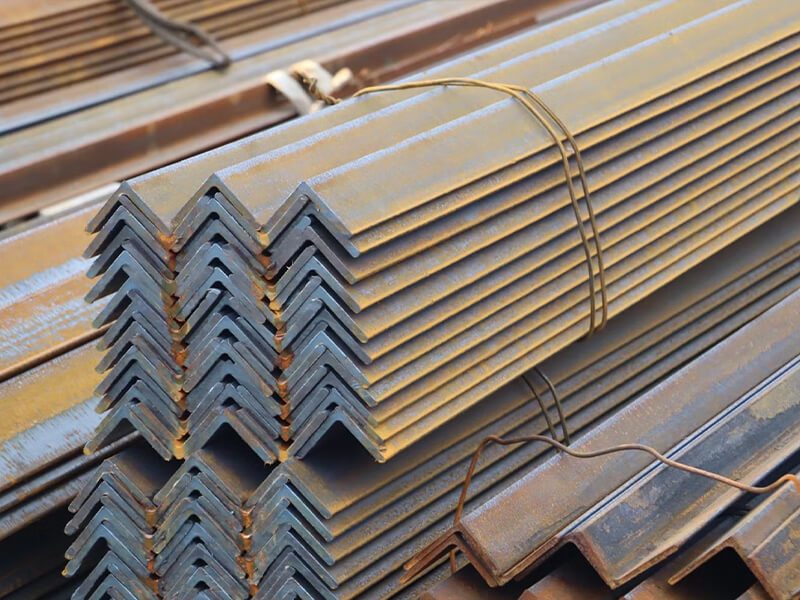
The theoretical weight1 of a 40x40x5mm steel angle (equal leg) is approximately 2.97 kilograms per meter. This is calculated using the formula: Weight (kg/m) = [(A+B)-t] t 0.00785, where A and B are the leg lengths (40mm) and t is the thickness (5mm). The actual weight may vary slightly due to manufacturing tolerances. An inspector may weigh samples to verify that the actual weight is within acceptable limits.
How Weight Verification Supports Compliance
Weight is a quick check that can reveal deeper issues.
1. The Calculation.
- Step 1: (40 + 40) – 5 = 75
- Step 2: 75 * 5 = 375
- Step 3: 375 * 0.00785 = 2.94375 kg/m ≈ 2.97 kg/m
| 2. What Weight Deviations Can Indicate. | Deviation | Possible Cause | Compliance Risk |
|---|---|---|---|
| Consistently underweight | Legs or thickness under tolerance | Section modulus reduced, structure weaker. | |
| Consistently overweight | Legs or thickness over tolerance | Extra weight, may affect vessel performance. | |
| Inconsistent weight within batch | Poor mill control, mixed sources | Quality inconsistency, potential mix-up of grades. |
3. Inspector’s Role.
- Sample Weighing: The inspector may weigh several random pieces and calculate the average weight per meter.
- Compare to Theoretical: They compare the actual to the theoretical. A significant deviation triggers further investigation.
- Check Against Tolerance: Standards allow a weight tolerance (e.g., ± 4%). The inspector verifies compliance.
4. Why This Matters.
If the steel is underweight, it may not meet the required section modulus2. The structure could be weaker than designed. Third-party inspection catches this before the steel is shipped, allowing correction at the source.
My Insight from the Field
An inspector once flagged a batch of 40x40x5 angles that were consistently 5% underweight. The mill had rolled them with a thinner leg to save material. The angles did not meet the specified section modulus2. The client rejected the batch. The mill had to replace them at their cost. Without the inspector, the client would have received weak angles and possibly built them into a vessel, with catastrophic consequences.
What are the 4 types of angles?
You are specifying angles for a project. The design calls for different types in different locations. An inspector needs to know which type to expect and how to inspect each. Understanding the types helps both buyer and inspector.
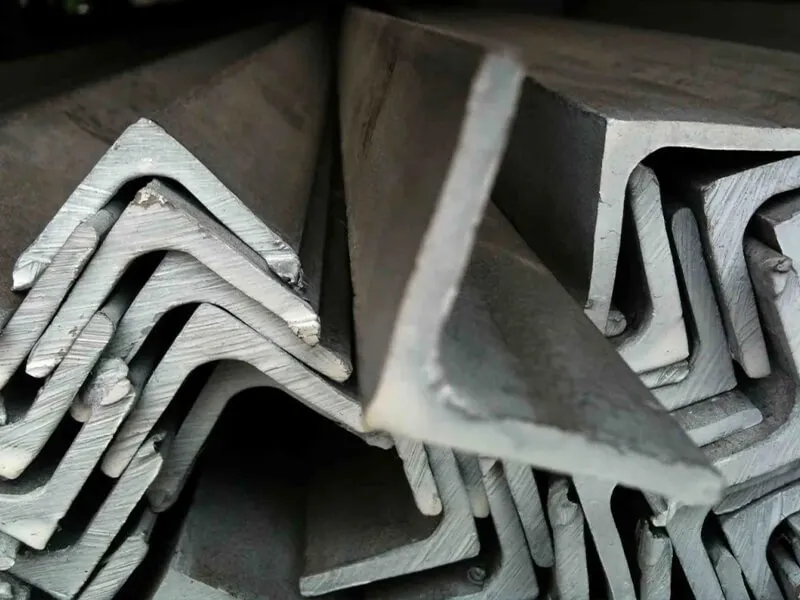
The four main types of steel angles are: 1) Equal Angles1, where both legs are the same length (e.g., 50x50mm). 2) Unequal Angles2, with legs of different lengths (e.g., 100x75mm). 3) Lipped Angles3, which have a short return lip on one leg for enhanced edge stiffness. 4) Bulb Angles4, which have a rounded bulb at the end of one leg for extra strength. For marine use, equal and unequal angles are most common. Lipped and bulb angles are specialized.
How Inspection Varies by Type
Each type has specific features to check.
| 1. Equal Angles1. | Feature | Inspection Focus |
|---|---|---|
| Leg Lengths | Both legs must be equal within tolerance. | |
| Symmetry | The angle should be symmetric. | |
| Common Use | General framing, brackets, supports. |
| 2. Unequal Angles2. | Feature | Inspection Focus |
|---|---|---|
| Leg Lengths | Verify which leg is longer. The order matters (e.g., 150×90 means the 150mm leg is specified first). | |
| Orientation | Ensure the longer leg is correctly identified. | |
| Common Use | Edge beams, specific bracket connections. |
| 3. Lipped Angles3. | Feature | Inspection Focus |
|---|---|---|
| Lip Dimensions | Check lip length and thickness against standard. | |
| Lip Integrity | Ensure lip is not damaged or bent. | |
| Common Use | Edge stiffening, light structural applications. |
| 4. Bulb Angles4. | Feature | Inspection Focus |
|---|---|---|
| Bulb Shape | Verify bulb dimensions against standard. | |
| Bulb Consistency | Bulb should be uniform along the length. | |
| Common Use | Specialized marine stiffening (less common than bulb flats). |
5. Inspector’s Checklist.
- Identify the Type: Confirm that the delivered type matches the order.
- Measure Key Features: For each type, measure the critical dimensions.
- Check Against Standard: Ensure dimensions are within the tolerances of the specified standard.
My Insight from the Field
A client in Vietnam ordered unequal angles, 150x90x12. The supplier delivered 90x150x12, with the legs reversed. The inspector caught it immediately. The angles were marked incorrectly. The supplier had to re-mark or replace them. Without the inspector, the client would have received angles with the long leg where the short leg should be, causing fit-up problems. This is a simple error that third-party inspection catches.
What are four types of steel?
Your inspector is reviewing Mill Test Certificates1. They see references to different steel types. Understanding the broader classification of steel helps them verify that the material is appropriate for the application.
Steel can be classified into four main types based on chemical composition: 1) Carbon Steel2, where carbon is the primary alloying element. 2) Alloy Steel3, which contains significant amounts of other elements like chromium, nickel, or molybdenum. 3) Stainless Steel4, which has at least 10.5% chromium for corrosion resistance. 4) Tool Steel5, which is hardened for cutting and drilling tools. Marine structural steel6 (angles, plates, bulb flats) is typically low-carbon or high-strength low-alloy (HSLA) steel, falling under the carbon or alloy steel categories.
How This Classification Helps Inspection
Knowing the steel type guides the inspector’s expectations.
| 1. Carbon Steel2. | Characteristics | Inspection Focus |
|---|---|---|
| Marine Grades | Grade A, B, D, E (normal strength). | |
| Properties | Strength from carbon content. Weldability decreases as carbon increases. | |
| Inspection | Verify grade, check carbon content on MTC. |
| 2. Alloy Steel3. | Characteristics | Inspection Focus |
|---|---|---|
| Marine Grades | AH36, DH36, EH36 (high strength). | |
| Properties | Strength from alloying elements (Mn, Nb, V). Better toughness and weldability. | |
| Inspection | Verify alloying elements, check carbon equivalent (CE). |
| 3. Stainless Steel4. | Characteristics | Inspection Focus |
|---|---|---|
| Marine Grades | 316, 316L (for corrosion resistance). | |
| Properties | Chromium for corrosion resistance. Molybdenum in 316 for chloride resistance. | |
| Inspection | Verify grade with PMI testing if required. Check for correct alloy. |
| 4. Tool Steel5. | Characteristics | Inspection Focus |
|---|---|---|
| Marine Use | None for structural applications. | |
| Properties | Hardened for tools. | |
| Inspection | If delivered, it is a clear error. |
5. Inspector’s Role.
- Verify Grade: Ensure the steel type (as indicated by the grade) matches the order.
- Check Chemistry: Review the MTC for carbon, manganese, and alloying elements. Ensure they are within spec.
- Identify Substitutions: If a supplier tries to substitute a lower-grade carbon steel for a high-strength alloy steel, the chemistry will reveal it.
My Insight from the Field
A client in Malaysia ordered AH36 angles. The MTC showed chemistry consistent with AH36, but the inspector noticed the impact test results were missing. AH36 requires impact testing. The supplier had provided steel that met the chemistry but had not been impact-tested. It was not truly AH36. The inspector flagged it, and the material was rejected. This is why third-party inspection is essential. The certificate looked right, but a trained eye spotted the missing requirement.
Conclusion
Third-party inspection supports marine angle steel compliance by providing independent verification of dimensions, quality, and documentation. It catches errors before they reach your yard, protects your project from non-conforming material, and builds trust between buyers and suppliers.
-
Learn about Mill Test Certificates and why they are essential for verifying material quality in inspections. ↩ ↩ ↩ ↩ ↩ ↩
-
Explore this link to understand the properties and uses of Carbon Steel, crucial for various applications. ↩ ↩ ↩ ↩ ↩ ↩ ↩
-
Learn about Alloy Steel’s advantages in construction, including strength and weldability, by visiting this resource. ↩ ↩ ↩ ↩ ↩
-
Discover why Stainless Steel is vital for marine applications, especially for its corrosion resistance. ↩ ↩ ↩ ↩ ↩
-
Find out how Tool Steel is utilized in manufacturing tools and its unique properties by checking this link. ↩ ↩
-
Understand the different types of Marine structural steel and their applications in the industry. ↩