
Your shipbuilding project’s budget is tight, and the steel quality must be perfect. One wrong purchase can cause delays, cost overruns, or worse, safety issues. Sourcing marine steel in bulk feels like navigating a minefield of suppliers, grades, and hidden costs. I’ve seen many projects stall because the procurement plan was an afterthought.
To buy marine steel plate in bulk successfully, you need a clear strategy beyond just finding the lowest price. Focus on four key areas: First, verify the supplier’s certifications and mill partnerships. Second, precisely define your required steel grades (like AH36, DH36) and specifications. Third, plan logistics and consider total landed cost, not just FOB price. Finally, insist on quality assurance processes like SGS inspection before shipment. Building a partnership with a reliable supplier is more valuable than chasing the cheapest offer.
Knowing the overall strategy is your starting point. However, the real challenge lies in the specific decisions you must make. You will face questions about material types, costs, and grades. The answers directly impact your project’s budget, timeline, and integrity. Let’s move from the general plan to the specific questions that every bulk buyer must answer correctly.
What is the cost of 1 kg of stainless steel?
Asking for the price per kilogram of stainless steel seems simple. But this question often leads to confusion and misquotes. You might get a price that looks good, only to discover it doesn’t include the right grade, finish, or thickness tolerance. A vague price is useless for serious budgeting.
There is no single price per kilogram for stainless steel. The cost varies dramatically based on the specific grade (304, 316, 2205), dimensions (thickness, width), surface finish (2B, No. 4, BA), and purchase volume. For marine applications, 316/L stainless steel typically costs 40-60% more than 304/L due to its molybdenum content. As a rough reference, in early 2024, the base price for common 304 stainless plate could range from $2.5 to $4.5 per kg, excluding processing and logistics. Always request a formal quotation based on your exact technical requirements.
To understand why the price varies so much, we need to look at what influences it. The "cost per kg" is the final result of many factors. Treating it as a simple commodity price is a mistake that leads to budget shortfalls.
The Layers of Cost in Stainless Steel
The price you pay is not just for raw metal. It is a combination of material value, processing cost, and market dynamics.
- Raw Material and Alloy Cost: This is the base cost of the iron ore, nickel, chromium, and other elements. Nickel prices are especially volatile and have a huge impact.
- Manufacturing and Processing Cost: This includes melting, casting, hot rolling, cold rolling, heat treatment, and cutting to size. More processing means higher cost.
- Grade and Specification Premium: Special grades (like 316, duplex) or tight tolerances command a higher price due to more complex production.
A Detailed Breakdown of Price Factors
The following table breaks down the key variables that change the "per kg" price for stainless steel plates used in marine projects.
| Cost Factor | How It Affects Price Per Kg | Example for Marine Context | Why It Matters for Your Project |
|---|---|---|---|
| Alloy Grade (304 vs 316 vs Duplex) | Higher alloy content increases cost. Molybdenum (in 316) and higher nickel/chromium (in duplex steels) are expensive. | 316/L plate will be significantly more expensive than 304/L. Duplex 2205 will be more expensive than 316. | Choosing the wrong grade to save money can lead to catastrophic corrosion failure in seawater. The cost of failure is far higher than the material savings. |
| Plate Dimensions (Thickness & Width) | Thicker and wider plates can cost more per kg due to more complex rolling processes and potentially lower production yield. | A 50mm thick shipbuilding plate has a different production cost than a 6mm thick plate, even per kilogram. | You must provide exact thickness and width requirements for an accurate quote. "Approximate" dimensions lead to price adjustments later. |
| Surface Finish and Condition | A standard 2B finish is cheaper than a polished No. 4 or 8K mirror finish. Hot-rolled plate (HR) is cheaper than cold-rolled (CR). | For internal structural parts, 2B or HR is fine. For visible architectural elements on a vessel, a better finish may be needed. | Specifying a higher finish than required wastes money. Not specifying enough finish can lead to extra post-processing costs. |
| Purchase Quantity and Mill Source | Large bulk orders (e.g., 50+ tons) get better per-kg rates. Direct mill pricing differs from trader pricing. | Ordering a full truckload or container for a ship hull project gets a better rate than small batches. | Consolidating your project’s steel needs into fewer, larger orders maximizes your buying power and simplifies logistics. |
| Market Timing & Raw Material Index | Stainless steel prices are tied to LME Nickel and Ferrochrome prices. Prices change weekly or even daily. | A quote valid for 3 days is common. A project planned months ahead faces price uncertainty. | Work with suppliers who are transparent about price validity. Consider locking in prices for confirmed projects to manage budget risk. |
In my daily work, when a client from Qatar or the Philippines asks for a "stainless steel price per kg," my first action is to ask for their technical drawing or specification sheet. This is not to avoid giving a number. It is to give them a useful and actionable number. For instance, the stainless steel used for a ship’s railing (likely 316, specific finish) has a completely different cost structure than the stainless used for a chemical tanker’s cargo tank lining (special grade, specific thickness tolerance). Providing a random price without context sets everyone up for failure. We build trust by providing detailed, specification-based quotations that clearly list grade, size, standard, and price validity.
What is the best steel for marine use?
Choosing the "best" steel for your marine project feels overwhelming. There are many grades and standards. But the best steel is not the most expensive one. It is the one that perfectly matches your specific application, balancing performance, cost, and availability.
The best steel for general marine structural use is normalized, high-strength, low-alloy (HSLA) steel, certified to shipbuilding classification society standards. Grades like AH36, DH36, and EH36 (per ABS, LR, DNV GL rules) offer an optimal balance of strength, toughness, weldability, and corrosion resistance for hulls, decks, and frames. For more corrosive environments or specific parts, stainless steel (316/L) or corten steel may be used. The "best" choice depends entirely on the component’s location (submerged, splash zone, interior) and function.
The term "marine use" covers many different applications. A single material cannot be the best for all of them. We need to think about the steel’s job and its working environment.
Defining "Best" for Different Marine Roles
We can break down "best" into three main criteria: structural performance, corrosion resistance, and fabricability.
- Structural Integrity Steels: These are the workhorses for the ship’s hull and main frame. Their primary job is to provide strength and toughness.
- Corrosion-Focused Steels: These are used in areas exposed to the harshest conditions or for specific components where longevity is critical.
- Special Application Steels: These have unique properties for specific functions, like low-temperature toughness or magnetic permeability.
A Comparison of Key Marine Steels
This table compares the most common types of steel used in shipbuilding and their ideal applications.
| Steel Type / Grade | Key Properties & Standards | Typical Marine Applications | Why It Might Be the "Best" Choice |
|---|---|---|---|
| AH/DH/EH Series Steel | High strength (36, 40, 46 yield strength), good low-temperature toughness, excellent weldability. Certified by ABS, DNV, LR, etc. Normalized delivery. | Hull plating, decks, bulkheads, frames, and other primary structures of cargo ships, tankers, and bulk carriers. | It is the industry standard for a reason. It offers the best all-around performance for most structural parts. It is readily available, cost-effective, and fabricators are very familiar with it. |
| Stainless Steel 316/L | Exceptional corrosion resistance due to molybdenum addition. Austenitic structure. Grades like 316L offer better weldability. | Chemical tanker linings, piping systems, pumps, valves, fasteners, exterior railings and fittings on luxury yachts or passenger ships. | It is the best choice where corrosion is the primary concern and budget allows. Its longevity in saltwater environments is superior to carbon steel. |
| Weathering Steel (Corten A/B) | Forms a stable, adherent rust layer that slows further corrosion. Good atmospheric corrosion resistance. | Fittings, decorative elements, or structures in the ship’s upper works that are exposed to weather but not constant seawater immersion. | It can be a good, low-maintenance option for above-deck non-critical structures, eliminating the need for painting in some cases. |
| High-Tensile Steel (e.g., 690 MPa) | Very high strength-to-weight ratio. Allows for thinner, lighter structures. | Used in advanced vessel design like naval ships, high-speed ferries, or where weight savings are crucial. | It is the best for maximizing payload or speed while maintaining structural safety. However, it is more expensive and requires specialized welding procedures. |
| Arctic Grade Steels (e.g., FH32, FH40) | Extraordinary impact toughness at very low temperatures (down to -60°C). | Ice-going vessels, LNG carrier containment systems, offshore structures in polar regions. | It is the only safe choice for operations in extreme cold environments where standard steel would become brittle. |
The experience with our client Gulf Metal Solutions is a perfect example. They needed Marine Steel Plate for fabricating components for offshore service vessels in the Gulf. The "best" steel for them was not the highest grade available. It was AH36 grade from a certified mill, with consistent quality and full traceability. Their pain point was inconsistent surface finish from previous suppliers, which caused extra work before painting. For them, the "best" steel was defined by consistent quality and reliable certification, not just the technical grade on paper. This is a crucial insight: the "best" steel is also the one that arrives on time, matches the certificate, and is easy for your team to work with.
Which steel is better, 304 or 316?
You’re specifying materials for a ship component. Your team debates between 304 and 316 stainless steel. The price difference is significant. Choosing 304 to save money seems tempting, but could it be a costly mistake later? This common dilemma requires a clear, practical understanding.
For marine environments, 316 stainless steel is almost always better than 304. The key difference is the addition of 2-3% Molybdenum (Mo) in 316. This element dramatically increases resistance to pitting and crevice corrosion, which are the main threats in chloride-rich seawater. While 304 is good for general purposes, 316 is the standard for marine applications. Using 304 in direct, prolonged contact with seawater risks severe localized corrosion and premature failure.
To make an informed choice, we must go beyond the simple "316 is better" statement. We need to understand why it’s better and in what specific situations 304 might still be acceptable. This is a decision based on chemistry, environment, and cost of failure.
The Chemical Battle: Chromium, Nickel, and Molybdenum
The performance difference starts at the atomic level. Both are austenitic stainless steels, but their alloy recipes are different.
- 304 Stainless Steel: The basic formula. It contains about 18% Chromium and 8% Nickel. It forms a good passive layer for many environments.
- 316 Stainless Steel: The upgraded formula. It has similar Chromium and Nickel, plus 2-3% Molybdenum. This addition is the game-changer for saltwater.
A Detailed Side-by-Side Analysis
Let’s compare these two grades across the factors that matter most in a shipbuilding or marine project context.
| Comparison Factor | AISI 304 Stainless Steel | AISI 316 Stainless Steel | Implication for Marine Use |
|---|---|---|---|
| Chemical Composition | 18% Cr, 8% Ni, <0.08% C. No intentional Molybdenum addition. | 16-18% Cr, 10-14% Ni, 2-3% Mo, <0.08% C. The Mo is critical. | The Molybdenum in 316 strengthens the passive oxide layer, especially against chlorides. It makes the steel more "passive" and stable. |
| Corrosion Resistance | Good resistance to many organic and inorganic chemicals. Resists oxidation up to ~870°C. | Superior resistance to chlorides, acidic conditions, and industrial solvents. More resistant to pitting/crevice corrosion. | In seawater, chlorides aggressively attack the passive layer. 316's Mo-rich layer resists this attack far better than 304's layer. |
| Mechanical Properties | Similar tensile and yield strength ranges. Both are non-magnetic when annealed. | Very similar to 304. Slightly higher high-temperature strength. | The choice is not about strength; it is purely about environmental durability. |
| Cost Difference | Lower cost. The base price benchmark. | Typically 30-60% more expensive than 304, depending on Mo and Ni market prices. | The cost premium is real and must be justified by the application's demands. |
| Typical Marine Applications | Interior components, non-critical fixtures, galley equipment, or areas with minimal salt spray exposure. | Standard for marine hardware: shafts, fittings, fasteners, railings, pumps, valves, components in splash zones or immersed. | Using 304 for underwater through-hull fittings would be a severe engineering error. For a dry interior cabinet, 304 is perfectly adequate. |
The rule I follow and advise my clients is simple: "When in doubt, or when in contact with seawater or salt spray, specify 316/L." The cost of a failed component—including downtime, replacement labor, and potential safety issues—dwarfs the initial material savings. For example, we supplied 316L stainless steel plates to a shipyard in Thailand for fabricating a set of custom davits (cranes for lifeboats). These parts live in the worst possible environment: constant salt spray, sun, and mechanical stress. Using 304 here would have been a decision regretted within a few years. As a bulk buyer, you must enforce this material discipline across your entire project specification to ensure uniform longevity and avoid being the weakest link.
How much does 1 kilogram of steel cost?
This is the most common and most dangerous question in bulk buying. A single price per kilogram for "steel" is meaningless. It's like asking the price of "a vehicle" without specifying if it's a bicycle or a truck. Relying on an average number can derail your entire project budget.
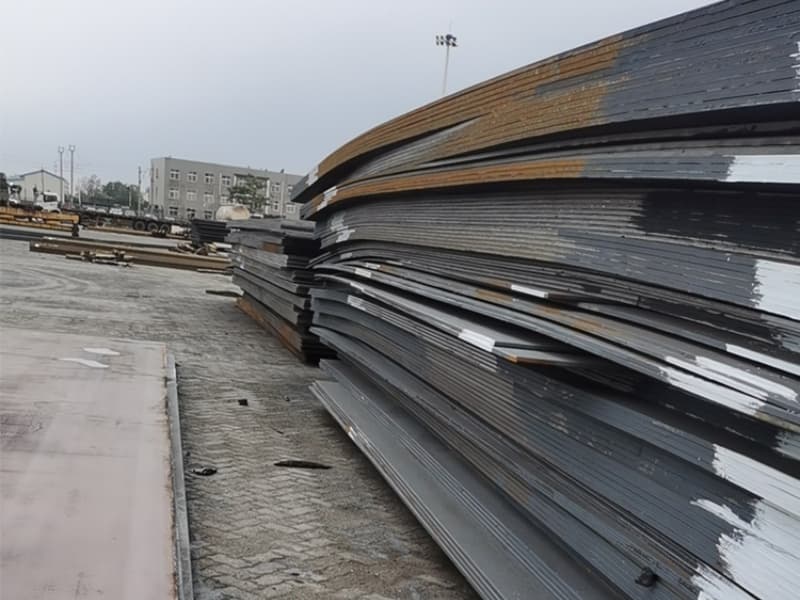
Providing one price for 1 kg of steel is impossible because "steel" encompasses thousands of grades and forms. The cost per kg1 varies by a factor of 10 or more. Regular carbon steel plate for construction might cost $0.7-$1.2/kg. High-strength marine-grade plate (like AH36) may cost $1.0-$1.8/kg. Specialized stainless steel (316) can be $3.0-$5.0/kg. The only way to get an accurate cost is to specify the exact grade, dimensions, quantity, and delivery terms.
%[cost of 1kg of steel](https://cnmarinesteel.com/wp-content/uploads/2025/10/Marine-steel-plate-28.jpg "Cost of 1kg of Steel")
To budget correctly, you must abandon the search for a simple per-kg number. Instead, you need to understand the cost drivers. The final price is a puzzle made of several pieces.
Deconstructing the "Per Kg" Price
The price per kilogram you pay is a total of several cost layers added together.
- Base Material Cost2: This is influenced by the iron ore/ scrap price and the cost of alloying elements (Nickel, Chromium, Molybdenum).
- Manufacturing and Processing Cost3: Turning raw material into a specific product (plate, angle, etc.) has a cost that varies by process complexity.
- Market and Supply Chain Costs4: This includes trader margins, logistics, tariffs, and market volatility premiums.
A Framework for Estimating Steel Costs
Use this table as a guide to understand the relative cost landscape. Remember, these are indicative ranges and can fluctuate.
| Steel Product Category | Example Grades / Types | Indicative Price Range (per kg) | Primary Cost Drivers & Notes |
|---|---|---|---|
| Carbon Steel Plate (General) | ASTM A36, SS400, Q235B. Non-certified, commodity grade. | $0.65 – $1.05 | Raw material (iron ore/scrap) price is the main driver. Thickness and width cause minor variations. Not suitable for primary ship structure. |
| Marine Carbon Steel Plate5 | AH36, DH36, EH36 (ABS, DNV certified). Normalized delivery. | $1.00 – $1.80 | The premium pays for certification, controlled chemistry, normalized heat treatment, guaranteed mechanical properties, and traceability. Essential for classification society approval. |
| Stainless Steel Plate 304 | AISI 304, 304L. Standard 2B finish. | $2.5 – $4.0 | Highly sensitive to Nickel (Ni) price on the LME. Also depends on Chromium cost and production volume. |
| Stainless Steel Plate 3166 | AISI 316, 316L. Standard 2B finish. | $3.5 – $5.5+ | Carries a significant premium over 304 due to Molybdenum (Mo) content. More complex to produce. The go-to for marine corrosion resistance. |
| Alloy Steel / Special Steels | Duplex 2205, High-Tensile 690, Arctic Grades. | $4.0 – $10.0+ | Cost is driven by high alloy content (Cr, Ni, Mo, N) and specialized, low-volume production processes. Used for extreme conditions. |
For a bulk buyer, the focus should shift from "price per kg" to "total landed cost per usable ton7." This includes the material cost, plus international shipping, insurance, port charges, customs duties, and any inland transportation to your yard. A supplier offering a slightly higher FOB price per kg might provide better packaging (like the waterproof, heavy-duty packing our client Gulf Metal Solutions praised), which reduces damage and waste. They might also handle door-to-port logistics smoothly, saving you hidden fees and administrative headaches. When you request a quote, ask for a breakdown that includes all these elements. A professional supplier, like us, will provide a detailed proforma invoice8 showing FOB price, sea freight estimate, and other charges. This transparency allows you to compare offers on an equal basis and make a truly rational, results-driven decision for your project.
Conclusion
Buying marine steel in bulk requires a partnership-focused strategy. Prioritize certified quality, precise specifications, and total cost transparency over the lowest headline price. This approach ensures your project stays on budget, on schedule, and, most importantly, built to last.
-
Understanding the factors affecting cost per kg can help you budget accurately for your steel purchases. ↩
-
Exploring Base Material Cost will give you insights into the primary drivers of steel pricing. ↩
-
Learn how manufacturing processes impact the final price of steel, which is crucial for budgeting. ↩
-
Understanding these costs can help you anticipate price fluctuations and manage your budget effectively. ↩
-
Discover the unique properties and pricing of Marine Carbon Steel Plate essential for marine applications. ↩
-
Learn about the premium features of Stainless Steel Plate 316 that justify its higher cost. ↩
-
Understanding this concept is vital for accurate budgeting and cost comparison in bulk steel buying. ↩
-
A comprehensive proforma invoice ensures transparency and helps you make informed purchasing decisions. ↩