
Engineers specify marine angle steel based on a key number: its section modulus. Using the wrong modulus can lead to a weak design or wasted material. Understanding how to find and use this value is essential for safe and efficient ship structures.
The section modulus (Z) of marine angle steel is calculated based on its geometric dimensions. For common equal-leg angles, you can use the formula *Z = (bt²)/6** (for bending about an axis parallel to a leg), or more accurately, consult engineering handbooks and steel tables that provide pre-calculated values for standard sizes like 100x100x10mm.
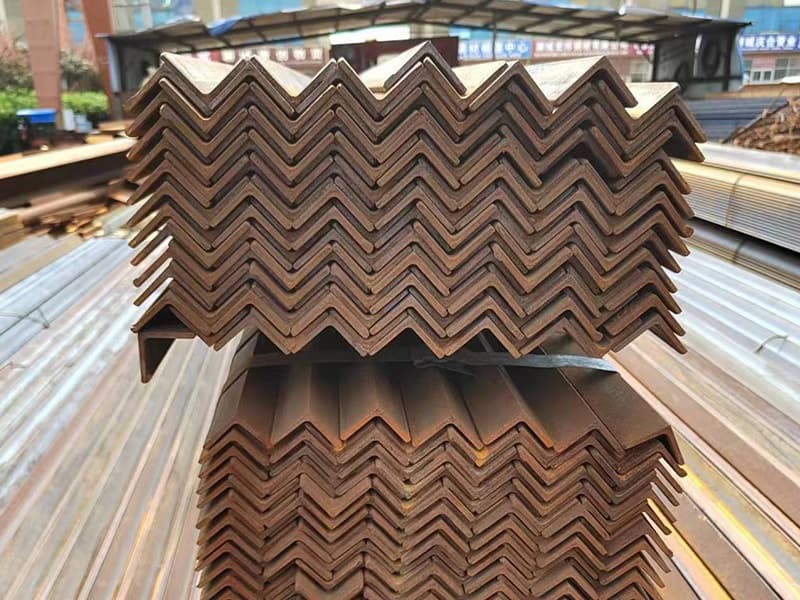
This number is not just for theory. It directly tells you how much bending stress the angle can handle. Let’s start from the beginning to master this critical calculation.
What is the modulus of elasticity of the steel angle?
Before we talk about shape (section modulus), we must talk about the material itself. The modulus of elasticity is a fundamental property of the steel, not the angle. It tells us how stiff the material is, regardless of whether it’s a plate, a beam, or an angle.
The modulus of elasticity (E) for steel angles is a material property, not a geometric one. For standard structural steels like S235, S355, or marine grades AH32, the value is approximately 200 GPa (Gigapascals) or 29,000 ksi (kilo-pounds per square inch). This value is consistent for all structural steel shapes made from the same material.

Understanding Material Stiffness: E-Modulus in Practice
The modulus of elasticity, often called Young’s Modulus1, is a measure of a material’s stiffness or resistance to elastic deformation. Think of it as the "spring constant" for the steel.
What the Value Means:
A value of 200 GPa means that for every unit of stress (force per area) you apply, the steel will strain (deform) by a predictable, proportional amount, as long as you stay within the elastic limit. The formula is: *Stress (σ) = E Strain (ε)**. This relationship is linear and is the foundation of structural analysis.
Why It’s Critical for Design:
- Deflection Calculations2: The E-modulus is crucial for calculating how much a beam or bracket will bend under load. A lower E would mean more deflection for the same load and shape.
- Buckling Analysis3: The stability of columns and compression members depends heavily on E. It determines the critical load at which a member will buckle.
- It’s a Constant (Mostly): For all practical purposes in structural steel design, we use E = 200 GPa. This simplifies calculations because whether you use a common angle or a high-strength marine grade, the stiffness is nearly the same. The difference between grades (like S235 vs. AH36) is primarily in yield strength (σy) and toughness, not the Elastic Modulus.
The Role of E in Bending Stress:
The famous bending stress formula ties everything together: σ = M / Z, where:
- σ = Bending stress
- M = Applied bending moment
- Z = Section Modulus4
Notice that E is not in this formula directly. However, E is vital in the process of deriving the section modulus (Z) and in calculating the bending moment (M) from loads and deflections. The section modulus Z itself is a purely geometric property derived from the shape’s area and moment of inertia (I).
| Property | Symbol | What it Describes | Units | Is it Material or Geometric? |
|---|---|---|---|---|
| Modulus of Elasticity5 | E | Stiffness of the steel material. How much it resists stretching/compressing. | GPa, ksi | Material Property |
| Yield Strength6 | σy | Stress at which steel begins to deform permanently. | MPa, psi | Material Property |
| Moment of Inertia | I | Resistance to bending based on shape and size. How the area is distributed. | mm⁴, in⁴ | Geometric Property |
| Section Modulus4 | Z = I / y | Directly relates bending moment to stress. The "efficiency" of the shape in bending. | mm³, in³ | Geometric Property |
For a buyer or fabricator, you don’t calculate E. You rely on the fact that certified marine steel from a reputable mill will have this standard, predictable value. When we supply AH36 angle steel, the mill certificate confirms the yield strength and chemical composition, underpinning the assumption that E = 200 GPa for all design purposes.
How to calculate zx for steel?
In structural drawings, you often see "Zx" and "Zy" on a beam detail. These are specific section modulus values for bending about a particular axis. For angles, this gets a bit more complex because they are not symmetric like an I-beam.
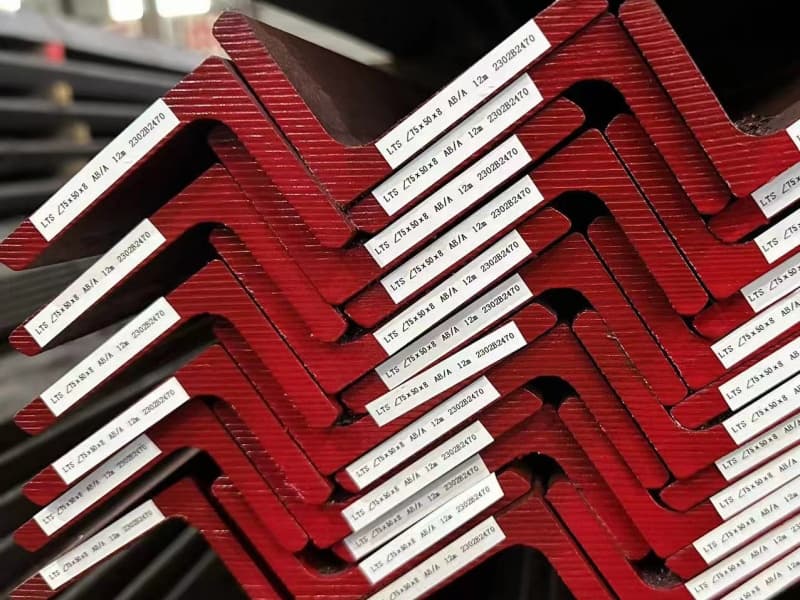
To calculate Zx (or any principal axis section modulus) for a steel angle, you first need its moment of inertia (Ix) and the distance from the neutral axis to the extreme fiber (y_max). The formula is Zx = Ix / y_max. For standard angles, engineers almost always use pre-calculated values from steel section tables or design software to save time and ensure accuracy.
A Step-by-Step Guide to the Calculation Process
While using tables is standard, understanding the manual calculation builds deep intuition. Let’s walk through the process for an equal-leg angle, L 100x100x10.
Step 1: Define the Geometry and Axes
We have an angle with legs b = 100 mm and thickness t = 10 mm. We need to define our axes. Typically:
- The x-axis and y-axis are parallel to the two legs, going through the centroid of the shape.
- The u-axis and v-axis are the principal axes. For an equal-leg angle, these are at 45 degrees to the legs. Bending about these principal axes is the most common scenario, as it avoids simultaneous twisting.
Step 2: Find the Centroid Location
For an equal-leg angle, the centroid (C) is located at the same distance from both legs. For our angle: x̄ = ȳ = (b – t/2) / 2. Plugging in the numbers: (100 – 10/2) / 2 = (100 – 5) / 2 = 47.5 mm from the back of each leg.
Step 3: Calculate the Moment of Inertia (Iu) about a Principal Axis
This is the complex part. The moment of inertia for an angle about a principal axis (say, the u-axis) is not simply the sum of two rectangles. We must use the parallel axis theorem. The formula from engineering handbooks is:
Iu = t [ (b⁴ + b²t² + t⁴/4) / (6(2b – t)) ]
For L 100x100x10, this calculation gives Iu ≈ 1,770,000 mm⁴ (You would find this exact value in a table).
Step 4: Determine the Extreme Fiber Distance (y_max)
For bending about the u-axis, the farthest point from the neutral axis (the u-axis itself) is the toe of the angle. The distance from the centroid to the toe (c) is calculated as: c = (b√2) – x̄. For our angle: (100 * 1.414) – 47.5 ≈ 141.4 – 47.5 = 93.9 mm.
Step 5: Compute the Section Modulus (Zu)
Now we apply the core formula: Z = I / y_max.
So, Zu = Iu / c = 1,770,000 mm⁴ / 93.9 mm ≈ 18,850 mm³.
This Zu value, often listed as Zmin in tables because it’s the smaller of the two principal moduli, is the one you use for conservative design. The other principal modulus (Zv) will be larger.
Why Everyone Uses Tables:
As you can see, the calculation is tedious. This is why standard references exist. Here is an example of what you find in a steel table:
| Angle Size (mm) | Thickness (mm) | Area (cm²) | Weight (kg/m) | Iu (cm⁴) | Centroid Dist. to Toe, c (cm) | Section Modulus, Zu (cm³) |
|---|---|---|---|---|---|---|
| L 100x100x10 | 10 | 19.2 | 15.1 | 177 | 9.39 | 18.85 |
| L 150x150x12 | 12 | 34.9 | 27.4 | 688 | 14.1 | 48.79 |
| L 200x200x16 | 16 | 61.8 | 48.5 | 2170 | 18.8 | 115.4 |
When a client in the shipbuilding industry needs to verify a design, they reference these standardized values. Our job as a supplier is to guarantee that the physical product—the L 100x100x10 angle—matches the dimensional tolerances assumed in these tables, so the engineer’s calculations remain valid.
What is the section modulus1 of steel?
The term "section modulus1 of steel" is a common simplification. Steel itself doesn’t have a section modulus1. The section modulus1 is a property of the shape you make from the steel. It is the key that unlocks how strong a beam, channel, or angle will be in bending.
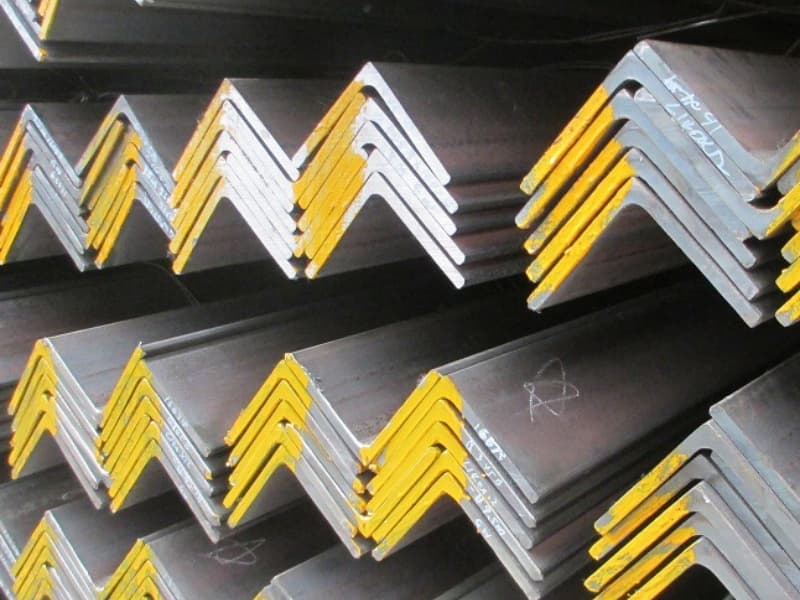
The section modulus1 (Z) of a steel shape is a geometric property that indicates its strength in bending. It is calculated as the moment of inertia2 (I) of the cross-section divided by the distance from the neutral axis to the outermost fiber (y_max). A higher Z means the shape can resist a larger bending moment3 for the same material.
The Bridge Between Shape and Strength
Think of bending a beam. The stress is not uniform. It is zero at the middle (neutral axis) and maximum at the top and bottom surfaces. The section modulus1 quantifies how effectively the cross-section’s area is distributed to resist these outer stresses.
Derivation from the Bending Stress Formula:
The maximum bending stress in a beam is given by: *σ_max = M y_max / I**
Where:
- M = Applied bending moment3
- y_max = Distance from neutral axis to farthest point
- I = Moment of inertia of the cross-section
Engineers rearrange this to: σ_max = M / (I / y_max)
They then define: Z = I / y_max
This gives the simple and powerful formula: σ_max = M / Z
Interpretation and Use:
This formula tells us two things:
- For a given bending moment3 M, the maximum stress σ_max is inversely proportional to Z. Double the section modulus1, and you halve the stress.
- To select a member, you calculate your design moment (M), know your allowable stress (σ_allowable, based on yield strength4), and solve for the required Z: Z_required ≥ M / σ_allowable. You then look in a steel table to find a shape with a Z value that meets or exceeds this requirement.
Example in Marine Context:
Imagine a bracket made from a 150x150x12 mm angle (Zu = 48.79 cm³ from our table) supporting a piece of deck equipment. The bracket is made of AH36 steel with a yield strength4 of 355 MPa. Using a safety factor, the allowable stress might be 250 MPa.
- If the calculated bending moment3 on the bracket is M = 10 kN·m = 10,000,000 N·mm.
- The required Z = M / σ_allowable = 10,000,000 / 250 = 40,000 mm³ = 40.0 cm³.
- Since the angle’s actual Zu (48.79 cm³) > required Z (40.0 cm³), the bracket is strong enough.
If the moment were higher, you would need to choose a larger angle size with a greater Z value. This direct relationship is why the section modulus1 is the primary value engineers look up when selecting steel members for bending applications. It condenses complex geometry into a single, usable number for strength checks.
What is the difference between ZX and SX section modulus?
You might see both "Z" and "S" used in different textbooks or software. This is not a typo. They represent two fundamentally different concepts: one for elastic design and one for plastic design. Using the wrong one can lead to an unsafe or inefficient design.
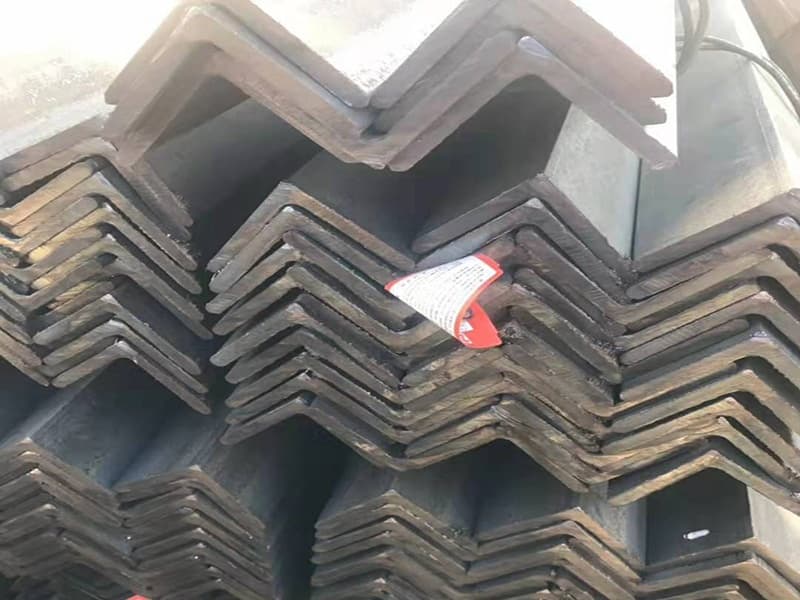
The key difference is that Z (or Zx) is the Elastic Section Modulus, used in elastic design where stress must stay below yield. S (or Sx) is the Plastic Section Modulus, used in plastic design where some yielding is allowed to utilize the full capacity of the cross-section. S is always greater than or equal to Z for a given shape.
Choosing the Right Tool for the Design Philosophy
This distinction is at the heart of modern structural steel codes. Different design philosophies allow engineers to use the material more efficiently under different rules.
Elastic Section Modulus (Z):
- Basis: Assumes a linear stress distribution from the neutral axis. The maximum stress (at the outermost fiber) must not exceed the yield strength.
- Use Case: This is the traditional, conservative approach. It is used in designs where permanent deformation is unacceptable, for fatigue-sensitive structures, or as a basis for deflection calculations. It’s common in machinery, precision frames, and is the starting point for all analysis.
- Calculation: Z = I / y_max, as we have discussed. It depends only on the geometry up to the point of first yield.
Plastic Section Modulus (S):
- Basis: Assumes the entire cross-section has yielded, creating a rectangular "stress block" of constant yield stress above and below the neutral axis. This allows the section to develop its full plastic moment capacity (Mp).
- Use Case: This is used in plastic design or limit state design (like in modern building codes). It recognizes that steel is ductile and can redistribute stress after initial yield, providing a hidden reserve of strength. It often allows for more economical designs.
- Calculation: S is found by taking moments of the cross-sectional area about the plastic neutral axis (which divides the area in half, not the moment of inertia). Its formula is shape-specific.
Comparing Z and S for an Angle:
For an equal-leg angle, the difference can be significant. The plastic neutral axis is not in the same location as the elastic neutral axis (centroid). Calculating S is complex, but its value is always listed in comprehensive steel tables.
| Angle Size | Elastic Modulus, Zu (cm³) | Plastic Modulus, Su (cm³) | Ratio (Su / Zu) | Implication |
|---|---|---|---|---|
| L 100x100x10 | 18.85 | ~23.6 | ~1.25 | The section has a 25% higher moment capacity if plastic design is permitted. |
| L 200x200x16 | 115.4 | ~145.0 | ~1.26 | The benefit ratio is similar, indicating consistent ductile behavior. |
Which One to Use for Marine Structures?
This is a critical question. The answer depends on the governing rules and the specific application.
- Primary Hull Girders: For the main longitudinal strength members of a ship, classification society rules are typically based on elastic design using the elastic section modulus (Z). This ensures no part of the primary structure yields under normal operational loads, maintaining watertight integrity and preventing fatigue cracks.
- Secondary Structures and Brackets: For smaller, localized supports, brackets, and foundations, engineers might employ limit state checks that utilize the plastic section modulus (S) to achieve a more efficient design, as some local yielding is acceptable.
As a supplier, we provide the material that meets the yield and toughness specifications (like AH36). The engineer decides whether to design elastically or plastically. Our value lies in delivering a product with consistent, certified properties so that whichever modulus (Z or S) the designer uses, their calculations translate into real-world safety and performance.
Conclusion
Calculating and applying the section modulus for marine angle steel is a fundamental engineering task. Mastering the difference between elastic (Z) and plastic (S) moduli allows for safe, efficient, and code-compliant ship structural design.
-
Understanding section modulus is crucial for engineers to ensure structural integrity and safety in design. ↩ ↩ ↩ ↩ ↩ ↩ ↩ ↩ ↩
-
Learning about moment of inertia is vital for understanding how shapes resist bending and twisting. ↩ ↩
-
Exploring bending moments helps grasp how forces affect structures, essential for safe engineering practices. ↩ ↩ ↩ ↩ ↩
-
Yield strength is key in material selection, ensuring structures can withstand applied loads without failure. ↩ ↩ ↩ ↩
-
Understanding the Modulus of Elasticity is crucial for structural design, ensuring materials perform as expected under load. ↩
-
Understanding yield strength helps in selecting materials that can withstand specific loads without permanent deformation. ↩