
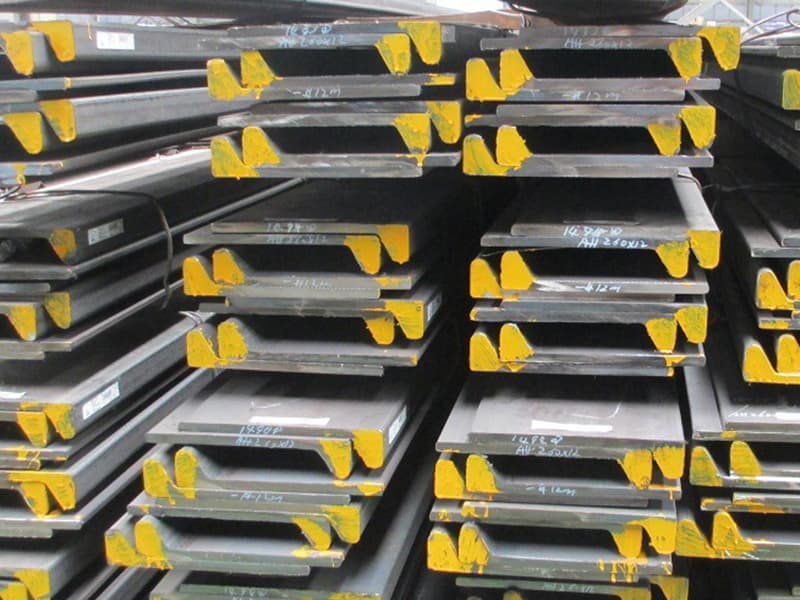
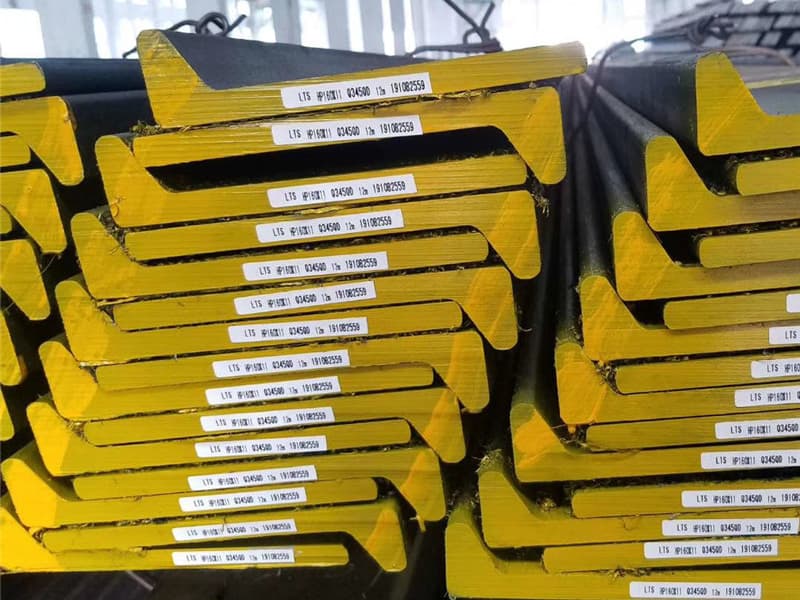
A shipyard in Saudi Arabia recently miscalculated bulb flat steel weight, causing transportation issues. Accurate weight calculation is crucial for project planning.
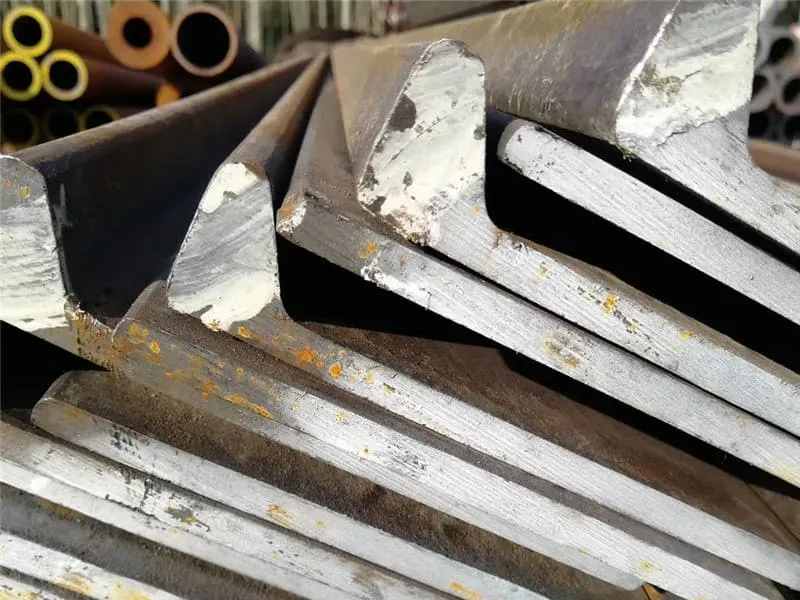
Bulb flat steel weight is calculated using the formula: Weight (kg) = (Web Height × Web Thickness + Bulb Area) × Length × 7.85. The bulb area is typically 20-30% of the web cross-section, with standard sizes following classification society specifications for accurate marine application calculations.
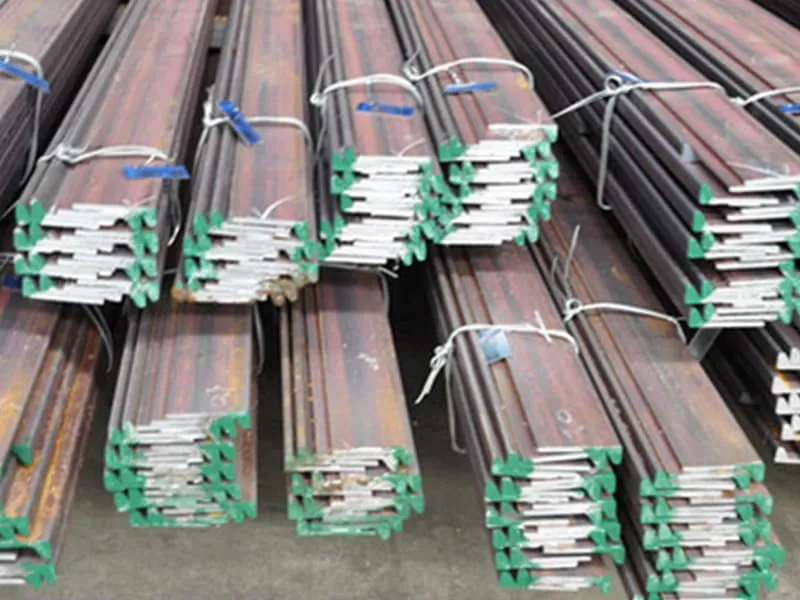
Proper weight calculation affects logistics, costing, and structural design. Let me explain the methods for accurate bulb flat steel weight determination.
How to calculate the weight of flat steel?
A contractor from Qatar needed to calculate flat steel weight for their shipbuilding project. The simple formula helped their material planning.
Flat steel weight1 is calculated using the formula: Weight (kg) = Length (m) × Width (m) × Thickness (mm) × 7.85. This calculation uses steel density2 of 7.85 g/cm³ and requires all measurements in compatible units, with the result representing theoretical weight3 before considering mill tolerances.
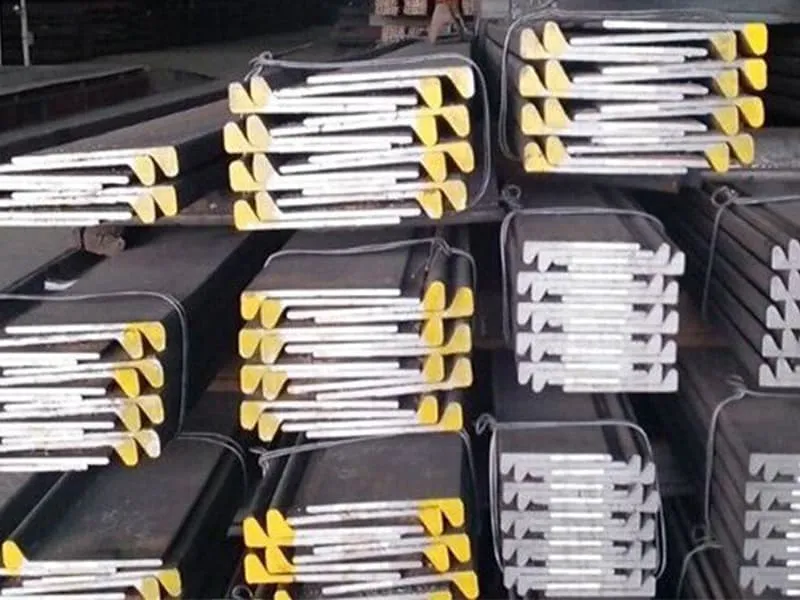
Comprehensive Flat Steel Weight Calculation
Calculating flat steel weight involves understanding the basic formula and its practical applications. The process seems simple but requires attention to measurement units4 and accuracy.
Basic Weight Formula Foundation
The fundamental formula for flat steel weight calculation is straightforward. Weight equals length times width times thickness times density. Steel density is consistently 7.85 grams per cubic centimeter. The formula requires metric units for compatibility. Length and width must be in meters. Thickness should be in millimeters. The result comes out in kilograms.
Measurement Unit Considerations
Proper unit conversion is essential for accuracy. Many errors occur from unit confusion. Some people mistakenly use centimeters instead of meters. Others might use inches without proper conversion. The formula only works with specific unit combinations. Understanding these requirements prevents calculation mistakes.
Practical Calculation Example
Consider a practical example for clarity. A flat steel plate measures 6 meters long. The width is 1.5 meters. Thickness is 12 millimeters. The calculation becomes: 6 × 1.5 × 12 × 7.85. This equals 847.8 kilograms. The example demonstrates the formula application. Real calculations follow the same pattern.
Tolerance and Actual Weight
Theoretical weight differs from actual weight. Mills produce steel within specific tolerances. Thickness may vary by ±0.3mm or more. The calculated weight represents the theoretical value. Actual weight may be slightly different. This difference affects shipping and costing.
Multiple Piece Calculations
Projects often require multiple pieces. Calculate single piece weight first. Multiply by the quantity needed. Add any cutting waste percentage. Include processing allowances if necessary. The total represents project requirement. This approach ensures adequate material ordering.
Software and Tool Applications
Modern tools simplify weight calculations. Spreadsheet programs automate the process. Specialized software includes material databases. Mobile apps provide quick calculations. These tools reduce human error. However, understanding the manual method remains important.
Flat Steel Weight Calculation Table
| Size (mm) | Weight per meter (kg/m) | 6m Length Weight (kg) | 12m Length Weight (kg) |
|---|---|---|---|
| 100×10 | 7.85 | 47.1 | 94.2 |
| 150×12 | 14.13 | 84.78 | 169.56 |
| 200×16 | 25.12 | 150.72 | 301.44 |
| 250×20 | 39.25 | 235.5 | 471.0 |
| 300×25 | 58.88 | 353.28 | 706.56 |
We provide weight calculation assistance to all clients. Projects in Vietnam and Philippines benefit from accurate material planning.
How to calculate the weight of a steel ball?
While steel balls differ from bulb flats, understanding various weight calculations helps comprehensive knowledge. The principles demonstrate different approaches.
Steel ball weight is calculated using the sphere volume formula1: Weight = (4/3 × π × r³) × density, where r is the radius in meters and density is 7850 kg/m³. This method differs from structural steel calculations but follows the same density principle for accurate results.
Steel Ball Weight Calculation Methodology
Steel ball weight calculation involves geometric principles different from structural steel. Understanding these differences demonstrates various weight calculation approaches.
Geometric Volume Calculation
Steel balls require spherical volume calculation. The sphere volume formula1 is four-thirds pi times radius cubed. This geometric approach differs from rectangular calculations. The radius must be in consistent units. Volume calculation precedes weight determination. The method applies to all spherical objects.
Density Application
Steel density remains constant at 7850 kg/m³. This value converts to 7.85 g/cm³. The density applies regardless of shape. Weight equals volume times density. The calculation requires consistent units. Metric units simplify the process.
Practical Calculation Example
Consider a steel ball with 100mm diameter. The radius is 50mm or 0.05 meters. Volume calculation: (4/3) × 3.1416 × (0.05)³. This equals 0.0005236 cubic meters. Multiply by density 7850 kg/m³2. The result is 4.11 kilograms. The example shows the complete process.
Measurement Considerations
Accurate measurement is crucial for balls. Diameter measurement must be precise. Radius is half the diameter. Units must be consistent throughout. Small measurement errors affect results significantly. Multiple measurements ensure accuracy.
Comparison with Structural Steel
Ball calculations differ from structural shapes. Structural steel uses cross-sectional area. Balls require volume integration. The mathematical approaches vary. However, both use the same density. Understanding both methods is valuable.
Application Context
Steel balls serve specific purposes. They appear in bearings and grinding media. Ball mills use them for material processing. Some valves contain steel balls. The weight calculation supports these applications. Proper sizing ensures correct function.
Steel Ball Weight Reference
| Diameter (mm) | Radius (m) | Volume (m³) | Weight (kg) |
|---|---|---|---|
| 50 | 0.025 | 0.00006545 | 0.514 |
| 100 | 0.05 | 0.0005236 | 4.11 |
| 150 | 0.075 | 0.001767 | 13.87 |
| 200 | 0.1 | 0.004189 | 32.88 |
| 250 | 0.125 | 0.008181 | 64.22 |
While we don’t supply steel balls, understanding various calculations helps comprehensive knowledge. The principles demonstrate mathematical consistency.
What is the formula for steel weight calculation?
A shipbuilder from Mexico needed a reliable weight calculation method. Understanding the fundamental formula improved their material management.
The universal steel weight calculation formula is: Weight = Volume × Density, with density fixed at 7.85 g/cm³. For practical applications, this becomes: Weight (kg) = Length (m) × Width (m) × Thickness (mm) × 7.85, with variations for different steel shapes and sections.
Comprehensive Steel Weight Formula Analysis
The steel weight calculation formula has a simple foundation but requires understanding for proper application. Different steel shapes use variations of the basic formula.
Fundamental Formula Principle
All steel weight calculations follow the same principle. Weight equals volume multiplied by density. Steel density is consistently 7.85 grams per cubic centimeter. This value is proven and standardized. The formula applies to all steel types. Only the volume calculation changes with shape.
Volume Calculation Variations
Different steel shapes require different volume approaches. Flat products use length times width times thickness. Structural sections involve cross-sectional area times length. Tubes calculate using annular area. Each shape has its specific method. The density remains constant throughout.
Unit Consistency Requirements
Proper units are essential for accurate results. The formula requires metric units for compatibility. Length dimensions should be in meters. Thickness or diameter in millimeters. Density in grams per cubic centimeter. Result in kilograms. Mixed units cause calculation errors.
Practical Formula Applications
The basic formula adapts to various situations. Plates and sheets use the straightforward approach. Structural shapes employ section tables. Pipes and tubes require circumference calculations. Each application has established methods. Understanding the principle helps all calculations.
Formula Verification Methods
Multiple verification approaches ensure accuracy. Compare results with manufacturer data. Use different calculation methods. Check against historical project data. Employ software verification tools. These methods confirm calculation correctness.
Common Calculation Mistakes
Several common errors affect weight calculations. Unit confusion causes significant errors. Measurement inaccuracy leads to wrong results. Formula misapplication produces mistakes. Density assumption errors create inaccuracies. Understanding these pitfalls prevents problems.
Steel Weight Formula Variations
| Steel Shape | Formula | Variables | Example Calculation |
|---|---|---|---|
| Flat Plate | L×W×T×7.85 | L-length(m), W-width(m), T-thickness(mm) | 2×1×10×7.85=157kg |
| Round Bar | π×r²×L×7850 | r-radius(m), L-length(m) | 3.1416×0.01²×1×7850=2.47kg |
| Square Bar | W²×L×7850 | W-width(m), L-length(m) | 0.02²×1×7850=3.14kg |
| Angle Steel | (W+T-t)×t×L×7850 | W-width(m), T-thickness(m), t-toe thickness(m) | (0.1+0.01-0.01)×0.01×1×7850=7.85kg |
| Pipe | π×(D-t)×t×L×7850 | D-diameter(m), t-thickness(m) | 3.1416×(0.1-0.005)×0.005×1×7850=11.73kg |
We help clients with weight calculations for all steel types. Accurate planning supports successful project execution.
How to find the weight of a steel rod?
A fabricator from Philippines needed rod weight calculations for reinforcement work. The cylindrical shape required different calculation methods.
Steel rod weight is calculated using the formula: Weight (kg) = (π × d² / 4) × L × 7.85, where d is diameter in mm, L is length in meters, and π is approximately 3.1416. This formula uses the circular cross-section area to determine volume before applying steel density.
Steel Rod Weight Calculation Methodology
Steel rod weight calculation involves cylindrical geometry principles. The process requires understanding circular cross-sections and their relationship to volume and weight.
Circular Cross-Section Calculation
Steel rods have circular cross-sections. The area calculation uses pi times diameter squared divided by four. This geometric formula determines cross-sectional area. The area is crucial for volume calculation. Understanding this step is essential for accuracy.
Volume Determination Process
Rod volume equals cross-sectional area times length. The area must be in square meters. Length should be in meters for consistency. Volume calculation provides cubic meters. This volume value is used for weight calculation. The process follows logical steps.
Density Application
Steel density converts volume to weight. The standard density is 7850 kg per cubic meter. This equals 7.85 grams per cubic centimeter. The density value is well-established. It applies to all carbon steel types. The consistency simplifies calculations.
Practical Calculation Example
Consider a steel rod with 20mm diameter. The length is 6 meters. First calculate area: (3.1416 × 20²) / 4 = 314.16 mm². Convert to square meters: 0.00031416 m². Calculate volume: 0.00031416 × 6 = 0.001885 m³. Apply density: 0.001885 × 7850 = 14.80 kg. The example demonstrates each step.
Measurement Accuracy Importance
Accurate diameter measurement is crucial. Small diameter errors significantly affect results. Use calibrated measuring tools. Take multiple diameter measurements. Average the measurements for accuracy. Proper measurement ensures reliable calculations.
Comparison with Other Shapes
Rod calculations differ from other shapes. Flat steel uses rectangular cross-sections. Structural shapes have complex geometries. Rods use simple circular sections. The mathematical approach is consistent. Only the area calculation changes.
Steel Rod Weight Reference Table
| Diameter (mm) | Cross-section Area (mm²) | Weight per meter (kg/m) | 6m Length Weight (kg) | 12m Length Weight (kg) |
|---|---|---|---|---|
| 10 | 78.54 | 0.616 | 3.70 | 7.40 |
| 16 | 201.06 | 1.578 | 9.47 | 18.94 |
| 20 | 314.16 | 2.466 | 14.80 | 29.59 |
| 25 | 490.87 | 3.854 | 23.12 | 46.25 |
| 32 | 804.25 | 6.313 | 37.88 | 75.76 |
We provide weight calculations for all steel products. Clients in Thailand and Malaysia benefit from accurate material planning.
Conclusion
Accurate bulb flat steel weight calculation requires understanding both the basic formula and profile-specific considerations. Proper calculation supports logistics planning, cost estimation, and structural design for shipbuilding projects.
-
This resource will provide insights into the derivation and significance of the sphere volume formula. ↩ ↩ ↩
-
Learn why this density value is crucial for accurate weight calculations in engineering. ↩ ↩
-
Understanding this difference is vital for budgeting and logistics in steel procurement. ↩
-
Correct measurement units prevent errors in calculations, leading to more accurate project planning. ↩