
Have you ever struggled to join different steel shapes for a marine project? Poor connections can lead to weak structures and costly failures. Let me show you how to do it right.
Combining bulb flat steel with angle and L sections is about choosing the right connection method—welding or bolting—and considering load paths, material compatibility, and corrosion protection. Proper design ensures strength, durability, and cost efficiency.
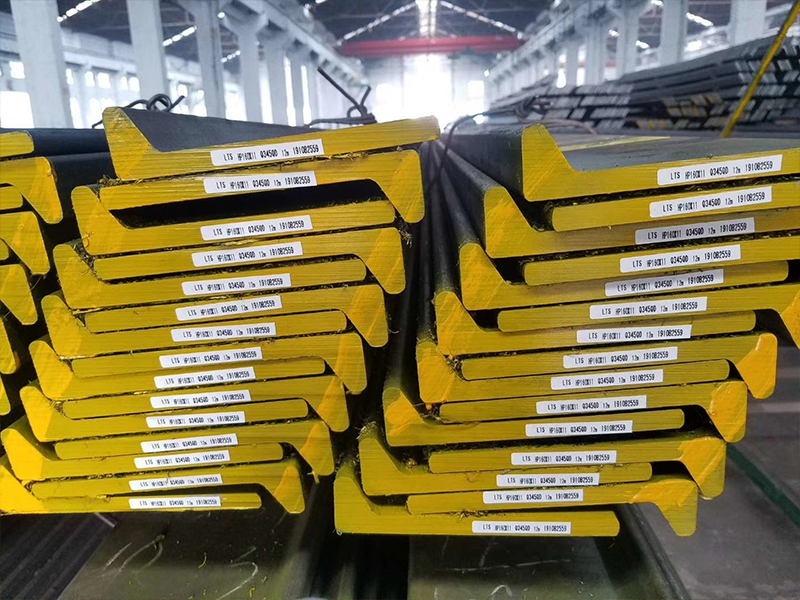
Before we dive into connection details, it is important to know exactly what these profiles are and how they behave. Only then can you combine them effectively.
Understanding the Basic Profiles: Bulb Flats, Angles, and L Sections
Do you really know the difference between bulb flats, angles, and L sections? Many engineers confuse them, and that can lead to wrong choices in design.
Bulb flat steel has a flat web with a rounded bulb at one end. Angle steel (also called L section) has two legs at 90 degrees. The term "L section" often means the same as angle, but sometimes it refers to unequal leg angles. All three are widely used in shipbuilding and construction.
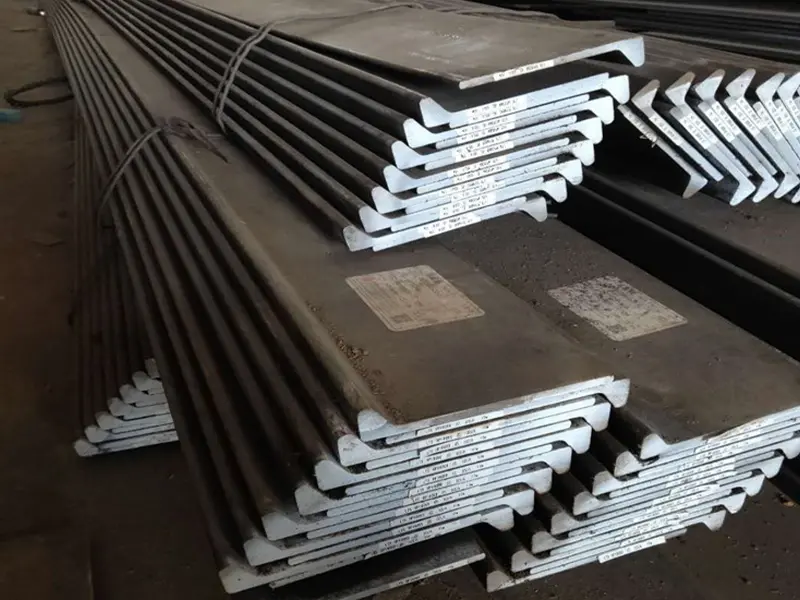
What Makes Each Profile Unique?
To combine them well, you need to understand their individual strengths. Let’s break down their key features.
Bulb Flat Steel1
- Shape: Flat plate with a thickened bulb edge.
- Strength: The bulb adds stiffness without extra weight.
- Common Use: Stiffeners in ship hulls, decks, and bulkheads.
- Advantage: Saves weight compared to using a flat bar with a separate angle.
Angle Steel2 (Equal or Unequal Legs)
- Shape: Two legs at 90°, can be equal or unequal length.
- Strength: Good for resisting bending and torsion.
- Common Use: Frames, brackets, supports in buildings and ships.
- Advantage: Easy to connect to other members with bolts or welds.
L Section Steel3 (Often Synonymous with Angle, but Sometimes Specific)
- Shape: Typically same as angle, but some standards distinguish L as unequal leg.
- Strength: Similar to angle.
- Common Use: Similar to angle, often used in corners and connections.
- Advantage: Versatile for various structural joints.
Here is a quick comparison table to help you see the differences:
| Profile Type | Shape Characteristics | Typical Size Range | Primary Strength | Common Applications |
|---|---|---|---|---|
| Bulb Flat | Flat web + bulb at toe | Web height 80-300mm | Bending stiffness in one direction | Ship hull stiffeners, deck beams |
| Equal Angle | Two equal legs, 90° | Leg length 20-200mm | Multi-directional strength | Frames, trusses, brackets |
| Unequal Angle (L Section) | Two unequal legs, 90° | Legs e.g., 100x75mm | Directional strength optimization | Corners, edge reinforcements |
Why Combining Them Makes Sense
In my years of supplying marine steel, I have seen many projects where using only one type of profile is not enough. For example, a ship’s hull needs stiffeners (bulb flats) to resist water pressure, but at intersections, you need angles to connect them to frames. Combining them lets you use the best of each shape.
But here is the catch: you cannot just put them together randomly. The way they meet determines the load transfer. If you weld a bulb flat to an angle, the weld must handle the stress. If you bolt them, the bolt holes might weaken the section.
Personal Insight from Our Workshop
At our mill in Liaocheng, we often receive orders from clients like Gulf Metal Solutions in Saudi Arabia. They buy marine angle steel and bulb flats for their fabrication projects. One time, their engineer asked me, "Zora, can we weld bulb flats directly to unequal angles without reinforcement?" I realized they needed clear guidance. So we arranged a video call with our technical team to explain the best practices. That experience showed me how important it is to understand these basics before connecting.
Now that you know each profile, let’s move on to the actual connection methods.
Key Connection Methods: Welding vs. Bolting Techniques
Are you unsure whether to weld or bolt your combined sections? The wrong choice can lead to delays, extra costs, or even safety risks.
Both welding and bolting have their place. Welding creates a continuous joint, ideal for watertight structures. Bolting allows disassembly and is faster in some cases. Your decision depends on the application, load type, and whether you need future access.
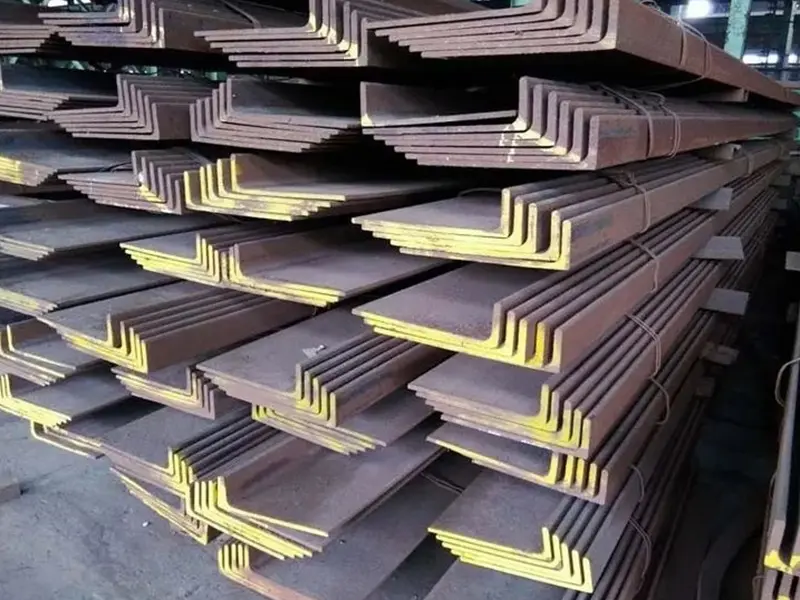
Welding Techniques for Combined Sections1
When you decide to weld, you must follow proper procedures. Here are the key points.
Preparation and Fit-Up
- Clean the surfaces. Remove rust, oil, and mill scale.
- Ensure good alignment. The bulb flat’s bulb might require a special edge preparation to fit snugly against the angle leg.
- Use tack welds to hold pieces in place before full welding.
Weld Types
- Fillet weld2: Most common for joining a bulb flat to an angle. You weld along the intersection.
- Groove weld: If you need full penetration, you might bevel the angle leg or the bulb flat web.
- Intermittent weld: For non-critical areas, you can weld in segments to save time and reduce distortion.
Challenges with Bulb Flats
The bulb shape can make welding tricky. If you place the bulb against the angle, the contact area is small. You might need to add a backing plate or grind the bulb to create a better surface. In shipbuilding, often the bulb flat is placed with its web perpendicular to the angle leg, and the weld runs along the web.
Bolting Techniques for Combined Sections3
Bolting is preferred when you need to replace parts or when welding is not allowed (e.g., in some aluminum structures or when fire risk is high).
Hole Preparation
- Drill or punch holes. Make sure they align perfectly.
- Hole size should follow standards (e.g., 2mm larger than bolt diameter).
- Avoid placing holes too close to the edge to prevent tear-out.
Bolt Selection
- Use high-strength bolts for structural connections (grades 8.8 or 10.9).
- Consider corrosion resistance: galvanized or stainless steel bolts for marine environments.
- Add washers under the nut and head to distribute load.
Challenges with Bolting L Sections
Angles have thin legs. If you bolt through them, the bolt head might not seat well. You might need to use a thicker plate as a backing. Also, the bulb flat’s bulb can interfere with bolt placement. You may need to offset the bolts or use a connecting plate.
Comparison Table: Welding vs Bolting
| Aspect | Welding | Bolting |
|---|---|---|
| Strength | Continuous joint, full strength | Depends on bolt shear and bearing |
| Watertightness4 | Excellent if continuous weld | Requires gaskets or sealants |
| Disassembly | Difficult, requires cutting | Easy, can unbolt |
| Speed | Can be slower due to prep and inspection | Faster in the field if holes are pre-punched |
| Skill Required | Certified welders needed | General fitters can do it |
| Cost | Higher labor, less material | Lower labor, cost of bolts and plates |
| Fatigue Resistance5 | Good if weld quality is high | Can be lower due to stress concentrations at holes |
My Experience with Bolting in Shipbuilding
I recall a project for a Vietnamese shipyard. They were repairing a bulk carrier and needed to attach new bulb flats to existing angle frames. Welding was not possible because of the risk of fire near fuel tanks. They used bolted connections with high-strength bolts and sealing compound. We supplied the bulb flats with pre-drilled holes according to their drawings. The job went smoothly, and they later ordered more for another vessel.
Choosing between welding and bolting is not always easy. But once you decide, the next step is to think about the overall structural design.
Structural Design Considerations for Combined Sections
How can you ensure your combined bulb flat and angle structure is safe and efficient? Many designers overlook load paths1 and end up with weak points.
You need to consider how forces flow through the connection. The bulb flat is strong in bending along its length, but weak in torsion. Angles can handle multi-directional loads. When combined, the design must avoid stress concentrations2 and allow for thermal expansion.
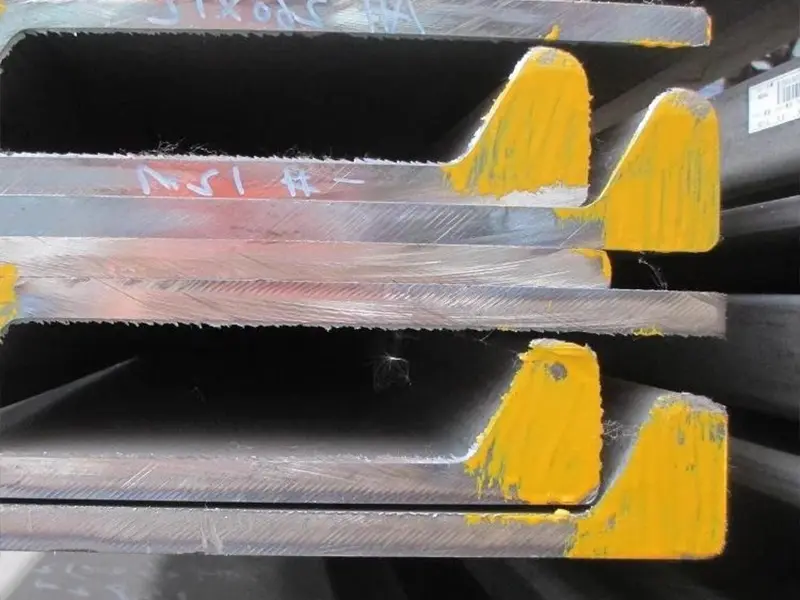
Load Transfer and Continuity
The main goal is to transfer loads from one member to another without sudden changes. Here are the key points.
Align Neutral Axes
When you connect a bulb flat to an angle, their neutral axes might not line up. This creates eccentricity, which causes bending in the connection. To reduce this, you can add gusset plates or choose a connection point where the axes are close.
Avoid Stress Concentrations
- Sharp corners in the connection can cause high stress. Use fillets or smooth transitions.
- If you bolt, staggered bolt patterns reduce the chance of tear-out.
- If you weld, grind the weld toes smooth to improve fatigue life3.
Consider Combined Loading
A combined section might experience bending, shear, and torsion. For example, a bulb flat stiffener on a ship’s bulkhead also carries in-plane loads from the hull. The connection to the angle frame must handle all these.
Design for Fabrication and Erection
You also need to think about how the combined section will be made and installed.
Tolerances
- Bulb flats have a specific dimensional tolerance4. So do angles. When you combine them, mismatches can occur. Allow for adjustment.
- Pre-assembly in the workshop is better than on-site if possible.
Accessibility for Welding/Bolting
- Ensure there is enough space to weld or tighten bolts. The bulb might block access. In such cases, you might need to use a different arrangement, like welding the bulb flat to a plate first, then bolting the plate to the angle.
Corrosion Protection
After combining, the joint area is prone to corrosion. Paint or coat it carefully. In marine environments, consider cathodic protection or using corrosion-resistant steel grades.
Table: Design Checklist for Combined Sections
| Consideration | Action |
|---|---|
| Load path | Ensure continuous transfer, minimize eccentricity |
| Stress concentration | Use smooth transitions, avoid sharp notches |
| Fatigue | Grind welds, use high-strength bolts in tension |
| Tolerances | Allow for adjustment, check fit before final connection |
| Access | Verify space for welding gun or wrench |
| Corrosion | Apply coating after assembly, seal crevices |
A Real Example from Our Client in Qatar
One of our clients in Qatar, a project contractor, was building a steel platform for an offshore oil rig. They needed to combine bulb flats with unequal angles to create a lightweight but strong deck support. They sent us the design, and we noticed that the welds were specified in a location where the bulb would block the welder’s torch. We suggested rotating the bulb flat 90 degrees or adding a small cut-out. They revised the design, and we supplied the steel with pre-cut holes for easier assembly. That saved them weeks on site.
Design is all about foresight. Now let’s look at where these combinations are actually used.
Practical Applications in Shipbuilding and Construction
Are you curious where bulb flat and angle combinations are most common? You might be surprised how often they appear in both ships and buildings.
In shipbuilding, bulb flats1 are used as stiffeners on hull plates, decks, and bulkheads. Angles serve as frames, stringers, and brackets. Combining them creates the skeleton of a ship. In construction, they appear in steel frames2, trusses, and heavy equipment supports3.
[^4]](https://cnmarinesteel.com/wp-content/uploads/2026/01/Flat-steel-ball119.webp)
Shipbuilding: The Backbone of Vessels
Ships are the primary market for bulb flats. Here is how combinations are used.
Hull Stiffening
- Bulb flats run longitudinally along the hull to resist bending.
- Angle frames run transversely to maintain the shape.
- At intersections, the bulb flat is either continuous (with the angle welded to it) or the angle is continuous with the bulb flat cut and welded to the angle. The choice depends on the structural analysis5.
Bulkheads and Decks
- Vertical stiffeners on bulkheads are often bulb flats.
- Horizontal stringers are often angles or L sections.
- Connections use brackets made from plate or angle to distribute loads.
Tankers and Container Ships
- In oil tankers, bulb flats are used in cargo holds. They must be strong and corrosion-resistant.
- Container ships have large hatch openings. The surrounding structure uses heavy angles and bulb flats combined.
Construction: Steel Frameworks
In building construction, bulb flats are less common but still used for specific purposes.
Heavy Steel Frames
- Some industrial buildings use bulb flats as purlins or girts.
- They combine with angle bracing to resist wind loads.
Bridges and Gantries
- Lightweight bridge decks may use bulb flats as stiffeners under the deck plate.
- Angles are used for cross bracing.
Special Structures
- Offshore platforms use many combinations due to the harsh environment.
- Cranes and heavy equipment often have L sections and bulb flats in their booms.
Comparison Table: Shipbuilding vs Construction Applications
| Aspect | Shipbuilding | Construction |
|---|---|---|
| Primary Loads | Hydrostatic pressure, wave impact, cargo | Dead load, live load, wind, seismic |
| Environment | Saltwater, high humidity | Varies (indoor/outdoor, industrial) |
| Corrosion Protection | Heavy coating, sometimes cathodic | Standard paint or galvanizing |
| Connection Preference | Mostly welding for watertightness | Bolting often used for erection speed |
| Typical Combined Sections | Bulb flat stiffener + angle frame | Angle truss + bulb flat purlin |
| Standards | Classification society rules (ABS, DNV) | Building codes (AISC, Eurocode) |
A Story from Our Malaysian Client
A shipyard in Malaysia once ordered bulb flats and angle steel for a series of tugboats. They had a problem: the welds between the bulb flats and the transverse frames were cracking after a few months at sea. We sent our technical team (via video call) to review their design. It turned out they were using a full penetration weld that created a hard spot. We suggested changing to a fillet weld with a flexible bracket. They tried it on the next boat, and the cracking stopped. That client now trusts us to advise on design.
Conclusion
Combining bulb flat steel with angle and L sections is about understanding each profile, choosing the right connection, and designing for real-world loads. Get these right, and your structure will be strong, durable, and cost-effective.
-
Explore the diverse applications of bulb flats in shipbuilding and construction, enhancing your understanding of their structural importance. ↩ ↩ ↩ ↩
-
Discover the advantages of steel frames in construction, including strength, durability, and design flexibility. ↩ ↩ ↩ ↩
-
Understand the significance of heavy equipment supports in construction and their role in ensuring safety and stability. ↩ ↩ ↩ ↩
-
Learn about the critical role angle frames play in structural integrity across various industries. ↩ ↩
-
Delve into the importance of structural analysis in ensuring safe and efficient building designs. ↩ ↩