
Angle steel lands in your yard while the welding line sits idle — or the frames fall due and the steel is still on the water. Either way the assembly schedule slips, and idle hours turn into real money. Here is how to close that gap.
Coordinate marine angle steel delivery by tying every shipment to a welding or assembly milestone: release each batch one week before its phase starts, phase deliveries by block, verify heat numbers on arrival, and share a rolling production forecast with your supplier every week.
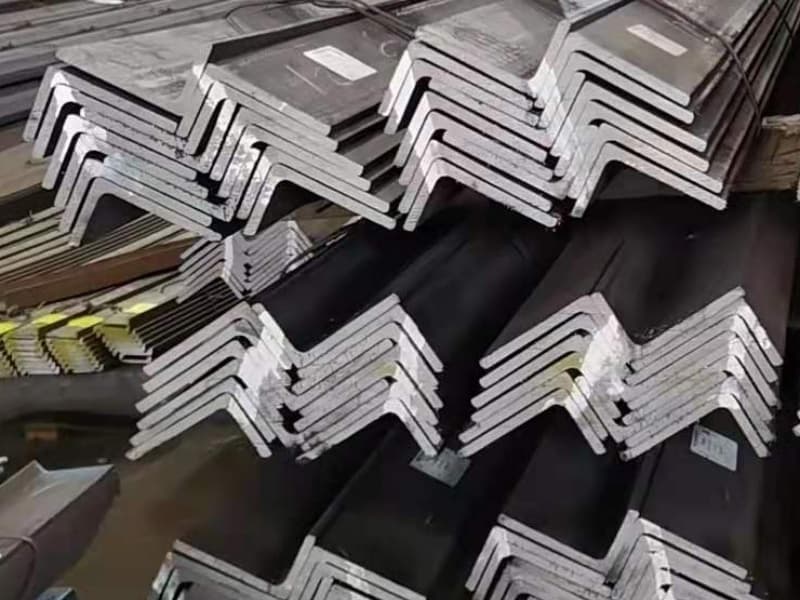
I have sold marine steel for years, and the orders that go wrong are almost never wrong because of the steel itself. They go wrong because the steel and the work met at the wrong time. The angle sections for a hull block arrive three weeks after the welding crew was scheduled to start on that block, so the crew gets moved twice, the crane slot is lost, and everything downstream shuffles. Or the opposite: six bundles of L100×100×10 show up months early, sit outside through a rainy season, and grow a crust of rust that your blasters charge extra to remove. Coordination is a skill, and like any skill it breaks down into steps you can actually run. Below are the four I walk through with every yard I supply — choosing the delivery model, building the schedule around welding milestones, controlling what happens at the gate, and keeping the supplier synced when the plan moves.
What Delivery Model Fits Marine Angle Steel Work Best: Bulk, Phased, or Just-in-Time?
Buying all the angle steel for a vessel in one order feels safe. In practice it clogs the yard, ties up cash, and buries the sizes your welders need this week under the sizes they will not touch until next quarter.
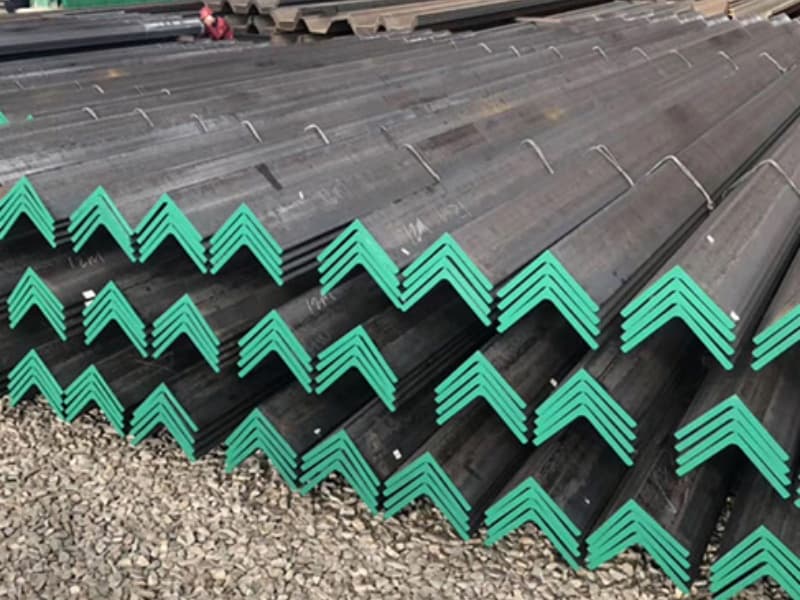
Phased delivery wins for most shipyards: order against the fabrication schedule, ship in batches tied to block assembly phases, and keep one to two weeks of buffer stock for the sizes your welders use every day.
Three Models, Three Cost Structures
The three common models — one bulk order, phased deliveries, and just-in-time — differ less in the steel they deliver than in the costs they create around the steel. I put the trade-offs side by side:
| Cost factor | Bulk order (one delivery) | Phased delivery (3–5 batches) | Just-in-time (per phase) |
|---|---|---|---|
| Average steel held in yard | Full order | 30–50% of order | 1–3 weeks of usage |
| Yard space occupied | One full bay or more | A partial bay | Minimal |
| Rust and re-blast risk | High — steel sits longest | Moderate | Low — fresh steel |
| Working capital tied up | All of it, early | Spread over months | Minimal |
| Freight cost per ton | Lowest (full loads) | Slightly higher | Highest if LCL |
| Idle-labor risk if schedule slips | High — no follow-up stock | Low — next batch can pull forward | Low, but thin margin for error |
Even with slightly higher freight, phased delivery usually wins on total cost. I worked through the numbers with a yard that was ordering around 200 tons of angle steel at a time. When they split into four deliveries of about 50 tons each, tied to fabrication phases, their average stock on the ground fell from roughly 200 tons to about 75 tons, and the space they freed became a second assembly bay. That is the part buyers forget: yard space is not storage cost, it is production capacity you gave away.
Why Bulk Orders Backfire on Assembly Lines
A bulk order is a bet that your schedule will not move. Shipbuilding schedules always move. When the yard runs ahead, the later batches are welcome. When it runs behind, the steel that arrived early sits outdoors, oxidizes, and needs re-blasting before welding — buyers I talk to budget roughly $10–20 per ton for that cleaning, and it lands right on the sections you were proudest of getting cheap. There is also a handling penalty. Angle steel bundles for the deck phase get moved three or four times to dig out the frames needed for the bottom blocks this week. Every move risks edge damage on the legs, and dented angle sections fight you at fit-up.
The Buffer That Keeps Welders Busy
Phased does not mean razor-thin. Keep one to two weeks of the sizes you consume most — the frame and bracket angles that feed the welding lines daily — as a physical buffer, stored separately and never issued against a planned phase. When a shipment slips two weeks or a phase finishes five days early, the buffer absorbs the gap and the welders never see it. I tell buyers to treat the buffer like a fire extinguisher: you hope you never open it, but you check it every month.
How Do You Build a Delivery Schedule Around Welding and Assembly Milestones?
A delivery date picked from a calendar has nothing to do with your production. Anchor every shipment to the welding start date of the block it feeds, and work backwards.
Build the schedule backwards from each block’s welding start date: subtract unloading and inspection time, set delivery one week before that start, then subtract supplier lead time and transit to fix the order date for each batch.
Work Backwards from the Weld Start, Not the Order Date
The mistake I see most is ordering by “when we think we’ll need it” instead of deriving the date. Do the arithmetic instead. Take the welding start date for the hull block. Add the week you need for unloading, MTC checks, and moving bundles to the fabrication station — so the steel must land one week before the weld start. Then subtract ocean transit and customs from the supplier. If the supplier needs roughly 45–60 days from order to arrival for your lane, the order date for that batch is fixed. Do this for every block and you get a spread of order dates instead of one giant PO placed when the contract was signed. One more detail matters more than people expect: agree delivery windows, not fixed dates. A window of three to five days survives the reality of port congestion; a single fixed date turns one missed vessel into a formal delay.
Map Sections and Angles to Each Block Phase
Your angle steel consumption is not flat across a build. The bottom and side blocks eat the heavy frame sections; the deck phase shifts to mid-size sections; the superstructure uses the light ones. Map it, then hand the map to your supplier:
| Build phase | Typical weeks | Angle sections typically consumed | Delivery should land |
|---|---|---|---|
| Bottom block fabrication | 2–6 | L125×125×12, L150×100×10 frames | Week 1 |
| Side block and bulkhead assembly | 5–9 | L100×100×10, L125×125×12 | Week 4 |
| Deck panels and beams | 9–13 | L100×100×10, L75×75×8 | Week 8 |
| Superstructure and outfitting | 13–18 | L75×75×8, L50×50×5 | Week 12 |
The sizes in the table are typical patterns, not a substitute for your own block takeoff sheet — every design shifts them. The point is the last column: each delivery lands about a week before its phase, not all at week zero. When we supplied Gulf Metal Solutions in Saudi Arabia, we shipped their plate and angle steel in batches against exactly this kind of phase map, and their purchasing manager told us the packaging and labeling per batch was the cleanest they had received — because each bundle was tagged for the block it fed, so their crew never had to guess where a bundle belonged.
Leave Room at the Gate for the Arrivals You Did Not Plan
A schedule is only as good as the yard’s ability to receive it. Before the first delivery lands, confirm three things: the crane or forklift slot for the arrival window, the dunnage and storage bay assigned to that phase, and who signs the receiving checklist that day. If the steel arrives and the receiving team has no slot, it waits on the trailer, demurrage runs, and your perfect schedule quietly burns money. I ask every client to treat the receiving slot as part of the delivery date. The steel is not delivered when it reaches the port; it is delivered when your welder can pick up a section from the bay.
What Should You Check and Tag When Each Angle Steel Delivery Arrives?
Every delivery that enters the yard unverified is a future stoppage you have agreed to accept. The arrival gate is where traceability is either locked in or lost.
Check and tag every delivery against its mill test certificate: match heat numbers, grades, section sizes, and lengths bundle by bundle, tag each bundle with its heat number and destination phase, and register it in your tracking system before anything moves to the fabrication line.
Heat Numbers and Mill Certificates Before the First Cut
The sequence at the gate should be fixed and boring: unload, count, verify, tag, register — and only then move steel to the line. Verification means each bundle matches the packing list, and the packing list matches the mill test certificate (EN 10204 3.1 or 3.2 for most marine orders). The grade on the angle sections — A, B, D, E, or the high-strength AH32/AH36 and their DH/EH cousins — must match what your approved welding procedures assume. A wrong-grade section that slips into a frame is a classification problem you discover at the worst possible moment. The heat number is the thread that ties it all together: it must transfer from the MTC to the bundle tag, and later to the offcut tag after cutting. If the heat number chain breaks at the gate, it never comes back. This is the table I give receiving teams:
| Arrival check | What you compare | Why it matters |
|---|---|---|
| Quantity and bundle count | Against packing list | Shortages claimed late are hard to recover |
| Grade marking | Against MTC and PO | Wrong grade breaks weld procedure approval |
| Section size and leg thickness | Calipers against spec | Out-of-tolerance legs cause fit-up rework |
| Lengths | Against order (6/9/12 m) | Wrong lengths wreck your cutting nesting plan |
| Surface condition | Scabs, laps, cracks, rust | Surface defects must be claimed on arrival, not after cutting |
| Heat number | MTC to bundle tag | Traceability for classification records |
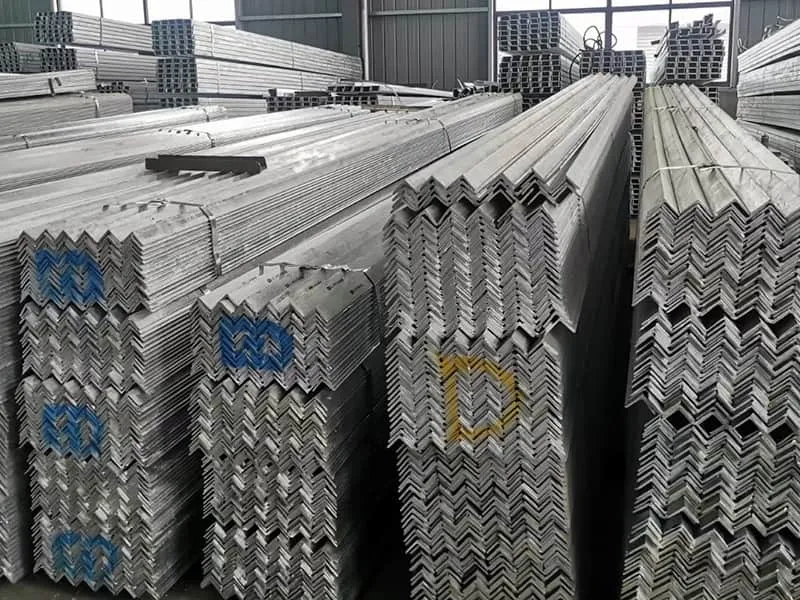
One habit separates disciplined yards from chaotic ones: the checks happen before the steel moves, every time, even when the crew is busy. A rushed receiving day saves thirty minutes and can cost a week if a wrong-grade section reaches a welder who has already qualified his procedure on AH36.
Store by Phase, Not by Arrival Date
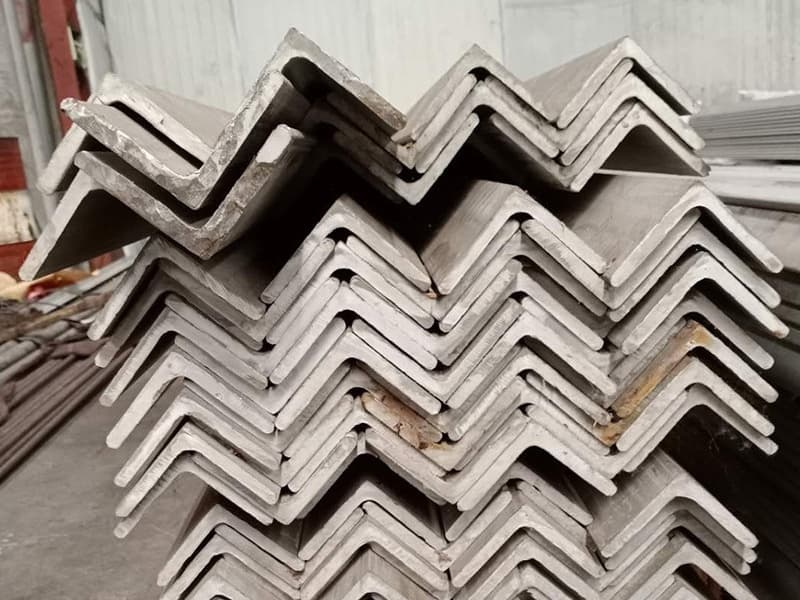
Where a bundle lands in the yard should be decided by its phase tag, not by which corner was empty that day. Bundles for the bottom blocks go to the bay nearest the fabrication line; bundles for the deck phase go to the longer-term racks. Store angle sections on sleepers, off the ground, with the open side of the legs angled down so water does not sit in the corner. I walked a yard last year where [Zora will replace] the angle bundles for three different vessels were stacked in one mixed bay, and their crew spent the first hour of every shift hunting for the right heat number — an hour, every day, paid to find steel that a phase-tagged layout would have found in five minutes. Registration closes the loop: every bundle goes into the ERP or tracking sheet with its heat number, arrival date, and bay location, so production status meetings argue about schedule, not about where the steel is.
How Do You Keep the Supplier Synchronized When the Welding Schedule Slips?
The schedule will slip — that is a given, not a risk. The question is whether your supplier learns about it this week or finds out when the container is already on the water.
Keep the supplier synchronized with a short weekly production update, a blanket order with flexible shipping windows, and agreed rules for pulling deliveries earlier or pushing them back, so shipments track the real welding schedule instead of the original plan.
The Two-Line Weekly Update That Prevents Two-Week Delays
Fancy systems are not required. I ask my clients for a two-line message every week: “on track” or “we are three days behind,” plus any change to the next phase’s start. That single message decides what I do with the batch in production or on the water. Ahead of schedule, I look at what can pull forward. Behind, I check whether the next batch can wait at our warehouse instead of stacking up in your yard. I hold finished goods for regular clients for up to 30 days before shipping on their call — the steel stays ours, in our shed, until the yard is ready. This is also where inspection timing plugs in: when the schedule firms up, we book third-party inspection (SGS or the society surveyor) against the real batch, so certificates and the vessel booking line up instead of racing each other. With Gulf Metal Solutions, the two-line rhythm is exactly how we kept their Dammam shipments aligned with their fabrication updates — their buyer’s first impression of us was response speed, and the weekly loop is how we kept it.
Change Orders, Blanket POs, and Flexible Shipping Windows
Put the flexibility into the paperwork before you need it. A blanket purchase order with a total quantity and release schedule beats a stack of separate POs: one commercial document, multiple shipping calls, and no fresh negotiation every time a phase moves. Negotiate two notice rules explicitly — how much notice the supplier needs to pull a delivery earlier, and how much notice to push it back without penalty. From our side, the answer depends on the batch’s stage: steel still in production flexes easily; steel loaded on a vessel does not, and honest suppliers say so instead of promising miracles. Add a price-adjustment clause for schedule-driven quantity changes so nobody renegotiates from scratch mid-project. And keep the rolling forecast alive: an eight-week lookahead, updated weekly, lets the mill plan rolling slots for your sections even while individual dates move. The comparison below is the whole argument in one view. When we preview it for a new client, most recognize their own yard in the left column:
| Practice | Uncoordinated delivery | Coordinated delivery |
|---|---|---|
| Schedule communication | None until a problem erupts | Two-line weekly update + rolling forecast |
| Order structure | Separate POs per shipment | Blanket PO with release schedule |
| When plans slip | Supplier learns after sailing | Batch held or re-timed before sailing |
| Inspection booking | Rushed, sometimes missed | Booked against the confirmed batch |
| Idle welding hours | Absorbed silently as overhead | Prevented or caught within a week |
| Yard condition | Mixed, rusty, double-handled stock | Phase-tagged, FIFO, fresh steel |
I will give you my honest opinion from the port side: the yards that never seem to have steel problems are not luckier suppliers than everyone else. They just talk to their suppliers every single week, in two lines, without drama. That habit is worth more than any clause in the contract.
Conclusion
Coordinate angle steel delivery by phasing shipments against welding milestones, verifying and tagging every arrival, and syncing weekly with your supplier — the steel and the welders will finally meet on the same day.