
You ordered the weight on the drawing, but the invoice shows more tonnes than the ship will ever carry. The gap is cutting loss, and if you never priced it on purpose, you are paying for it by accident. Here is how to estimate it before you sign.
Estimate cutting losses on a marine angle steel order by adding four named lines to your takeoff: saw kerf (about 2–4 mm per cut), bar-end offcuts (anywhere from near zero to over 16%, driven by member length versus standard 6 m, 9 m, or 12 m mill lengths), handling damage (1–2%), and the theoretical-to-actual weight gap (1–2%). Buyers who nest their cut lists land near 3–7% total; buyers who do not can pass 10%.
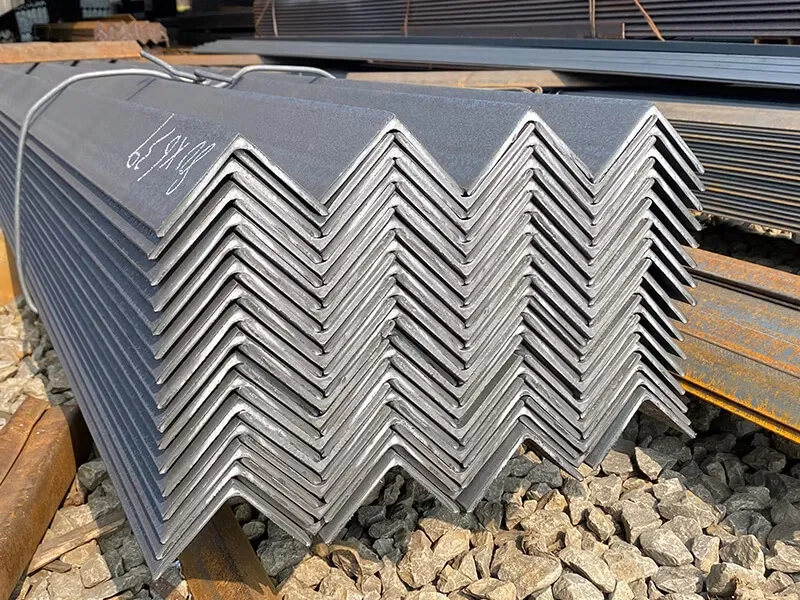
I sell marine angle steel for a living, and the question I hear most often is not about grades or certificates. It is about weight. A buyer compares the tonnage on our quotation with the tonnage in his own takeoff sheet, sees a difference, and wants to know who made the mistake. Usually, nobody did. The difference is cutting loss, and it belongs on the purchase order as a visible line, not buried in a rounded number. This article walks through what cutting loss actually contains, how to convert your cut list into a defensible loss figure, and what percentage makes sense for your kind of order.
What Actually Counts as Cutting Loss on a Marine Angle Steel Order?
Your estimate matches the drawing, but the purchased tonnage is higher. Where does the extra steel go? Without named categories, the gap becomes an argument.
Cutting loss on marine angle steel is the steel you buy but never weld into the ship. It has four parts: the saw kerf removed by each cut, the offcut left at the end of each mill bar, bars damaged in handling, and the small gap between theoretical weight and actual rolled weight. Each part has its own driver, so each needs its own line in the estimate.
The Kerf: Small Cuts, Honest Arithmetic
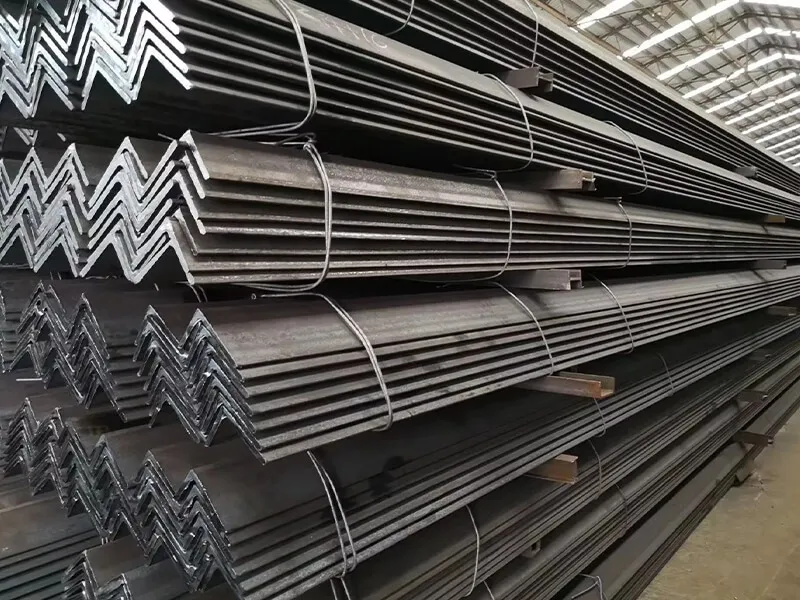
Every saw or torch cut removes a slice of steel. A band saw kerf runs around 3 mm. Plasma cutting takes roughly 2–4 mm, and laser cutting is the narrowest at about 0.5–1.5 mm. On a 12 m bar carrying four members, four cuts remove about 12 mm of length. That sounds like nothing, and in weight terms it almost is: 12 mm on a 12 m bar is 0.1% of the bar. But kerf matters in a different place — nesting. If your members are sized so that five pieces plus five kerfs exactly fill a 12 m bar, forgetting the kerf means the fifth piece comes up 15 mm short. Cut length drawings usually carry their own allowance, so the kerf rarely breaks a job, but I always tell buyers to write it into the nesting calculation anyway. It costs one line in a spreadsheet and it prevents the phone call where the fabricator says the last piece on every bar is short.
The Offcut: Where the Real Money Goes
Offcuts are the dominant loss, and they are pure geometry. Mill bars arrive in standard lengths of 6 m, 9 m, or 12 m. Your members arrive on the drawing at whatever length the naval architect chose. When the two numbers do not divide nicely, the remainder goes to the scrap pile. The extremes are dramatic. If a member is 2.4 m long, five of them fill a 12 m bar exactly, and the offcut is nearly zero. If the member is 2.5 m, only four fit, and every bar gives up almost 2 m — a 16.6% loss on that size, before anything else goes wrong. Same vessel, same drawing weight, wildly different purchase quantity. This is why I ask fabricators for the cut list, not just the weight summary, on any order big enough to matter. A weight summary tells me what the ship needs. A cut list tells me what the yard will actually throw away.
The Quiet Two Percent: Handling and Tolerance
Two smaller lines finish the picture. First, handling and fit-up loss: bars bent by careless forklift work, ends damaged in transport, pieces mis-cut and re-cut. Well-run yards hold this at 1–2%. I have watched crews in some yards stack bundles with machine care, and I have watched others drop bundles onto mud from a meter up. The difference shows up in their scrap skip, not on any invoice line. Second, the theoretical-to-actual weight gap. The formula for an equal angle — kg/m ≈ [(A + B − t) × t × 0.00785] — ignores the rolled root radius at the heel, so table values and weighbridge values sit about 1–2% apart on mid-size sections. Neither number is wrong. The certificate follows the standard’s tolerance rules, the packing list weighs bundles as shipped, and the invoice usually follows the certificate. If your estimate ignores that spread, your receiving team will report a shortage that never existed.
| Loss component | Typical range | Main driver |
|---|---|---|
| Saw kerf | 2–4 mm per cut | Cutting method (band saw, plasma, laser) |
| Bar-end offcut | 0% to over 16% per size | Member length vs 6/9/12 m mill bar length |
| Handling and fit-up damage | 1–2% | Yard material-handling discipline |
| Theoretical-to-actual weight gap | 1–2% | Rolled root radius and rolling tolerances |
| Mill length tolerance | up to ±50 mm on bar length | Rolling practice; absorbs small nesting errors |
How Do You Turn a Cut List into a Cutting Loss Number You Can Defend?
You accept that cutting loss exists, but a number in a negotiation needs arithmetic behind it. A vague “add some wastage” invites the supplier to add his own.
Build the loss estimate in three steps: calculate net length and net weight from the cut list, fit members against standard bar lengths to find the offcut per bar, then convert the total loss into a purchase quantity using net divided by one minus the loss rate. Show each step on the purchase order, and the number stops being an opinion.
Step 1: Net Length and Net Weight
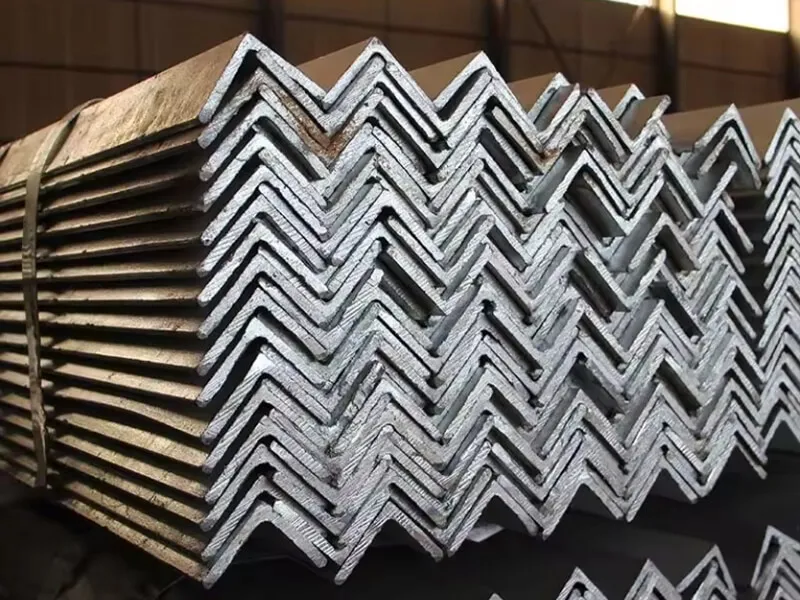
Start with the cut list, not the weight summary. Say a small cargo vessel needs 120 frame members of L100×100×10, each cut at 2.5 m. Net length is 120 × 2.5 = 300 m. The table weight for L100×100×10 is about 14.9 kg/m, so net weight is 300 × 14.9 ≈ 4,470 kg. That is the steel that actually goes into the ship. Everything after this step is the premium you pay to get mill bars to behave.
Step 2: Fit Members to Bar Lengths
Now test the members against bar lengths. On 12 m bars, four 2.5 m members consume 10 m plus about 12 mm of kerf, leaving roughly 1.99 m of offcut per bar. Thirty bars deliver the 120 members: 360 m purchased against 300 m net. The offcut alone is 59.6 m, a 16.6% loss — and the purchased weight lands near 5,364 kg against 4,470 kg net. Nearly 900 kg of steel paid for and never welded. Now run the same list with a nested plan. Pair the 2.5 m frames with, say, 2.2 m bracket stock from another part of the cut list: two frames plus three brackets fill 11.6 m of a 12 m bar, and the offcut drops to 0.4 m per bar, about 3.3%. The nesting plan cut the loss by five points without changing a single drawing. This is the conversation I try to have with every fabrication client before their order is final: send me the full cut list, and I will tell you which bar length — 6, 9, or 12 m — fits it best. Sometimes the answer is to order 9 m bars for one size and 12 m for another. The mill does not charge extra for choosing.
Step 3: Convert the Loss into an Order Quantity
Once the loss rate is settled, convert it correctly. If cutting loss is defined as a share of what you purchase, the formula is purchase quantity = net quantity ÷ (1 − loss rate). For 300 m net at a 10% loss: 300 ÷ 0.9 = 333.3 m, so 334 m. Buyers often multiply instead — 300 × 1.1 = 330 m — and under-order by a few meters, which is harmless on paper and less harmless when the last bar runs out two frames before the section is done. Round up to whole bars, and state the loss line explicitly on the purchase order: net 300 m, cutting loss 10% (offcut-driven, 2.5 m members on 12 m bars), order 334 m. If a dispute ever comes, that line is the difference between a ten-minute arithmetic review and a week of emails.
| Worked example: 120 pcs L100×100×10, cut 2.5 m | Plan A: single-size cutting | Plan B: nested with 2.2 m brackets |
|---|---|---|
| Net length required | 300 m | 300 m |
| Bars used (12 m) | 30 | 30 |
| Offcut per bar | ~1.99 m | ~0.40 m |
| Total offcut | ~59.6 m | ~12 m |
| Cutting loss share | ~16.6% | ~3.3% |
| Purchased weight vs net (4,470 kg) | ~5,364 kg | ~4,617 kg |
Which Cutting Loss Percentage Should You Write into the Purchase Order?
Every order is different, so copying a percentage from a colleague’s last project is how estimates drift. What range is honest for your order profile?
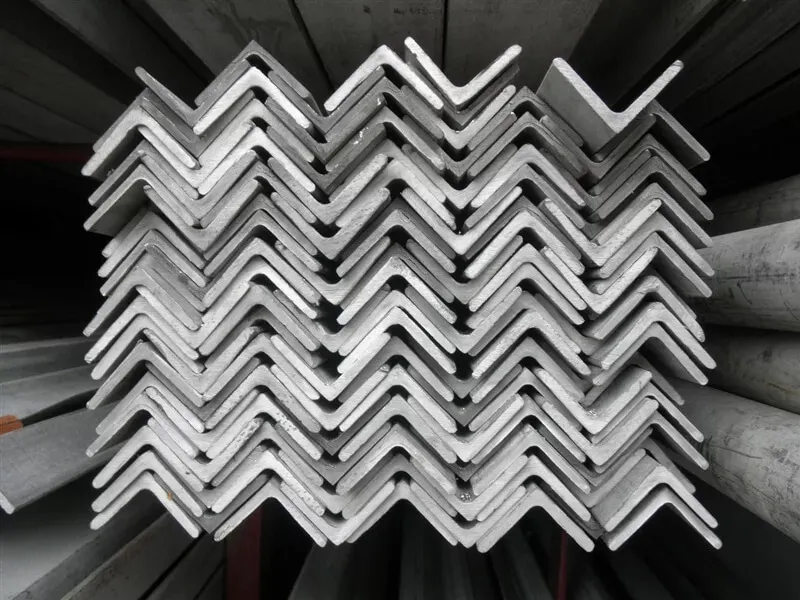
Match the cutting loss allowance to the order profile: 2–3% for long members close to bar length, 3–5% for medium members with a shared nesting plan, 8–12% for short members in many sizes with no cut list shared, and 5–8% for repair or odd-lot orders. State the figure on the purchase order and reconcile it against the scrap skip when the job ends.
| Order profile | Suggested cutting-loss allowance | Why |
|---|---|---|
| Long members near bar length (e.g. 11.5 m of 12 m bars) | 2–3% | One cut per bar, minimal offcut |
| Medium members with a nesting plan across sizes | 3–5% | Bars shared between member types |
| Short members, many sizes, no cut list shared | 8–12% | Offcut pile grows on every bar |
| Repair and odd-lot orders | 5–8% | Small lots, mixed sizes, urgent cuts |
| Any profile where kerf is the only loss | under 1% | Kerf weight is trivial at bar scale |
Two practical rules make the percentage stick. First, separate the lines. Cutting loss, handling loss, and the theoretical-to-actual gap each answer to a different person — the nesting planner, the yard foreman, and the receiving clerk, respectively. Lumping them into one “wastage” number means nobody owns any of them, and the number grows quietly over the project. Second, close the loop after delivery. My clients at Gulf Metal Solutions in Saudi Arabia check the packing list against the order before the vessel departs, verify the bundles at Dammam port against the same sheet, and later compare ordered, received, and consumed tonnage. When their actual loss comes in below the allowance, the next order’s estimate gets tighter — and they keep the difference as margin instead of donating it to the scrap skip. That loop is also why their quantity disputes are rare; the paper trail already agrees with itself. I stood in their yard one afternoon watching a crew sort bars by cut length before fabrication even started, and I remember thinking that most of the “steel price negotiation” content on the internet is about the wrong thing. The per-tonne price matters, but the loss percentage you sign sits right next to it, and the loss line is the one buyers almost never negotiate.
One last honesty check before you sign. If a supplier quotes a suspiciously low tonnage with no cutting-loss line at all, ask which party absorbs the offcut. Sometimes the answer is that the yard buys the shortfall later, as an emergency top-up at spot prices and freight — the most expensive steel in the whole project. A visible 5% line is cheaper than an invisible one.
Conclusion
Estimate cutting loss as four named lines, fit your cut list to standard bar lengths, and write the percentage on the purchase order. Then reconcile it. The buyer who owns the loss line keeps the margin.