
You are sourcing bulb flat steel for a new offshore platform. The project is critical. The budget is set. The timeline is fixed. You have multiple supplier quotes on your desk. How do you choose? The lowest price is tempting, but the wrong supplier can sink your project. A systematic evaluation process is essential.
Evaluating bulb flat steel suppliers for marine projects requires a multi-dimensional assessment. Key criteria include: 1) Mill certification and classification society approvals (ABS, LR, DNV). 2) Production capability for the specific sizes and grades you need. 3) Quality management including third-party inspection support (SGS, BV). 4) Track record with similar marine projects. 5) Logistics capability for timely delivery. 6) Communication and responsiveness in English. A supplier who scores well on all these factors is a reliable partner.
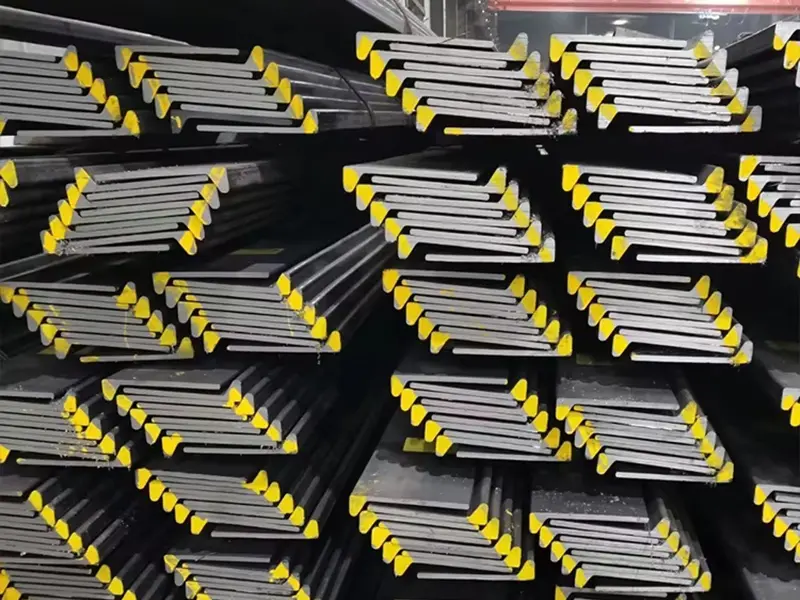
The evaluation process starts with understanding the product and its critical properties. If you do not know what makes bulb flat steel suitable for marine use, you cannot judge a supplier’s ability to provide it. Let’s begin with the most important property.
What property is particularly important for shipbuilding steel to ensure it can withstand harsh marine environments?
You are reviewing a supplier’s Mill Test Certificate. You see numbers for yield strength, tensile strength, and elongation. But is there something missing? For marine environments, one property is more critical than others. If a supplier does not understand this, they cannot provide suitable steel.
The most important property for shipbuilding steel to withstand harsh marine environments is impact toughness1. This is the steel’s ability to absorb energy and resist fracture under sudden stress, especially at low temperatures. In cold ocean waters, steel can become brittle and crack catastrophically. Impact toughness, measured by the Charpy V-notch test2, ensures the steel remains ductile and safe throughout the vessel’s operating life. Without guaranteed toughness, a ship is at risk of brittle fracture3.
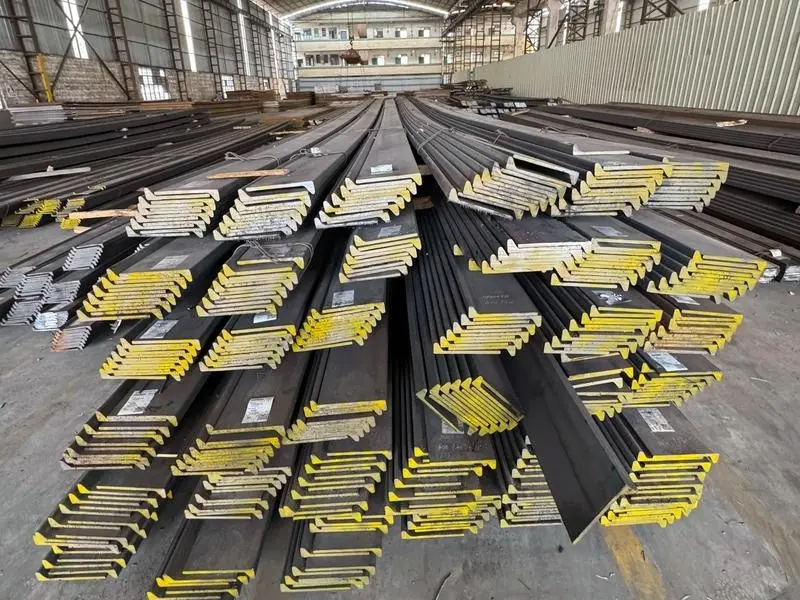
Why Toughness is the Critical Property
Understanding this helps you evaluate suppliers.
1. The Danger of Brittle Fracture.
- The Problem: At low temperatures, some steels transition from ductile (bending) to brittle (snapping) behavior. A brittle fracture3 can propagate rapidly across a hull, causing catastrophic failure.
- Historical Context: Many early ships suffered brittle fracture3 failures in cold waters. This led to the development of impact-tested steels and the classification society rules we use today.
2. How Toughness is Measured.
- Charpy V-Notch Test: A small notched sample is struck by a pendulum. The energy absorbed (in Joules) is recorded. Higher energy means tougher steel.
- Test Temperature: The test is performed at a specified temperature (0°C, -20°C, -40°C, -60°C) depending on the grade. The steel must absorb a minimum energy at that temperature.
| 3. What This Means for Supplier Evaluation. | Question to Ask | Why It Matters |
|---|---|---|
| "Does your mill perform Charpy impact tests?" | Some mills skip this for non-marine grades. Marine steel requires it. | |
| "At what temperature are the tests done?" | Must match the grade (e.g., -20°C for DH36). | |
| "Can you provide the actual test results?" | Not just a pass/fail. The actual values show consistency. | |
| "Is your mill approved by classification societies for impact-tested grades4?" | Approval requires the mill’s quality system to be audited. |
4. The Supplier’s Role.
A good supplier will:
- Know which grades require impact testing.
- Provide certificates with clear Charpy results.
- Advise you if the grade you selected is suitable for your operating temperature.
My Insight from the Field
A client in Canada was building a vessel for Arctic waters. They specified EH36 grade, which requires impact testing at -40°C. A potential supplier quoted a lower price but could only provide AH36 (tested at 0°C). The supplier claimed it was "just as good." It is not. In Arctic waters, AH36 would be brittle and dangerous. The client chose a supplier who understood the importance of toughness. This is a life-safety decision, not just a cost decision.
What is the use of bulb bar1?
You are evaluating a supplier. They ask, "What is your application for the bulb bar1s?" If they do not understand the use, they cannot provide the right material. The use dictates the grade, the dimensions, and the certification required.
A bulb bar1 (bulb flat) is used as a stiffener2. It is welded perpendicularly to hull plates, deck plates, and bulkheads to prevent them from buckling under compressive loads. In a ship, bulb bar1s create a grid of reinforcement that allows the hull to be strong yet light. They are primary structural members and must meet the same rigorous standards as the plates they stiffen. Their use dictates the required strength, toughness, and weldability.
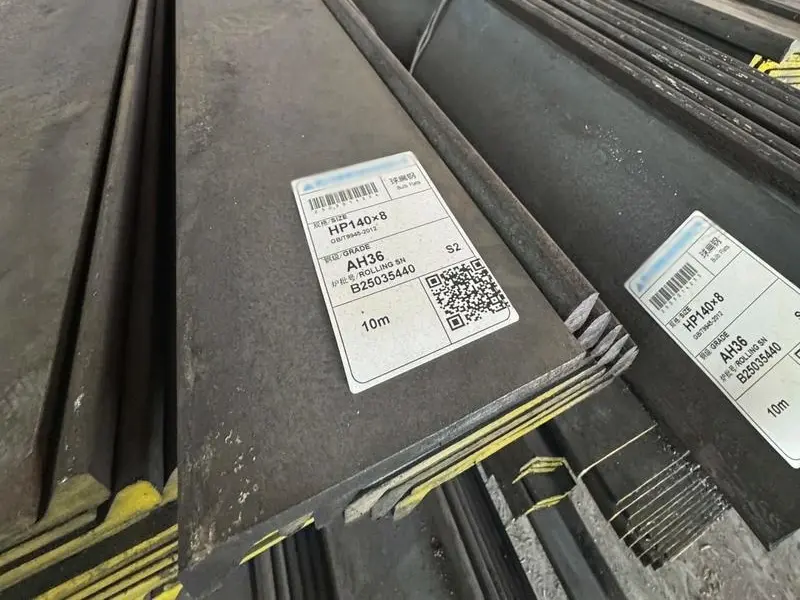
How Use Affects Supplier Evaluation
A supplier who understands the use will ask better questions.
1. The Stiffening Function.
- Buckling Prevention: Large flat plates will buckle under pressure. Stiffeners divide the plate into smaller panels that resist buckling.
- Load Distribution: Stiffeners distribute local loads (like wave impact) over a larger area.
- Structural Integrity: The stiffener2 grid is integral to the hull’s strength. Failure of a stiffener2 can lead to progressive collapse.
| 2. What This Means for Material Selection. | Requirement | Why It Matters |
|---|---|---|
| Grade | Must match the hull plate grade (e.g., DH36 with DH36 plate). | |
| Toughness | Must be appropriate for the operating temperature. | |
| Weldability | Must have controlled chemistry to weld without defects. | |
| Dimensions | Must match the design spacing and plate thickness. |
3. Questions a Good Supplier Will Ask.
- "What grade of plate are you using? The bulb bar1 grade should match."
- "What is the vessel’s operating temperature? This determines the required toughness."
- "What is your welding procedure? We can advise on carbon equivalent limits."
- "What are your dimensional tolerances? We can ensure the mill rolls to your needs."
4. Red Flags in Supplier Responses.
- They do not ask about the application.
- They offer a generic "stiffener2" grade without understanding the context.
- They cannot explain why a particular grade is suitable.
My Insight from the Field
A client in Malaysia once ordered bulb bar1s from a supplier who did not ask any questions. The bars arrived, but they were the wrong grade for the hull plates. The supplier had assumed a standard grade without confirming. The client had to return the material and reorder, losing weeks. Now, they only work with suppliers who ask about the application. The questions show they care.
What are the 4 types of bulbs?
You are specifying bulb flats. The term "bulb" refers to the rounded edge. But are there different types of bulbs? Understanding this helps you select the right profile and evaluate whether a supplier can provide it.
In the context of bulb flats, there are not four distinct "types" of bulbs in the sense of different shapes. Rather, bulb flats are produced in a range of standard sizes, each with a specific bulb geometry defined by the standard (EN 10067, JIS G 3192, etc.). The "types" refer to the size categories: small, medium, large, and jumbo1 profiles. Each size range has different rolling requirements, and not all mills can produce all sizes. A supplier’s capability to provide the sizes you need is a key evaluation criterion.
Understanding Bulb Flat Size Ranges
This helps you match your needs to supplier capability.
| 1. Size Categories (Indicative). | Category | Web Height Range | Typical Applications | Rolling Difficulty |
|---|---|---|---|---|
| Small | 80-160 mm | Light stiffening, small vessels. | Easier, many mills can do it. | |
| Medium | 160-240 mm | General shipbuilding, hull stiffeners. | Standard, most marine mills can do it. | |
| Large | 240-320 mm | Primary stiffening in large vessels. | More difficult, requires larger mills. | |
| Jumbo | 320-430 mm | Very large ships, offshore platforms. | Specialized, only a few mills worldwide. |
2. Why This Matters for Supplier Evaluation.
- Capability: Not all mills can roll jumbo sizes. If your project requires 400mm bulb flats, you need a supplier with access to a mill that has that rolling capacity.
- Lead Time: Larger sizes may have longer lead times because they are rolled less frequently.
- Cost: Jumbo sizes often command a premium due to the specialized rolling required.
3. Questions to Ask Potential Suppliers.
- "What is the maximum bulb flat size2 your mill can produce?"
- "Do you have experience supplying the sizes we need?"
- "What are the typical lead times for our required sizes?"
- "Can you provide section property data for the sizes we need?"
4. The "One Size Fits All" Trap.
Some suppliers may claim they can provide any size, but they may be brokering from multiple sources. This can lead to inconsistent quality and longer lead times. A supplier with direct mill access for your specific size range is more reliable.
My Insight from the Field
A client in South Korea needed 400mm jumbo bulb flats for a large offshore project. Several suppliers quoted, but only one had a direct partnership with a mill that could roll that size. The others were planning to broker from that same mill, adding a layer of cost and risk. The client chose the direct supplier. The material arrived on time and met all specifications. This is why asking about mill capability matters.
What are bulb flats used for?
You are evaluating a supplier. They should be able to tell you, without hesitation, what bulb flats are used for. If they cannot, they lack the fundamental knowledge to serve the marine industry. This question is a basic test of their expertise.
Bulb flats are used primarily as stiffeners in ship hulls and offshore structures1. They are welded to steel plates to prevent buckling under compressive loads from water pressure, deck cargo, and wave action. They are also used in bridge construction, wind turbine towers, and other large steel structures where efficient stiffening is required. Their unique shape provides maximum stiffness with minimum weight, making them ideal for weight-sensitive marine applications.
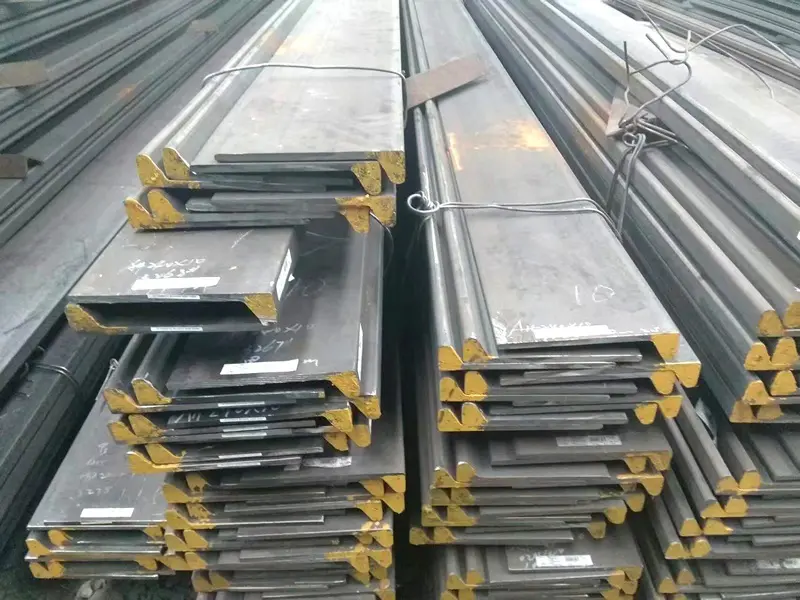
Why Application Knowledge Matters in Supplier Evaluation
A supplier who understands applications can add value beyond just selling steel.
| 1. Primary Applications. | Application | Specific Use | Why Bulb Flats Are Chosen |
|---|---|---|---|
| Ship Hulls | Longitudinal and transverse stiffeners on bottom, side, and deck plates. | High stiffness-to-weight ratio, reduces hull weight. | |
| Offshore Platforms | Stiffeners in jacket legs, deck plates, and helidecks. | Withstands harsh wave loads, corrosion-resistant grades2 available. | |
| Wind Turbine Towers | Internal and external stiffeners. | Provides rigidity without adding excessive weight. | |
| Bridges | Stiffeners in steel box girders. | Efficient for long spans. |
2. How Application Knowledge Helps You.
- Grade Selection: A supplier who knows the application can recommend the right grade (e.g., DH36 for a ship hull, S355 for a bridge).
- Toughness Requirements: They will ask about operating temperature and recommend the appropriate impact-tested grade3.
- Dimensional Advice: They can advise on standard sizes that match your design, potentially saving cost and lead time.
- Welding Recommendations: They may offer guidance on weldability based on the grade and application.
3. Red Flags in Supplier Responses.
- "They are used in construction." (Too vague, misses marine focus.)
- "I’m not sure, what does your design say?" (Lacks proactive knowledge.)
- "They are like flat bars." (Fundamental misunderstanding.)
4. The Value of a Knowledgeable Supplier.
A supplier who understands your application can:
- Prevent mistakes by catching specification errors.
- Suggest alternatives that may be more cost-effective or available sooner.
- Provide technical support during fabrication.
- Be a partner, not just a vendor.
My Insight from the Field
A client in Thailand was designing a new type of fishing vessel. They specified bulb flats based on a European design. Our team, knowing the application, asked about the operating conditions. The vessel would operate in tropical waters, so AH36 was sufficient; they had specified DH36 unnecessarily. We saved them money by suggesting the lower grade. This is the kind of value a knowledgeable supplier provides. It is not just about price; it is about expertise.
Conclusion
Evaluating bulb flat steel suppliers requires looking beyond price. Key factors include understanding of critical properties like toughness, knowledge of applications, capability to supply required sizes, and a track record of quality and communication. A supplier who scores high on these factors is a reliable partner for your marine projects.
-
Understanding stiffeners is crucial for marine construction, ensuring structural integrity and safety. ↩ ↩ ↩ ↩ ↩ ↩ ↩ ↩ ↩
-
Corrosion resistance is essential for longevity in harsh marine environments; learn about suitable materials. ↩ ↩ ↩ ↩ ↩ ↩ ↩
-
Impact-tested grades are crucial for safety in extreme conditions; find out how to choose the right one. ↩ ↩ ↩ ↩
-
Understanding impact-tested grades helps in selecting the right steel for specific marine conditions. ↩