
Your shipbuilding project depends on high-quality marine steel plates. You have contacted several Chinese suppliers online, but you are unsure who to trust. How do you separate the reliable exporters from the traders who cannot guarantee certified quality or on-time delivery?
To find a reliable marine steel plate exporter in China, verify their direct partnerships with certified mills, check for valid classification society approvals (ABS, LR, DNV, etc.), and assess their export support like English communication and inspection services. A true exporter provides full Mill Test Certificates and understands shipbuilding specifications.
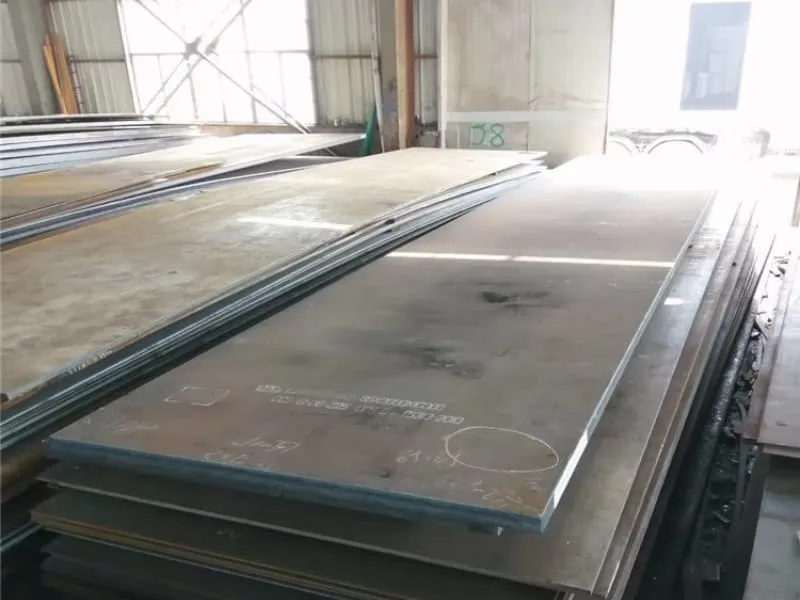
Finding the right partner is about more than just price. It is about risk management for your entire project. Based on my experience in the industry and working with international clients, I will share a clear framework. This framework helps you evaluate suppliers based on quality, material knowledge, and service, not just a website.
How to identify good quality steel?
A supplier might show you shiny pictures, but the real test of quality is in the documentation and the details they can provide. You cannot inspect every plate yourself before shipment, so you need to know what proof to ask for.
Good quality marine steel is identified by its Mill Test Certificate (MTC)1 matching the order, classification society stamp2 (ABS, LR, etc.), proper surface condition free of deep defects, and precise dimensions within tolerance. Third-party inspection reports (SGS, BV) provide an additional layer of verification.
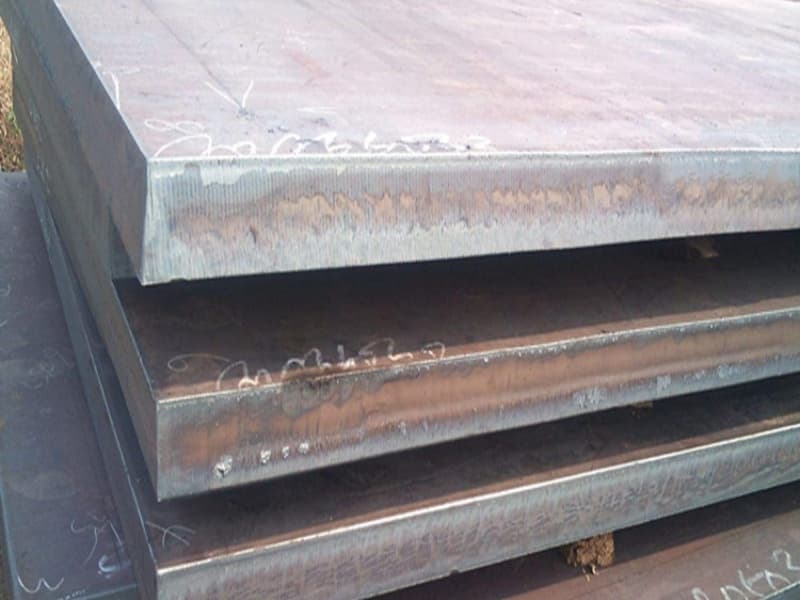
A Checklist for Verifying Quality Before You Order
You need a systematic way to assess quality claims. The table below outlines the key proofs and checks a reliable exporter should facilitate.
| Quality Indicator | What to Ask For / Look For | Why It Matters | Red Flags from a Supplier |
|---|---|---|---|
| Certification & Documentation | EN 10204 Type 3.1 or 3.2 Mill Test Certificate (MTC)1. The certificate must list the heat number, chemical analysis, and mechanical test results (yield strength, tensile strength, impact toughness). | This is the steel’s birth certificate. It provides full traceability back to the melt. Without it, the steel cannot be used in classed construction. | Supplier hesitates to provide a sample MTC. They offer only a "Certificate of Conformity" which is not from the mill. |
| Classification Society Approval | Valid approval stamps from ABS, Lloyd’s Register (LR), DNV, Bureau Veritas (BV), or CCS. The approval should cover the specific grade and thickness you need. | This proves the mill’s production process is audited and approved to make steel for marine applications. It is non-negotiable. | The supplier says the steel is "equivalent to" or "can be used for" marine grade, but shows no class approval. |
| Physical & Visual Standards | Request photos or video of the actual stock material. Look for consistent surface finish3 (no heavy pitting, deep scratches, or laminations). Check edge condition. | Surface defects can be stress concentrators. They may also indicate poor handling or inferior material. | Photos are always generic stock images. They avoid showing you the specific batch or material in their warehouse. |
| Dimensional Tolerance Compliance | Confirm the plates meet standard tolerances for thickness, width, length, and flatness (per ASTM A6 or similar). Ask about their measurement process. | Plates outside tolerance cause fit-up problems during construction. This leads to costly rework and delays. | The supplier dismisses tolerance concerns with "it’s standard," but cannot specify the standard or acceptable deviation. |
| Third-Party Inspection Support | A reliable exporter will facilitate SGS, BV, or Intertek inspection at the mill or before shipment. They arrange access for the surveyor. | An independent inspector verifies the material matches the MTC and the purchase order. This is your final quality gate. | The supplier discourages third-party inspection4, calls it unnecessary, or adds excessive fees for it. |
One of our clients from Saudi Arabia shared his old problem. His previous supplier sent plates with a valid-looking MTC. However, when the plates arrived, the stamped heat number on the plate edges did not match the heat number on the MTC. This broke the traceability chain5. The class surveyor rejected the entire shipment. This is a classic sign of a trader mixing materials or providing fake documents. A reliable exporter ensures the physical marking on the steel always matches the paperwork. Always ask for a clear photo of the stenciled marking on the plate along with its MTC. This one step can reveal a lot about a supplier’s organization and honesty.
Is 304 or 316 better for saltwater?
This is a common question, but it often points to a misunderstanding. For the primary hull structure of large ships, neither 304 nor 316 stainless steel1 is used. These are grades for specific components, not main hull plates.
For prolonged exposure to saltwater, 316 stainless steel1 is better than 304 due to its added molybdenum content, which significantly improves resistance to pitting and crevice corrosion. However, most ship hulls are built from specialized carbon or low-alloy marine-grade steel (like AH36) that is painted, not from stainless steel.
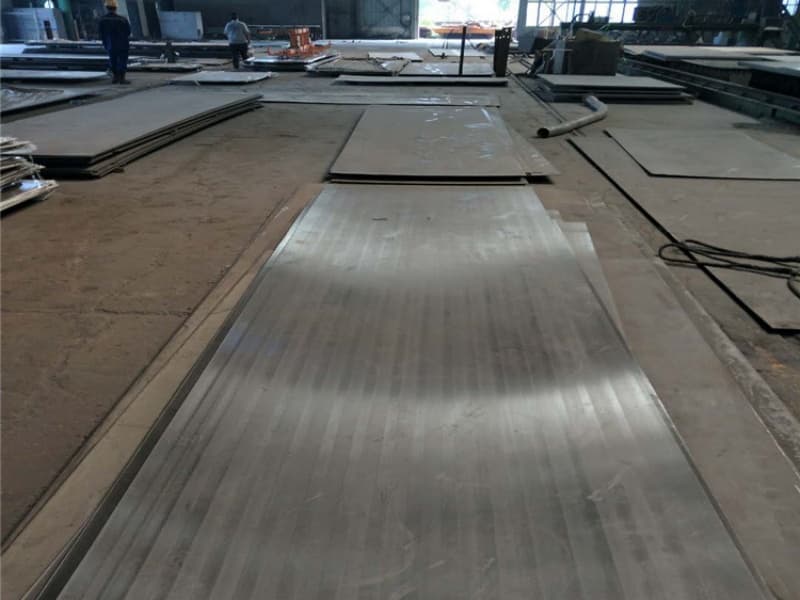
Selecting the Right Material for the Right Marine Part
Understanding where different steels are used helps you evaluate a supplier’s expertise. A good exporter knows the difference between structural steel and corrosion-resistant alloys2.
| Material Type | Common Grades | Primary Use in Marine/Shipbuilding | Key Advantage & Limitation |
|---|---|---|---|
| Marine Structural Steel | AH32, DH36, EH40 (per ASTM A131/ABS rules). Carbon/low-alloy steel. | Ship hulls, decks, bulkheads, frames. The core material for 95% of the vessel’s structure. | High strength, good toughness, weldable, cost-effective. It requires protective coating systems (paint) to resist corrosion. |
| Stainless Steel (316/L) | 316, 316L (Molybdenum-containing). | Critical fittings, valves, pumps, railings, exhaust systems, and areas in chemical tankers. | Excellent corrosion resistance in saltwater without coating. It is expensive and not used for large hull structures due to cost and different welding needs. |
| Stainless Steel (304/L) | 304, 304L (No molybdenum). | Interior fittings, galley equipment, decorative trim, non-critical marine applications. | Good general corrosion resistance. It is cheaper than 316. It can suffer pitting in chloride environments like stagnant seawater. |
| Duplex Stainless Steel3 | 2205, 2507 (Mixed microstructure). | Propeller shafts, seawater piping, offshore platform components. | Very high strength and excellent corrosion resistance. It is used in highly stressed, corrosive applications. |
| Coated/Protected Steel | Marine-grade steel with shop primer or specialized coatings. | Hull plates and sections are typically primed immediately after blasting at the mill or service center. | The coating is part of the corrosion protection system. A good exporter understands coating compatibility and handling requirements. |
A Norwegian client building advanced fishing vessels once asked us about sourcing 316L plate for a small, specific seawater tank. We supplied it. But we also discussed the rest of their hull. They needed AH36 plate for that. This showed them we were not just order-takers. We understood the different material applications within a single project. A supplier who immediately recommends 316 stainless for a hull plate quote likely does not have real shipbuilding experience. They are just selling metal. A reliable marine steel exporter will first ask about the application. They will guide you to the most cost-effective, class-compliant material for the job, which for hulls is virtually always coated marine-grade steel4, not stainless.
What is the best marine grade steel?
There is no single "best" grade. The best grade is the one that exactly matches the specific structural, environmental, and regulatory requirements of each part of your vessel.
The best marine grade steel is the one with the correct strength (e.g., AH32, AH36, DH36), toughness (related to D, E, F grades), and certification for your specific application and vessel class. For most ocean-going hulls, AH36 or DH36 offers an optimal balance of high strength, good weldability, and proven performance.
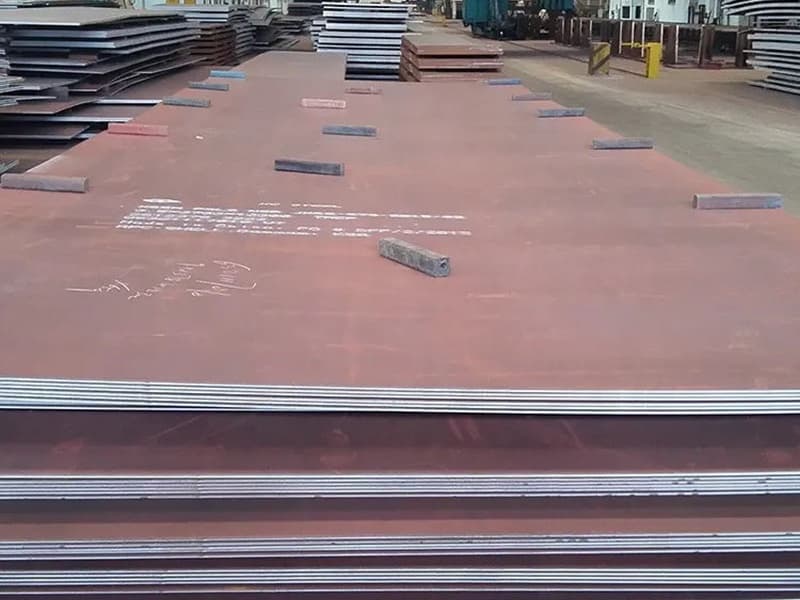
Choosing the Optimal Grade: A Functional Breakdown
The "best" grade is determined by a set of decision factors. The table below shows how to match the grade to the vessel’s needs.
| Selection Factor | Grade Consideration | Typical Application Example | What a Reliable Exporter Should Ask You |
|---|---|---|---|
| Required Strength Level | Normal Strength (A, B grades): For non-critical areas. High Strength (AH32, AH36, DH36): For hull plating to save weight. Extra High Strength (EH40, FH46): For large container ships or critical zones. |
A Panamax bulk carrier uses AH36 for its hull shell to maximize cargo capacity. | "What is the designed yield strength for this plate location?" They help you avoid over-specifying (which costs more) or under-specifying (which is unsafe). |
| Operating Temperature | Grade A/B: Basic toughness. Grade D: Improved low-temperature toughness. Grade E/F: For Arctic service or very low design temperatures. |
An LNG carrier or an ice-class vessel requires EH36 steel for its hull to prevent brittle fracture. | "What is the minimum design temperature for the vessel’s service area?" |
| Corrosion Environment | Standard grades plus corrosion allowance (extra thickness). Special Corrosion Resistant (CR) grades for ballast tanks. | The inner sides of ballast tanks might use a CR grade steel to extend coating life and reduce maintenance. | "Is this for a ballast tank or a cargo hold? Different rules apply." |
| Classification Society Rules | The grade must be listed in the society’s rules (ABS, LR, DNV, etc.) for the intended use. | A yacht built to Lloyd’s Register rules must use LR-approved grades from an LR-approved mill. | "Which classification society is the vessel under? We will supply from a mill approved by that society." |
| Weldability & Fabrication | Grades with lower carbon equivalent (C.E.) are easier to weld without pre-heat. DH36 generally has better weldability than AH36. | Complex block assemblies with many welds benefit from grades with proven good weldability to reduce cracking risk. | "What is your welding procedure? We can recommend a grade with a suitable carbon equivalent." |
We worked with a shipyard in Thailand on a series of container ships. Their design called for EH40 steel in the upper deck area for extreme strength. Our partner mill could produce it. However, based on the welding procedures the yard planned to use, we jointly reviewed the carbon equivalent of EH40. We found it was high. This would require strict pre-heat during welding, potentially slowing production. We presented the option of using a more weldable DH36 with a slightly increased thickness to meet the strength requirement. The yard’s engineers appreciated this practical input. It showed we were partners in solving fabrication challenges, not just selling the highest grade. The best grade is the one that meets all requirements while being the most constructible and cost-effective for your specific project.
Is Swedish or German steel better?
This question reflects a common perception about European steel quality. While some European mills have strong reputations, for global shipbuilding, the critical factor is not the country of origin, but the mill’s approval and compliance with international standards.
For marine applications, steel from a certified mill in China, Sweden, Germany, Japan, or Korea can be equally good if it meets the same classification society rules (ABS, LR, DNV). The "best" choice depends on project requirements, cost, availability, and the exporter’s ability to guarantee traceability and consistent quality from that mill.

Evaluating Steel Origin: Beyond Country Stereotypes
A professional evaluation focuses on mill credentials and supply chain control, not nationality. A reliable Chinese exporter partners with top-tier certified mills.
| Evaluation Criteria | Country-Based Assumption | Reality-Based Assessment (What Matters More) | How a Reliable Chinese Exporter Competes |
|---|---|---|---|
| Quality Standard | "German/Swedish steel is inherently better." | Quality is defined by the standard and certification (e.g., ASTM A131, EN 10225, ABS approval). A certified Chinese mill produces to the exact same standard. | They supply steel from mills with multiple international class approvals (ABS, LR, DNV, BV, CCS). The MTC is the proof. |
| Consistency & Traceability | European mills have a long reputation. | Consistency comes from modern process control (automated rolling, heat treatment). Traceability is ensured via the heat number system, which is global. | They provide full, unbroken traceability from the melt to the delivered plate. They invite third-party inspection to verify. |
| Cost | European steel is often significantly more expensive. | Chinese marine steel offers a competitive price while meeting identical technical specifications. This is a major advantage for cost-sensitive projects. | They offer direct mill prices plus export service, providing high value. |
| Availability & Lead Time | European mills may have longer lead times for certain grades/sizes. | Large Chinese mills have massive, flexible capacity. They can often deliver faster from stock or production. | They maintain strategic stock of common grades/sizes and have fixed rolling schedules with mills for predictable lead times. |
| Technical Support | Proximity to European designers is seen as an advantage. | Support depends on the exporter’s expertise, not the mill’s location. Understanding drawings, specs, and fabrication issues is key. | They employ fluent English-speaking engineers and sales staff who understand shipbuilding terminology and can provide technical clarifications. |
A European shipowner was building a vessel in a Vietnamese shipyard. The design specified steel from a well-known European mill. The cost was high and the lead time was long. The shipyard asked us if we could propose an alternative. We connected them with a major Chinese mill that held the same DNV and LR approvals for the required EH36 grade. We provided extensive test records and arranged for a DNV surveyor to audit the mill’s production process for this specific order. The steel was approved, met all specs, and was delivered in half the time at a 20% lower cost. The key was the exporter’s (our) role as a knowledgeable bridge, proving equivalence through certification, not nationality. When evaluating an exporter, ask: "Which specific mill do you use for this grade? Can you show me their approval certificates for my class society?" This moves the conversation from stereotypes to verifiable facts.
Conclusion
Finding a reliable exporter is about verifying their technical capability and supply chain integrity. Focus on certified mill partnerships, quality documentation, and professional service, not just the lowest price.
-
Explore the advantages of 316 stainless steel, especially its corrosion resistance, crucial for marine environments. ↩ ↩ ↩ ↩
-
Understand the significance of corrosion-resistant alloys in marine engineering and their impact on vessel longevity. ↩ ↩
-
Find out why Duplex Stainless Steel is favored for high-stress marine environments due to its strength and corrosion resistance. ↩ ↩
-
Learn why coated marine-grade steel is essential for ship hulls, providing cost-effective corrosion protection. ↩ ↩
-
Understanding traceability is key to ensuring the integrity and quality of steel products. ↩