
Getting the lowest price from China is easy. Getting the best price is a skill. Many buyers focus only on the number per ton. They forget about hidden costs and risks. This mistake can cost you more money later.
To get the best marine angle steel price from China, focus on the total landed cost, not just the FOB price. Partner with a reliable supplier who offers clear pricing, consistent quality, and full logistics support. Consider order volume, steel grade, payment terms, and always factor in inspection and shipping costs for a true comparison.
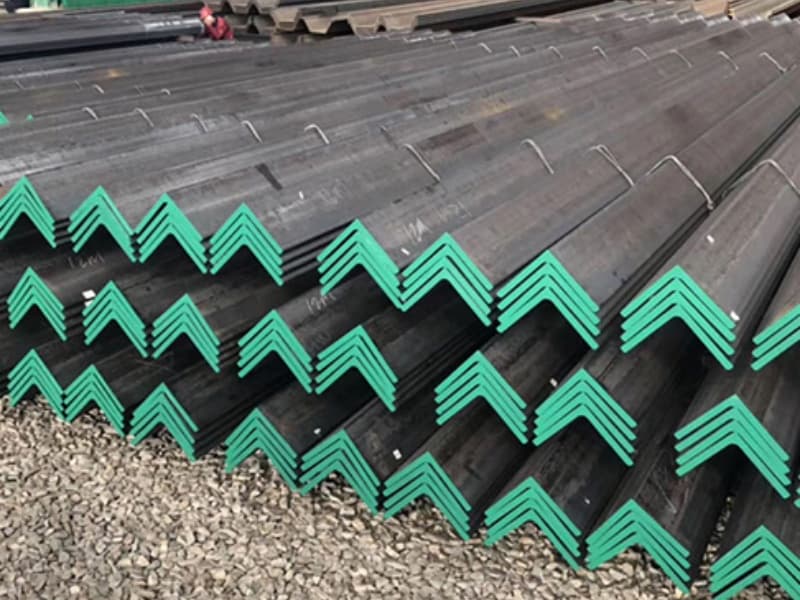
The real question is not "what is the price?" It is "what is the value?" A cheap price with poor quality, bad packaging, and slow shipping is expensive. I have worked with buyers who learned this the hard way. In this guide, I will explain how steel prices are set. I will show you what factors you can control. You will learn how to communicate with suppliers to secure a deal that saves you money and protects your project. Let’s look beyond the simple price per ton.
How much is steel per ton in China?
This is the most common question I get. But it is like asking "how much is a car?" The price changes daily and depends completely on the model, features, and where you buy it.
There is no single "steel per ton" price in China. The cost varies by product type, grade, specification, market timing, and order quantity. For marine angle steel, prices are typically quoted per metric ton (1000 kg) and can range widely based on these factors. A specific quotation is needed for accuracy.

Deconstructing the "Price Per Ton"
To understand the price, you must understand what goes into it. The number you see is the result of several layers. Each layer can change.
1. The Raw Material Base: Iron Ore and Scrap
The foundation of all steel prices is the cost of iron ore and ferrous scrap. These are global commodities. Their prices change every day on exchanges like the Dalian Commodity Exchange in China. When iron ore prices rise, steel prices usually follow. A supplier cannot control this. A good supplier will explain how these movements affect your quote.
2. The Mill’s Production Cost and Policy
The steel mill has its own costs. These include energy, labor, and equipment. More importantly, each mill has a sales policy. Large, certified mills often have fixed price lists they adjust weekly or monthly. They sell to major distributors and traders. The price from the mill is the starting point. As a direct supplier working with mills, we get prices based on our long-term cooperation and volume.
3. The "Product Premium": It’s Not Just Steel
"Steel" is too general. You are buying a specific product. Marine angle steel in grade AH36 commands a higher price than ordinary Q235B mild steel angle. The reason is the added cost of alloying elements, controlled rolling, and required testing. Similarly, a non-standard size or a special surface treatment will add a premium. The price per ton for a common size like 100x100x10mm will be different from a rare size like 200x90x18mm.
4. The Market Mood: Demand and Supply
This is the most volatile part. If many infrastructure projects start in China, domestic demand increases. This can tighten supply and push prices up. If the government announces production cuts for environmental reasons, supply shrinks and prices can rise. Conversely, during a slow season, mills might lower prices to attract orders. The price you get on Monday can be different from the price on Friday.
How to Get a Meaningful Price
Therefore, when you ask for a price, you must provide clear details. Sending an email that just says "price for steel angle?" will get you a useless number. You need to specify:
- Product: Marine Angle Steel
- Grade: e.g., ABS AH36, LR Grade A
- Size: e.g., L 100x100x10mm
- Quantity: e.g., 50 Metric Tons
- Destination Port: e.g., Dammam, Saudi Arabia
Only with these details can a supplier give you a serious FOB or CIF quote. For a project buyer like Gulf Metal Solutions, we always ask for their technical specification sheet first. This allows us to give them the exact price for the exact material they need, avoiding surprises later.
| Price Component | What It Is | How It Affects Your Quote | Can You Influence It? |
|---|---|---|---|
| Raw Material Cost | Cost of iron ore, coking coal, scrap. | Sets the base trend for all steel prices. | No. This is a market force. |
| Mill Production Cost | The mill’s expenses to make the steel. | Determines the baseline ex-mill price. | Indirectly, by choosing efficient, certified mills. |
| Product/Spec Premium | Extra cost for specific grade, size, or treatment. | A major differentiator between "ordinary" and "marine" steel. | Yes. Optimize your specs; use standard grades/sizes where possible. |
| Market Supply/Demand | Current buying and selling activity in China. | Causes short-term price fluctuations (up or down). | Partially. Timing your purchase can help. |
What is the price of MS angle 50x50x5mm?
This seems like a simple, direct question. However, the answer is not a single number. It is a formula. The price depends on what "MS" means to you and to the supplier.
The price of MS angle 50x50x5mm varies based on the steel grade, order quantity, and purchase terms. For common mild steel (like Q235B), prices might range between $500-$700 per ton FOB China. However, for marine-grade equivalents, the price will be higher. You must confirm the exact material standard and get a formal quotation for your project.
Why "MS Angle" is a Problematic Term
"MS" stands for Mild Steel. But this term is vague in international trade. It causes confusion and can lead to you receiving the wrong material.
The Grade Confusion
In China, the most common mild steel grade is Q235B. This is roughly equivalent to ASTM A36. In Europe, a common grade is S235JR. In India, it might be IS 2062 E250. They are all "mild steel," but their chemical compositions and standards are different. The price for Q235B is not the same as for S235JR, even for the same 50x50x5mm size. When you ask for "MS angle," a supplier will typically quote for Q235B because it is the cheapest and most common. But is that what your project requires?
Marine Applications Need More Than "MS"
If you are using this angle in a ship, "MS" is almost certainly wrong. You likely need a grade with specified yield strength and impact toughness, like AH36 or a similar class-approved grade. The price difference is significant. A 50x50x5mm angle in AH36 will cost more per ton than the same size in Q235B. You are paying for the alloying, the controlled production process, and the mandatory testing. Always specify the exact grade.
The Quantity and Packaging Effect
The price per ton for 5 tons of 50x50x5mm angle is much higher than for 50 tons. Setting up the production line for a small batch has a fixed cost that is spread over fewer tons. Also, packaging matters. Standard bulk bundle packaging is included. If you need individual protective wrapping or specific marking, that adds cost. For our client in Saudi Arabia, good packaging was a key value point. They were willing to pay a slight premium for it because it reduced their handling damage and labor costs.
How to Get an Accurate Price
To move from a vague range to a firm price, you must be specific. Here is the conversation we have with new buyers:
- Buyer: "What is your price for 50x50x5mm MS angle?"
- Us: "We need to confirm the material standard. Is this for general construction or for marine use? Do you have a grade requirement like Q235B, S235, or AH36?"
- Buyer: "It’s for a ship interior partition. We need standard structural steel."
- Us: "For that application, we suggest Q235B to save cost, unless your drawing specifies otherwise. The price for Q235B, 50x50x5mm, in a 20-ton order, FOB Qingdao, is approximately $XXX per ton. For AH36, it would be approximately $YYY per ton. We can provide a proforma invoice with exact prices once we confirm quantity and destination."
This clarity saves time and prevents costly mistakes. The "price" only becomes real when the specification is locked down.
| Specification Level | What It Typically Means | Price Implication | Risk if Not Clarified |
|---|---|---|---|
| "MS Angle" (Vague) | Supplier assumes cheapest common grade (e.g., Q235B). | Lowest apparent price. | High. You may get material unsuitable for your purpose. |
| "Q235B Angle" (Clear Grade) | Specific Chinese mild steel standard. | Competitive price for non-critical uses. | Low, if Q235B meets your needs. |
| "ASTM A36 Angle" (Int’l Std.) | Specific American mild steel standard. | Slightly higher than Q235B due to certification. | Very low for projects requiring this spec. |
| "ABS AH36 Angle" (Marine Grade) | High tensile steel for shipbuilding. | Premium price due to enhanced properties and testing. | None. This is the correct spec for marine frames. |
What is the current price of steel per ton?
I could give you a number right now. But by the time you read it, it would be outdated. The "current" price is a snapshot. More important is understanding the trends and where to find reliable information.
There is no universal "current price." You must check real-time sources. For a general indicator, look at the Shanghai Futures Exchange (SHFE) rebar contract. For marine steel, contact suppliers directly with your specific requirements (grade, size, quantity) to get a live, all-in quotation that reflects the true market at that moment.
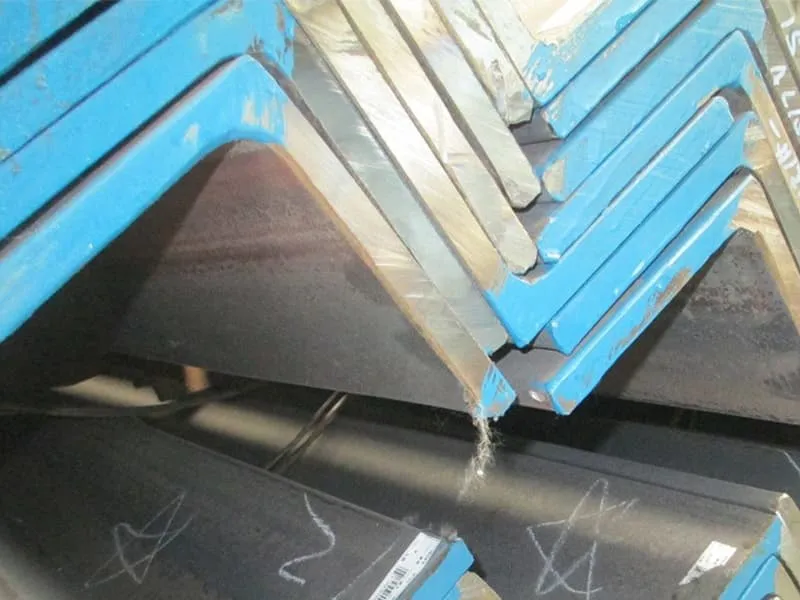
Navigating the Sea of Price Information
Relying on a single source for "the price" is risky. Smart buyers cross-reference information to build a true picture.
1. Official Exchange Data (The Pure Commodity Price)
The Shanghai Futures Exchange (SHFE) is the key benchmark in China. They trade "rebar" futures contracts (RB). The price you see here is for a standardized grade of steel reinforcement bar, for delivery in a future month. It does not represent your marine angle steel. However, it is an excellent indicator of market sentiment and the general direction of steel prices. When the SHFE rebar price moves up or down, the entire domestic market usually follows. Watching this trend helps you decide if it’s a good time to buy or if you should wait.
2. Industry Price Reporting Agencies
Companies like Mysteel, SMM, and Metal Bulletin collect data from mills, traders, and warehouses. They publish daily price indexes for different products and regions. For example, you can find "Mysteel: HRB400 20mm rebar price in Beijing" or "Mysteel: Q235B 4.75mm hot-rolled coil price in Shanghai." These indexes are more specific than futures and are based on actual transactions. They give you a realistic range for mainstream products. Again, marine angle steel is a niche product, so its price will correlate with but not exactly match these indexes.
3. Supplier Quotations: The Only Price That Matters
The exchange and index prices are for information. The only price that matters for your business is the formal quotation from your supplier. This quote should include:
- Unit Price: e.g., USD $XXX / MT
- Price Term: FOB (Free On Board port), CFR (Cost and Freight), or CIF (Cost, Insurance, Freight) to your port.
- Validity Period: e.g., This price is valid for 7 days.
- Product Details: As discussed earlier.
A professional supplier will explain the basis of their quote. For instance, they might say, "Our quote today is based on the current mill price list, plus the processing fee for your size, and the current freight rate to Haiphong." This transparency builds trust.
A Practical Strategy for Buyers
Do not call ten suppliers every day asking for the "current price." It is inefficient. Instead:
- Monitor the trend: Check the SHFE rebar price once a week.
- Establish relationships: Work with 2-3 reliable suppliers. Send them your annual or quarterly demand forecast.
- Request structured updates: Ask your main supplier for a monthly market summary and price outlook for your key products.
- Lock in prices strategically: For large, planned projects, discuss with your supplier the possibility of hedging or partial price locking when the market is favorable.
This approach turns you from a price-taker into an informed partner. Our long-term clients operate this way. They share their project pipeline with us. We then advise them on the best time to place orders, sometimes saving them significant amounts by avoiding market peaks.
| Information Source | What It Tells You | Its Limitation | Best Use For Buyers |
|---|---|---|---|
| Futures Exchange (SHFE) | Overall market sentiment and future price direction for basic steel. | It is for generic rebar, not your specific marine product. | Gauging the general market trend (up/down/stable). |
| Price Index (e.g., Mysteel) | Average transaction price for specific, common products in key markets. | May not cover specialized marine grades or angle sizes. | Getting a benchmark range for related steel products. |
| Supplier Quotation | The actual all-in cost to procure your exact material. | It is specific to one supplier at one point in time. | The definitive price for making a purchasing decision. |
Is the price of steel expected to go down?
Everyone wants to buy at the lowest point. Predicting the exact bottom is impossible. However, you can understand the factors that push prices down. This helps you make an educated decision rather than just guessing.
Maybe. Steel prices are cyclical and influenced by government policy, raw material costs, and global demand. Prices may decrease if Chinese government production controls ease, if iron ore prices fall, or if global economic slowdown reduces demand. However, long-term decarbonization policies may support higher prices. Close monitoring of these factors is essential.
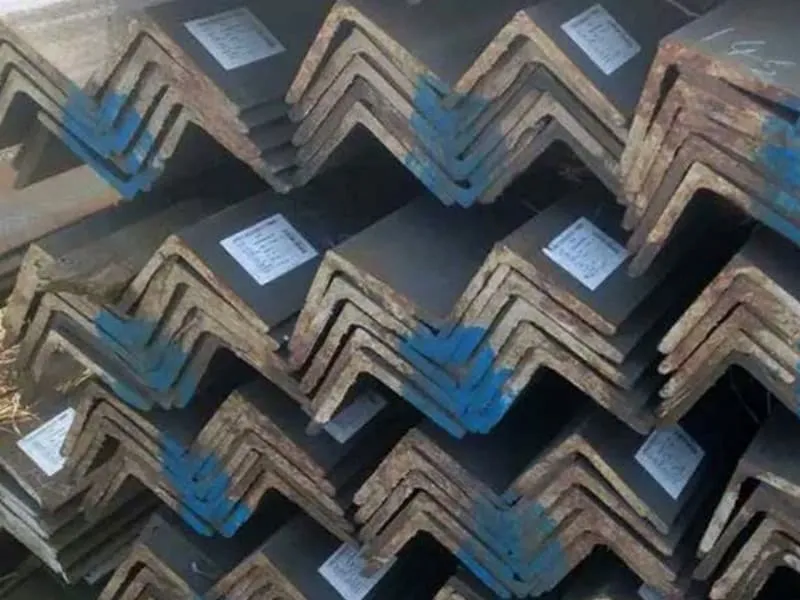
Analyzing the Forces That Push Prices Lower
Price drops do not happen randomly. They are driven by a shift in the balance between supply and demand. Let’s look at the main downward pressures.
1. Government Policy Shifts
The Chinese government is the most powerful actor in the market. In recent years, they enforced strict production cuts, especially in winter, to control pollution and reduce carbon emissions. This policy reduced supply and kept prices high. If the government decides to relax these controls to support economic growth, more steel will enter the market. Increased supply, if demand is stable, leads to lower prices. Watching official announcements from agencies like the MIIT (Ministry of Industry and Information Technology) is crucial.
2. Falling Raw Material Costs
Steel is made from iron ore and coal. If the price of iron ore on the Singapore Exchange or Dalian Exchange drops significantly, the cost base for steel mills falls. They can then lower their selling prices and still maintain margins. This often happens if major miners (like Vale, Rio Tinto) increase production, or if demand for iron ore from China’s own mills weakens.
3. Weakening Demand
Steel demand comes from key sectors: real estate, infrastructure, manufacturing, and exports. If the Chinese property market slows down, or if the government reduces infrastructure spending, domestic demand falls. Similarly, if a global recession reduces orders for Chinese manufactured goods and ships, demand for steel drops. When mills have high inventories and fewer orders, they start offering discounts to attract buyers. This is a classic signal of a buyer’s market.
4. Increased Mill Competition and Overcapacity
China has massive steel production capacity. When demand is strong, this is not a problem. When demand softens, mills compete fiercely for orders. This competition can drive prices down, sometimes below cost, as mills try to maintain cash flow and market share. This situation can lead to price volatility and very attractive short-term offers.
How This Affects Your Buying Decision
You cannot control these macro factors. But you can use your understanding of them.
- For long-term projects: Do not try to time the market perfectly. If prices are at a historically high level due to strict production cuts, it might be wise to wait if your schedule allows. If prices have dropped 20% from a recent peak and your demand is firm, it could be a good time to buy.
- For regular procurement: Consider a mix of strategies. Place a core order at current prices to secure supply. Then, set aside a portion of your budget for spot purchases if the market dips.
- Work with your supplier: Ask them for their analysis. A good supplier has a market research team. They can provide insights you might not have. For example, we regularly advise our clients when we see a potential price adjustment coming from our partner mills. This helps them plan.
Remember, the "best price" is often not the absolute lowest. It is the price that ensures you get the right quality material, delivered on time, from a partner you trust. Chasing the lowest possible number can lead you to unreliable suppliers. Gulf Metal Solutions chose us not because we had the rock-bottom price, but because we offered a stable, transparent price with guaranteed quality and service. That reliability was more valuable to their business than a temporary discount.
| Downward Price Driver | How It Works | Current Likelihood (General Assessment) | What to Watch |
|---|---|---|---|
| Easing of Production Cuts | Government allows mills to produce more, increasing supply. | Possible as policy goals evolve. | Official announcements from MIIT on steel output targets. |
| Falling Iron Ore/Cool Costs | Lowers the fundamental cost of making steel. | Constant cyclical possibility. | Prices on Dalian/Singapore iron ore futures. |
| Weak Domestic Demand | Lower consumption in construction and manufacturing reduces orders. | Tied to the health of the Chinese economy. | Data on fixed asset investment, PMI, property sales. |
| Global Economic Slowdown | Reduces demand for Chinese exports and new shipbuilding. | Depends on global economic conditions. | World Bank/IMF growth forecasts, new ship order volumes. |
Conclusion
The best price combines a competitive cost with reliable quality and service. Understand the market factors, specify your needs clearly, and build a partnership with a trustworthy supplier. This strategy delivers real value, not just a low number.