
You send out ten inquiries for the same steel plate. You get ten different prices, and they seem to compare nothing. The lowest quote might hide costly risks, while the highest may include unnecessary extras. Getting a true "best" quote is a skill.
To get the best marine steel plate quotation, provide clear and complete specifications: grade, dimensions, quantity, delivery terms, and required certifications. Then, compare suppliers on total cost-in-place, not just unit price, factoring in quality assurance, reliability, and logistical support.
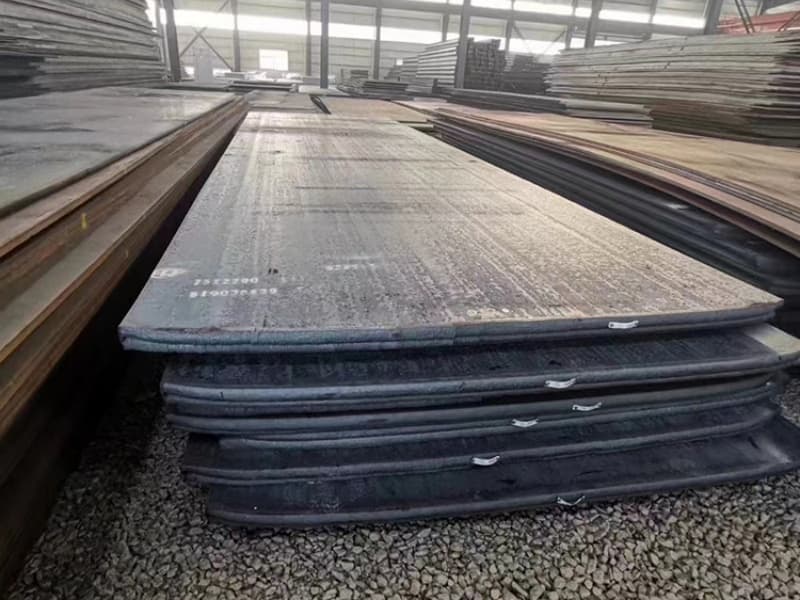
A quotation is more than a price list. It is a proposal and a promise. It tells you what the supplier understands about your needs and what they commit to deliver. For project managers and buyers, the art lies in asking the right questions to get comparable, transparent offers. Let’s break down the process.
How to estimate steel plate?
A rough estimate can help with initial budgeting, but a precise quote requires exact specifications. Many buyers make the mistake of asking for a price per ton without providing enough detail, leading to inaccurate estimates that change later.
To estimate the cost of a steel plate, first calculate its weight using the formula: Weight (kg) = Thickness (mm) x Width (m) x Length (m) x 7.851. Then, multiply this weight by the current market price per ton for the specific grade and condition. Remember, this is just a material cost estimate and excludes processing, testing, and logistics.
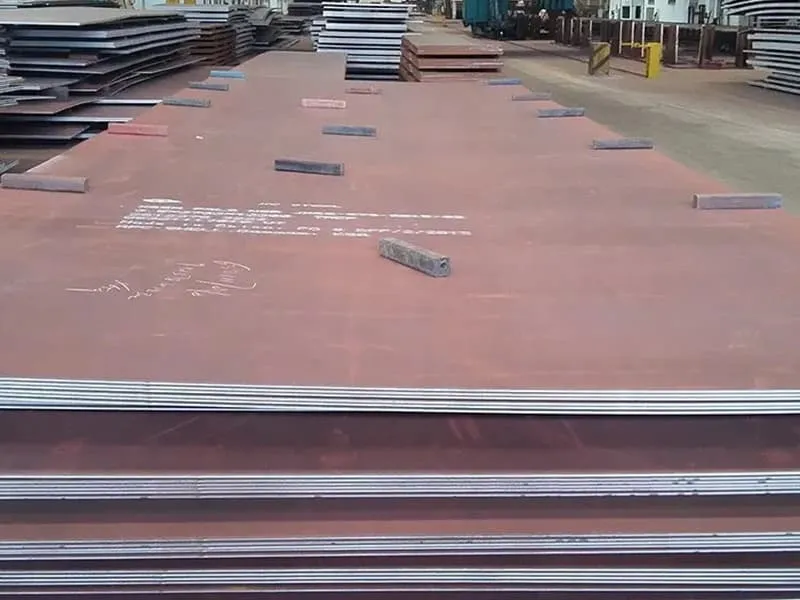
From Rough Guess to Precise Budget: A Step-by-Step Framework
Estimating steel plate cost is a layered process. A casual guess based on last month’s commodity price is dangerous. A professional estimate is built from the ground up, separating material cost from all other value-added components. This clarity is what allows for meaningful comparison between suppliers.
Step 1: The Foundational Weight Calculation
The density of steel is approximately 7.85 grams per cubic centimeter, or 7850 kg per cubic meter. The standard formula is your starting point:
Weight (kg) = Thickness (mm) x Width (m) x Length (m) x 7.851
Example: For one plate of 10mm thickness, 1.5m width, and 6m length:
Weight = 10 x 1.5 x 6 x 7.85 = 706.5 kg.
Important Notes:
- Use consistent units (mm for thickness, meters for width/length).
- This gives the theoretical weight. Mills have permissible weight tolerances (usually +10%/-5% or similar). Your final invoice may be based on actual weight, which can differ.
- For large orders, you often provide a "cutting list" or "nesting list" to the supplier. They use this to optimize how they cut from mother plates, which affects yield and total cost.
Step 2: Understanding the Price Components
The "price per ton" you request is not a single number. It is a bundle. A proper supplier will break it down, but you should know what to look for. Here is a table of typical components:
| Cost Component | What It Is | Is It Negotiable? | Impact on Final Cost |
|---|---|---|---|
| Base Material Price2 | The cost of the raw steel slab and basic rolling. Tied to global indexes (iron ore, scrap) and mill production costs. | Low. Fluctuates daily. Different mills have different base prices. | The largest single component. |
| Grade Premium3 | Extra cost for alloying elements and processing to meet higher specs (e.g., AH36 vs. A36, or DH36 vs. AH36). | No. Fixed by the grade’s technical requirements. | Can add 5-20%+ to the base price. |
| Testing & Certification Fee4 | Cost for mechanical tests, chemical analysis, and issuing the Mill Test Certificate (MTC). For 3rd party inspection (SGS/BV), this is extra. | Sometimes. Often included for small orders, itemized for large ones. | A small percentage, but critical for quality assurance. |
| Processing Charges5 | Costs for cutting to size, edge milling (UM), surface blasting, priming/painting. | Yes. Depends on the complexity of the work. | Can be significant. Always request a breakdown. |
| Packaging Fee | Cost for waterproof wrapping, steel framing, and securing plates for export. | Yes. Basic vs. premium packaging. | Our client, Gulf Metal Solutions, specifically praised our packaging for preventing damage in transit, which saved them cost. |
| Inland Freight & Port Charges6 | Transport from mill to loading port, port handling fees, documentation. | Partially. Depends on route and volume. | Must be clarified: Is the quote EXW, FOB, or CFR? |
Step 3: Moving from Estimate to Firm Quotation
An estimate becomes a firm quotation only when all variables are fixed. To get there, your inquiry must specify:
- Material Standard & Grade7: e.g., ASTM A131 AH36, EN 10025 S355G2+M.
- Delivery Condition: As-rolled, normalized, TMCP?
- Exact Dimensions & Tolerances: Thickness, width, length, and the standard for tolerance (e.g., EN 10029).
- Quantity: Total tons and the number of pieces per size.
- Testing Requirements: MTC only, or additional Charpy tests, ultrasonic testing?
- Surface Preparation: Mill scale, blasted, primed?
- Packaging: Standard export pack, individual crate, etc.
- Trade Term: EXW Mill, FOB Shanghai, CFR Dammam Port?
- Payment Terms8: T/T, LC at sight?
Only when a supplier prices against this complete list can you compare their offer apples-to-apples with others. A vague inquiry will get a vague, often misleading, estimate.
How much does 1 kilogram of steel cost?
There is no single answer. The price per kilogram of steel varies dramatically based on its form, grade, and market conditions. Asking this question without context is like asking the price of "fabric" without specifying cotton or silk.
The cost of 1 kg of steel varies widely. For common carbon steel plate, it could be between $0.70 to $1.50 per kg. For specialized marine-grade steel like AH36 or DH36, it typically ranges from $0.90 to $2.00+ per kg, depending on thickness, order size, certification requirements, and global market prices at the time of purchase.
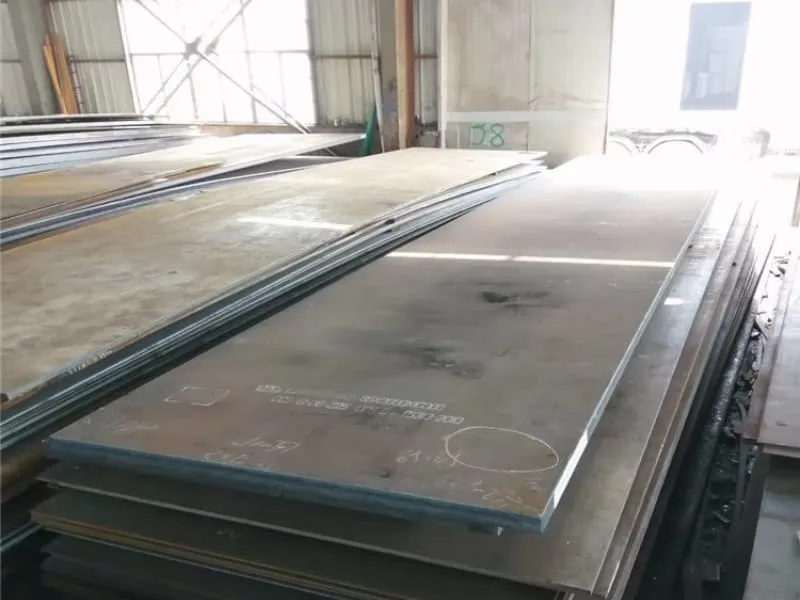
Decoding the Variables Behind the Per-Kilogram Price
Giving a single number for the cost of steel per kilogram is not just unhelpful—it can be actively misleading. The price is a dynamic output of multiple input variables. Smart buyers focus on understanding and controlling these variables to get a fair price, not just a low number.
Primary Price Drivers:
-
Raw Material and Market Dynamics: This is the biggest, most volatile factor. The cost is influenced by:
- Iron Ore and Coking Coal Prices: The primary inputs for blast furnace steelmaking.
- Scrap Metal Prices: A key input for electric arc furnace (EAF) steelmaking.
- Global Demand and Supply: Economic activity in China, Europe, and the USA directly affects worldwide prices.
- Government Policies: Tariffs, export taxes, and environmental regulations can shift prices regionally.
-
Product Form and Grade (The Quality Factor): Steel is not a commodity. Higher performance commands a higher price.
- Form: Rebar is cheaper per kg than heavy plate. Plate requires more complex rolling and handling.
- Grade: A simple A36 plate is the baseline. Adding elements for strength (like in AH36) or toughness (like in DH36/EH36) adds cost. The table below illustrates typical relative premiums. (Note: Actual premiums fluctuate).
| Steel Grade (Example) | Typical Use | Key Property | Approximate Price Premium vs. Basic Carbon Steel |
|---|---|---|---|
| ASTM A36 / S235 | General structure | Basic strength | Baseline (0%) |
| ASTM A572 Gr. 50 / S355 | Heavy construction | Higher strength | +5% to +15% |
| ASTM A131 AH36 / DH36 | Ship Hull | High strength, good toughness | +10% to +25% |
| ASTM A131 EH36 / FH36 | Ice-class vessels, Offshore | Very high low-temperature toughness | +20% to +40%+ |
| Stainless Steel (304) | Special marine applications | High corrosion resistance | +200% to +400% |
- Order Characteristics (The Volume and Complexity Factor):
- Order Quantity (MOQ): Mills have minimum order quantities for specific grades and sizes. A 50-ton order will get a better per-ton rate than a 5-ton order. However, a good supplier can often bundle smaller orders from different clients to meet mill MOQs, offering you flexibility.
- Size and Thickness: Producing very thick (over 50mm) or very wide plates requires special mill passes and can be more expensive per kg. Non-standard sizes may incur extra cutting charges.
- Certification and Processing: A plate with just a standard MTC is cheaper than the same plate that also requires third-party inspection (SGS), ultrasonic testing (UT), or a specific paint system.
How to Get a Meaningful Price Per Kg:
Instead of asking "How much per kg?", you should ask:
"What is your all-in price, CFR [Your Port], for [Quantity] tons of [Exact Grade and Dimensions], with standard MTC and export packaging?"
The supplier’s response to this question will be a firm figure (e.g., $950/MT CFR). You can then easily calculate the cost per kg ($0.95/kg). This figure is meaningful because it includes the agreed-upon specifications and logistics to your doorstep. You can now compare this total landed cost with other suppliers who have quoted on the exact same basis. This eliminates surprises and ensures you are comparing the true cost of ownership, not just an incomplete headline number.
What grade is marine steel plate1?
"Marine steel plate" is not a single grade. It is a category defined by its ability to withstand the marine environment. The specific grade is chosen based on the vessel’s type, the structural component’s location, and the operating conditions.
Marine steel plate refers to a range of grades certified by classification societies2 for shipbuilding. Common grades include "A", "B", "D", "E", and "AH", "DH", "EH" under standards like ASTM A1313 or ABS rules. The letter indicates toughness level, with "E" being high toughness for low-temperature service. Higher grades like "EH36" combine strength (36 ksi yield) with exceptional toughness.
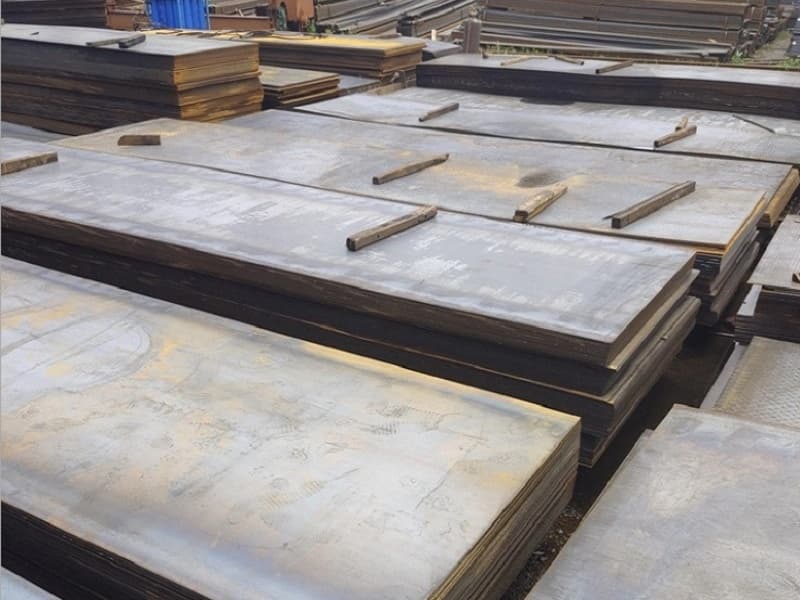
Navigating the Alphabet Soup: A Guide to Marine Steel Grades
Selecting the correct grade is the most important technical decision in the quotation process. Using an incorrect or sub-standard grade can lead to catastrophic failure and void insurance. Understanding the grading system allows you to specify precisely what you need and verify what you receive.
The Two Main Grading Systems:
Marine steels are primarily governed by two parallel systems: the traditional "Normal Strength" grades and the modern "High Strength" grades.
1. Normal Strength Steel Grades4 (Grades A, B, D, E):
These are the original shipbuilding steels. Their yield strength5 is around 235 MPa (34 ksi). The letter indicates the required level of impact toughness6 (resistance to brittle fracture).
- Grade A: Standard quality. No required Charpy V-notch impact test. Used for non-critical internal structures.
- Grade B: Improved quality. Requires impact testing at 0°C. Very common for general hull plating in temperate zones.
- Grade D: Superior quality. Requires impact testing at -20°C. Used for more critical parts and vessels operating in colder waters.
- Grade E: Extraordinary quality. Requires impact testing at -40°C. Used for the most critical structural members (like sheer strake) and vessels for Arctic service.
2. High Strength Steel Grades7 (Grades AH, DH, EH, FH):
These steels offer higher yield strength5 (typically 315 MPa or 355 MPa, which is 46 or 51 ksi) while maintaining defined toughness levels. The "H" stands for High Strength. The prefix letter (A, D, E, F) has the same toughness meaning as in normal strength steels.
- AH36 / DH36 / EH36: Yield strength of 355 MPa (51 ksi). The most common high-strength grades for modern shipbuilding (bulk carriers, container ships). AH36 is common, DH36 offers better toughness, EH36 is for critical/low-temperature areas.
- AH40 / DH40 / EH40 / FH40: Yield strength of 390 MPa (57 ksi). Used where higher strength-to-weight ratio is needed.
- FH grades (e.g., FH32, FH40): The "F" indicates exceptional toughness, often for special applications like LNG carrier containment systems.
How Classification Societies Fit In:
These grades (A, B, D, E, AH36, etc.) are defined by classification societies2 like ABS (American Bureau of Shipping), LR (Lloyd’s Register), DNV (Det Norske Veritas), and others. A plate is not truly "marine grade" unless it is produced at a mill approved by these societies and supplied with a certificate bearing the society’s stamp or notation (e.g., "ABS Grade AH36"). This approval process ensures the mill’s entire production and testing system is audited and controlled.
Specifying the Grade in Your Quotation Request:
Your inquiry must be precise. Do not just ask for "marine steel." Specify:
- The Standard: e.g., "ASTM A1313"
- The Grade: e.g., "AH36"
- The Classification Society Approval: e.g., "with ABS approval and certification"
Example: "We require 50 MT of ASTM A1313 AH36 steel plate, with ABS type approval and mill certificates."
This level of detail immediately separates professional suppliers with access to certified mills from traders who may offer cheaper, non-certified material. It also ensures that the quotation you receive is for a product that will be accepted by the shipyard and the vessel’s certifying authority. For our clients, this precision is non-negotiable—it’s the foundation of the "stable quality" they demand.
How much does a 4×8 sheet of 1/4 steel cost?
This is a common question for smaller fabricators, but it’s framed for sheet metal, not typically for heavy marine plate. For marine plates, we think in meters and tons, not feet and sheets. However, the principle of clear specification remains the same.
A standard 4×8 foot sheet of 1/4 inch (6.35mm) thick mild steel (like A36) might cost between $250 and $400 as a retail item, depending on market. For marine-grade steel of similar size (e.g., 6mm AH36), the cost is higher due to the grade premium, and it is almost always sold by weight in larger quantities, not as single sheets.
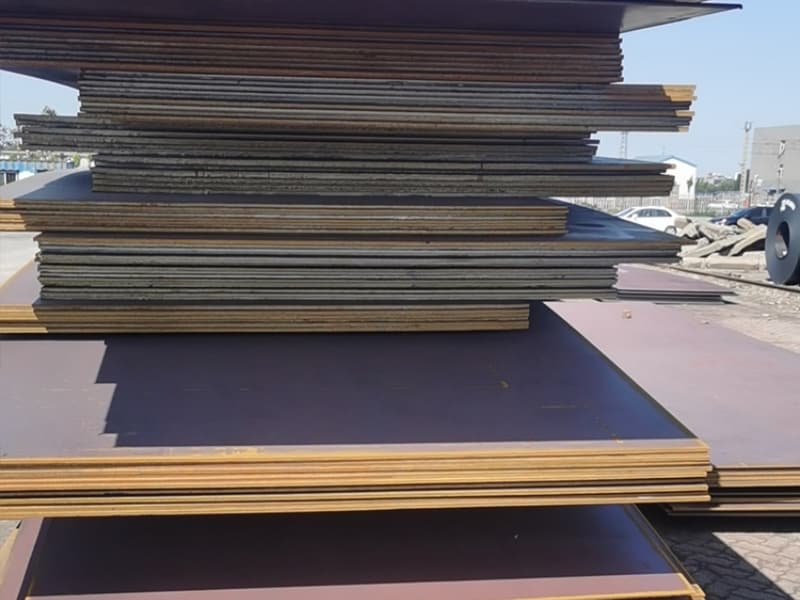
From Retail Sheet to Industrial Plate: Scaling Your Inquiry for Marine Projects
The question about a single 4×8 sheet highlights a common divide in the steel market: retail/light fabrication vs. industrial/marine procurement. Understanding this divide is key to getting realistic quotes and building a relationship with the right type of supplier.
Why the "Single Sheet" Model Doesn’t Work for Marine Plates:
- Product Form and Scale: A "4×8 sheet" (1219mm x 2438mm) of 1/4" (6.35mm) is a light, manageable product often sold from a service center’s warehouse. Marine plates are heavy, thick (often 10mm to 50mm+), and large (lengths up to 12m or more). They are rolled to order at a mill, not stocked as finished sheets in standard sizes.
- Supply Chain Difference: Retail sheets are part of a mass distribution network. Marine plates are part of a project-based, made-to-order supply chain involving mills, testing, and complex international logistics.
- Pricing Model: A single sheet price includes high margins for cutting, handling, and retail profit. Marine plate pricing is based on bulk tonnage, with much lower margins per kg but higher total order value.
How to Correctly Frame Your Inquiry for Marine Quantities:
If you are used to buying sheets but are now procuring for a marine project, you need to shift your mindset. Instead of asking for "X number of sheets," you need to provide a material list or cutting list.
Example Conversion:
Your design might call for 10 pieces of 1/4" thick, 4′ x 8′ plates.
- Step 1: Convert to Metric (Industry Standard): Thickness: 6.35mm. Size: 1219mm x 2438mm.
- Step 2: Calculate Total Weight:
Weight per plate = 6.35 x 1.219 x 2.438 x 7.85 ≈ 148.5 kg.
Total weight for 10 plates = 1,485 kg (≈1.49 metric tons). - Step 3: Build Your Professional Inquiry:
You would now inquire: "Please quote for 1.49 MT of ASTM A131 AH36 steel plate, cut to the following dimensions: 10 pieces at 6.35mm T x 1219mm W x 2438mm L. Tolerance to ASTM A6. Packaging for export. Price FOB Shanghai."
The Advantages of This Approach:
- You Get an Accurate Quote: The supplier can calculate the exact weight and check if your sizes can be nested efficiently from standard mill plates, minimizing waste.
- You Reveal Supplier Capability: A supplier who can professionally handle a detailed cutting list is likely set up for industrial business. A supplier who insists on selling only by the full, uncut mother plate may not be the right partner for a fabrication project.
- It Enables Comparison: You can send this precise list to multiple suppliers. Their quotes will be directly comparable because they are bidding on the exact same scope of work (material + processing).
- It Manages Expectations: It clarifies that you are engaged in a serious B2B procurement, not a one-off retail purchase. This attracts the right kind of suppliers—like us, who specialize in flexible MOQ and custom cutting for project contractors.
For a company like Gulf Metal Solutions, they are not buying single sheets. They are buying dozens of tons of plate and angle, cut to specific profiles for multiple projects. Providing a clear bill of materials (BOM) is how they get efficient, project-ready quotes that include all necessary processing, saving them time and cost on their workshop floor.
Conclusion
The best marine steel plate quotation comes from clear, detailed specifications and a supplier comparison based on total landed cost and reliability, not just the lowest unit price. Precision in your request leads to accuracy in the offers you receive.
-
Explore this link to understand the different grades of marine steel plate and their applications in shipbuilding. ↩ ↩ ↩
-
Learn about the importance of classification societies in ensuring the quality and safety of marine steel plates. ↩ ↩ ↩
-
Understand the ASTM A131 standard and its significance in the marine steel industry. ↩ ↩ ↩ ↩
-
Discover the characteristics and applications of Normal Strength Steel Grades used in marine construction. ↩ ↩
-
Learn about yield strength and its implications for the durability and safety of marine structures. ↩ ↩ ↩
-
Explore the concept of impact toughness and its critical role in selecting marine steel grades. ↩ ↩
-
Find out how High Strength Steel Grades enhance the performance and safety of modern ships. ↩ ↩
-
Understanding payment terms can help you manage cash flow and negotiate better deals. ↩