
Finding out that your bulb flat steel doesn’t meet the specs is a project manager’s worst nightmare. It stops work, creates stress, and can cost you a lot of money.
The best way to handle non-conforming bulb flat steel is to stop using it immediately, quarantine it, and then work with your supplier to replace it. A clear, step-by-step process with your supplier from the start is the only way to fix the problem fast and keep your project on track.
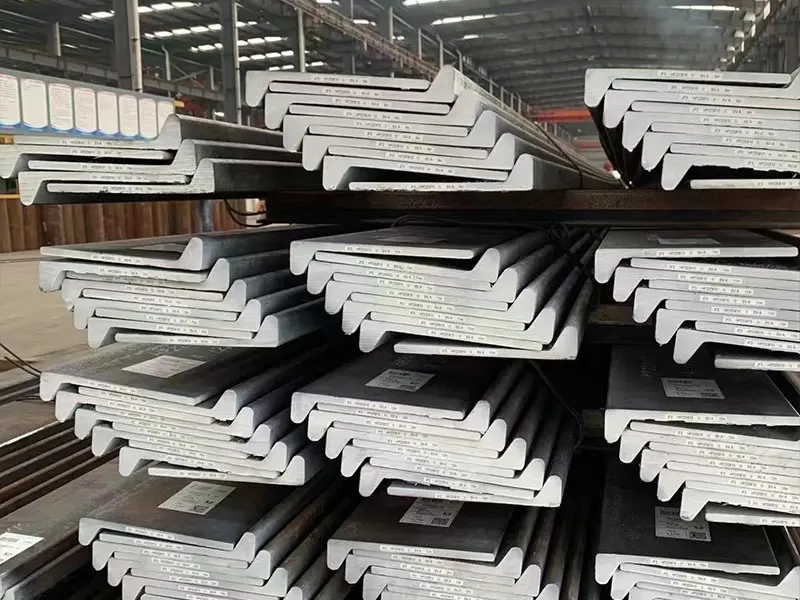
I have been in the steel business for over a decade, and I can tell you one thing for sure: even the best mills can have a bad day. A wrong grade stamp, a slight bend in the profile, or a surface imperfection can happen. The difference between a good project and a disaster is not whether these problems appear, but how you and your supply chain deal with them when they do.
How do you handle non-conforming material?
Seeing a stack of steel that doesn’t fit your requirements can make your blood pressure rise. Your first reaction might be anger, but the real challenge is to move from shock to action quickly.
The correct approach is to immediately stop work, isolate the material, and document everything with photos and inspection reports. Your next step is to notify your supplier with all the evidence and work together on a formal Non-Conformance Report (NCR)1.

The Three Pillars of Handling Non-Conforming Material
When I talk to my clients, especially project-based distributors like Gulf Metal Solutions from Saudi Arabia, I tell them to think about handling non-conforming material in three stages. It is not just about fixing one problem. It is about protecting your project and your relationship with the client. Let me break it down.
1. Immediate Action: Isolation and Identification2
This is the step you take in the first hour after finding the problem. Your goal here is to stop the problem from getting bigger. If you use bad steel in your structure, you create a much bigger problem later. You have to cut the problem off at the source.
Here is what I always advise my clients to do:
- Stop Work: Tell your team to stop using that batch of material right away. No exceptions.
- Physical Isolation3: Move the non-conforming pieces to a separate area. Mark this area with clear signs or red tape. This stops anyone from accidentally using it.
- Tag and Record: Put a red tag on every single piece. On the tag, write the date, the batch number, and the problem you found (like "Wrong Grade" or "Poor Surface").
- Photo Evidence4: Take clear photos. Take close-ups of the defect and wide shots to show how much material is affected.
2. Formal Process: The Non-Conformance Report (NCR)
Once the material is safe, you need to make the problem official. This is where you document everything. A verbal complaint over the phone is not enough. You need a paper trail. This NCR is your tool to get a solution.
A good NCR should have these parts:
- Description of the Problem: Be specific. Do not just say "steel is bad." Say "Bulb flat steel grade A32 shows test certificate for grade A36. Mill certificate number is XYZ."
- Quantity Affected: Tell them exactly how many pieces and how many tons are involved.
- Root Cause Analysis5: This is often the hardest part. Was it a mill mistake? A handling mistake? Did we order the wrong thing? Sometimes, the "non-conformance" is actually a miscommunication in the specs.
- Proposed Disposition6: This is the most important part. What do you want to happen? Do you want them to replace it? Do you want a credit? Do you want to repair the material?
3. Resolution and Prevention7
The final stage is about finding a solution and making sure it does not happen again. This part is about working with your supplier, not against them. I have found that a good supplier will work hard to fix their mistake. A bad supplier will make excuses.
For the resolution, you have a few common paths:
- Replacement8: The supplier sends new, correct material. This is the best option for critical structural parts.
- Rework or Repair: Sometimes, the problem is small. A surface rust issue can be cleaned and painted. A small bend can be straightened.
- Accept with Credit: If the problem is not structural and you can still use the material in a non-critical area, you can ask for a price reduction.
- Reject and Return: For major problems like wrong grade, this is the only safe option.
After we fix the problem, I always ask my clients: "What did we learn?" We look at the process. Did we have the right inspection at the mill? Did we have a clear communication about the required standards? This step turns a bad situation into a way to make your supply chain stronger for the next project.
What should be done with non-conforming parts?
You have a pile of steel that is not right. Now you face a tough question. Can you still use it? Is it safe? Or is it just scrap that you have to pay to get rid of?
You must determine the disposition of the parts based on a clear hierarchy: rework, accept as-is, reject, or scrap. The final decision depends on a risk assessment, the type of non-conformance, and the input of the project’s engineer.
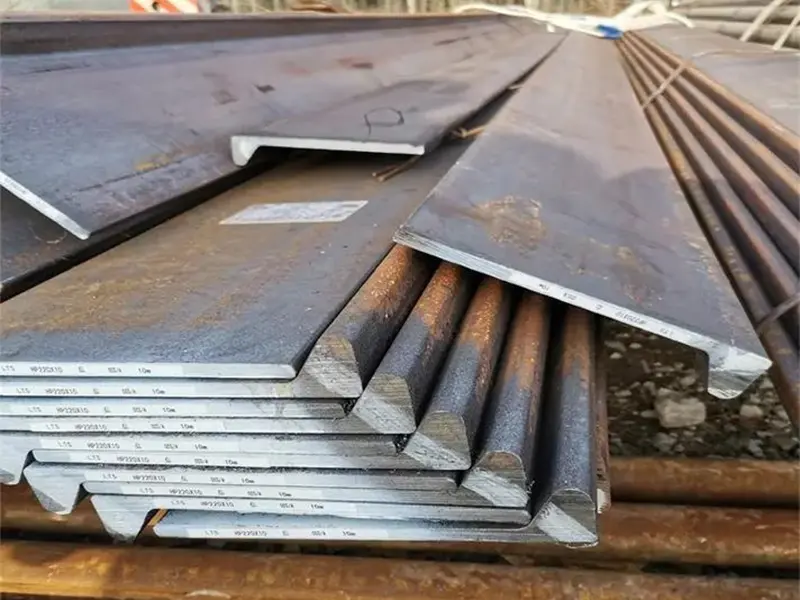
A Systematic Approach to Disposition
When I work with contractors on big projects, I help them set up a simple system to decide what to do with bad parts. This is not a guessing game. It is a decision tree based on facts and standards. Here is how I break it down.
Rework
This means you fix the part so it meets the specs. Rework is a good option when the problem is small and fixable. For bulb flat steel, rework might mean:
- Straightening: If a bar has a slight bend, you can use a press or a straightening machine to fix it.
- Surface Cleaning2: If there is light rust from storage, you can clean it with a wire brush or a sandblaster.
- Cutting: If a piece is too long, you cut it to the right size.
- Welding Repairs3: For small surface flaws like pitting, a qualified welder can fix it after a careful inspection.
The key with rework is the cost. You need to compare the cost of fixing it to the cost of buying new steel and waiting for it. Also, you need to be sure the rework does not damage the steel’s strength. For structural steel, any welding or heating must follow a strict code.
Accept As-Is4
This is the best-case scenario for your stress levels. You can use the part without doing anything to it. This is only possible if the non-conformance is minor and does not affect the part’s performance. A small scratch in the paint does not matter. A slight variation in thickness that is still within the allowed tolerance is fine.
But you have to be careful. You cannot just decide this yourself. You need to get a formal "accept as-is" from the project engineer or the client. I always tell my clients to get this in writing. An email is better than a verbal agreement. This paperwork protects you later if there is an inspection.
Here is a simple table I use to help my clients decide on the disposition for common issues with bulb flat steel:
| Type of Non-Conformance | Example | Typical Disposition | Notes |
|---|---|---|---|
| Dimensional | Thickness is 0.2mm over tolerance. | Accept As-Is | Check if it still fits. Get engineer approval. |
| Dimensional | Bulb profile is significantly undersized. | Reject / Scrap | This affects strength. Do not use. |
| Surface | Light, even surface rust from storage. | Rework (Clean) | Clean to SA 2.5 standard before painting. |
| Surface | Deep pitting or laminations. | Reject / Scrap | This is a structural defect. |
| Chemical | Wrong steel grade (e.g., A32 instead of A36). | Reject / Scrap | Do not use. The strength is wrong. |
| Mechanical | Straightness out of spec by a few mm. | Rework (Straighten) | Straighten and re-inspect. |
Reject and Return / Scrap5
This is the option you take when the part is not safe to use and cannot be fixed. This is the hardest option because it costs time and money. For bulb flat steel, this is almost always the choice for wrong grade, bad weldability, or deep internal cracks.
If you reject the material, you have to document it clearly. You send the formal rejection to your supplier. Then, you work with them on the logistics. Do they want the steel back? Or do they tell you to scrap it locally and they will give you a credit? In my experience, returning heavy steel across borders is very expensive. Most good suppliers will prefer to let you scrap it locally and then they send you a replacement at their cost.
How do you handle non-conformance issues?
A non-conformance issue is more than just a bad part. It is a process breakdown. It can involve wrong paperwork, late delivery, or bad communication. These issues create friction and can ruin a project’s timeline.
To handle a non-conformance issue effectively, you need to shift from a reactive mode to a proactive, process-driven mode. This means identifying the root cause, implementing a corrective action, and closing the loop with a formal record.
[^1] (NCR) document on a tablet](https://cnmarinesteel.com/wp-content/uploads/2026/01/Flat-steel-ball125.webp)
Beyond the Bad Part: A Process View
When I talk to my clients, especially project-based distributors like Gulf Metal Solutions, I often hear about problems that are not just about the steel itself. The steel might be fine, but the paperwork is wrong. Or the steel is good, but it arrived three weeks late. These are all non-conformance issues, and they need a process to fix them.
I have developed a simple, four-step process that I share with my clients. It helps them treat the problem, not just the symptom.
Step 1: Containment2
This is the same as the first step I mentioned earlier. You contain the problem. For a delivery issue, containment might mean sourcing a small amount of steel locally to keep your welders working. For a paperwork issue, it means stopping any work that depends on that certificate until it is cleared. The goal is to minimize the impact on your project schedule.
Step 2: Root Cause Analysis3
This is where many people stop too early. They see the wrong part and blame the supplier. But sometimes, the wrong part was ordered. You have to ask "why" until you get to the real cause. I use a simple technique called the "5 Whys4."
Let me give you an example from my own work. A client once told me they got the wrong grade of bulb flat steel.
- Why? The mill certificate did not match the steel stamp.
- Why? The supplier sent the wrong certificate.
- Why? The supplier’s warehouse manager picked the wrong file.
- Why? The warehouse had two similar orders with different grades in the same area.
- Why? There was no clear system to separate different grades in the warehouse.
You see? The problem was not a bad person. It was a bad system. The real cause was poor warehouse organization. Once we knew that, we could fix the real problem. We helped the supplier set up a color-coding system for their different steel grades.
Step 3: Corrective Action5
This is what you do to make sure the same issue never happens again. A corrective action is not a one-time fix. It is a permanent change to the process. In the example above, the corrective action was to implement the color-coding system and train the warehouse staff on it.
A good corrective action is specific and measurable. "We will be more careful" is not a corrective action. "We will implement a new barcode scanning system for all outgoing material by next month" is a good corrective action.
Step 4: Verification and Closure
This is the final step that most people forget. You have to go back and check that your corrective action actually worked. Did the new system stop the problem from happening again? You need to monitor the next few orders to be sure.
Only when you have verified the fix, you can close the Non-Conformance Report. This creates a complete record. It shows your client that you have a mature system for quality management6. For a distributor or contractor, this record is gold. It proves to your end customer that you are a reliable, professional business.
How do you handle nonconforming supplies services?
This is a question about your supply chain partners. It is not about a piece of steel. It is about a company that failed to deliver on its promise. This could be the mill, the shipping company, or the inspection agency.
Handling a non-conforming supply service1 requires you to treat the service like a material. You must document the failure, communicate the expected standard, and enforce your contract. The goal is to either correct the service failure or replace the service provider.
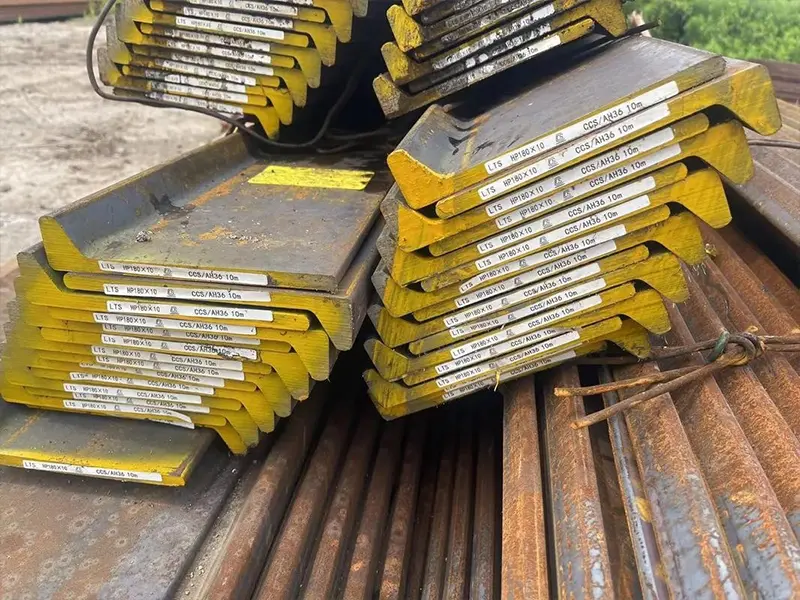
When the Service Fails
I have been a supplier for many years. I know that sometimes, I am the one who has to face this question from my clients. And I have also been on the other side. I have had to deal with shipping lines that lost my client’s steel or mills that promised a 4-week lead time and delivered in 8 weeks. These service failures hurt my reputation.
When you face a service failure, you have to manage it with the same discipline you use for a material defect. Here is how I approach it.
The Three Dimensions of Service Non-Conformance
I look at service failures in three categories. Each one needs a different approach.
1. Communication Failure
This is the most common issue my clients tell me about. The supplier does not respond to emails. They do not give updates. They leave you in the dark.
My Approach: I have learned that a communication failure2 is often a sign of a disorganized supplier. I do not tolerate it. If a supplier is slow to respond before I pay them, they will be even slower after. My rule is simple: I set a clear expectation for communication in the contract. I ask for weekly updates. If they fail, I send a formal notice. I tell them that failure to communicate is a breach of our agreement. If it does not get better, I find a new supplier. This is exactly why we, at CN Marine Steel, assign a dedicated sales rep to every client. We learned that fast response is not just nice to have; it is a core part of our service.
2. Delivery Failure
The steel arrives late. This is a major problem for a project with a tight schedule.
My Approach: You have to look at the reason. Was it a force majeure event like a port strike? Or was it the supplier’s poor planning? For a late delivery, I first ask for a new, guaranteed delivery date. I ask for a plan. How will they catch up? If the delay is their fault, I ask for compensation. This could be a discount on the order, or I ask them to pay for the air freight of a small emergency order to keep my site running. The key is to document the original promised date and the actual delivery date. This evidence is what you use to negotiate.
3. Quality Failure
This is when the service you paid for is not done correctly. For example, you pay for a third-party inspection, but the inspector misses a major defect. Or the shipping company damages your steel by handling it poorly.
My Approach: For a quality failure3, you go back to the service contract4. What did you pay for? What was the standard? If a shipping company damages the steel, you file a claim with their insurance. You have to have a "before" and "after" inspection report. This is why I always advise my clients to take photos of the steel at the mill and again when it arrives. This evidence is your only tool for a claim. If an inspection company does a bad job, you refuse to pay for their service. You also report it to the project owner. Their poor inspection puts your project at risk.
In all these cases, I treat the service provider like any other supplier. If they cannot provide the service I paid for, I will not use them again. My reputation is built on my clients’ trust. I can only give them that trust if I have service partners who are just as reliable as I am.
Conclusion
Handling non-conforming bulb flat steel is about clear process, fast action, and strong communication with your supplier. A systematic approach turns a potential disaster into a manageable situation.
-
Explore this link to understand effective strategies for handling non-conforming supply services and improving supplier relationships. ↩ ↩
-
This resource offers insights into resolving communication failures, ensuring smoother interactions with suppliers. ↩ ↩ ↩ ↩
-
Discover the impact of quality failures and how to address them effectively to protect your business interests. ↩ ↩ ↩ ↩
-
This link provides essential elements to include in service contracts, minimizing risks of service failures. ↩ ↩ ↩ ↩
-
Learning about effective Corrective Actions can help prevent future issues and streamline operations. ↩ ↩ ↩
-
Exploring quality management principles can lead to better project execution and customer satisfaction. ↩ ↩
-
Discover strategies that ensure long-term solutions and prevent recurrence of material issues. ↩
-
Explore the best practices for replacing faulty materials to maintain project integrity and safety. ↩