
You receive a shipment of marine angle steel. The Mill Test Certificate looks fine. But your inspector measures a sample and finds the leg length is 2mm under tolerance. The material is non-conforming. Your project schedule is tight. What do you do? How you handle this situation can mean the difference between a minor delay and a major crisis.
Handling non-conforming marine angle steel requires a systematic, documented process. First, quarantine the material to prevent accidental use. Second, document the non-conformance with photos, measurements, and reference to the specification. Third, notify the supplier immediately and request a corrective action plan. Fourth, evaluate if the material can be used as-is with engineering approval, or if it must be returned. Fifth, disposition the material (accept, rework, reject) based on technical and commercial factors. Finally, implement corrective actions to prevent recurrence.

A non-conformance is stressful, but it is also an opportunity to test your systems and your supplier’s responsiveness. A professional approach protects your project and builds stronger partnerships. To understand the standards that define "conforming," we need to look at how steel is specified.
What is en 10340 2007 steel castings for structural uses1?
You are reviewing a supplier’s certificate. It references EN 10340. What is this standard? Is it relevant to your marine angle steel2? Understanding the standards that apply to your material helps you determine if a non-conformance3 is real or just a misunderstanding.
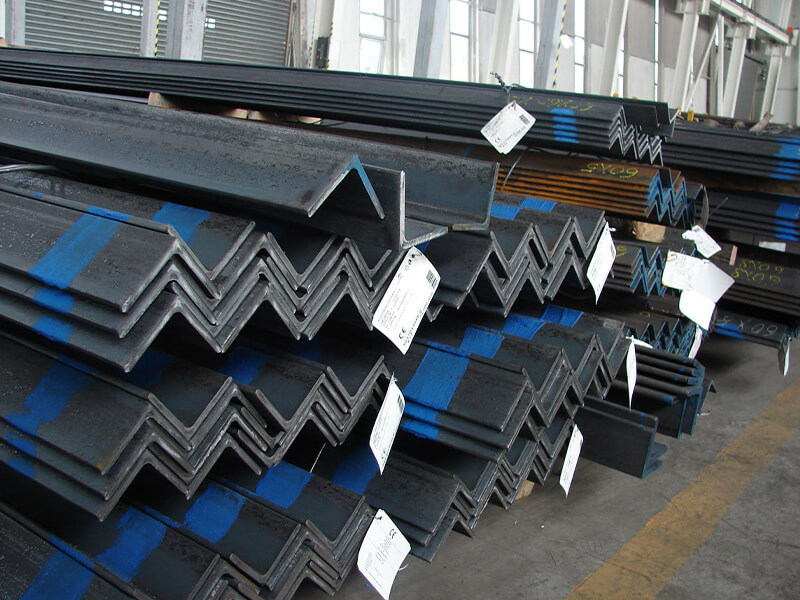
EN 10340:2007 is a European standard for steel castings for structural uses1. It specifies the technical delivery conditions for cast steel products used in structural applications. However, it is not directly applicable to marine angle steel2, which is a rolled section, not a casting. Marine angle steel is typically produced to standards like EN 100564 (dimensions) and EN 10025 (grades) or classification society rules (ABS, LR, DNV). Knowing this helps you spot when a certificate refers to the wrong standard.
Why Standards Matter in Non-Conformance Cases
A non-conformance3 is only valid if measured against the correct standard.
| 1. The Difference Between Castings and Rolled Sections. | Product Type | Production Method | Typical Standards |
|---|---|---|---|
| Steel Castings | Molten steel poured into a mold. | EN 10340, ASTM A27, etc. | |
| Rolled Sections (Angles, Bulb Flats) | Heated steel passed through rollers. | EN 100564 (dimensions), EN 10025 (grades), classification society rules. |
2. Why Confusion Happens.
- A supplier might mistakenly reference EN 10340 on a certificate for rolled steel.
- A buyer might see the reference and think the material is non-conforming because it doesn’t match a casting standard.
- The key is to verify that the certificate references the correct standard for the product type.
3. What to Check on a Certificate.
- Product Description: Does it say "hot-rolled angle" or "steel casting"?
- Standard Referenced: Is it the correct standard for rolled sections (e.g., EN 100564) or classification society rules (e.g., ABS Rules)?
- Grade: Does the grade match the order (e.g., AH36, not a casting grade)?
4. If the Wrong Standard is Referenced.
If the certificate references the wrong standard, the material may be non-conforming even if the chemistry and properties are correct. The documentation itself is non-conforming. You have the right to reject it and request a corrected certificate.
My Insight from the Field
A client in Romania once received a shipment of marine angles with certificates referencing EN 10340. They panicked, thinking the material was for castings. We explained that the mill had made an error in the certificate template. The steel was actually rolled to EN 100564 and tested to marine grades. We worked with the mill to issue corrected certificates. The client accepted the material. This experience taught me that certificate errors are common, but they must be fixed. A non-conforming document is still a non-conformance3.
What type of steel is used in construction?
You are comparing the steel you received to what you ordered. You ordered marine-grade steel. The material seems similar to what you see in building construction. Is there a difference? Understanding the types of steel used in construction helps you identify when a substitution has occurred.
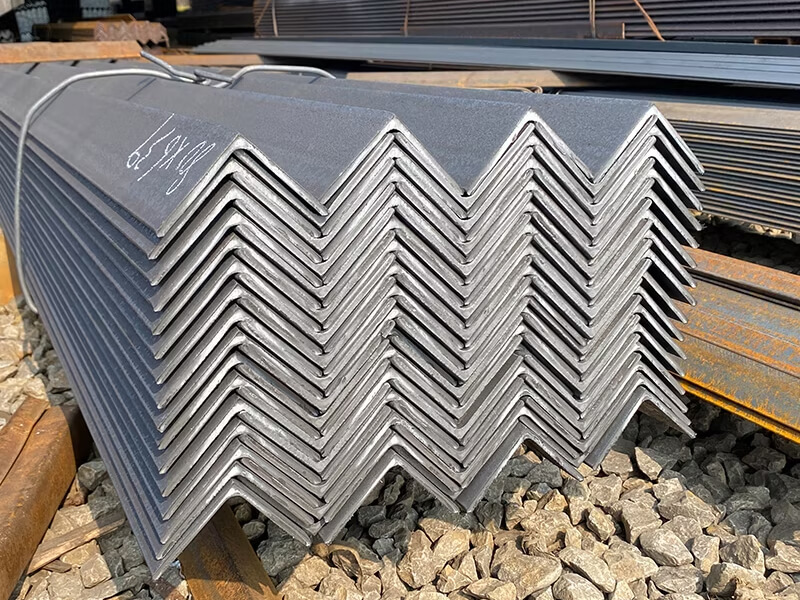
Construction uses a wide range of steel types. For general building construction, carbon steels like ASTM A36 or S2751 are common. For bridges and heavy infrastructure, higher-strength steels like ASTM A572 or S3552 are used. For marine construction (ships, offshore platforms), marine-grade steels like AH36, DH36, and EH363 are specified. These marine grades have tighter chemistry control, guaranteed toughness, and certification by classification societies. They are not the same as general construction steels.
How to Spot a Substitution
If you ordered marine grade but received construction grade, you have a non-conformance.
| 1. Comparison of Common Grades. | Application | Common Grades | Key Features |
|---|---|---|---|
| General Building Construction | ASTM A36, S275JR | Good strength, weldable, no impact testing required. | |
| Bridge/Infrastructure | ASTM A572 Grade 50, S355J2 | Higher strength, some impact testing. | |
| Shipbuilding (Normal Strength) | Grade A, Grade D | Impact tested (Grade D at -20°C), class certified. | |
| Shipbuilding (High Strength) | AH36, DH36, EH36 | High strength, impact tested at various temperatures, class certified. |
2. The Critical Differences.
- Toughness4: Marine grades are impact-tested. General construction grades are not. In cold water, a construction grade could become brittle and crack.
- Weldability: Marine grades have controlled carbon equivalent for better weldability.
- Certification: Marine grades come with classification society certification. Construction grades have only a mill certificate.
3. If You Receive Construction Grade Instead of Marine.
- This is a major non-conformance. The material cannot be used in a classed vessel.
- Document the discrepancy. Compare the certificate to your order.
- Notify the supplier immediately. Demand replacement or credit.
- Quarantine the material. Do not let it enter production.
My Insight from the Field
A shipyard in Malaysia once ordered AH36 angles. The shipment arrived with certificates for S355J2, a construction grade. The supplier claimed they were "equivalent." They are not. S355J2 is not certified by a classification society and has different testing requirements. The shipyard rejected the entire shipment and demanded replacement. The delay cost them, but using non-approved steel would have cost them their class approval. This is a line you cannot cross.
What is an angle in steel1?
You are in a dispute with a supplier. They delivered material they call "angle steel." You say it is non-conforming because the legs are not square. What is an angle, exactly? Understanding the definition helps you articulate the non-conformance.
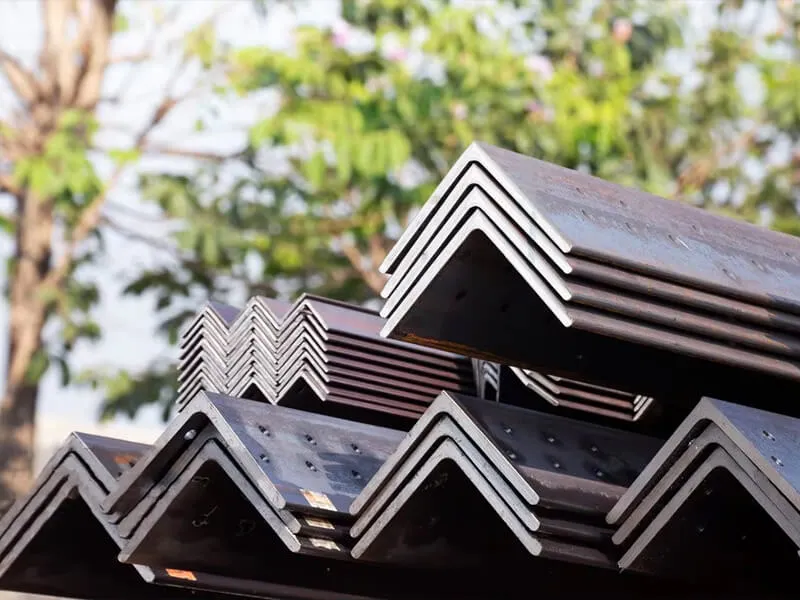
An angle in steel1 is a hot-rolled L-shaped section with two legs meeting at a 90-degree angle. It is defined by its leg lengths (equal or unequal) and its thickness. It is produced to dimensional standards2 like EN 10056, ASTM A6, or JIS G 3192, which specify tolerances for leg length3, thickness, straightness, and the included angle (which must be 90°, within a tolerance). If any of these are outside the specified tolerance, the angle is non-conforming.
The Elements of a Conforming Angle
To check for conformance, you must measure against the standard.
| 1. Key Characteristics. | Characteristic | What It Means | Typical Tolerance (Example from EN 10056) |
|---|---|---|---|
| Leg Length (A, B) | The length of each leg. | ± 2mm for leg lengths up to 100mm. | |
| Thickness (t) | The thickness of the legs. | ± 0.5mm for thickness up to 10mm. | |
| Included Angle | The angle between the legs. | 90° ± 2° or ± 1° for precision. | |
| Straightness | How straight the section is along its length. | 0.4% of length (e.g., 24mm max deviation in 6m). | |
| Mass per Meter | The weight per unit length. | ± 4% of theoretical mass. |
2. Common Non-Conformances.
- Out-of-Tolerance Leg Length: One or both legs are too short or too long.
- Under-Thickness: The steel is thinner than specified, reducing strength.
- Out-of-Square: The angle is not 90°, causing fit-up problems.
- Twist: The section is twisted along its length.
- Bowing: The section is curved.
3. How to Document.
- Measure: Use calipers for leg length and thickness. Use a protractor or square for the angle. Measure straightness with a straightedge.
- Photograph: Show the measurement in progress, with the reading visible.
- Reference: Cite the specific clause in the standard that defines the tolerance.
- Report: Create a non-conformance report4 (NCR) with all data.
My Insight from the Field
A client in Vietnam rejected a shipment of angles because the leg lengths varied by up to 5mm from piece to piece. The tolerance was ±2mm. We agreed the material was non-conforming. The mill had a rolling issue. We arranged for replacement material and credited the client. The client appreciated our quick response. They later told us that our willingness to accept responsibility strengthened their trust in us. Handling non-conformance well builds partnerships.
Which steel grade is widely used in ship hull construction for high strength and toughness1?
You are specifying steel for a new vessel. You need high strength and toughness1. Which grade do you choose? And if you receive something else, you have a non-conformance2. Knowing the standard grades helps you specify correctly and verify deliveries.
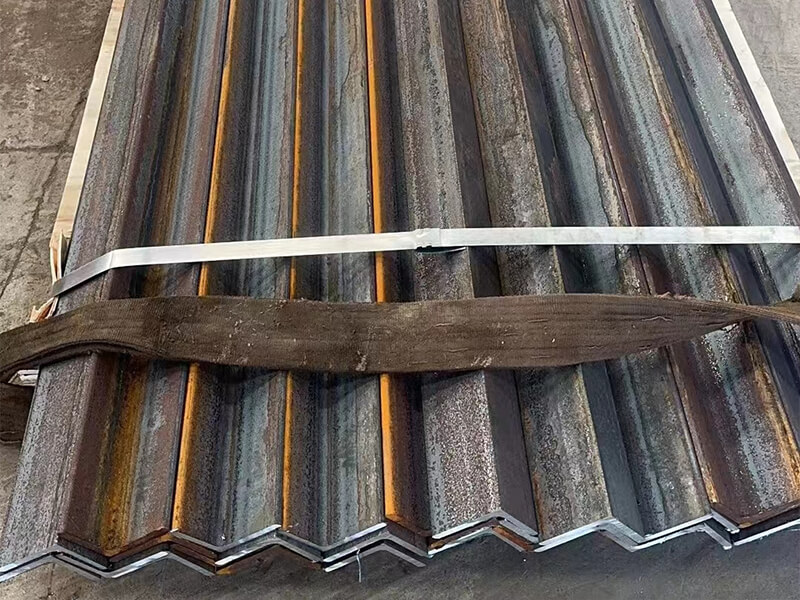
The most widely used steel grades for ship hull construction requiring high strength and toughness1 are AH363 and DH364. These are high-strength steels with a minimum yield strength of 355 MPa. AH363 is impact-tested at 0°C, while DH364 is tested at -20°C, making it suitable for most ocean-going vessels. For the most demanding applications, EH36 (-40°C) or FH36 (-60°C) may be specified. These grades are produced to classification society rules (ABS, LR, DNV, etc.) and are the backbone of modern shipbuilding.
The Workhorses of Modern Shipbuilding
Understanding these grades helps you spot substitutions.
| 1. The AH363/DH364 Family. | Grade | Yield Strength (MPa) | Impact Test Temp | Typical Application |
|---|---|---|---|---|
| AH363 | 355 | 0°C | High-strength structure in warm climates. | |
| DH364 | 355 | -20°C | Most common for ocean-going vessels. | |
| EH36 | 355 | -40°C | Vessels operating in very cold waters. | |
| FH36 | 355 | -60°C | Arctic vessels. |
2. Why They Are Widely Used.
- Strength: 355 MPa yield allows thinner, lighter structures than normal-strength steel (235 MPa).
- Toughness: Guaranteed impact performance prevents brittle fracture.
- Weldability: Controlled chemistry ensures good weldability.
- Availability: Produced by many certified mills worldwide.
3. Common Non-Conformances with These Grades.
- Wrong Grade: Receiving AH363 when DH364 was ordered (or vice versa).
- Missing Certification: Material with a mill certificate but no class society approval.
- Wrong Impact Tests: Tests performed at the wrong temperature or with insufficient energy.
- Chemistry Out of Spec: Carbon equivalent too high, affecting weldability.
4. How to Verify.
- Check the Certificate: It must state the grade and the classification society (e.g., "ABS DH364").
- Check the Markings: Each piece should be stamped with the grade and heat number.
- Verify Impact Tests: The certificate should show Charpy V-notch test results at the specified temperature.
My Insight from the Field
A client in Qatar ordered DH364 angles. The shipment arrived with certificates showing AH363. The supplier said, "It’s the same." It is not. The impact test temperature is different. The client rejected the shipment. We sourced DH364 from another mill and delivered on time. The client learned to always check the grade marking, not just the certificate title. Now, they photograph the markings on every piece as part of their incoming inspection.
Conclusion
Handling non-conforming marine angle steel requires a systematic process: quarantine, document, notify, evaluate, and disposition. Understanding the relevant standards and grades helps you identify non-conformances and take appropriate action to protect your project.
-
Understand the critical role of strength and toughness in ensuring vessel safety and performance. ↩ ↩ ↩ ↩ ↩ ↩ ↩ ↩
-
Discover how to identify and avoid non-conformance issues in steel specifications. ↩ ↩ ↩ ↩ ↩
-
Explore the significance of AH36 in shipbuilding for high strength and toughness. ↩ ↩ ↩ ↩ ↩ ↩ ↩ ↩ ↩ ↩ ↩
-
Learn about DH36’s impact testing and applications in ocean-going vessels. ↩ ↩ ↩ ↩ ↩ ↩ ↩ ↩ ↩ ↩ ↩ ↩ ↩ ↩