
Too much steel ties up your cash. Too little steel stops your production line.
You optimize bulb flat steel inventory by forecasting demand accurately, setting the right safety stock levels, using Just‑in‑Time (JIT) delivery, and following proper storage and handling practices.

I have visited shipyards where bulb flat steel was piled everywhere. Some pieces were buried under others. No one knew how much they had. They kept ordering more. That is expensive and wasteful. I have also worked with smart shipyards that run lean. They always have the right steel at the right time. Let me show you how they do it.
How Do You Forecast Demand for Different Bulb Flat Steel Sizes and Grades?
You guess how much 150mm bulb flat you need. You are wrong by 20 tons. Now you either run out or have leftovers.
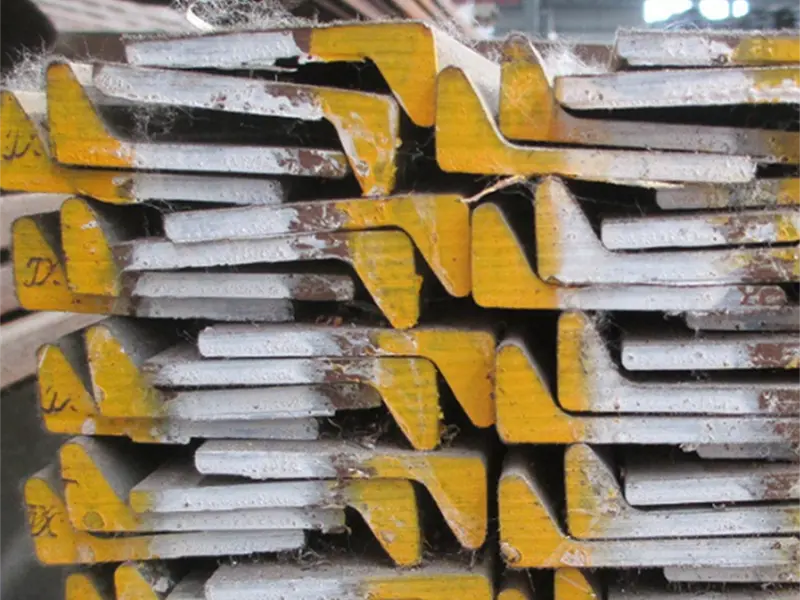
You forecast demand by breaking down your vessel design into a bill of materials (BOM)1, grouping sizes by usage frequency, and using historical consumption data plus future build schedules to predict needs.
From design to order: the numbers that save you money
I remember a shipyard in Vietnam. They were building three bulk carriers. They ordered the same bulb flat steel sizes2 for all three vessels at once. But each vessel had slightly different stiffener spacing. The second vessel needed more 200mm sections. The third needed more 160mm. They ended up with a pile of 200mm that they did not use for six months. That is $50,000 of steel sitting in the yard.
So let me walk you through a better way.
First, build a detailed bill of materials (BOM) per vessel. Do not rely on memory. Write down every size, grade, and length you need for each vessel. Here is a simple BOM table:
| Vessel | Bulb Flat Size | Grade | Total Length (m) | Pieces | Est. Weight (tons) |
|---|---|---|---|---|---|
| Vessel 1 | HP 150×9 | AH36 | 800 | 40 | 8.5 |
| Vessel 1 | HP 180×10 | AH36 | 600 | 30 | 10.2 |
| Vessel 2 | HP 150×9 | AH36 | 850 | 43 | 9.0 |
| Vessel 2 | HP 200×11 | AH36 | 500 | 25 | 12.5 |
| Vessel 3 | HP 150×9 | AH36 | 780 | 39 | 8.3 |
| Vessel 3 | HP 160×9 | AH36 | 720 | 36 | 8.8 |
Second, group sizes by how often you use them. This helps you decide what to keep in stock.
| Usage Category | Criteria | Example Sizes | Action |
|---|---|---|---|
| High frequency | Used on every vessel, high volume | HP 150×9, HP 180×10 | Keep safety stock3 + bulk order |
| Medium frequency | Used on 50‑80% of vessels | HP 200×11, HP 160×9 | Order per project + small buffer |
| Low frequency | Used on less than 50% of vessels | HP 250×12, custom sizes | Order exactly as needed |
Third, use a simple forecasting formula4. For each size, calculate:
Forecast = (Average usage per vessel × Number of vessels in next 3 months) + (Safety stock)
Example: HP 150×9 is used on every vessel. Average per vessel is 810 meters. You plan to build 4 vessels in the next 3 months. So base need = 810 × 4 = 3,240 meters. Add safety stock (say 20% of one vessel’s usage = 160 meters). Total forecast = 3,400 meters.
Fourth, update your forecast every month. Do not set it and forget it. Project schedules change. Designs change. I recommend a monthly review meeting5 between the production planner6 and the purchasing team.
A simple demand forecasting checklist
- Do you have a BOM for each vessel in production?
- Do you know the average usage per vessel for each size?
- Do you separate high‑, medium‑, and low‑frequency sizes?
- Do you review your forecast monthly?
I share my own monthly forecast with my mill partners. That way they can reserve production slots for me. My clients get their steel on time.
What Is the Right Safety Stock Level for Common Bulb Flat Sections?
Safety stock1 protects you from surprises. But too much safety stock is just waste.
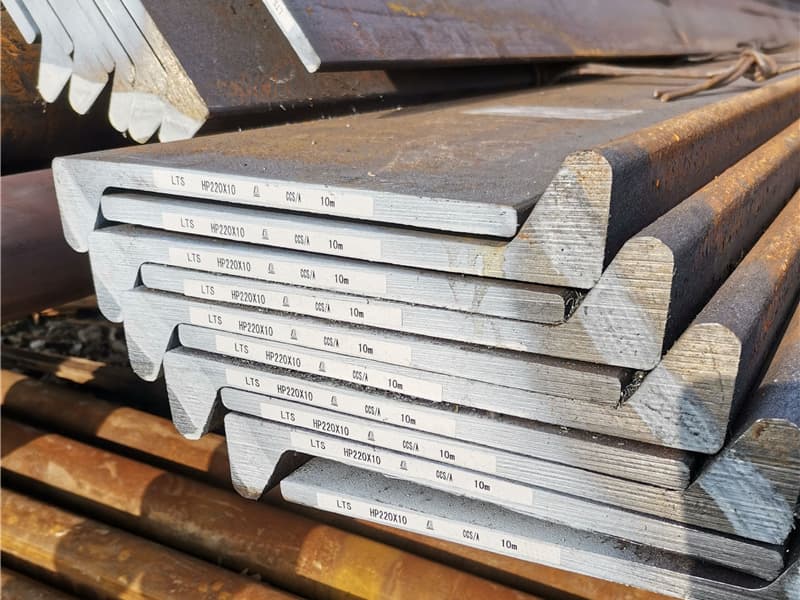
The right safety stock level depends on your lead time, usage variability, and supplier reliability. A common formula is: Safety stock = (Daily usage × Lead time2 in days) × Service level factor (typically 1.2 to 1.5).
Find the buffer that works for your yard
I worked with a shipyard in Malaysia. They kept three months of safety stock for every bulb flat size. That is massive. Their warehouse was full. Then they switched to a data‑driven approach. They cut their safety stock to 3‑4 weeks for common sizes. They saved $200,000 in inventory costs in the first year.
So let me show you how to calculate your own safety stock.
First, understand your lead time. Lead time is the time from when you place an order to when you receive the steel. For imported bulb flat steel, lead time typically includes:
| Stage | Days (Typical) |
|---|---|
| Order confirmation and deposit | 1‑2 |
| Mill production (if not in stock) | 15‑25 |
| Quality check and packaging | 3‑5 |
| Shipping to port | 1‑3 |
| Sea freight to your country | 15‑30 |
| Customs clearance | 3‑7 |
| Last‑mile trucking to yard | 1‑2 |
| Total lead time | 40‑70 days |
If your supplier keeps stock in China, lead time can be as low as 25‑35 days. I keep stock of common bulb flat sizes in Liaocheng. That helps my clients cut lead time.
Second, measure your daily usage variability. Some weeks you use 10 tons. Some weeks you use 30 tons. The more variable your usage, the higher your safety stock needs to be.
Here is a simple way to calculate variability:
- Track your daily usage for 3 months
- Find the average daily usage (e.g., 12 tons/day)
- Find the highest daily usage (e.g., 20 tons/day)
- Variability factor = highest / average = 20/12 = 1.67
Third, apply the safety stock formula. A basic formula works well for most shipyards:
Safety stock (tons) = (Average daily usage × Lead time in days) × Variability factor
Example:
- Average daily usage = 12 tons
- Lead time = 50 days
- Variability factor = 1.5 (use 1.5 if you do not have exact data)
Safety stock = 12 × 50 × 1.5 = 900 tons
That means you should keep 900 tons of bulb flat steel as safety stock to cover all sizes combined. For individual sizes, do the same calculation using that size’s daily usage.
Fourth, adjust based on supplier reliability.
| Supplier Reliability | Safety Stock Multiplier |
|---|---|
| Very reliable (never late, good communication) | 1.0 to 1.2 |
| Average (sometimes late, slow communication) | 1.3 to 1.6 |
| Unreliable (often late, poor after‑sales) | 1.7 to 2.0 |
I work hard to be in the "very reliable" category. My clients can use a 1.2 multiplier, which means lower safety stock for them.
Recommended safety stock levels3 for common sizes
Based on my experience, here are typical safety stock levels for a mid‑sized shipyard using 5‑10 vessels per year:
| Bulb Flat Size | Typical Daily Usage (tons) | Lead Time (days) | Safety Stock (tons) |
|---|---|---|---|
| HP 150×9 | 5 | 45 | 5 × 45 × 1.3 = 292 |
| HP 180×10 | 4 | 45 | 4 × 45 × 1.3 = 234 |
| HP 200×11 | 2 | 45 | 2 × 45 × 1.3 = 117 |
| HP 160×9 | 1.5 | 45 | 1.5 × 45 × 1.3 = 88 |
These are guidelines. Adjust based on your actual usage and lead time.
How Can Just-in-Time (JIT) Delivery Reduce Storage Costs and Waste?
You store steel for three months before using it. That steel costs you interest, space, and risk of rust.
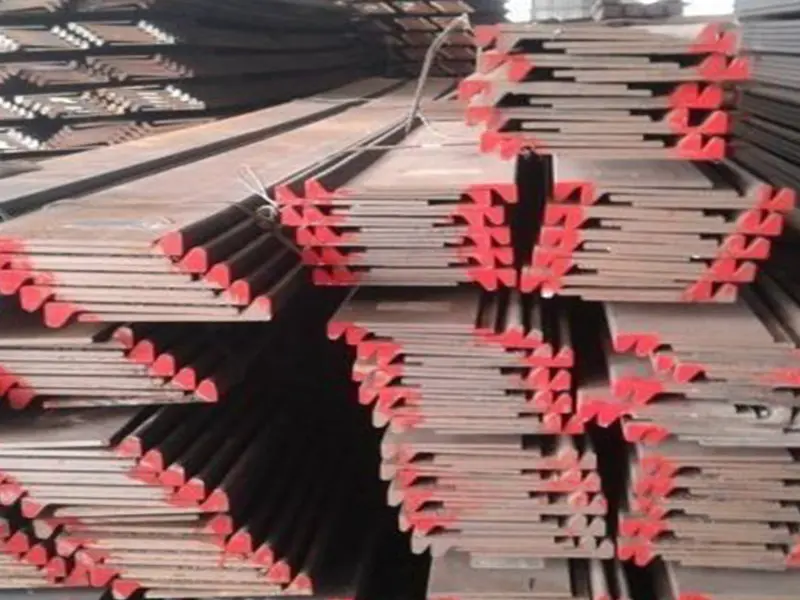
JIT delivery1 means you schedule steel deliveries to arrive exactly when you need them for production. This reduces inventory holding costs2, frees up yard space3, and cuts the risk of surface damage from long storage.
Plan your deliveries like a train schedule
I have a client in Thailand. He used to order steel for three vessels at once. His yard was a mess. Then he switched to JIT. He now places one order for all vessels but asks me to split delivery into four shipments. The first shipment arrives when hull assembly starts. The second arrives before the deck goes on. The third and fourth follow the schedule. His yard is now half as full, and his steel never sits for more than two weeks.
So let me show you how to set up JIT for bulb flat steel.
First, map your production phases4. Most shipbuilding follows a similar sequence:
| Phase | Weeks from Start | Bulb Flat Steel Needed |
|---|---|---|
| Keel laying | Week 0 | None yet |
| Hull block assembly | Week 2‑6 | Main stiffeners (HP 150, HP 180) |
| Hull joining | Week 6‑10 | Additional stiffeners (HP 200, HP 160) |
| Deck installation | Week 10‑14 | Deck stiffeners (HP 150, HP 220) |
| Superstructure | Week 14‑18 | Small sections (HP 120, HP 140) |
Second, create a delivery schedule that matches your phases. For a 4‑vessel project running over 6 months, a JIT schedule might look like this:
| Delivery | Weeks from Start | Sizes | Quantity (tons) | Used By |
|---|---|---|---|---|
| 1 | Week 3 | HP 150, HP 180 | 150 | Hull blocks Vessel 1 |
| 2 | Week 5 | HP 150, HP 200 | 200 | Hull blocks Vessel 1+2 |
| 3 | Week 7 | HP 160, HP 180 | 180 | Hull joining V1, blocks V2 |
| 4 | Week 9 | HP 150, HP 220 | 170 | Deck stiffeners V1, hull V2 |
| 5 | Week 11 | HP 150, HP 180 | 200 | Vessel 2 deck, Vessel 3 hull |
| … | … | … | … | … |
Third, negotiate JIT terms with your supplier. Not every supplier can do JIT. You need one who:
- Keeps stock of common sizes (not just producing after order)
- Has flexible shipping options (partial containers, LCL, or break bulk)
- Communicates clearly about schedule changes
- Is close to a major port
I offer JIT delivery to all my regular clients. We agree on a rolling 4‑week forecast. I ship every two weeks. The client never holds more than 3 weeks of stock.
Fourth, calculate your JIT savings. Here is a realistic example for a shipyard using 2,000 tons per year:
| Cost Item | Without JIT | With JIT | Saving |
|---|---|---|---|
| Average inventory (tons) | 500 | 150 | 350 tons less |
| Inventory holding cost (20% of steel value/year) | $500 × $700 × 0.2 = $70,000 | $150 × $700 × 0.2 = $21,000 | $49,000 |
| Yard space cost | $20,000/year | $8,000/year | $12,000 |
| Rust cleaning labor | $15,000/year | $5,000/year | $10,000 |
| Total annual saving | $71,000 |
That is real money. And you get a cleaner, safer yard.
JIT challenges and how to overcome them
| Challenge | Solution |
|---|---|
| Supplier does not have stock | Find a supplier who keeps stock (like me) |
| Unpredictable production schedule | Keep small safety stock (1‑2 weeks) and update forecast weekly |
| Shipping delays from China | Use a reliable freight forwarder and add 5‑10% buffer time |
| Minimum order quantity (MOQ) | Combine JIT with a blanket PO – one order, multiple deliveries |
I use blanket POs with my clients. They order 1,000 tons once. I ship 100 tons every two weeks. That works around MOQ rules.
What Storage and Handling Practices Prevent Damage and Improve Turnover?
Steel stored on wet ground for three months will rust. Steel stacked poorly will bend.
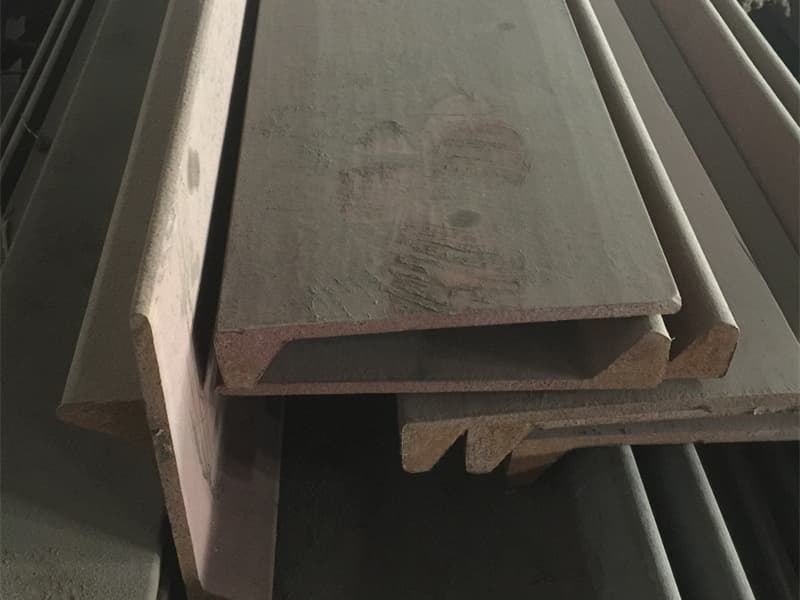
Good storage practices include keeping bulb flat steel1 on raised racks or wood sleepers, covered from rain, organized by size and heat number, and rotated using FIFO (first in, first out)2. Handling practices use padded slings and avoid steel‑to‑steel impact.
Your steel is not a pile of scrap – treat it right
I visited a yard in the Philippines. Their bulb flat steel was lying directly on wet gravel. The bottom layer was completely rusted. They had to cut off the bottom 200mm of every piece. That is pure waste. They did not track which steel arrived first, so older steel stayed buried under newer steel. Some pieces sat for 8 months.
So let me share the storage system that works.
First, proper storage surfaces3. Do not put steel on the ground. Use:
- Wooden sleepers (10cm x 10cm) spaced every 1.5m
- Steel racks with rubber or wood pads
- Concrete blocks with wood on top
Keep the storage area slightly sloped for drainage. Cover with a roof or at least a heavy tarp.
Second, organize by size and grade. Group the same bulb flat size together. Separate different grades (AH36 vs A). Here is a simple layout:
| Bay | Size | Grade | Max Capacity |
|---|---|---|---|
| Bay A1 | HP 150×9 | AH36 | 100 tons |
| Bay A2 | HP 150×9 | A | 50 tons |
| Bay B1 | HP 180×10 | AH36 | 80 tons |
| Bay C1 | HP 200×11 | AH36 | 60 tons |
Clear labeling helps your team find what they need fast.
Third, use FIFO (first in, first out). Steel that arrives first should be used first. Older steel at the back of the pile gets forgotten. To fix this:
- Mark each bundle with arrival date (e.g., "Arrived Feb 15, 2025")
- Store new bundles at the back, pull from the front
- Use a simple tracking board or spreadsheet
If you find steel that has been sitting for more than 3 months, use it on a non‑critical part or return it for credit.
Fourth, handling to prevent damage4. Bulb flat steel has a delicate shape. The bulb edge is easy to dent. Train your forklift and crane operators:
| Do | Do Not |
|---|---|
| Use padded slings or rubber‑coated chains | Use bare steel chains or hooks |
| Lift from the bottom with a wide fork | Lift from one end only |
| Stack with wood spacers between layers | Stack directly on top of steel |
| Move slowly around corners | Swing or drop loads |
A dented bulb edge is hard to weld and creates stress points. One careless lift can ruin a $5,000 bundle.
A weekly storage audit checklist5
- Is the steel off the ground (on sleepers or racks)?
- Is it covered from rain?
- Are different sizes and grades clearly separated?
- Are arrival dates marked and visible?
- Is the oldest steel being used first?
- Are there any signs of rust or damage on stored steel?
I help my clients set up this system. One of them told me: "After we organized our storage, we cut our rust‑related waste by 80%."
Conclusion
Forecast demand, set safety stock by formula, use JIT delivery, and store steel properly. That is how you run a lean shipyard.
-
Explore this link to learn effective storage methods that prevent rust and damage to bulb flat steel. ↩ ↩ ↩ ↩
-
Understanding FIFO can significantly enhance your inventory turnover and reduce waste. ↩ ↩ ↩ ↩
-
Discover the best surfaces for steel storage to prevent rust and damage. ↩ ↩ ↩ ↩
-
Learn how to handle bulb flat steel properly to avoid costly damage and ensure safety. ↩ ↩ ↩
-
A comprehensive checklist can help maintain optimal storage conditions and prevent issues. ↩ ↩
-
Understanding the role of a production planner can enhance coordination between production and purchasing. ↩