
Ordering specialized steel like bulb flats from China can seem complex. Many buyers face delays, unclear communication, and quality surprises. But with the right process, it becomes smooth and reliable.
To order bulb flat steel from us, you need to provide clear specifications: profile size (e.g., 250×12), material grade (e.g., AH36), standard (e.g., LR/BV), length, quantity, and destination port. Then, contact our sales team via email or website for a formal quote. We manage the rest, including mill production, quality certification, packing, inspection (like SGS), and shipping to your port with customs support.
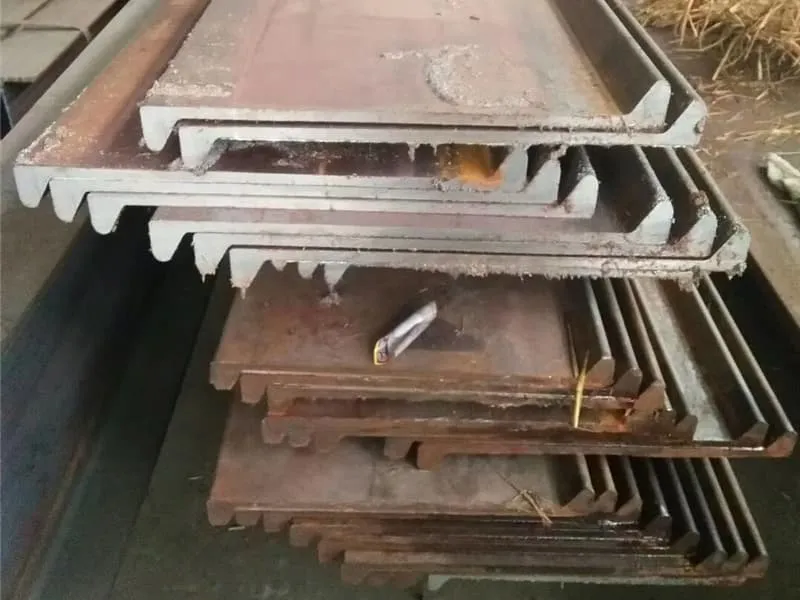
A smooth order starts with you knowing exactly what you need. Let’s break down the key information you should have ready. This will make your inquiry fast and accurate.
What are bulb flats used for?
Before you order, you must be certain bulb flats are the right product for your project. Using the wrong profile can cause structural failure. I have seen this mistake delay projects by months.
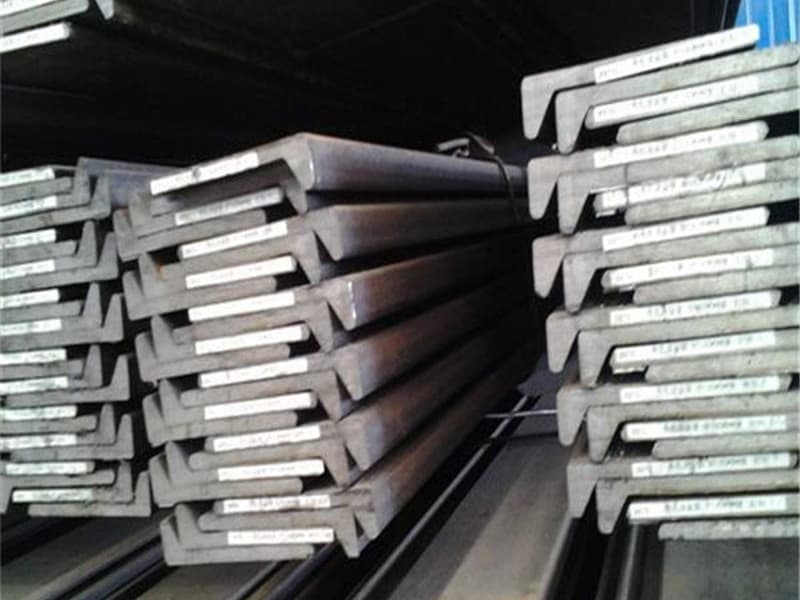
Bulb flats are specialized steel profiles used primarily as stiffeners and frames in shipbuilding and offshore structures. Their main job is to reinforce large steel plates, like a ship’s hull or deck, to prevent buckling under load. They are also used in port construction, large warehouses, and anywhere a strong, one-sided stiffener is needed on a plate.
The Specific Niche of Bulb Flat Applications
Bulb flats are not a general-purpose product. They are engineered for specific, high-demand situations. Understanding these uses helps you confirm your requirement is correct.
1. Primary Use: The Skeleton of Ships
This is the most important application. In a ship’s hull, you have large, flat or curved steel plates. These plates would bend and flex under water pressure and cargo weight if not supported.
- How They Work: Bulb flats are welded vertically or horizontally to the inside of these plates. The flat web is welded to the plate. The bulb sticks out, acting like a small, continuous flange. This adds tremendous bending stiffness.
- Types of Ship Members: They are used as longitudinals (running fore and aft) and transverse frames (running athwartships). They form the grid that gives the hull its shape and strength.
- Advantage Over Alternatives: Compared to using a taller flat bar or an angle bar, a bulb flat provides more strength for the same weight. This saves steel and increases cargo capacity.
2. Secondary Uses in Marine and Heavy Construction
While shipbuilding is king, bulb flats have other important roles.
- Offshore Oil & Gas Platforms: These structures face harsh marine environments. Bulb flats are used to stiffen leg sections, decks, and living quarters against wave and wind forces.
- Port and Dock Construction: Quay walls, lock gates, and large dock gates use bulb flats as stiffening ribs.
- Heavy Industrial Fabrication: In very large tanks, pressure vessels, or power plant structures where internal stiffening is needed, bulb flats can be the specified profile.
3. What Bulb Flats Are NOT Used For
It is just as important to know when NOT to use them.
- Not for General Fabrication: They are not used for simple brackets, frames, or railings. Standard flat bars or angles are better and cheaper for those jobs.
- Not for Architectural Features: Their shape is functional, not aesthetic. They are almost always hidden inside structures.
- Not for Non-Structural Parts: They are a primary structural component.
Here is a table to clarify the application scope:
| Application Area | Specific Use | Why Bulb Flat is Chosen | Common Alternative (if any) |
|---|---|---|---|
| Shipbuilding | Hull longitudinals and frames. | Optimal strength-to-weight ratio; designed for easy welding to hull plate. | T-bars or large angles, but these are heavier or less efficient. |
| Shipbuilding | Deck stiffeners under heavy load areas. | Provides stiffness to support cranes, containers, or equipment. | Built-up sections from plates, which are more expensive to fabricate. |
| Offshore Structures | Stiffeners on jacket legs and decks. | High corrosion resistance (if specified) and strength in dynamic seas. | Circular hollow sections or built-up plate girders. |
| Heavy Engineering | Internal ribs for large-diameter storage tanks. | Efficient one-sided stiffening for large, curved plate surfaces. | Flat bar stiffeners, which are less effective. |
When you contact us to order, being able to say "I need bulb flats for ship transverse frames" immediately tells us you understand the product. It allows us to ask the right follow-up questions about grade and certification. For our client in Saudi Arabia, their clear understanding that they needed bulb flats for a specific ship repair project allowed us to provide the most accurate quote and delivery timeline immediately.
What size are flat steel sections?
"Flat steel sections" is a broad term. Bulb flats have their own specific size system. Giving the wrong size when you order leads to production of unusable material. Knowing how sizes are designated is crucial.
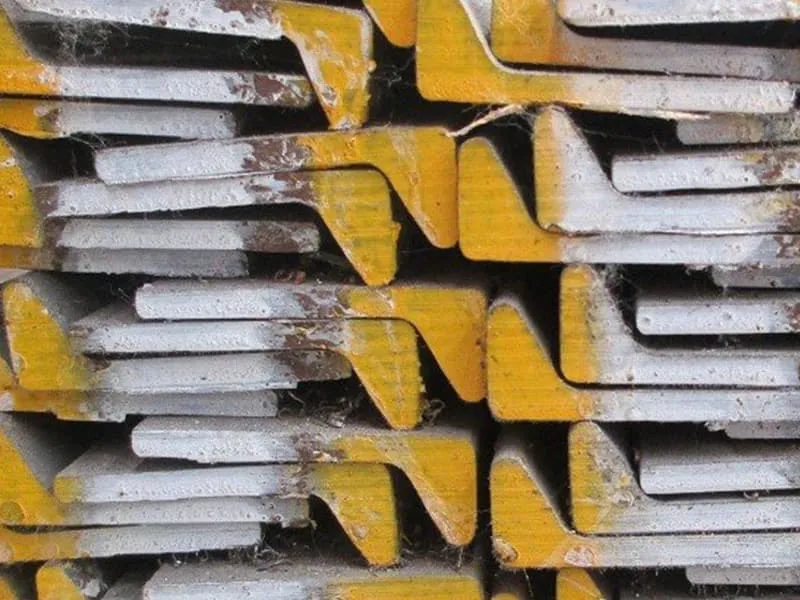
Flat steel sections like bulb flats are sized by their cross-sectional dimensions. For a bulb flat, the size is given as "Height x Web Thickness" in millimeters (e.g., 250x12mm). The height includes the bulb. Standard flat bars are sized as "Width x Thickness". Plates are sized by thickness, width, and length. Always specify dimensions in millimeters for accuracy.
Decoding Size Specifications for Different Flat Sections
"Size" can mean different things for different products. We need to look at each category to avoid confusion in your order.
1. Bulb Flat Steel Sizes
Bulb flats follow a standardized system from classification societies (LR, BV, DNV, ABS).
- Nomenclature: A size is written as HP 220 x 11 or simply 220×11.
- HP often stands for "Hot rolled bulb Profile."
- 220 is the total height (H) in mm. This is the most important dimension.
- 11 is the web thickness (t) in mm.
- Common Standard Sizes: The industry has common series. Examples include: 200×10, 220×11, 250×12, 280×13, 300×13, 350×14, 400×15. Not every mill produces every size. We work with mills that cover the most common range.
- Other Dimensions: The bulb itself has a radius and height. The toe has a width. These are fixed by the standard for each HP size. You don’t usually need to specify them, but they are checked during inspection.
2. Standard Flat Bar Sizes
This is simpler. A flat bar is designated by its width (W) and thickness (T). Example: 100mm x 10mm flat bar. Widths can range from 20mm to 500mm or more. Thicknesses range from 3mm to 100mm.
3. Steel Plate Sizes
Plates are the most flexible and are specified with three dimensions:
- Thickness (t): The most critical spec (e.g., 15mm plate).
- Width (W): Usually 1500mm, 1800mm, 2000mm, 2500mm, etc.
- Length (L): Usually 6000mm, 8000mm, 12000mm, or as required.
- Ordering Example: "1 x Plate, 20mm thick x 2000mm wide x 8000mm long."
4. Length of All Sections
All long products (bulb flats, flat bars, angles) are supplied in standard lengths, typically 6 meters, 8 meters, 12 meters, or "random length" (R/L) within a mill’s range. You can order them in these fixed lengths, or you can order "cut to length" for a specific project need, which may involve a small additional charge.
Here is a comparison table for ordering clarity:
| Product | Size Designation Example | What the Numbers Mean | Key Dimension to Specify |
|---|---|---|---|
| Bulb Flat | HP 250 x 12 | Total Height = 250mm, Web Thickness = 12mm. | Height (250) and Web Thickness (12). The rest is standard. |
| Flat Bar | 150 x 20 | Width = 150mm, Thickness = 20mm. | Width and Thickness. |
| Steel Plate | t=15mm, W=2000mm, L=8000mm | Thickness=15, Width=2000, Length=8000. | Thickness, then Width & Length. |
| Marine Angle | L150x100x12 | Leg1=150mm, Leg2=100mm, Thickness=12mm. | Leg lengths and Thickness. |
When you send an inquiry to sales@cnsteelsupplier.com, providing the size in this clear format is step one. For bulb flats, saying "I need 20 tons of bulb flat, size 300×13, Grade AH36" gives us 80% of the information we need to give you a price. Vague requests like "I need some flat steel for frames" cause delays as we ask multiple questions to clarify.
What are the different types of flat steel?
"Flat steel" is a family. Ordering the wrong type is a costly error. You might receive a flat bar when you needed a bulb flat. Knowing the types ensures you ask for and receive the correct product.
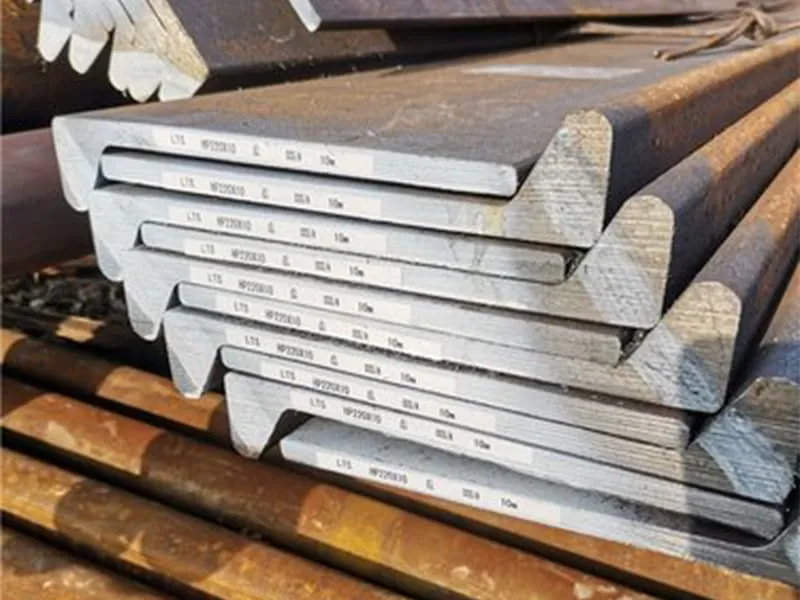
The main types of flat steel relevant to marine and structural work are: Steel Plates, Flat Bars (Mild Steel Flat), and Bulb Flat Steel (Bulb Bars). Plates are wide and thick for primary structures. Flat bars are simple rectangles for general fabrication. Bulb flats are specialized profiles with a thickened edge for high-efficiency stiffening in ships.
A Guide to the Flat Steel Family Tree
Each type serves a different purpose. Choosing between them is a fundamental engineering decision. Let’s explore each one’s identity.
1. Steel Plate
This is the foundation. Plates are flat, wide, and thick.
- Characteristics: They have large surface areas. They are defined primarily by their thickness. They can be cut into any shape.
- Marine Use: They are the hull, deck, and bulkhead material. Grades like A, B, D, E, AH36, DH36 are used. They are the "skin" of the ship.
- How to Order: You order by thickness, grade, width, and length. You might also specify cutting patterns.
2. Flat Bar (Mild Steel Flat Bar)
This is the versatile, general-purpose member.
- Characteristics: It has a simple rectangular cross-section with sharp or rounded corners. It is uniform in strength in all directions (unlike a bulb flat).
- Use: It is for brackets, braces, frames, ladders, and non-critical stiffening. It is easy to cut, drill, and weld.
- How to Order: You order by width, thickness, length, and grade (e.g., S235JR, S355JR).
3. Bulb Flat Steel (The Focus of This Guide)
This is the engineered specialist.
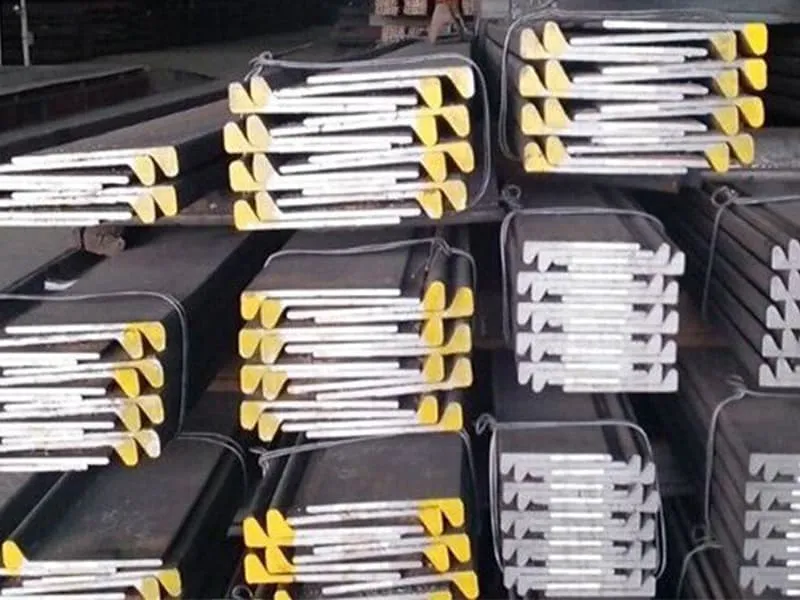
- Characteristics: It looks like a flat bar with a bulb on one edge. The bulb adds mass away from the center, giving it high bending strength in one direction.
- Use: It is almost exclusively for primary structural stiffening in ships and offshore platforms. It is not a general fabrication item.
- How to Order: You order by profile size (e.g., 250×12), material grade (ship grade like AH36), classification standard (LR, BV), and length.
4. Other Related "Flat" Products
- Floor Plate: Has a raised pattern for anti-slip. Used for walkways and work platforms.
- Sheet/Coil: Thin, flat-rolled steel used for non-structural cladding, ductwork, or further processing.
Here is a decision table to help you choose:
| Your Need | Best Flat Steel Type | Reason | Example Order Spec |
|---|---|---|---|
| Building a ship’s hull surface. | Steel Plate. | Provides the continuous watertight surface. | Plate, Thk 20mm, Grade DH36, 2500mm Wide, 10000mm Long. |
| Making a support bracket in an engine room. | Flat Bar. | Simple, strong, easy to fabricate into a right-angle bracket. | Flat Bar, 100mm x 20mm, Grade S355JR, Length 6m. |
| Stiffening the ship’s hull plate from the inside. | Bulb Flat Steel. | Specifically designed for this job; highest efficiency. | Bulb Flat, HP 300×13, Grade AH36, per LR rules, Length 12m. |
| Creating a walkway on deck. | Floor Plate (a type of plate). | Has built-in anti-slip safety feature. | Floor Plate, Thk 6mm, Pattern, Grade A, 1500mm Wide. |
Confusion between a flat bar and a bulb flat is common. A buyer might see both as "long, flat steel." But they are as different as a common nail and a specialized screw. Telling us "I need flat steel" forces us to guess. Telling us "I need bulb flat steel for ship frames" shows expertise and gets you the right product faster. Our client Gulf Metal Solutions started with plates and angles, and now they are ordering bulb flats. Their clear understanding of the product type made the new order process seamless.
Which is thicker, 18 ga or 14 ga?
The "gauge" system (GA) is common for thin sheet metal but is NOT used for bulb flats or structural steel plate. Using gauge to order thick sections is a major mistake that will cause miscommunication and errors.
In the steel gauge system, a lower gauge number means a thicker sheet. Therefore, 14 gauge steel is thicker than 18 gauge steel. However, this system is only for thin sheets and strips. For bulb flats, flat bars, and plates, thickness is always specified in millimeters (mm) or inches (in), not gauge.
Why Gauge is Irrelevant for Bulb Flat Orders
Understanding why we use millimeters, not gauge, is key to professional procurement. This avoids a critical error in your specification.
1. The Gauge System Explained
- What it is: Gauge is a traditional, non-linear measurement system for sheet metal thickness. It originated from the number of times a sheet was passed through a rolling mill.
- The Rule: The lower the gauge number, the thicker the metal. 10 GA is much thicker than 22 GA.
- The Problem: The actual thickness in inches or millimeters for a given gauge number can vary depending on the material (steel, aluminum, copper) and the standard used (US Standard, Birmingham, etc.). It is not precise.
2. The Millimetre System for Structural Steel
- Why we use it: The metric system (millimetres) is the international standard for engineering and construction. It is precise, universal, and unambiguous.
- Bulb Flats: The web thickness of a bulb flat is always in mm. A "300×13" bulb flat has a 13mm thick web. There is no "gauge" equivalent for 13mm.
- Plates and Bars: A 20mm thick plate is 20mm. A 10mm thick flat bar is 10mm. These are clear numbers for design, calculation, and ordering.
3. The Risk of Using Gauge
If you email a supplier and say "I need 14 gauge bulb flats," you will create confusion.
- The supplier will not know if you mean a specific thickness (which is about 1.9mm for 14 GA steel sheet) or if you are misusing the term.
- A 1.9mm thick bulb flat does not exist. Bulb flat webs start at around 8mm or 9mm and go much thicker.
- The conversation will stall while they ask you to clarify, wasting time.
4. Conversion for Reference (Steel Sheet Only)
For your reference, here is how common steel sheet gauges relate to millimeters. Remember, this is only for thin sheet:
| Gauge (GA) | Thickness (inches) | Thickness (mm) – Approx. | Typical Use |
|---|---|---|---|
| 10 GA | 0.1345 in | 3.42 mm | Heavy ductwork, truck beds. |
| 14 GA | 0.0747 in | 1.90 mm | Automotive panels, some roofing. |
| 18 GA | 0.0478 in | 1.21 mm | HVAC ductwork, furniture. |
| 22 GA | 0.0299 in | 0.76 mm | Light decorative work. |
5. How to Specify Thickness Correctly
- For Bulb Flats: Specify the web thickness in mm as part of the profile: "300×13" where 13 is the web thickness in mm.
- For Plates: Specify "Plate, thickness 15mm".
- For Flat Bars: Specify "Flat bar, 50mm x 10mm" where 10mm is the thickness.
When you work with a global supplier like us, using millimeters is the professional standard. It is the language used by mills, engineers, and shipyards from Vietnam to Saudi Arabia to Mexico. Providing clear mm dimensions in your first email makes you look experienced and helps us provide an accurate quote immediately. We never use gauge for structural products, and neither should you.
Conclusion
Ordering bulb flat steel is a straightforward process when you know the key details: the correct application, the precise size in millimeters, the exact type of flat steel you need, and the importance of using metric measurements. Providing this clear information from the start ensures a fast, accurate, and smooth transaction from quote to delivery.