
Offcuts eat your margin quietly. Every unplanned cut turns paid steel into scrap, and on a bulk carrier order that waste buys nothing. A length plan fixes the problem before the first bar leaves the mill.
Plan marine angle steel lengths by grouping every cut length by section size and grade, nesting them longest-first into 6, 9, or 12 meter stock bars with the saw kerf added per cut, then rounding up to whole bars and keeping every offcut above roughly 300 mm as remnant stock.
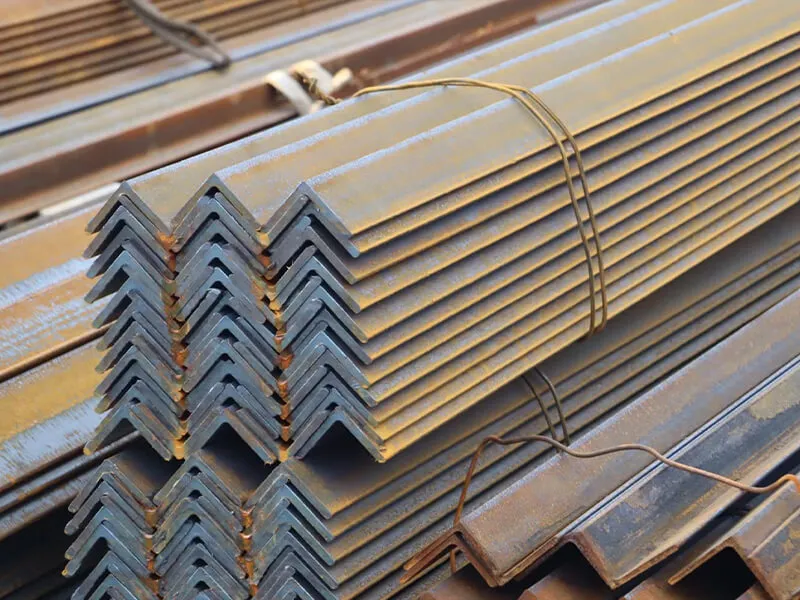
I have quoted hundreds of marine angle steel orders, and the ones that go badly almost never fail on price. They fail on length. The buyer sends me a total tonnage, I confirm it, the bars arrive, and then the fabricator discovers that his parts do not divide evenly into the mill lengths he received. Half-metre drops pile up by the saw. By the end of the hull section, ten percent of the order is a scrap pile. The fix is not a better price. It is a cutting plan built before the order is placed, and this article walks through exactly how we help buyers build one.
Why Do Mills Supply Marine Angle Steel in Fixed Mill Lengths?
You ordered exact part lengths, but the truck delivered 6 and 12 meter bars. It feels like the mill ignored you, and now the waste feels like their fault. It is not. Rolling mills produce hot-rolled sections in standard mill lengths because the rolling line, the cooling beds, and the handling equipment are all built around them, so understanding why the system works this way is the first step to planning around it.
Mills roll marine angle steel in standard lengths, most commonly 6, 9, and 12 meters, because rolling equipment and logistics are built around those lengths. Your part lengths are produced by cutting these stock bars, so the mill length you choose becomes the raw input of every offcut decision you make afterwards.
The Standard Length Menu
For hot-rolled sections like equal and unequal angle, European practice under EN 10025 works with mill lengths in the 6 to 12 meter range, and longer lengths can sometimes be arranged with the mill directly. Our own marine angle supply follows the same logic: 6 m, 9 m, and 12 m as the standard menu, with leg sizes from 50×50×5 mm up to 250×250×20 mm. The bars ship with a length tolerance of ±50 mm, so a bar ordered as 12 m can arrive anywhere between 11.95 and 12.05 m. Keep that number in your head, because it quietly breaks naive cutting plans, which I will come back to later.
Here is how the three standard lengths compare in practice:
| Stock length | Best for | Typical offcut risk | Handling and freight notes |
|---|---|---|---|
| 6 m | Short stiffeners, brackets, frames under ~3 m | Low if parts are 1.5–3 m | Fits standard containers easily, easy yard handling |
| 9 m | Mid-length members, mixed cut lists | Moderate, depends on part mix | Fewer options at some mills, check availability |
| 12 m | Long longitudinal stiffeners, continuous frames | Low when parts nest in triplets | Cheaper per tonne to ship, needs longer trailers or breaking |
The mistake I see most often is buyers picking one length for everything. A yard cutting mostly 2.2 m bracket legs from 12 m bars will produce five drops of 1.2 m per bar, and those drops are too short for the next job and too long to ignore. The same yard ordering 6 m bars would cut two parts per bar with almost nothing left. Match the mill length to the dominant part length in your cut list, not to the lowest price per tonne.

Group Before You Plan Anything
One rule comes before all the clever math: you cannot cut two different section sizes or two different grades from the same bar. An AH36 angle and a grade A angle never share stock, and neither do L100×100×10 and L150×90×9. So the first act of length planning is boring sorting: take every line in your material list, group it by section size, then by grade, and only then start thinking about bars. In Chinese shipyard practice this is written down explicitly. GB/T 37535-2019 advises yards to complete the nesting calculation before ordering and to select steel specifications from the nesting results rather than from rough estimates. The standard is talking about Chinese yards, but the logic travels: the cut list decides the order, not the other way around.
I learned to respect this sorting step the hard way. Early in my export work, a buyer sent me a mixed list where every grade of angle was merged into one tonnage figure. We quoted it, he ordered it, and his workshop spent a week sorting bars on the ground before a single cut was made. Nothing was wrong with the steel. The order was just organized for the seller instead of the saw. Now when I receive a merged list, I ask for the split before I quote, because the split is what makes an offcut plan possible at all.
How Do You Nest a Cut List So Almost Nothing Goes to Waste?
You have your cut list sorted by size and grade. Now comes the actual planning, and this is where most buyers either save whole bars or quietly burn them. Nesting sounds like software jargon, but at its core it is one simple discipline: fit every required part length into the smallest number of stock bars, accounting for every cut you will make.
Nest a cut list by sorting part lengths from longest to shortest, placing each into the first stock bar with room for the part plus one saw kerf, repeating until every part is placed, then rounding the bar count up to whole bars. This first-fit-decreasing method routinely brings waste down to the 3 to 5 percent range, against 10 to 15 percent for unplanned cutting.
The Kerf You Keep Forgetting
Every cut removes steel. The blade turns a slice of your bar into chips, and that slice is real money on a long list. A bimetal bandsaw takes about 1.1 to 1.6 mm per cut, a cold saw around 2 to 2.5 mm, an abrasive cut-off roughly 2.5 to 3 mm, and plasma anywhere from 1.5 to 4 mm depending on amperage and thickness. On a 46-piece line at 3 mm per cut, that is around 140 mm of steel gone to dust, which is enough to push one extra bar into the order if you ignored it. My rule is simple: add one kerf per cut into the nesting math first, and only round up to whole bars after that. And measure the kerf on your own saw with a test cut instead of trusting the catalogue, because blade wear changes the number over time.
| Cutting method | Typical kerf per cut | What it means for a 40-cut list |
|---|---|---|
| Bandsaw (bimetal) | 1.1–1.6 mm | 45–65 mm total loss |
| Cold saw | 2–2.5 mm | 80–100 mm total loss |
| Abrasive cut-off | 2.5–3 mm | 100–120 mm total loss |
| Plasma | 1.5–4 mm | 60–160 mm total loss |
A Worked Example You Can Copy
Take a realistic line group: L100×100×10, grade A, cut from 12 m stock bars, with a 3 mm kerf per cut. The list below shows four common part patterns and what each costs in waste per bar:
| Part pattern per bar | Length used | Kerf included | Offcut left per bar |
|---|---|---|---|
| 3 × 3,800 mm | 11,400 mm | +6 mm | ~590 mm |
| 6,000 + 5,200 mm | 11,200 mm | +3 mm | ~795 mm |
| 2 × 5,800 mm | 11,600 mm | +3 mm | ~395 mm |
| 2 × 4,000 + 3,500 mm | 11,500 mm | +6 mm | ~490 mm |
Now watch what sorting does. The first-fit-decreasing method places the longest part first, into the first bar that still has room, then keeps placing until nothing fits, and only then opens a new bar. It is not the mathematically perfect answer, because true optimal 1D cutting-stock solutions are expensive to compute, but it is what a good foreman does with a pencil and it lands within a bar or two of optimal on real lists. If your nesting leaves only 30 mm of slack on a bar, remember the ±50 mm length tolerance: a bar that arrives at 11.95 m breaks that nest and you discover it at the saw. I keep at least 100 mm of slack per bar in any plan I review. It sounds conservative, but I have never seen a yard complain about spare steel. I have seen them stop work for a missing piece.
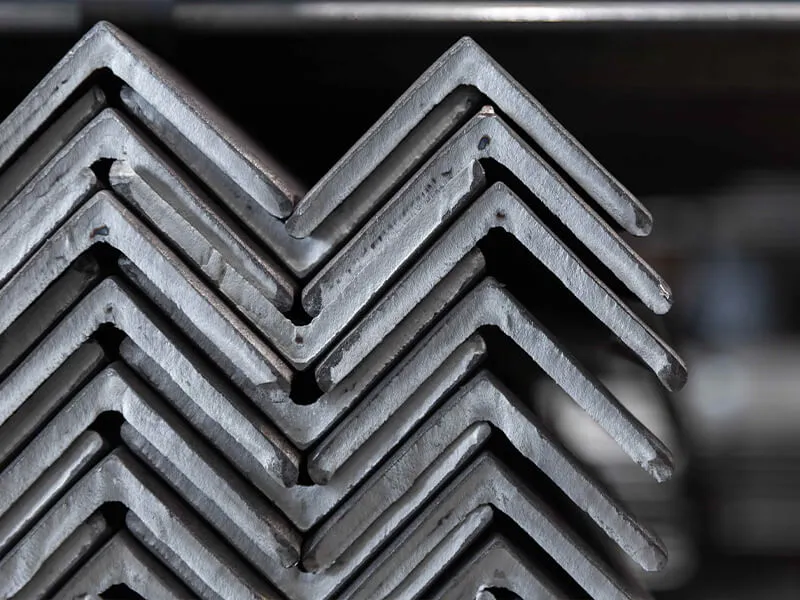
One more detail that separates a plan that runs from a plan that fails: bar ends. Mill ends and stockist cuts are often out of square or dinged in transit, so most shops crop a short piece off the head of each bar before cutting parts to size. Plan on it. Give your nesting calculation the usable length, the delivered length minus the trim you will actually take, rather than the number on the price list. I stood at a customer’s bandsaw in [Zora will replace] last year and watched the operator measure the first bar of a batch, crop 60 mm off the head, and mutter that the plan on the wall assumed 12.000 m exactly. His drop was 10 mm short on the last part of that bar. The plan was pretty. The bar did not care.
Order in Bars, Not Tonnes
The final output of your nesting work should be a bar count, not a tonnage figure. When you send me “12 bars of L100×100×10 × 12 m, grade A”, I can confirm stock and length mix in hours, and your workshop can put the nesting plan on the wall the day the truck arrives. When you send “2.1 tonnes of angle, various”, every downstream decision becomes a guess. This is also where the supplier can genuinely help. Share the cut list with us before you order. If your nest works best with 12 m bars, we supply 12 m bars. If your bay handling favors 6 m, we do that instead. A buyer in the Gulf, Gulf Metal Solutions, sends us his part-length groups with every plate and angle order now, and his scrap rate visibly dropped between his first shipment and his last. Two hours of response time helps, but honest cut lists help more.
What Should You Do With the Offcuts You Cannot Avoid?
Even the best nest leaves drops. Some part lengths simply do not combine, and a bar always ends somewhere. The difference between a yard that leaks money and one that does not is what happens to those leftovers in the first week after the cut.
Treat every offcut as inventory, not waste. Keep drops above roughly 300 mm on a marked remnant rack by section size and grade, feed them back into the next nesting run before opening new bars, and reserve true scrap for the shortest, damaged, or off-grade pieces only.
The Remnant Rack Discipline
A 900 mm offcut of structural angle is reusable steel with real value, and even a shorter drop has scrap value if it goes to the scrap dealer instead of rusting in a corner. The rule that works in the shops I visit is a threshold: anything above about 300 mm goes to the remnant rack, anything below goes to scrap, no debate. Each remnant gets a chalk or tag marking of section size, grade, and exact length. An unlabeled remnant is worth nothing, because nobody will trust it weeks later, and cutting from an unknown grade into a hull member is a classification problem waiting to happen. The next nesting run then consumes remnants first. The cheapest bar you will ever cut is the one you already own.
| Offcut length | What to do with it | Why |
|---|---|---|
| Under 300 mm | Scrap bin | Too short for typical parts, not worth rack space |
| 300 mm – 1 m | Remnant rack, tagged with size and grade | Covers brackets, clips, short stiffener ends |
| Over 1 m | Remnant rack, first to be nested next run | Near-full-value stock, consumes before new bars |
| Any length, wrong grade or damaged | Scrap, never re-identify | Misidentified grade in a hull member is a surveyor’s nightmare |
The Payoff, Measured in Bars
Here is the comparison I wish every buyer ran before signing an order:
| Factor | Unplanned buying | Nested length planning |
|---|---|---|
| Typical offcut waste | 10–15% of order | 3–5% of order |
| Order quantity basis | Tonnage estimate with flat padding | Exact bar count from the cut list |
| Workshop start delay | Days of sorting and re-checking | Nesting plan on the wall day one |
| Offcut fate | Pile by the saw, mostly scrapped | Remnant rack, reused next run |
| Price per tonne | Possibly lower on paper | Often higher effective cost after waste |
Run the numbers on your own next order and the gap is rarely small. On a 100-tonne angle order, the difference between 12 percent and 4 percent waste is eight tonnes of steel that you paid for and never welded in. Add the cutting labor on steel that becomes chips, the disposal cost, and the yard space, and the planning hours pay for themselves many times over. Good planning does not need software, though free cutting optimizers exist and help on long repetitive lists. It needs a complete cut list, a sorted grouping by size and grade, one kerf per cut in the math, 100 mm of slack per bar, and a remnant rack somebody actually maintains. Those five habits are the whole method.
Conclusion
Plan lengths before you order, nest longest-first with the kerf counted, and keep your remnants tagged. The steel you save is the cheapest steel you will ever buy.