
leading paragraph:
Your ship needs 10 different L-shaped steel sizes. You order them all separately. The mill charges high setup fees. You waste money.
snippet paragraph:
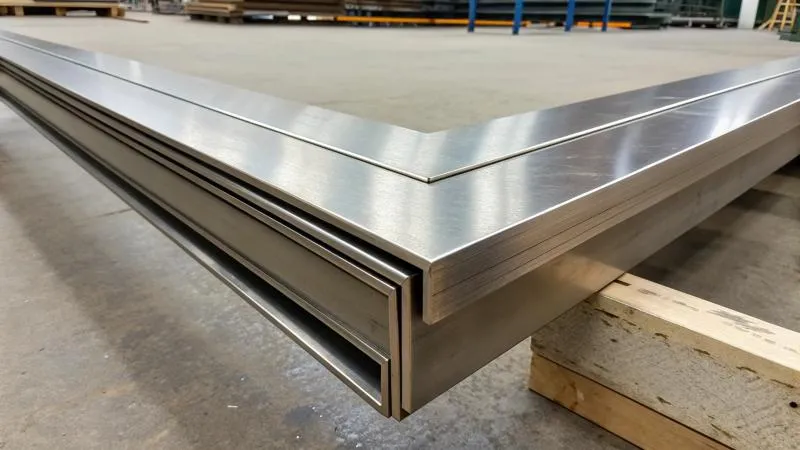
Plan mixed orders with a master size list. Group similar sizes. Balance quantities across grades. Coordinate delivery batches. One efficient plan saves 15-20% on costs.
Transition Paragraph:
I am Zora Guo from cnmarinesteel.com. I supply L-shaped section steel to shipyards and fabricators around the world. I have seen messy orders cost my customers thousands. Let me show you how to plan mixed orders the right way.
Why Mixed Orders Need a Master Size List Before You Start?
leading paragraph:
You have 20 drawings. Each drawing has different sizes. You start calling suppliers. You get confused. You miss some sizes.
snippet paragraph:
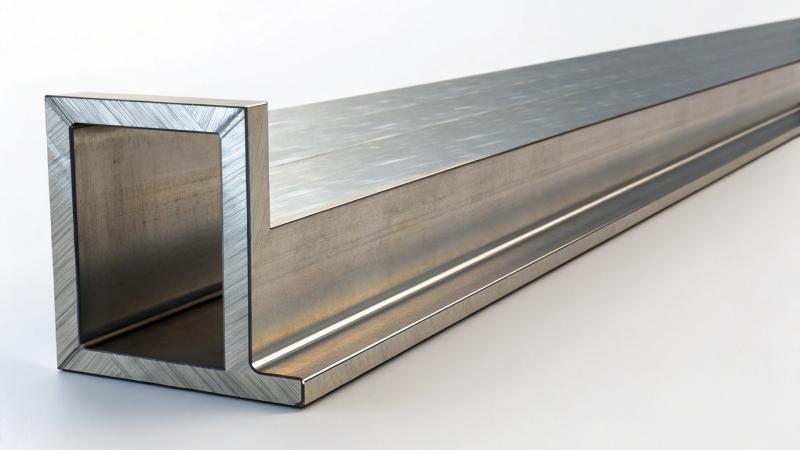
A master size list1 is one document that lists every L-shaped steel2 size, grade, length, and quantity for your project. Make it before you talk to any supplier. It stops mistakes.
Dive deeper Paragraph:
Let me explain why a master list is so important. Most buyers skip this step. They think they can remember everything. They cannot. A ship project has hundreds of pieces of L-shaped steel. Different leg lengths. Different thicknesses. Different grades. Different lengths. Without a master list, you will miss something.
What happens without a master list
I had a customer in Malaysia. He ordered L-shaped steel from three different suppliers. He did not have a master list. He ordered 65mm from Supplier A. He ordered 75mm from Supplier B. He forgot to order 90mm. When the steel arrived, he had no 90mm. His workers could not build the frames that needed 90mm. He had to place a rush order. That cost him double the price and 3 weeks of waiting.
What to put in your master list
Your master list should have these columns:
- Leg length (mm) – like 65, 75, 90, 100
- Thickness (mm) – like 6, 8, 10, 12
- Grade – A36, AH36, etc.
- Length per piece (m) – usually 6 or 12
- Number of pieces
- Total meters
- Weight per meter (kg)
- Total weight (tons)
- Where it is used (drawing number or frame number)
How to create the list
Step 1: Gather all your drawings. Put them in one folder.
Step 2: Go through each drawing. Write down every L-shaped steel size you see.
Step 3: Count how many pieces of each size.
Step 4: Calculate the total length (pieces x length per piece).
Step 5: Calculate the weight. Use the formula: weight (kg/m) = (leg1 + leg2 – thickness) x thickness x 0.00785. Or ask your supplier to do it.
Step 6: Put everything in Excel. Save it. Share it with your team and your supplier.
Master list example
| Leg (mm) | Thick (mm) | Grade | Length (m) | Pieces | Total m | kg/m | Total tons | Drawing |
|---|---|---|---|---|---|---|---|---|
| 65 | 6 | A36 | 6 | 80 | 480 | 5.8 | 2.78 | F-101 |
| 75 | 8 | A36 | 6 | 60 | 360 | 9.0 | 3.24 | F-102 |
| 90 | 10 | AH36 | 12 | 30 | 360 | 13.5 | 4.86 | F-103 |
| 100 | 10 | A36 | 12 | 25 | 300 | 15.0 | 4.50 | F-104 |
My advice
Make your master list before you send any inquiry. Keep it updated. When you change a design, update the list. Then send the new version to your supplier. I send my customers a blank template. Just email me. A good master list is the foundation of an efficient order.
Grouping Similar Sizes to Save Mill Setup Costs?
leading paragraph:
You need 65mm, 70mm, and 75mm. The mill charges a setup fee1 for each size. That is three fees. You can pay one fee.
snippet paragraph:
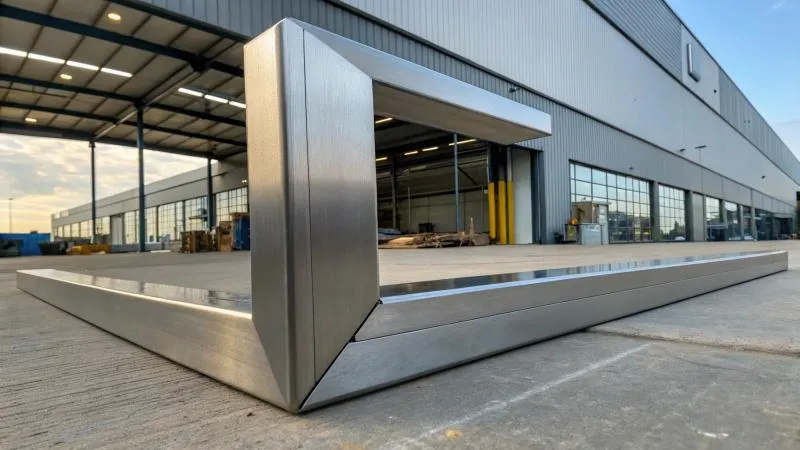
Group similar leg lengths together. The mill can roll them in one production run2. You pay one setup fee instead of many. The saving is 30-50% on mill charges.
Dive deeper Paragraph:
Mills do not like changing sizes. Each time they change from one size to another, they stop the line. They adjust the rollers. That takes time. They charge you for that time. This is called a setup fee or changeover fee3.
How grouping works
You take your master list. You look for sizes that are close to each other. For example, 65mm and 70mm are only 5mm apart. The mill can roll 65mm first. Then they make a small adjustment. They roll 70mm next. Then another small adjustment. They roll 75mm. The total changeover time is much less than three separate runs.
The mill charges you one setup fee for the whole group. That fee is maybe $500. If you ordered each size separately, you would pay $500 x 3 = $1500. You save $1000.
What sizes can be grouped?
| Group | Sizes included | Difference | Can group? | Setup fee saving |
|---|---|---|---|---|
| Group A | 50, 55, 60 | 10mm | Yes | 70% |
| Group B | 65, 70, 75 | 10mm | Yes | 70% |
| Group C | 80, 90, 100 | 20mm | Yes, but longer changeover | 50% |
| Group D | 50, 75, 100 | 50mm | No, separate runs | 0% |
How to present grouped sizes to the mill
Tell the mill: “I need a production run of 20 tons. In this run, please roll 5 tons of 65x6mm, then 8 tons of 75x8mm, then 7 tons of 90x10mm.” The mill will quote you one price for the whole run. That price is lower than three separate quotes.
A real example
A customer in Thailand needed 8 different L-shaped steel sizes. The total was 35 tons. I grouped them into two production runs. Run 1: sizes 50-75mm (18 tons). Run 2: sizes 80-120mm (17 tons). The mill charged $70 per ton for the grouped order. Separate orders would have been $95 per ton. The customer saved $875.
My advice
Always ask your supplier: “Can you group my sizes?” A good supplier will say yes. At cnmarinesteel.com, I always group sizes for my customers. I also combine L-shaped steel with marine angle steel and bulb flat steel in the same mill run. That saves even more. Send me your master list. I will show you the best grouping.
Balancing Quantities Across Different Grades and Lengths?
leading paragraph:
You need 10 tons of AH36 and 5 tons of A36. The mill wants to run AH36 first. Then change to A36. That is two runs. You pay twice.
snippet paragraph:
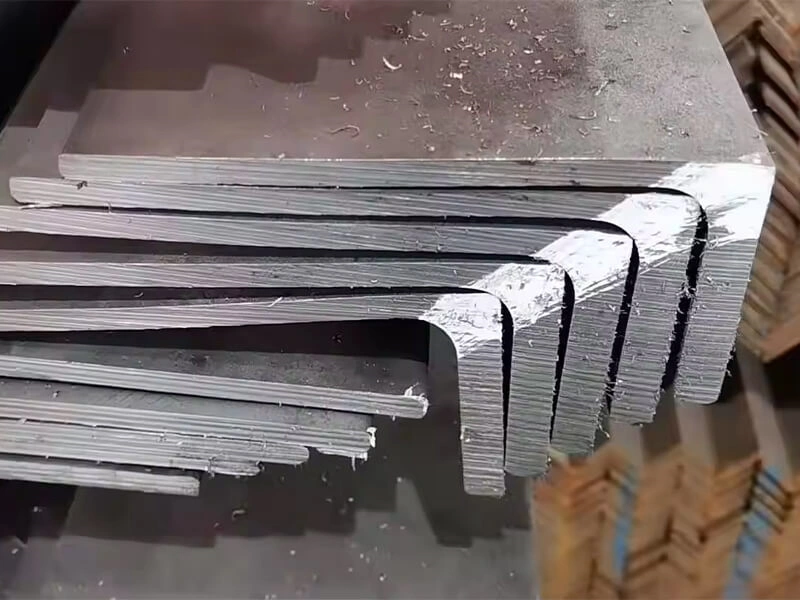
Balance quantities so that each grade reaches the mill’s minimum run size. For AH36, the minimum is often 10 tons. For A36, 5 tons is fine. Adjust your order to hit these minimums.
Dive deeper Paragraph:
Grades and lengths add another layer of complexity. A mill cannot roll AH36 and A36 in the same run. They are different steel chemistries. The mill must stop. Clean the furnace. Change the recipe. That takes hours. They charge you for that.
Minimum run quantities
Each mill has a minimum run quantity1 per grade. For common grades like A36, the minimum might be 5 tons. For higher grades like AH36, the minimum is often 10 tons. For DH36 or EH36, it could be 20 tons. If your order is below the minimum, the mill will charge a premium or refuse the order.
How to balance quantities2
Look at your master list. Separate it by grade. For each grade, calculate the total tons. If a grade is below the mill’s minimum, you have three choices:
- Increase the quantity for that grade (add extra for future use).
- Combine with another customer’s order (if your supplier does that).
- Pay a small-batch fee3.
Also consider lengths. Most mills prefer 6m or 12m lengths. If you need 7m or 9m, that is a special cut. The mill charges extra. Try to standardize on 6m and 12m4. Cut the steel to exact length at your yard.
Grade and length balancing table
| Grade | Minimum tons | Your order (tons) | Action |
|---|---|---|---|
| A36 | 5 | 6 | OK, no change |
| AH36 | 10 | 8 | Add 2 tons (keep as buffer) |
| DH36 | 20 | 5 | Cannot meet. Change design to AH36 or pay high fee |
A real example
A customer in Vietnam needed 7 tons of AH36 L-shaped steel. The mill’s minimum was 10 tons. I asked the customer: “Can you add 3 tons of buffer stock?” He said yes. He ordered 10 tons. He used 7 tons for the project. He kept 3 tons for future repairs. The mill did not charge a small-batch fee. He saved $300.
My advice
Talk to your supplier about minimum quantities before you finalize your order. Do not assume every mill has the same rules. I can tell you the minimums for the mills I work with. I can also help you adjust your order to hit those minimums without wasting money.
Coordinating Delivery Batches for Mixed Sizes to Match Production?
leading paragraph:
You order 10 sizes. They all arrive at once. Your yard is crowded. Workers pick the wrong pieces. You need a better system.
snippet paragraph:
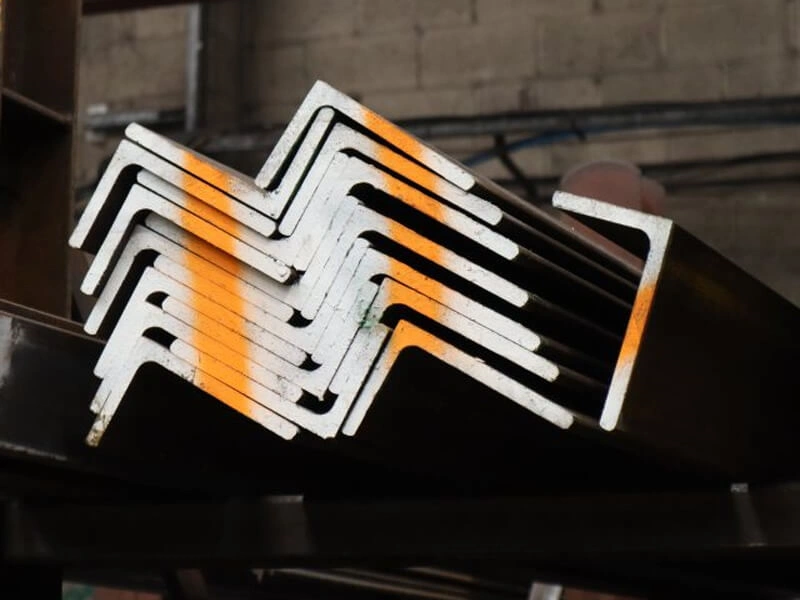
Divide your mixed order into delivery batches1. Each batch contains the sizes needed for one production phase. Batch 1 arrives first. Batch 2 arrives later. No crowding. No confusion.
Dive deeper Paragraph:
Even with a perfect master list and grouped sizes, you can still have problems if all the steel arrives at the same time. A shipyard has limited storage. Workers cannot find the right size quickly. Steel gets mixed up.
Why batch delivery works
You match steel delivery to your production schedule2. In week 1-4, you build the bottom frames. You need 65mm and 75mm L-shaped steel for that. So batch 1 contains only 65mm and 75mm. In week 5-8, you build the side frames. You need 90mm and 100mm. Batch 2 contains those. In week 9-12, you build the deck. You need smaller sizes. Batch 3 contains those.
The steel arrives just before you need it. You store only what you will use soon. No crowding. No rust from long storage. No mixing.
How to create delivery batches
Step 1: Get your build sequence from your production manager. List each phase and the weeks it runs.
Step 2: Go through your master list. Assign each size to a phase.
Step 3: Calculate the total tons per phase.
Step 4: Create batches. Each batch is one phase.
Step 5: Add a 2-week buffer between the arrival date and the start date. If you need the steel in week 5, have it arrive in week 3.
Batch delivery example
| Batch | Sizes included | Grade | Tons | Needed by week | Arrival week |
|---|---|---|---|---|---|
| 1 | 65mm, 75mm | A36 | 12 | Week 3 | Week 1 |
| 2 | 90mm, 100mm | AH36 | 18 | Week 6 | Week 4 |
| 3 | 120mm, 150mm | A36 | 10 | Week 9 | Week 7 |
A real example
Gulf Metal Solutions in Saudi Arabia used to receive all their L-shaped steel in one shipment. Their yard was small. Steel was stacked everywhere. Workers spent 30% of their time looking for the right size. I suggested batch delivery. Now they receive 3 batches over 8 weeks. Their yard is organized. Workers find steel fast. They told me they save 10 hours per week in labor.
My advice
Do not accept one big shipment. Ask your supplier for phased delivery3. A good supplier can do it. At cnmarinesteel.com, I offer phased delivery for all mixed orders. I also label each batch clearly. The label says the batch number and the production phase. That makes it easy for your workers.
Conclusion
Make a master list. Group similar sizes. Balance grades and lengths. Use batch delivery. Four steps. Mixed orders become simple.
-
Explore how delivery batches can streamline your production process and reduce confusion. ↩ ↩ ↩ ↩
-
Learn how to align your production schedule with delivery to optimize efficiency. ↩ ↩ ↩ ↩
-
Discover the advantages of phased delivery and how it can improve your operations. ↩ ↩ ↩
-
Standardizing lengths can reduce costs and simplify your steel ordering process. ↩