
You have just won a contract to build three new vessels. The material list includes 5,000 tons of marine steel plate. Your heart sinks a little. Where will you find that much steel? How can you be sure it will arrive on time? For large orders, a stable supply is not a hope. It is a strategic objective that requires planning and partnership.
Securing stable supply of marine steel plate for large orders requires a multi-faceted strategy: 1) Early engagement with certified mills to reserve production slots. 2) Framework agreements that lock in pricing and volume for the project duration. 3) Diversified sourcing within a managed supplier portfolio to mitigate mill outages. 4) Phased delivery schedules aligned with your construction plan. 5) Robust quality assurance including third-party inspection to prevent last-minute rejections. 6) Buffer stock for critical sizes to cushion against delays.
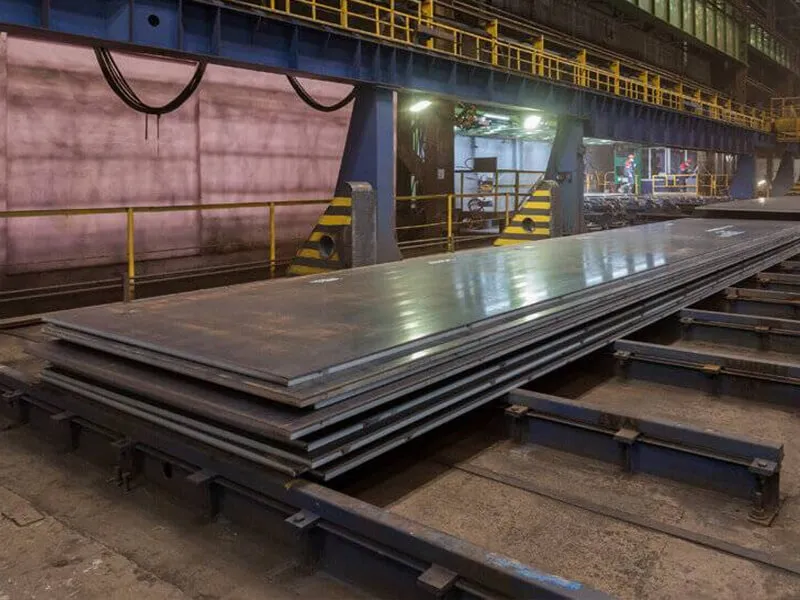
A large order is different from a small one. The risks multiply. A single mill delay can stall your entire production line. To build a stable supply, you need to understand the product deeply. Let’s start with the fundamentals.
What is the composition of marine steel?
You are reviewing a Mill Test Certificate1. It lists chemical elements: carbon, manganese, silicon, and more. What do these numbers mean? Understanding the composition of marine steel helps you verify that the material meets specifications and will perform as expected in the marine environment.
Marine steel2 is a low-carbon or high-strength low-alloy (HSLA) steel with a carefully controlled chemical composition. Key elements include: Carbon (C) for strength, but limited (<0.2%) to maintain weldability. Manganese (Mn) for strength and toughness. Silicon (Si) for deoxidation. Phosphorus (P) and Sulfur (S) kept very low for purity. For high-strength grades like AH36, small amounts of Niobium (Nb), Vanadium (V), or Titanium (Ti) are added for grain refinement and precipitation strengthening. This precise chemistry ensures the steel has the required strength, toughness, and weldability for marine service.
%[marine steel chemical composition elements](https://cnmarinesteel.com/wp-content/uploads/2026/01/Marine-steel-plate-26-1.webp "Marine Steel Chemical Composition")

Why Composition Matters for Supply Stability
Knowing the composition helps you verify quality and avoid substitutions.
| 1. Key Elements and Their Roles. | Element | Typical Range | Function |
|---|---|---|---|
| Carbon (C) | 0.10-0.20% | Primary strengthener. Too much reduces weldability. | |
| Manganese (Mn) | 0.60-1.60% | Improves strength and toughness. Combines with sulfur. | |
| Silicon (Si) | 0.15-0.50% | Deoxidizer. Adds some strength. | |
| Phosphorus (P) | <0.035% | Impurity. Causes brittleness if too high. | |
| Sulfur (S) | <0.035% | Impurity. Causes hot cracking during welding. | |
| Niobium (Nb) | <0.05% | Grain refiner, increases strength (in HSLA grades). | |
| Vanadium (V) | <0.10% | Precipitation strengthener (in HSLA grades). |
2. What the Numbers Mean.
- Carbon Equivalent (CE)3: A formula that predicts weldability. CE = C + Mn/6 + (Cr+Mo+V)/5 + (Ni+Cu)/15. Lower CE means better weldability. Marine grades have maximum CE limits.
- Impact Toughness4: Controlled by low sulfur, grain refinement (from Nb, V, Ti), and proper rolling practice.
3. How to Use Composition in QC.
- Check the MTC: Verify that each element is within the specified range for the grade.
- Watch for Substitutions: If you ordered a normalized steel and receive one with high niobium but no normalizing, it may be a different product.
- Verify CE: For critical welds, ensure the CE is within the limits for your welding procedure.
My Insight from the Field
A client in Romania once received a shipment of what was supposed to be DH36 plate. The MTC showed the chemistry was correct, but the carbon equivalent was higher than specified. Their welding procedure, designed for lower CE, was not suitable. They had to adjust their preheat and welding parameters, causing delays. Now, they check CE on every certificate before steel arrives. This simple check saves them from welding problems.
Is 304 or 316 stainless steel marine grade?
You need stainless steel plate for marine fittings. The eternal question: 304 or 316? For large orders, getting this right is critical. The wrong choice can lead to corrosion failures and expensive replacements1. Your supply stability depends on specifying correctly from the start.
Of the two, 316 stainless steel is considered the true marine grade2. Its addition of molybdenum (2-3%) provides significantly enhanced resistance3 to chloride-induced corrosion from saltwater. 304 lacks molybdenum and is susceptible to pitting and crevice corrosion4 in marine environments. For large orders intended for marine exposure, 316 is the required grade. 304 may only be considered for interior, dry applications.
%[304 vs 316 stainless steel marine comparison](https://cnmarinesteel.com/wp-content/uploads/2026/01/Marine-steel-plate-22-1.webp "304 vs 316 Marine Stainless")
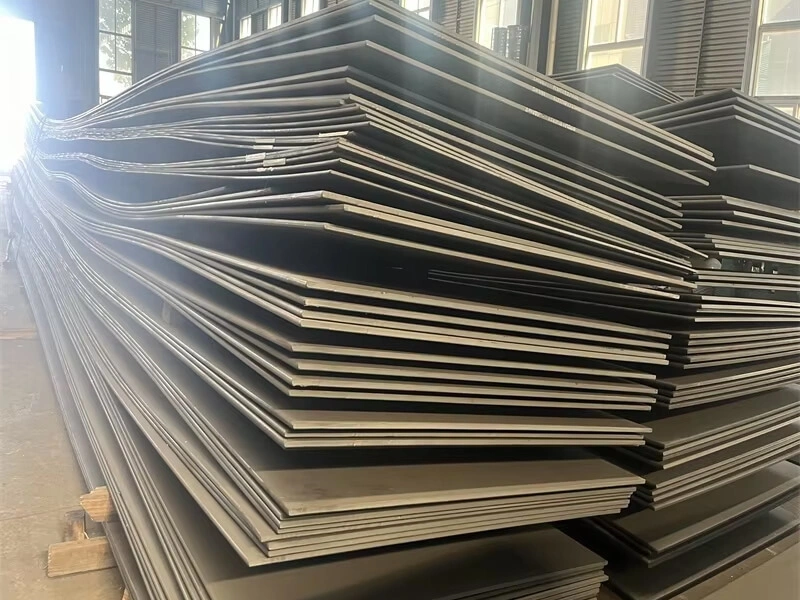
Stainless Steel Selection for Large Orders
Getting this right prevents project failures.
| 1. The Chemistry Difference. | Element | 304 Stainless | 316 Stainless | Why It Matters |
|---|---|---|---|---|
| Chromium (Cr) | 18-20% | 16-18% | Forms protective oxide layer. | |
| Nickel (Ni) | 8-10.5% | 10-14% | Stabilizes the structure. | |
| Molybdenum (Mo) | 0% | 2-3% | Key differentiator. Resists chloride pitting. | |
| Pitting Resistance Equivalent (PRE) | ~18-20 | ~24-26 | Higher is better for resisting pitting. |
| 2. Application Guide for Large Orders. | Application | Recommended Grade | Consequence of Using 304 |
|---|---|---|---|
| Exterior railings, fittings | 316 | Pitting, rust staining, failure in 2-5 years. | |
| Seawater piping | 316 or 316L | Rapid pitting and crevice corrosion4. | |
| Interior, dry areas | 304 | Acceptable, but 316 is over-specification. | |
| Freshwater systems | 304 | Acceptable if no chlorides. | |
| Ballast tanks (stainless components) | 316 | 304 will fail in the aggressive ballast environment. |
3. Cost Considerations for Large Orders.
- 316 typically costs 50-70% more than 304. For a 100-ton order, this is a significant difference.
- However, the cost of replacing failed 304 components in a few years is far higher.
- For large orders, the decision should be based on lifecycle cost, not just initial price.
4. Verification for Large Orders.
- Specify Clearly: "ASTM A240 Grade 316L5" not just "316."
- Require PMI Testing: For critical applications, require Positive Material Identification testing6 on a sample of each heat to verify the alloy.
- Check Certificates: Ensure the MTC shows the correct grade and chemistry.
My Insight from the Field
A client in Qatar once ordered 50 tons of stainless steel plate for exterior fittings on a large offshore project. They specified 304 to save money. We advised against it, but they proceeded. Within three years, they were ordering replacement 316 plate at emergency prices, plus paying for removal and reinstallation. The total cost was triple the original saving. Now, they specify 316 for all marine-exposed stainless.
How to calculate the weight of a steel plate?
You are planning logistics for a large order. You need to know the total weight to book shipping and plan crane lifts. The formula is simple, but getting it wrong can lead to overloaded trucks or under-booked vessels. Accurate weight calculation is essential for supply stability.
The weight of a steel plate is calculated using the formula: Weight (kg) = Length (m) x Width (m) x Thickness (mm) x 7.857. The constant 7.85 is the density of steel in g/cm³, adjusted for the units. For example, a plate 6m long, 2m wide, and 20mm thick weighs: 6 x 2 x 20 x 7.85 = 1,884 kg. For multiple plates, multiply by the quantity. Always use the theoretical weight for planning, but be aware that actual weight may vary slightly due to manufacturing tolerances.
%[steel plate weight calculation formula](https://cnmarinesteel.com/wp-content/uploads/2026/01/Marine-steel-plate-22.webp "Steel Plate Weight Calculation")
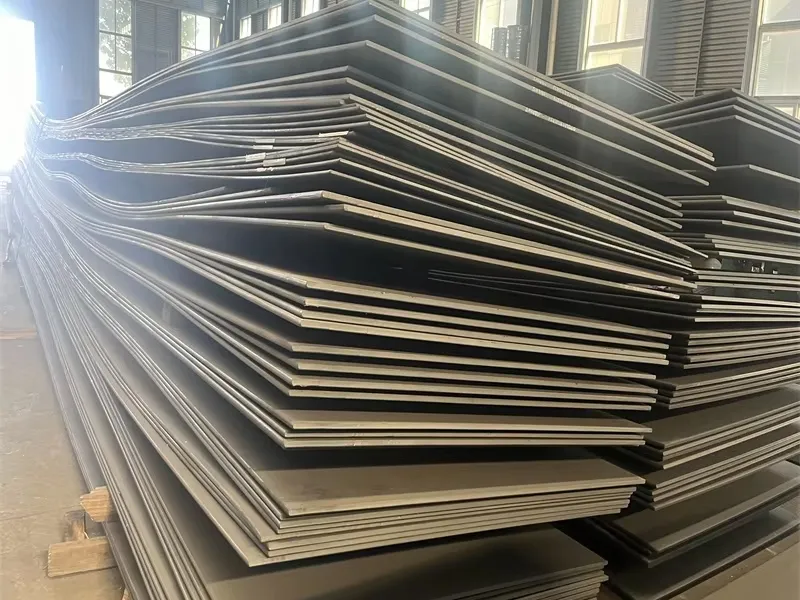
Weight Calculation for Large Orders
Accuracy here prevents logistics disasters.
1. The Formula Explained.
- Length (L): In meters.
- Width (W): In meters.
- Thickness (t): In millimeters (note: not meters).
- Density: 7.85 g/cm³, which equals 7,850 kg/m³. The formula simplifies to L x W x t x 7.85 because 1 mm thickness over 1 m² = 7.85 kg.
| 2. Examples for Common Sizes. | Plate Size (L x W x t) | Calculation | Weight per Plate |
|---|---|---|---|
| 6m x 2m x 10mm | 6 x 2 x 10 x 7.85 | 942 kg | |
| 6m x 2m x 20mm | 6 x 2 x 20 x 7.85 | 1,884 kg | |
| 12m x 3m x 25mm | 12 x 3 x 25 x 7.85 | 7,065 kg | |
| 8m x 2.5m x 30mm | 8 x 2.5 x 30 x 7.85 | 4,710 kg |
3. Using Weight for Logistics Planning.
- Total Order Weight: Sum the weight of all plates. Use this to book freight.
- Per-Lift Weight: For crane lifts, know the weight of each bundle or piece. Do not exceed crane capacity.
- Truck Load Limits: Ensure per-truck weight does not exceed road regulations.
4. Tolerances and Actual Weight.
The formula gives theoretical weight. Actual weight may vary by ±2-5% due to rolling tolerances. For large orders, this variation can add up to many tons. When planning freight, add a buffer (e.g., 5%) to account for this.
My Insight from the Field
A client in the Philippines once calculated their total order weight at 500 tons and booked a vessel accordingly. When the steel arrived at port, the actual weight was 525 tons. The vessel was overloaded. They had to split the shipment, incurring extra freight costs and delays8. Now, they add a 5% buffer to all weight calculations and confirm with the supplier's actual weights before booking freight.
What are the grades of marine steel plates?
You are specifying steel for a large vessel. The design calls for different grades in different areas. Which grades do you need? Understanding the grading system helps you order correctly and ensures you have the right material for each application.
Marine steel plates are graded by strength and toughness. Normal strength grades1 (A, B, D, E) have a minimum yield strength2 of 235 MPa. High strength grades3 (AH32, DH32, EH32, FH32, AH36, DH36, EH36, FH36) have yield strength2s of 315 MPa (32) or 355 MPa (36). The letter indicates impact test temperature4: A (0°C), D (-20°C), E (-40°C), F (-60°C). For large orders, you may need multiple grades for different parts of the vessel.
%[marine steel plate grades chart](https://cnmarinesteel.com/wp-content/uploads/2026/01/Marine-steel-plate-33.webp "Marine Steel Plate Grades")
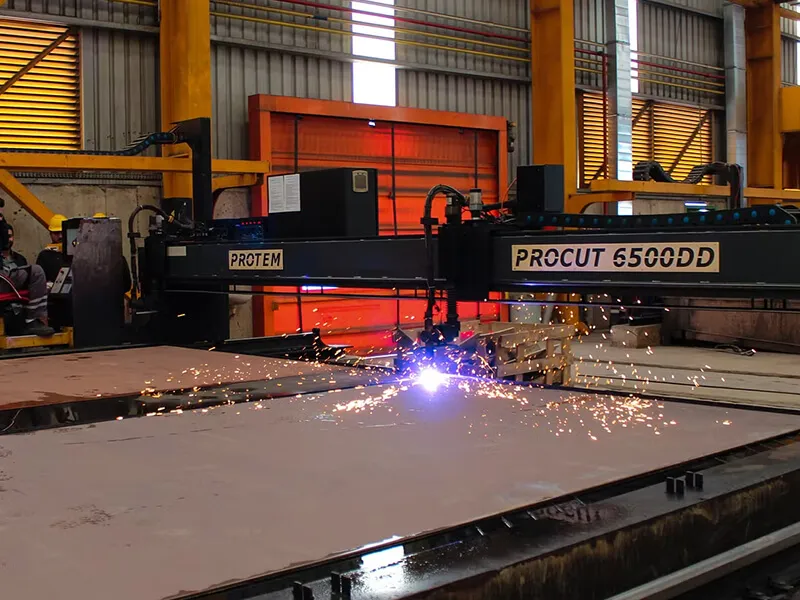
Grade Selection for Large Orders
Getting the grade mix right ensures structural integrity and cost efficiency.
| 1. The Grade Family Tree. | Grade Category | Yield Strength (MPa) | Impact Test Temp | Typical Application |
|---|---|---|---|---|
| Grade A | 235 | Not specified | Internal structures, mild environments. | |
| Grade D | 235 | -20°C | Hull plating for general ocean-going ships. | |
| Grade E | 235 | -40°C | Critical areas in large ships, cold routes. | |
| AH32 | 315 | 0°C | Higher strength, lighter structures in warm climates. | |
| DH32 | 315 | -20°C | Higher strength for general ocean-going. | |
| AH36 | 355 | 0°C | High-strength, weight-saving in warm climates. | |
| DH36 | 355 | -20°C | Most common high-strength grade for ocean-going vessels. | |
| EH36 | 355 | -40°C | High-strength for very cold climates. | |
| FH36 | 355 | -60°C | Arctic vessels. |
2. How to Choose for Large Orders.
- Step 1: Determine the vessel's operating route. This sets the required toughness (A, D, E, F).
- Step 2: Determine the structural requirements. High-strength areas (like the bottom shell) may need AH36 or DH36. Less critical areas may use Grade A or D.
- Step 3: Create a grade matrix5. List each structural block and the grade required.
- Step 4: Consolidate orders. Order all plates of the same grade together to simplify procurement and get better pricing.
| 3. Common Grade Mix for a Large Vessel. | Structural Area | Typical Grade | Reason |
|---|---|---|---|
| Bottom Shell | DH36 | High strength, good toughness for cold water. | |
| Side Shell | DH36 or Grade D | High strength or normal strength depending on design. | |
| Deck | AH36 or Grade A | High strength for deck loads, or normal for less stress. | |
| Bulkheads | Grade A or D | Often normal strength, depending on location. | |
| Superstructure | Grade A | Normal strength, weight not critical. |
4. Verification for Large Orders.
- Check Certificates: Ensure each plate's MTC shows the correct grade and impact test results.
- Check Markings: Each plate should be stamped with the grade and heat number.
- Segregate by Grade: Store different grades separately to avoid mix-ups during fabrication.
My Insight from the Field
A shipyard in Vietnam was building a series of container ships. They ordered all plates as DH36 to simplify procurement. They over-specified for areas that only needed Grade A, increasing their material cost by 15%. On the next project, we worked with them to create a grade matrix5. They ordered DH36 for the hull and Grade A for internal structures, saving significantly. This is the value of matching grade to application.
Conclusion
Securing stable supply of marine steel plate for large orders requires technical knowledge, strategic planning, and strong supplier partnerships. By understanding composition, selecting the right stainless grades, calculating weights accurately, and choosing appropriate marine grades, buyers can ensure their projects run smoothly.
-
Understanding normal strength grades is crucial for selecting the right materials for various marine applications. ↩ ↩ ↩
-
Yield strength is a key factor in determining the suitability of steel for specific marine applications. ↩ ↩ ↩ ↩
-
High strength grades are essential for ensuring the structural integrity of vessels in demanding environments. ↩ ↩ ↩
-
Impact test temperature affects the performance of steel in different environmental conditions, making it vital for selection. ↩ ↩ ↩ ↩
-
A grade matrix helps in organizing and optimizing the selection of steel grades for large orders. ↩ ↩ ↩
-
Find out how PMI testing ensures the quality and specifications of stainless steel in critical applications. ↩
-
Get insights on accurately calculating steel plate weight for logistics and planning. ↩
-
Learn strategies to prevent unexpected freight costs and delays when shipping steel. ↩