
Last month, a shipyard in Vietnam miscalculated their steel order by 15 tons. The error came from using wrong weight calculations for marine angle steel.
This comprehensive guide provides complete marine angle steel dimensions and weight data. Standard marine angles range from 20x20x3mm to 200x200x24mm, with weights from 0.9kg/m to 72.3kg/m. All weights are calculated using steel density of 7850kg/m³ with standard marine grade tolerances.
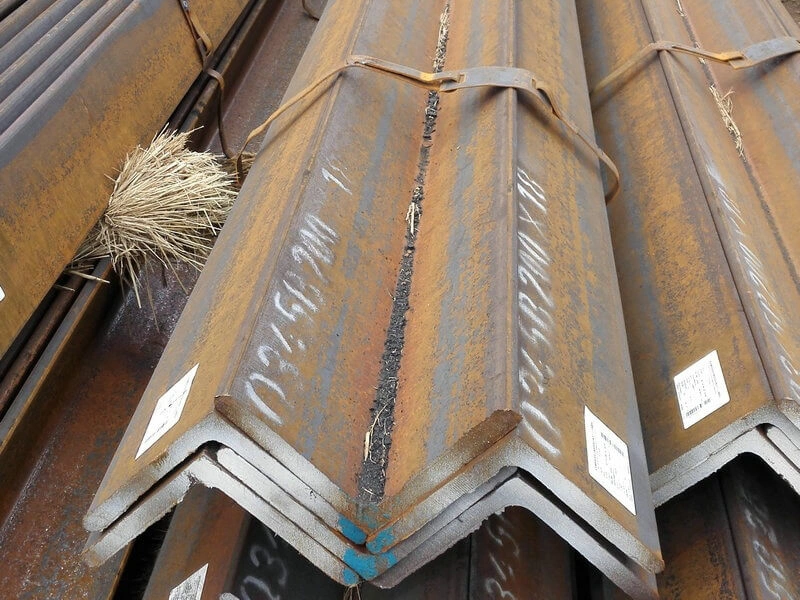
Accurate weight calculations are crucial for ship stability and cost control. Let me provide the complete reference data you need for your projects.
What is the weight of a 50x50x4mm angle?
Many shipbuilders underestimate the importance of precise weight calculations. Small errors in individual pieces multiply across entire ship structures.
A 50x50x4mm steel angle weighs approximately 3.05 kg per meter. This calculation assumes equal legs of 50mm width and 4mm thickness, using standard steel density. Actual weight may vary slightly due to manufacturing tolerances and corner radii.
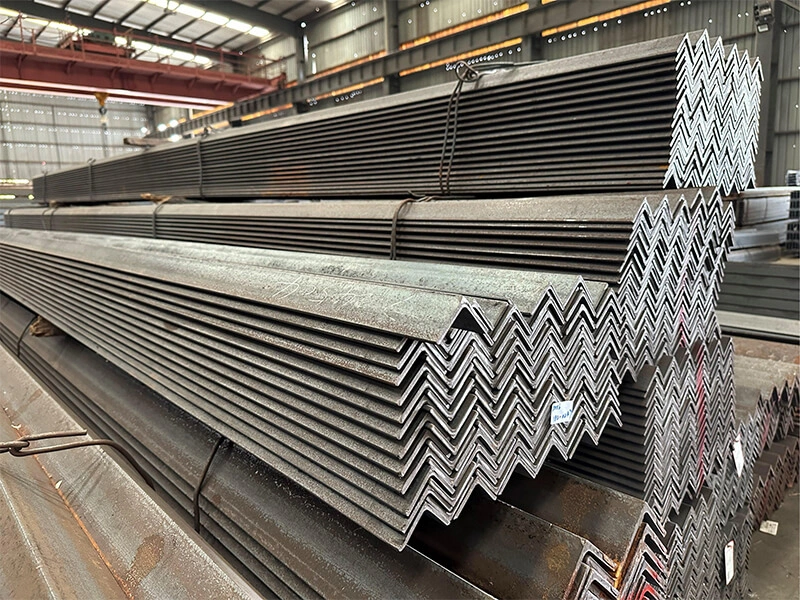
Detailed Analysis of 50x50x4mm Angle Properties and Applications
The 50x50x4mm angle represents a popular size for secondary ship structures with specific performance characteristics.
50x50x4mm Angle Technical Specifications
| Parameter | Value | Measurement Standard | Application Significance |
|---|---|---|---|
| Theoretical Weight | 3.05 kg/m | ISO 657-1 | Load calculations |
| Cross-sectional Area | 3.89 cm² | Geometric calculation | Strength capacity |
| Surface Area | 0.392 m²/m | Coating calculation | Paint requirements |
| Moment of Inertia | 8.67 cm⁴ | Structural analysis | Bending resistance |
| Section Modulus | 3.47 cm³ | Design calculations | Stress distribution |
| Standard Length | 6m, 12m | Shipping convenience | Handling and storage |
Theoretical weight calculation follows the standard formula. For equal angles, weight = (leg width × 2 – thickness) × thickness × 0.00785. The 0.00785 factor comes from steel density conversion. This gives 3.05 kg/m for 50x50x4mm, but actual delivered weight may be 2-3% different due to rolling tolerances.
Cross-sectional area determines the angle’s load-bearing capacity. The 3.89 cm² area supports tensile loads up to approximately 9.1 tons with safety factor. This capacity makes it suitable for medium-duty applications like platform supports and secondary framing in ship structures.
Surface area affects coating and maintenance requirements. Each meter of 50x50x4mm angle has 0.392 m² of surface to protect from corrosion. This information helps shipyards calculate paint quantities and plan maintenance schedules accurately.
Moment of inertia indicates bending stiffness. The 8.67 cm⁴ value shows how well the angle resists bending under load. Higher values mean better stiffness, making this size adequate for spans up to 2 meters in ship structures without excessive deflection.
Section modulus relates to stress distribution. The 3.47 cm³ value helps designers calculate maximum bending stress. This ensures the angle won’t exceed yield strength under expected loads, maintaining structural integrity throughout the vessel’s life.
Standard length options affect fabrication efficiency. The 6-meter and 12-meter standard lengths minimize waste during cutting and fitting. Our clients often order mixed lengths to optimize material usage in their shipbuilding projects.
What is the weight of 75 75 6mm ms angle?
The 75x75x6mm angle serves as a workhorse size in shipbuilding. Accurate weight knowledge prevents costly estimation errors in large projects.
A 75x75x6mm mild steel angle1 weighs approximately 6.85 kg per meter. This size provides good strength-to-weight ratio2 for medium structural applications. The weight calculation considers nominal dimensions with standard manufacturing tolerances.
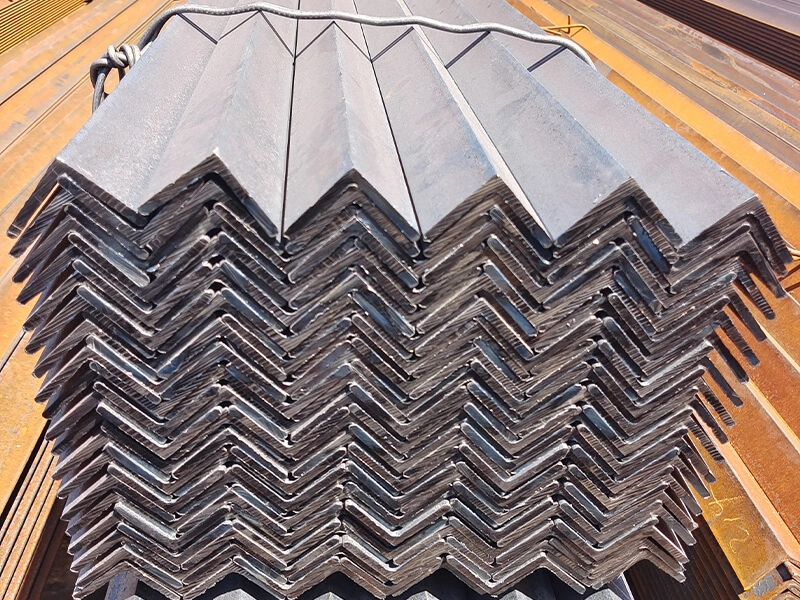
Comprehensive Guide to 75x75x6mm Angle Characteristics
This medium-sized angle offers balanced properties for various marine applications3 from hull framing to equipment supports.
75x75x6mm Angle Application Analysis
| Application Type | Usage Percentage | Reason for Selection | Alternative Sizes | Cost Comparison |
|---|---|---|---|---|
| Hull Framing | 35% | Good strength, easy welding | 80x80x6, 70x70x6 | Medium cost |
| Deck Supports | 25% | Adequate stiffness | 65x65x6, 75x75x8 | Competitive |
| Bulkhead Stiffeners | 20% | Optimal weight ratio | 70x70x5, 75x75x5 | Cost-effective |
| Equipment Foundations | 15% | Vibration resistance | 80x80x8, 75x75x7 | Good value |
| Walkway Framing | 5% | Sufficient load capacity | 65x65x5, 70x70x6 | Economical |
Hull framing represents the primary application for 75x75x6mm angles. The 6.85 kg/m weight provides substantial strength without excessive mass. Ship designers choose this size for intermediate frames where loads are significant but not extreme. The balanced proportions allow good weld access during construction.
Deck supports benefit from the angle’s stiffness characteristics. The 75mm leg width distributes loads effectively across deck plates. This prevents local deformation under concentrated loads from cargo or equipment. The 6mm thickness provides adequate corrosion allowance for marine environments.
Bulkhead stiffeners use this size for optimal performance. The weight-to-stiffness ratio makes 75x75x6mm efficient for reinforcing vertical partitions. The angles prevent buckling under water pressure while minimizing weight impact on vessel stability calculations.
Equipment foundations require vibration resistance4. The 75x75x6mm angle has sufficient mass to dampen vibrations from machinery while allowing flexible mounting arrangements. The size accommodates standard bolt patterns for most marine equipment installations.
Walkway framing utilizes the angle’s load capacity. The 6.85 kg/m weight supports pedestrian traffic and maintenance loads safely. The size allows comfortable walking space while maintaining structural integrity under dynamic ship motions.
Manufacturing consistency ensures reliable performance. Our certified mills maintain tight control over rolling processes to deliver 75x75x6mm angles with consistent dimensions and mechanical properties. This consistency allows shipyards to standardize their fabrication procedures.
What is the price of 65 65 6 angle weight?
Price inquiries often confuse weight cost with piece cost. Understanding the relationship prevents budget miscalculations in shipbuilding projects.
The price of 65x65x6mm angle1 depends on current steel markets2 and order quantity. Based on 4.82 kg/m weight, current prices range from $650-$850 per metric ton. This translates to approximately $3.13-$4.10 per meter, excluding shipping and certification costs.
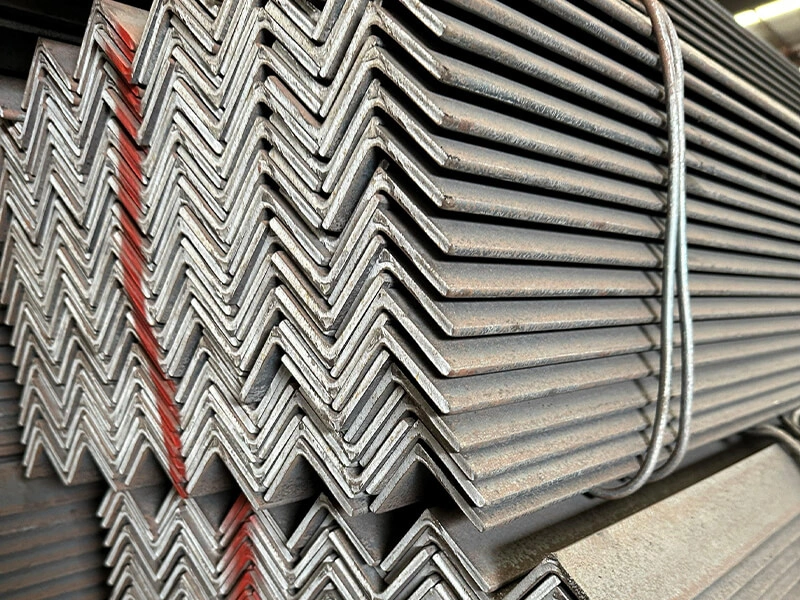
Factors Affecting 65x65x6mm Angle Pricing Structure
Multiple variables influence the final cost of marine angles3, requiring careful consideration during procurement planning.
65x65x6mm Angle Price Breakdown Table
| Cost Component | Price Range | Percentage of Total | Factors Influencing Cost | Cost Reduction Strategies |
|---|---|---|---|---|
| Raw Material | $450-$600/ton | 65-75% | Iron ore prices, demand | Bulk purchasing, timing |
| Manufacturing | $120-$180/ton | 18-25% | Energy costs, efficiency | Process optimization |
| Certification | $30-$50/ton | 4-7% | Classification society | Multi-certification |
| Surface Treatment | $20-$40/ton | 3-5% | Coating requirements | Standard options |
| Packaging | $15-$25/ton | 2-3% | Shipping method | Bulk packaging |
| Profit Margin | $35-$55/ton | 5-8% | Market competition | Long-term contracts |
Raw material costs dominate the pricing structure. Steel prices fluctuate daily based on global iron ore markets, energy costs, and manufacturing demand. The 65-75% material cost percentage means total price follows raw material trends closely. Smart buyers monitor these trends and time purchases strategically.
Manufacturing costs reflect production efficiency. Modern mills with energy-efficient equipment and optimized processes maintain lower manufacturing costs. The $120-$180 per ton range covers rolling, heat treatment if required, quality control, and overhead allocation. Larger orders spread fixed costs more effectively.
Certification expenses add significant value. Marine-grade certification requires third-party inspection, testing, and documentation. Different classification societies charge varying fees for mill approval and continuous surveillance. ABS, DNV, and LR certifications have similar costs but different market preferences.
Surface treatment options affect final price. Basic mill scale surfaces cost least, while shot-blasted and primed surfaces add $20-$40 per ton. Special coatings or treatments for corrosion protection increase costs further but extend service life in aggressive marine environments.
Packaging costs depend on shipping requirements. Standard bundled packaging suffices for domestic shipments, while export-grade weatherproof packaging costs more. Proper packaging prevents damage during transit and storage at shipyards.
Profit margins vary with market conditions. Competitive markets pressure margins, while specialized products command premium pricing. Established relationships with suppliers often lead to better pricing through long-term agreements and consistent order volumes.
How do you calculate the weight of steel from dimensions?
Weight calculation errors cause major problems in shipbuilding. I’ve seen projects where miscalculations led to stability issues and costly modifications.
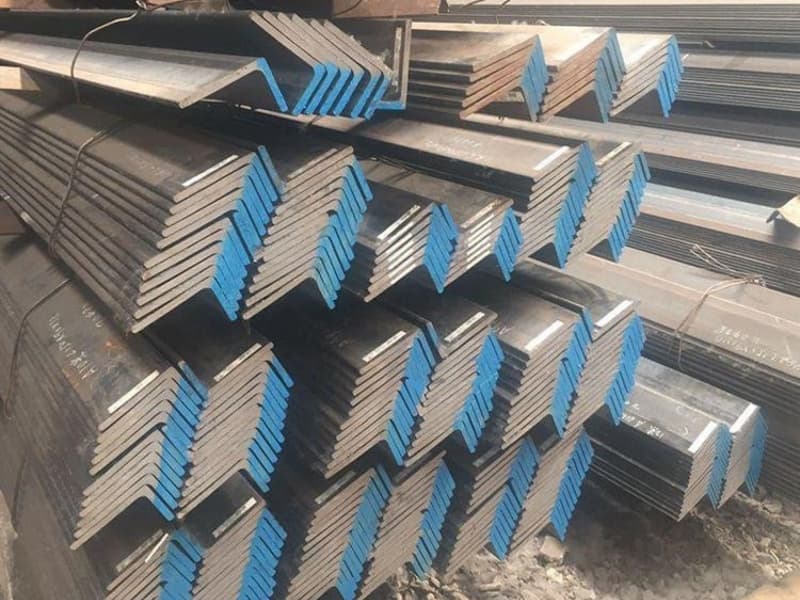
Steel weight calculation uses the formula: Weight = Volume × Density. For angles, Weight (kg/m) = (Leg1 + Leg2 – Thickness) × Thickness × 0.00785. Steel density is 7850 kg/m³, and the constant 0.00785 simplifies calculations for millimeter dimensions.
Comprehensive Guide to Steel Weight Calculation Methods
Accurate weight calculations require understanding multiple approaches and their appropriate applications.
Steel Weight Calculation Methods Comparison
| Method | Formula | Accuracy | Ease of Use | Best Applications |
|---|---|---|---|---|
| Theoretical | (A+B-t)×t×0.00785 | High | Moderate | Design, estimation |
| Tabular | Pre-calculated tables | Very High | Very Easy | Quick reference |
| Software | CAD/BIM integration | Highest | Easy | Detailed design |
| Actual | Scale measurement | Exact | Difficult | Verification |
| Approximation | Rules of thumb | Low | Very Easy | Rough estimates |
Theoretical calculation provides the foundation for weight estimation. The formula (Leg1 + Leg2 – Thickness) × Thickness × 0.00785 works for equal and unequal angles. The subtraction of thickness accounts for the corner intersection area that would otherwise be double-counted. This method gives accurate results for procurement and design purposes.
Tabular reference offers the most practical approach for shipyards. Pre-calculated tables like those provided in this article allow quick weight determination without calculations. Standardized sizes have established weights that classification societies accept for stability calculations. These tables account for standard tolerances and corner radii.
Software integration delivers the highest accuracy for complex projects. Modern CAD and BIM systems calculate weights automatically from 3D models. This approach captures all components and connections, providing comprehensive weight data for stability analysis and cost estimation. The software uses exact geometry rather than nominal dimensions.
Actual measurement serves as verification method. Weighing sample pieces on certified scales confirms theoretical calculations. This practice identifies significant discrepancies early, preventing costly errors in large orders. Regular verification ensures calculation methods remain accurate.
Approximation methods help with quick estimates. Rules of thumb like "1 meter of angle weighs approximately leg width in mm × thickness in mm × 0.015" provide rough figures for budgeting. These approximations lack precision but help during initial project planning and feasibility studies.
Practical considerations affect real-world accuracy. Manufacturing tolerances, corner radii variations, and scale calibration all influence final weights. Marine projects typically add 2-3% contingency to theoretical weights to account for these variables. This practice prevents material shortages during construction.
Conclusion
Accurate marine angle steel dimensions and weight data ensures proper material planning, cost control, and structural integrity in shipbuilding projects.
-
Explore this link to understand the latest pricing trends and factors affecting the cost of 65x65x6mm angle. ↩ ↩
-
This resource will provide insights into how fluctuations in steel markets impact material costs. ↩ ↩
-
Learn about the various factors that influence marine angle pricing, crucial for budgeting in shipbuilding. ↩ ↩
-
Learning about its vibration resistance can enhance equipment foundation designs. ↩