
Your shipment of marine angle steel has arrived at the shipyard. The crane is ready to unload. But the quality control inspector stops everything. They need to inspect the material first. If the inspection fails, the material sits on the dock, costs accumulate, and your project schedule slips. Understanding the inspection process is not optional. It is essential for smooth acceptance.
The marine angle steel inspection process for shipyard acceptance is a systematic verification. It includes checking dimensional tolerances (leg length, thickness, straightness), visual surface quality, material grade markings, and verifying the Mill Test Certificate (MTC) against the physical material and order specifications. Third-party inspection like SGS is often used to pre-certify material before shipment, ensuring smooth arrival.

Inspection is not just about finding defects. It is about proving that the material meets the design requirements and class society rules. A smooth inspection process starts long before the ship arrives. It starts with understanding exactly what will be checked. Let’s begin with one of the most fundamental checks: the angle itself.
How to measure the angle of steel?
You have a bundle of steel angles. They look right. But looks can be deceiving. The angle between the two legs must be exactly 90 degrees, within a specified tolerance. If it is off by even one degree, the fit-up in the hull structure will be wrong. Welds will be misaligned. Rework will be needed. Measuring the angle correctly is the first step to preventing this.
To measure the angle of steel, you use a precision tool called a universal protractor1 or a bevel protractor2. You place the protractor’s base firmly against one leg of the angle and the movable blade against the other leg. The reading on the scale shows the exact included angle. For marine angles, this should be 90 degrees, with tolerances specified in standards like ASTM A63 or EN 10056.
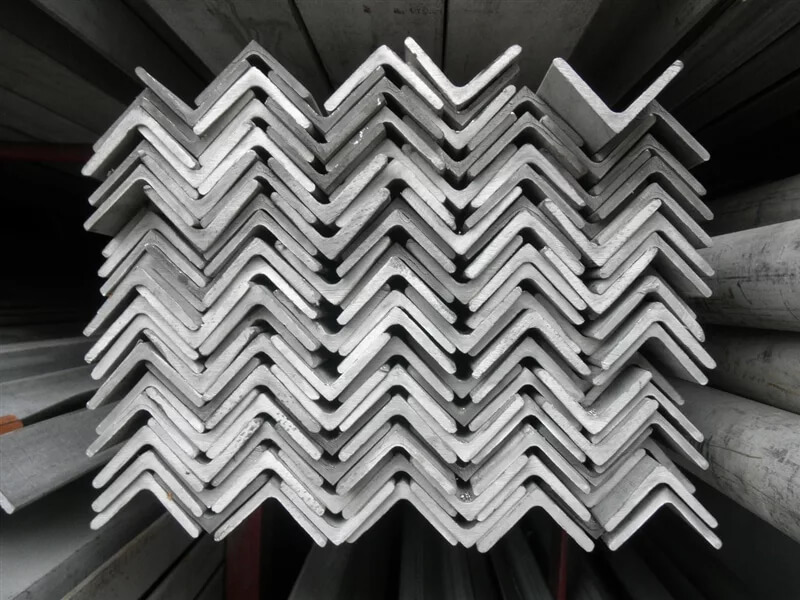
The Geometry Check: Ensuring Perfect Fit-Up
The 90-degree angle is not a given. The rolling process can introduce slight deviations. Inspection catches these.
1. The Tools of the Trade.
- Universal Bevel Protractor: This is the standard tool. It has a adjustable blade that swings across a graduated dial. It can measure angles with an accuracy of 5 minutes (1/12 of a degree) or 0.1 degrees.
- Steel Square: A simple, high-quality 90-degree square can be used for a quick pass/fail check. If the angle’s legs do not sit flush against both arms of the square, there is a problem.
- Vernier Caliper with Angle Function4: Some digital calipers can measure angles, though they are less common for this specific check.
2. The Inspection Procedure Step-by-Step.
- Step 1: Select Sample. The inspector selects a representative sample of angles from the shipment, following the sampling plan (e.g., 5 pieces per bundle or per heat number).
- Step 2: Clean the Surface. Ensure the surfaces where the tool will contact are free of mill scale, rust, or dirt that could affect the reading.
- Step 3: Position the Tool. Place the base of the protractor firmly against the inside of one leg. Extend the blade to contact the inside of the other leg.
- Step 4: Take the Reading. Read the angle on the protractor scale. For a standard angle, it should read 90 degrees.
- Step 5: Check Tolerance. The standard (e.g., ASTM A63) allows a small tolerance. For the included angle of a rolled angle, the tolerance is typically ± 2 degrees or ± 1 degree, depending on the size and precision required. The project specification may be tighter.
- Step 6: Document. Record the readings in the inspection report5. Any pieces outside tolerance are flagged for rejection or further review.
3. Why This Matters for Shipyard Acceptance.
A slight deviation in angle has a cumulative effect. If many angles are slightly off, the hull structure can become twisted. Welding gaps become inconsistent. The ship may not meet the design geometry. This is why the angle measurement6 is a non-negotiable check.
My Insight from the Field
A shipyard in Vietnam received a large shipment of angles from a new supplier. The price was good. The material looked fine. But during the incoming inspection, our client’s quality team measured the angles and found several pieces with an included angle of 91.5 degrees, outside the acceptable tolerance. They rejected the entire batch. The supplier had to replace it at their cost, causing a 3-week delay. The shipyard’s procurement manager told us later, "We learned that a cheap price means nothing if the geometry is wrong." Since then, they have made angle measurement6 the first check in their acceptance process. We now always provide pre-shipment inspection report5s with angle measurement6s to give them confidence before the steel even leaves China.
What is a steel inspection1?
You hear the term "steel inspection1" used often. But it means different things to different people. For the production supervisor, it might be a quick visual check. For the quality manager, it is a formal procedure with documented results. For the shipyard accepting material, it is the gatekeeper that decides whether the steel enters the workshop or sits on the dock.
Steel inspection is a systematic examination of steel products to verify they meet specified requirements. It includes checks on dimensions, surface quality, mechanical properties2, chemical composition, and traceability. For marine steel, inspection is often performed by the manufacturer (in-house), by the buyer, or by an independent third party3 (like SGS or Bureau Veritas) to ensure compliance with classification society rules and project specifications.

The Three Lines of Defense in Steel Inspection
A robust acceptance process uses multiple layers of inspection. Each layer catches different potential issues.
1. Mill Inspection (The First Line).
The steel mill performs its own inspections during production.
- During Rolling: They monitor temperature and dimensions continuously.
- Mechanical Testing: They cut samples from each "heat" (batch of steel) and test them for tensile strength, yield strength, and elongation. For marine grades, they also perform Charpy impact tests at specified temperatures.
- Dimensional Checks: They sample finished products to ensure they are within the standard tolerances.
- Output: The Mill Test Certificate (MTC)4 is the official record of these tests. It is the primary document for traceability.
2. Pre-Shipment Inspection5 (The Second Line – Optional but Recommended).
This is performed by the buyer or an independent third party3 at the supplier’s facility before the goods are shipped.
- What is Checked: Dimensional conformity, surface finish, marking, packaging, and verification of MTCs against the physical material.
- Who Does It: The buyer’s own inspector, or an independent company like SGS, Bureau Veritas (BV), or Lloyd’s Register (LR).
- Why Do It: It catches problems at the source. If something is wrong, it can be fixed before the steel travels halfway around the world. This saves time, money, and avoids project delays.
- Our Experience: Gulf Metal Solutions specifically valued our SGS inspection support6. It gave them confidence before shipment.
3. Incoming Inspection at Shipyard (The Third Line – The Final Gate).
This is the acceptance inspection when the material arrives.
- Quantity Check: Verify the received quantity against the packing list and purchase order.
- Visual Inspection: Check for shipping damage, rust, and general condition.
- Dimensional Spot Checks: Re-measure a sample of the material to confirm it matches the MTC and order.
- Document Verification: Check that the MTCs are original, match the material markings (heat numbers), and are approved by the relevant classification society.
- Marking Check: Ensure each piece is properly marked with grade, heat number, and manufacturer’s ID.
- Decision: Material that passes is accepted and moved to storage. Material that fails is quarantined and a non-conformance report (NCR)7 is issued.
My Insight from the Field
A client in Malaysia once waived pre-shipment inspection to save a small cost. The material arrived. The MTCs looked fine. But when our client’s surveyor came for the incoming inspection, they discovered that a significant portion of the angles were the wrong grade. The markings on the steel did not match the MTC. The shipment had been mixed at the mill. The client had to spend weeks sorting, testing, and negotiating with the supplier. The cost of the delay and rework was ten times the inspection fee they saved. Now, they always include third-party inspection in their contracts. This story is why we always recommend SGS or similar. It is not a cost; it is an insurance policy.
What are the grades of marine steel plates1?
Your inspection checklist says "Verify steel grade." You look at the steel piece. It has markings stamped on it: "AH362." You look at the Mill Test Certificate. It says "ABS AH3636](https://cnmarinesteel.com/ah36-vs-dh36-marine-steel-plate-whats-the-difference/)[^2]." What does this mean? Understanding the grading system is essential for verifying that you received what you ordered. The grade defines the steel’s strength and toughness.
Marine steel plates are graded based on their minimum yield strength4 and impact toughness5. The main categories are Normal Strength (Grades A, B, D, E) with yield strength4 around 235 MPa, and High Strength6 (Grades AH32, DH32, EH32, FH32 with 315 MPa yield; AH362, DH36, EH36, FH36 with 355 MPa yield). The letter indicates toughness level7 (A for basic, F for the most extreme cold temperatures).
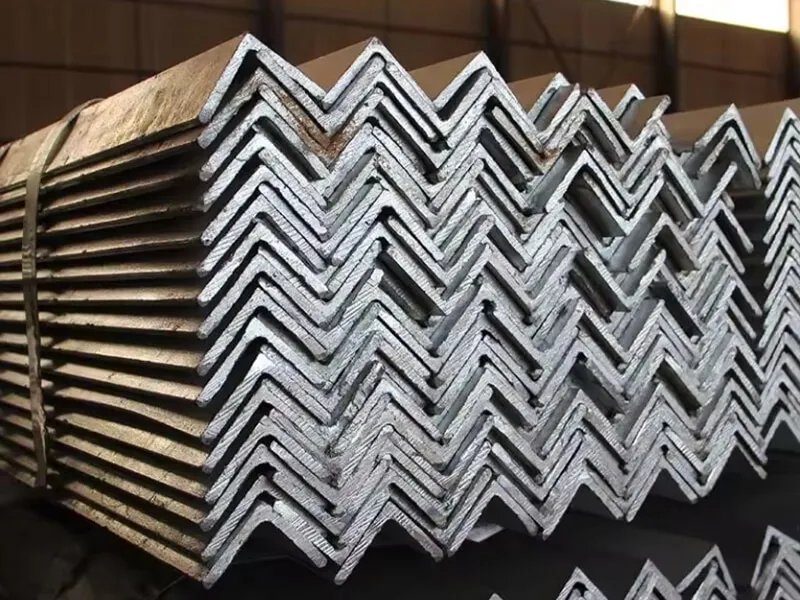
Decoding the Letters and Numbers: An Inspector’s Guide
When you look at a steel marking, you are reading a code. Here is how to decipher it.
1. The Strength Number.
The number in the grade (e.g., 32, 36, 40) indicates the minimum yield strength4 in kilograms per square millimeter (kgf/mm²) or, more commonly now, in megapascals (MPa).
- 32: Minimum yield strength4 of 315 MPa.
- 36: Minimum yield strength4 of 355 MPa.
- 40: Minimum yield strength4 of 390 MPa.
Higher numbers mean stronger steel, which allows for thinner plates and lighter structures.
2. The Toughness Letter.
The letter prefix (A, D, E, F) indicates the temperature at which the steel has been impact-tested and guaranteed to perform. This is critical for vessels operating in different climates.
- A (or AH for high strength): Impact tested at 0°C (32°F). Suitable for warm climates.
- D (or DH): Impact tested at -20°C (-4°F). Suitable for most ocean-going vessels.
- E (or EH): Impact tested at -40°C (-40°F). For vessels operating in very cold waters.
- F (or FH): Impact tested at -60°C (-76°F). For Arctic and extreme cold environments.
3. The Classification Society Prefix.
Often, the grade will also include the classification society8‘s initials, especially on the MTC.
- ABS AH3636](https://cnmarinesteel.com/ah36-vs-dh36-marine-steel-plate-whats-the-difference/)[^2]: American Bureau of Shipping certified, high strength, 355 MPa yield, tested at 0°C.
- LR DH36: Lloyd’s Register certified, high strength, 355 MPa yield, tested at -20°C.
- NV E36: DNV certified, high strength, 355 MPa yield, tested at -40°C.
4. Table: Common Marine Steel Plate Grades and Their Properties.
| Grade Designation | Yield Strength (Min, MPa) | Tensile Strength (MPa) | Impact Test Temperature | Typical Application |
|---|---|---|---|---|
| ABS Grade A | 235 | 400-520 | Not specified | Internal structures, mild environments. |
| ABS Grade D | 235 | 400-520 | -20°C | Hull plating for general ocean-going ships. |
| ABS Grade E | 235 | 400-520 | -40°C | Critical areas in hulls of large ships. |
| ABS AH32 | 315 | 440-590 | 0°C | Higher strength, lighter structures. |
| ABS DH32 | 315 | 440-590 | -20°C | Higher strength for colder routes. |
| ABS AH3636](https://cnmarinesteel.com/ah36-vs-dh36-marine-steel-plate-whats-the-difference/)[^2] | 355 | 490-620 | 0°C | Most common high-strength grade for shipbuilding. |
| ABS DH36 | 355 | 490-620 | -20°C | High strength for cold climates. |
| ABS EH36 | 355 | 490-620 | -40°C | High strength for very cold climates. |
My Insight from the Field
We had a shipment of angles for a project in Romania. The order was for DH36 grade. During the pre-shipment inspection, our SGS inspector noticed that the steel markings on some pieces were "AH362," not "DH36." The mill had mixed in some material from a different heat. We immediately quarantined those pieces and replaced them before shipment. If this had not been caught, the material would have arrived in Romania, failed the incoming inspection, and been rejected. The project would have been delayed by weeks while we sorted it out. The cost of the SGS inspection was tiny compared to that potential disaster. This is why we build third-party inspection into our standard process for critical grades.
What is the HS code1 for angle steel2?
Your angle steel2 is ready to ship. The customs documentation is being prepared. One box on the form asks for the HS code1. You hesitate. Getting this wrong can stop your shipment at the border, incur unexpected duties, or even lead to fines. For smooth international trade, knowing the correct code is essential.
The Harmonized System (HS) code for angle steel2 is typically 7216.21 or 7216.22, or within the broader heading 7216. Specifically:
- 7216.21: Angles, shapes and sections of iron or non-alloy steel, L or T sections, not further worked than hot-rolled, hot-drawn or extruded, of a height of less than 80 mm.
- 7216.22: L or T sections, of a height of 80 mm or more.
The exact code may vary by country, so always verify with a customs broker.
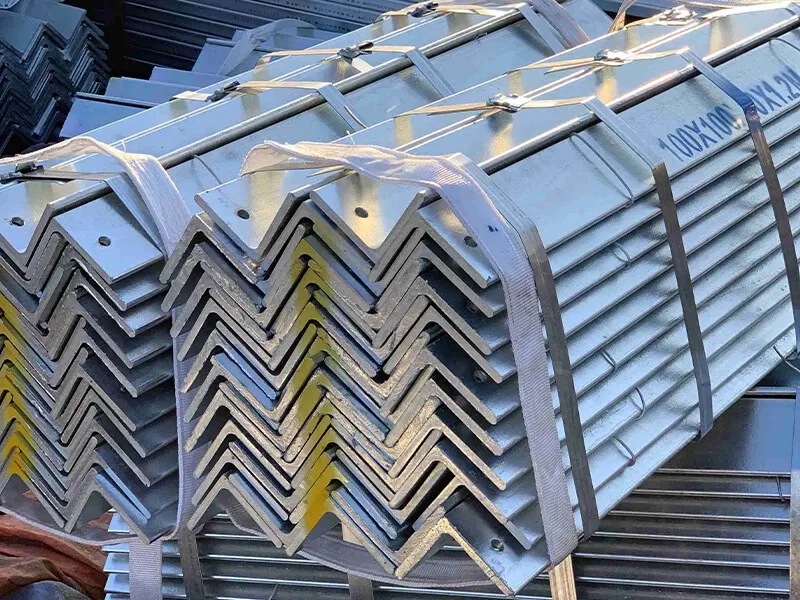
Customs Classification: A Practical Guide for Steel Buyers
HS codes are not random. They follow a logical structure. Understanding this structure helps you find the right code and avoid mistakes.
1. The HS Code Structure for Angle Steel.
The HS system is hierarchical.
- Chapter 72: Iron and Steel. This is the broad category.
- Heading 7216: Angles, shapes and sections of iron or non-alloy steel. This narrows it down to structural sections.
- Subheadings: This is where it gets specific.
- 7216.10: U, I or H sections, not further worked than hot-rolled, hot-drawn or extruded, of a height of less than 80 mm.
- 7216.21: L or T sections, not further worked than hot-rolled, hot-drawn or extruded, of a height of less than 80 mm.
- 7216.22: L or T sections, of a height of 80 mm or more.
- 7216.31 – 7216.50: Other sections (U, I, H) of various heights.
- 7216.69: Other, not further worked than hot-rolled, hot-drawn or extruded. (A catch-all for some profiles).
2. Determining the Correct Subheading.
For standard marine angle steel3l](https://cnmarinesteel.com/what-are-the-applications-of-marine-angle-steel-beyond-shipbuilding/)[^2] (L-shaped), the decision is based on the leg length (height).
- Step 1: Measure the leg length. For an equal angle, either leg is fine. For an unequal angle, use the longer leg.
- Step 2: If the leg length is less than 80mm, use 7216.21.
- Step 3: If the leg length is 80mm or more, use 7216.22.
3. Why Precision Matters.
- Duty Rates: Different subheadings can have different duty rates4. Using the wrong code could mean paying too much duty, hurting your project budget.
- Customs Delays: If the code is obviously wrong, customs may hold the shipment for inspection. This can cause days or weeks of delay.
- Compliance Risk: Incorrect declarations can be seen as a customs offense, leading to fines and increased scrutiny on future shipments.
4. Best Practices for Buyers.
- Ask Your Supplier: A good supplier ships steel regularly. They will know the correct HS code1 for your destination country. We always provide this information to our clients.
- Verify with a Customs Broker: Before the first shipment to a new country, have a local customs broker5 confirm the code. They know the local regulations and any special requirements.
- Include in Purchase Order: Once confirmed, include the HS code1 in your purchase order6 and ask the supplier to reference it on all shipping documents. This creates a clear chain of information.
My Insight from the Field
A new client in Pakistan was importing a container of angle steel2 from us. Their customs broker5 gave them an HS code1 that was for "structures and parts of structures" (heading 7308), not for the raw steel angles. They cleared the first shipment without issue. On the second shipment, customs audited the code and realized the mistake. They levied a significant fine for misclassification and demanded the correct duty for all past shipments. The client contacted us in a panic. We provided them with our standard HS code1 (7216.22) and a letter explaining the product. They were able to resolve the issue with customs, but it was a stressful and costly lesson. Now, we proactively discuss HS code1s with all new clients to ensure alignment from the start.
Conclusion
Shipyard acceptance of marine angle steel relies on a thorough inspection process. From measuring the 90-degree angle to verifying grades and using the correct HS code, each step ensures quality and compliance for a successful project.
-
Understanding HS codes is crucial for international shipping and avoiding customs issues. ↩ ↩ ↩ ↩ ↩ ↩ ↩ ↩ ↩ ↩ ↩
-
Explore the versatility of angle steel in various construction projects and its benefits. ↩ ↩ ↩ ↩ ↩ ↩ ↩ ↩ ↩
-
Find out about the specific applications and advantages of marine angle steel. ↩ ↩ ↩ ↩ ↩ ↩ ↩ ↩
-
Discover how different classifications can impact your import costs significantly. ↩ ↩ ↩ ↩ ↩ ↩ ↩ ↩ ↩
-
Learn how customs brokers can simplify the shipping process and ensure compliance. ↩ ↩ ↩ ↩ ↩ ↩
-
Get tips on ensuring your purchase orders are compliant and clear for customs. ↩ ↩ ↩ ↩ ↩ ↩
-
Understanding toughness levels helps in selecting the right steel for different environmental conditions in marine applications. ↩ ↩
-
Learn about the role of classification societies in ensuring the safety and quality of marine vessels and their materials. ↩