
You are an exporter preparing a shipment of marine angle steel for a client overseas. The order is large. The client is demanding. One quality issue could ruin the relationship. How do you ensure that every piece meets the specification? How do you catch problems before they reach the customer? A systematic quality control flow is the answer.
A marine angle steel quality control flow for export orders involves multiple checkpoints: 1) Mill source approval and material traceability. 2) Pre-production verification of the order specification. 3) In-process inspection during rolling. 4) Dimensional and visual inspection of finished products. 5) Mechanical testing verification against Mill Test Certificates. 6) Third-party inspection (e.g., SGS) if required. 7) Packaging inspection for export. 8) Documentation review before shipment. Each step prevents defects from reaching the customer.
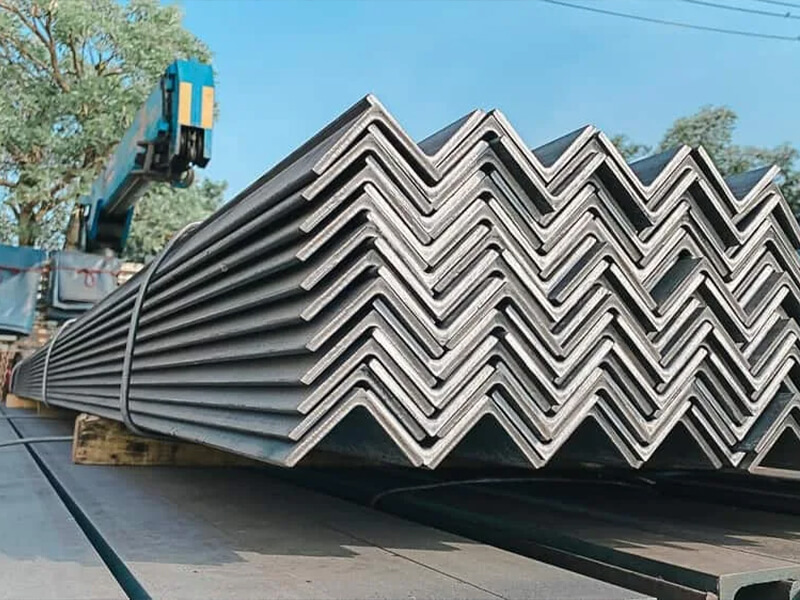
A robust QC flow protects both the supplier and the buyer. It catches problems early, when they are cheap to fix. To design such a flow, you must understand the product’s critical properties. Let’s start with a fundamental question.
How strong is angle steel?
You are specifying angle steel for a marine structure. The strength matters. But strength is not one number. It depends on the grade, the size, and the direction of loading. Understanding how strength is defined helps you set the right acceptance criteria in your QC flow.
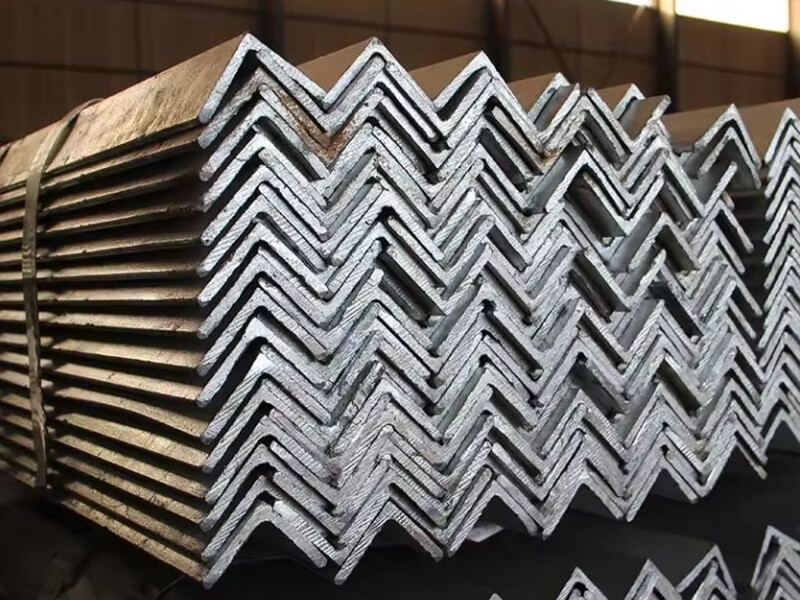
The strength of angle steel is defined by its yield strength1 and tensile strength2, which vary by grade. For marine grades, yield strength1 ranges from 235 MPa (normal strength) to 355 MPa or higher (high strength). However, the strength of an installed angle also depends on its section modulus3, which combines its geometry with material strength to determine its load-carrying capacity. In quality control, we verify the material grade (through certification and testing) and the dimensions (which affect section modulus3).
Strength Parameters in Quality Control
What you need to check depends on what "strength" means in context.
| 1. Material Strength (From the Mill Certificate). | Grade | Minimum Yield Strength (MPa) | Minimum Tensile Strength (MPa) |
|---|---|---|---|
| Grade A | 235 | 400-520 | |
| AH36 | 355 | 490-620 | |
| DH36 | 355 | 490-620 | |
| Grade D | 235 | 400-520 |
2. Section Strength (Combines Material and Geometry).
The section modulus3 (a calculated value based on the shape’s dimensions) determines how much bending moment the angle can resist. A larger angle with the same grade is stronger. This is why dimensional accuracy4 is critical. If the legs are thinner than specified, the section modulus3 decreases, and the angle is weaker than designed.
3. What QC Must Verify.
- Material Strength: Check the Mill Test Certificate for yield and tensile values. Ensure they meet the grade requirements.
- Dimensional Accuracy: Measure leg lengths and thickness. Use the measured dimensions to verify that the actual section modulus3 is within tolerance of the theoretical value.
- Consistency: Spot-check multiple pieces to ensure the material is consistent. Wide variation indicates poor mill control.
4. The Consequence of Weakness.
If the steel is weaker than specified, the structure may fail under load. This is why QC is not just paperwork. It is a safety function.
My Insight from the Field
A client in the Philippines once received a shipment of angles with certificates showing AH36 grade. But the material felt light. They weighed a sample and found it was underweight. Further checking showed the thickness was only 5.5mm instead of 6mm. The section modulus3 was reduced by nearly 10%. The material was rejected. The supplier had to replace it. This is why we always include dimensional checks in our QC flow. Numbers on a certificate are not enough.
What grade is steel angle?
You are reviewing a purchase order. It says "steel angle, Grade A1." Is that clear enough? For marine use2, "Grade A1" has a specific meaning. But in other contexts, it might mean something else. Understanding grade designations is essential for QC.
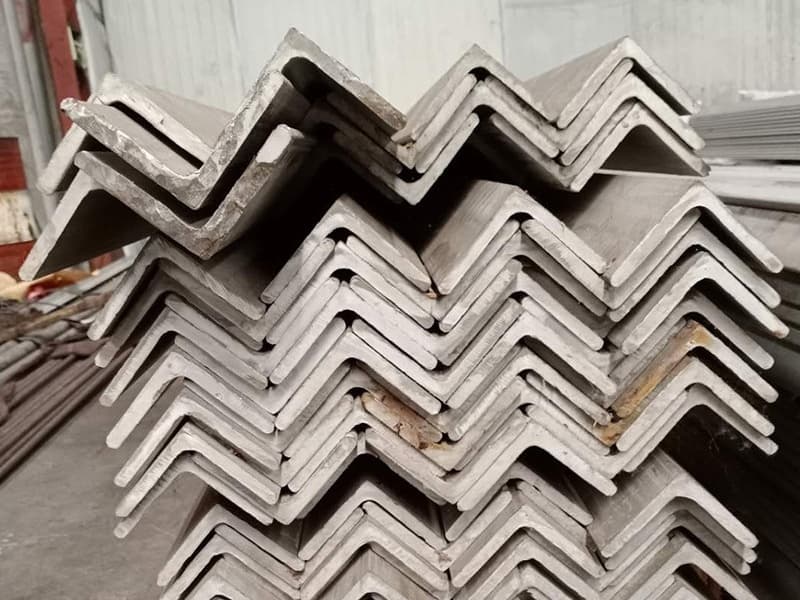
The grade of steel angle depends on the standard and application. For marine use2, common grades are Grade A1, B, D, E (normal strength) and AH32, AH36, DH32, DH36, EH36 (high strength). These grades specify minimum yield strength, tensile strength, and impact toughness3 at specific temperatures. For general construction, grades like ASTM A364 or S275JR are common. The grade must be clearly specified on the purchase order and verified on the Mill Test Certificate5 and physical markings.
Grade Verification in QC
This is a critical step. Getting the grade wrong can be catastrophic.
| 1. Common Grade Designations. | Application | Standard | Grade Examples | Key Properties |
|---|---|---|---|---|
| Marine (Normal Strength) | ABS, LR, DNV rules | Grade A1, Grade D, Grade E | Yield 235 MPa, impact tested (D at -20°C, E at -40°C). | |
| Marine (High Strength) | ABS, LR, DNV rules | AH36, DH36, EH36 | Yield 355 MPa, impact tested at various temperatures. | |
| General Construction | ASTM A6/A36 | ASTM A364 | Yield 250 MPa, no impact requirement. | |
| European Construction | EN 10025 | S235JR, S275JR, S355JR | Yield 235-355 MPa, impact at room temperature (JR). |
2. What QC Must Check.
- Purchase Order: Does it clearly specify the required grade and standard?
- Mill Test Certificate5: Does the certificate show the correct grade and standard? Is it signed by an authorized inspector?
- Physical Markings: Is each piece stamped or painted with the grade and heat number? Do the markings match the certificate?
- If Stainless: Check the specific alloy (304, 316, etc.) and confirm with PMI (Positive Material Identification6) testing if critical.
3. Common Grade-Related Non-Conformances.
- Wrong Grade Delivered: e.g., A36 instead of AH36. This is a showstopper.
- Missing Impact Tests: Marine grades require impact testing. If the certificate does not show it, the material is non-conforming.
- Unreadable Markings: If the physical markings are illegible, traceability is lost. The material may be rejected.
- Mixed Grades in One Shipment: Different grades mixed together. This requires 100% sorting and testing, which is expensive.
My Insight from the Field
A client in Saudi Arabia once received a shipment of angles marked "AH36." But the Mill Test Certificate5 showed the steel was actually A36 with a fake grade line. The client’s inspector noticed that the impact test results were missing, which is required for AH36. They challenged the supplier, who eventually admitted the substitution. The shipment was rejected. This is why we always include third-party inspection for critical orders. An extra set of eyes catches these problems before the steel ships.
What is the ASTM standard for angles?
You are ordering steel for a project in the United States. The specification calls for ASTM standards. Which ASTM standard applies to steel angles? Knowing this helps you ensure the material meets the required dimensional tolerances1 and testing protocols.
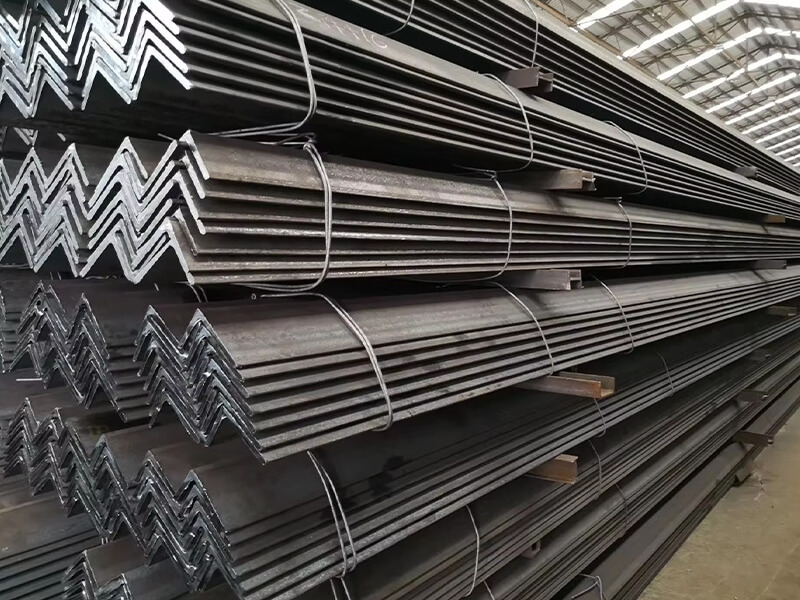
The primary ASTM standard for steel angles is ASTM A6/A6M2, "Standard Specification for General Requirements for Rolled Structural Steel Bars, Plates, Shapes, and Sheet Piling." This standard covers the general requirements, including tolerances, marking, and testing. The material grade itself is specified in other standards, such as ASTM A363 (carbon steel) or ASTM A5724 (high-strength low-alloy steel). For marine use, ASTM also has standards like ASTM A1315 for ship structural steel.
Navigating ASTM Standards for QC
Knowing which standard applies helps you verify compliance.
| 1. The Hierarchy of ASTM Standards. | Standard | What It Covers |
|---|---|---|
| ASTM A6/A6M2 | General requirements for rolled structural steel. Includes dimensional tolerances1, marking, and testing procedures. Applies to all shapes. | |
| ASTM A363/A36M | Specification for carbon structural steel. Covers chemical and mechanical properties for Grade 36. | |
| ASTM A5724/A572M | Specification for high-strength low-alloy steel. Covers grades 42, 50, 55, 60, 65. | |
| ASTM A1315/A131M | Specification for structural steel for ships. Covers marine grades (A, B, D, E, AH32, AH36, etc.). |
2. What This Means for Your Order.
- If you order "ASTM A363 angle steel," the material must comply with ASTM A363 for chemistry and properties, and ASTM A6 for tolerances and marking.
- If you order "ASTM A5724 Grade 50 angle," it must comply with ASTM A5724 and ASTM A6.
- If you order "ASTM A1315 Grade AH36," it must comply with ASTM A1315 and ASTM A6.
3. QC Checks for ASTM-Compliant Material6.
- Certificate: Does it reference the correct ASTM standards?
- Tolerances: Measure dimensions against the tolerances in ASTM A6.
- Markings: Each piece should be marked with the ASTM designation, grade, and heat number.
- Testing: Verify that mechanical tests (yield, tensile) meet the requirements of the grade standard.
4. Common Mistakes.
- Assuming A36 is a marine grade. It is not. It lacks impact testing.
- Not specifying the grade correctly. "ASTM angle" is not enough. You must specify the grade standard (A36, A572, A131).
- Confusing A6 (general requirements) with a grade standard.
My Insight from the Field
A client in Mexico ordered "ASTM angles" for a marine project. They received A36 angles. When the steel arrived, they realized they needed AH36 for the application. The A36 could not be used. The delay cost them. Now, their specifications are precise: "ASTM A1315 Grade AH36 angle steel." This level of detail prevents misunderstandings.
What are the disadvantages of using angle steel?
You are designing a structure. Angle steel seems like the obvious choice. But no material is perfect. Understanding the disadvantages helps you design better and also helps you spot quality issues that exploit these weaknesses.
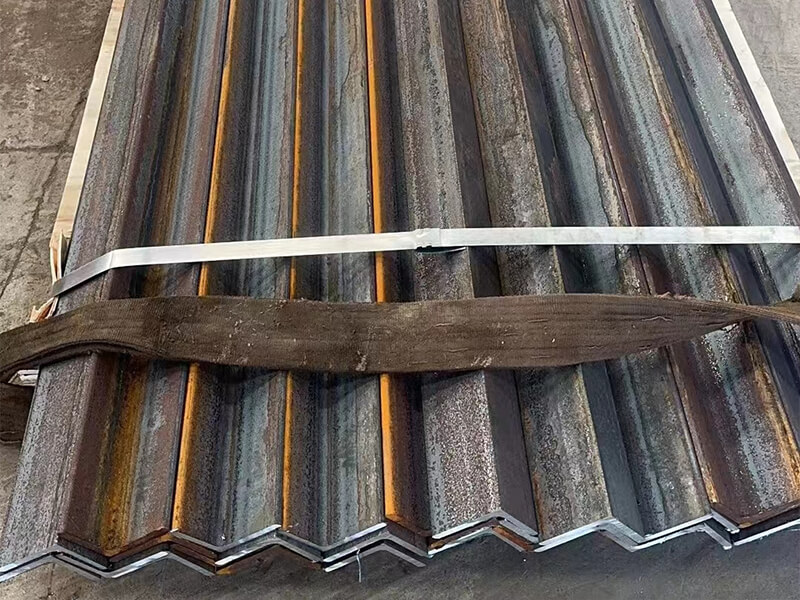
The main disadvantages of using angle steel include: 1) Corrosion traps1 in the inside corner where water and debris can accumulate. 2) Stress concentration2 at the sharp inner corner, which can initiate fatigue cracks. 3) Local buckling3 of the free leg under compressive loads. 4) Lower torsional resistance4 compared to closed sections like tubes. 5) Aesthetic and safety concerns5 from sharp edges. These disadvantages must be addressed through design, protective coatings, and proper quality control.
How Disadvantages Affect Quality Control
Understanding weaknesses helps you focus QC efforts.
1. Corrosion Traps.
- The Issue: The inside corner of an angle is a natural place for water, salt, and dirt to collect. This can lead to accelerated corrosion, especially if the coating is damaged.
- QC Focus: Ensure the inside corner is properly coated. Inspect for coating holidays or damage. For critical applications, consider seal-welding the corner or using a different profile.
2. Stress Concentration.
- The Issue: The sharp inner corner is a stress raiser. Under cyclic loading (like waves on a ship), fatigue cracks can initiate at this corner.
- QC Focus: Inspect the corner radius. A too-sharp corner (smaller than specified) increases stress concentration. For high-fatigue applications, specify a larger corner radius or require grinding of the corner.
3. Local Buckling.
- The Issue: The free leg of an angle (the leg not attached to a plate) can buckle under compressive load if it is too thin relative to its length.
- QC Focus: Verify that the thickness is within tolerance. Under-thickness increases the risk of buckling.
4. Lower Torsional Resistance.
- The Issue: Angles have low resistance to twisting. If the structure will experience torsional loads, angles may not be the best choice.
- QC Focus: If angles are used in a torsion application, ensure the design accounts for this. QC cannot fix a design flaw.
5. Aesthetic and Safety Concerns.
- The Issue: Sharp edges can be a safety hazard and may not look as clean as rounded sections.
- QC Focus: Inspect for sharp burrs or edges from cutting. These should be ground smooth for safety.
My Insight from the Field
A client in Qatar was building an offshore platform. They used angles for all the walkway grating supports. After a few years, they noticed severe corrosion in the inside corners of the angles. The coating had failed, and saltwater had been trapped. They had to replace all the supports at significant cost. Now, they specify that all angles in exposed areas must have the inside corner seal-welded or use a different profile. This experience taught me that understanding the disadvantages of a product is just as important as knowing its strengths.
Conclusion
A robust quality control flow for marine angle steel export orders covers every step from mill selection to final packaging. By understanding strength, grades, standards, and disadvantages, QC teams can catch defects early and ensure customers receive conforming, reliable material.
-
Explore how corrosion traps can impact the longevity and safety of angle steel structures. ↩ ↩ ↩ ↩ ↩ ↩ ↩ ↩ ↩
-
Learn about the implications of stress concentration on angle steel and how to mitigate risks. ↩ ↩ ↩ ↩ ↩ ↩
-
Understand the factors leading to local buckling and strategies to enhance structural integrity. ↩ ↩ ↩ ↩ ↩ ↩ ↩ ↩ ↩ ↩ ↩ ↩
-
Discover the limitations of angle steel in torsional applications and alternative solutions. ↩ ↩ ↩ ↩ ↩ ↩ ↩ ↩
-
Find out how sharp edges in angle steel can pose safety risks and affect design choices. ↩ ↩ ↩ ↩ ↩ ↩ ↩ ↩ ↩
-
Explore the quality control checks to ensure your steel meets ASTM standards and avoid costly mistakes. ↩ ↩