
You are building three vessels at once. You order steel from different suppliers. Then one shipment arrives late. Another batch has the wrong grade. Your production stops.
A solid supply strategy for multi-vessel projects means picking the right steel grades, knowing when to upgrade, matching deliveries to your build schedule, and working with one reliable supplier who keeps everything consistent.
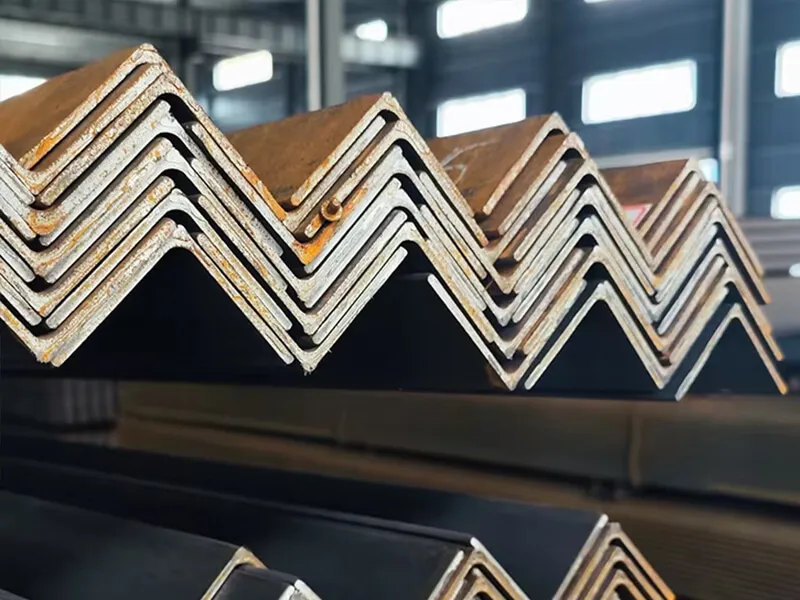
I have worked with fabricators across Southeast Asia and the Middle East. I have seen what happens when a supply plan fails. I have also seen what happens when it works. Let me walk you through the four things that make the difference.
What Type of Steel Is Used in Ship Construction?
You are about to order steel for a new project. You see terms like Grade A, AH32, and DH36. You are not sure what they mean. You pick one and hope it works.
Ship construction uses marine steel grades that are approved by classification societies1 like ABS, DNV, and CCS. The most common types are ordinary strength steel2 (Grade A, B, D, E) and high-strength steel3 (AH32, DH36, EH36). Each grade has a specific yield strength4 and is suited for different parts of the vessel.
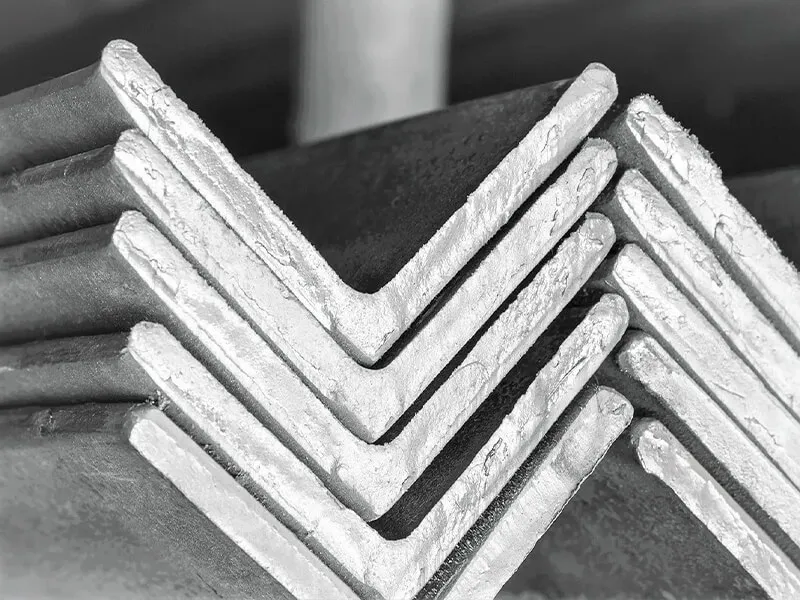
Let me break this down so you know exactly what you are buying.
The Two Main Categories
Shipbuilding steel falls into two categories. The first is ordinary strength steel. The second is high-strength steel. They are not the same.
| Category | Common Grades | Minimum Yield Strength | Typical Use |
|---|---|---|---|
| Ordinary Strength | A, B, D, E | 235 MPa | Bulkheads, decks, superstructures in non-critical areas |
| High-Strength | AH32, DH36, EH36 | 315 MPa to 355 MPa | Hull structures, bottom shells, frames that carry heavy loads |
What the Letters Mean
The letter in the grade tells you the impact toughness. This matters for cold weather performance.
- A grade is for normal temperature use. It is common for interior structures.
- B grade has slightly better toughness.
- D grade is for low temperatures. It works down to -20°C.
- E grade is for very low temperatures. It goes down to -40°C.
For high-strength steel, the H stands for high strength. The number tells you the yield strength in metric tons per square inch. So AH32 means it is high-strength steel with 32 kg/mm² yield strength.
Why This Matters for Multi-Vessel Projects
When you are building multiple vessels, you might be tempted to use one grade for everything. That can work. But it is not always the smartest choice.
I had a client in Malaysia building three tugboats. He used Grade A for the whole hull. The boats worked fine. But he spent more money than he needed to. The superstructure did not need the same strength as the bottom hull. He could have used Grade A for the top and AH32 for the bottom. That would have saved him about 12% on material cost.
The opposite can also happen. Another client in the Philippines used only Grade A for a set of fishing boats that worked in rough seas. The hull frames started cracking after two years. He should have used AH32 for the frames. He learned that lesson the hard way.
So when you plan your supply, ask yourself three questions:
- What classification society rules apply to these vessels?
- What sea conditions will the vessels face?
- What parts of the hull carry the most stress?
The answers will tell you which grades you actually need.
What Is Mild Steel for Shipbuilding, and When Should You Choose Higher Grades?
You hear the term mild steel. People tell you it is fine for most boats. You wonder if you really need the expensive high-strength grades. Then you worry about safety.
Mild steel for shipbuilding refers to ordinary strength grades like Grade A, B, D, and E1. It has a yield strength of around 235 MPa. You should choose higher grades like AH32 or DH362 when the structure carries heavy loads, when you need to reduce weight, or when the vessel operates in cold or rough sea conditions.
[^3] angle bar](https://cnmarinesteel.com/wp-content/uploads/2026/01/Marine-angle-steel-57.webp)
I want to be clear about this because I see buyers make the wrong choice all the time. They either overspend on high-grade steel they do not need, or they underspec and end up with structural problems later.
What Mild Steel Actually Is
Mild steel is a low-carbon steel. It is easy to weld. It is easy to cut. It is also the most affordable option. For many parts of a ship, it is the right choice.
Here is where mild steel works best:
- Decks that do not carry heavy cargo
- Superstructures above the main deck
- Interior bulkheads
- Non-structural stiffeners
- Small vessels that stay in calm waters
When You Need to Move Up
High-strength steel costs more per ton. But it lets you use thinner plates and smaller sections. That reduces weight. Less weight means better fuel efficiency4 or more cargo capacity.
I worked with a project contractor in Qatar who was building a set of offshore support vessels. He originally wanted to use Grade A for everything. I showed him the weight calculation5. By switching the main hull frames to AH32, he reduced the steel weight by 18 tons per vessel. Over five vessels, that was 90 tons less weight. The extra cost for the higher grade was covered in the first year of fuel savings.
Here is a simple way to decide:
| Condition | Mild Steel (Grade A/B) | High-Strength (AH32/DH36) |
|---|---|---|
| Calm water, small boat | ✓ Good choice | ✗ Not needed |
| Rough sea, large vessel | ✗ Risk of fatigue | ✓ Required |
| Cold climate operation | ✗ Brittle risk | ✓ DH36 or EH36 needed |
| Weight-sensitive design | ✗ Too heavy | ✓ Allows thinner sections |
| Budget-focused project | ✓ Lower material cost | ✗ Higher upfront cost |
The Cost Trade-Off
Many buyers think high-strength steel is always more expensive overall. That is not true. The price per ton is higher. But if you can use a smaller angle bar size, the total cost can be similar or even lower.
Let me give you an example. A standard angle bar 100x100x10 in Grade A weighs about 15 kg per meter. The same strength requirement might let you use 80x80x8 in AH32. That weighs about 9.5 kg per meter. You pay more per ton for the AH32. But you buy fewer tons. Your total invoice can be 10% lower.
So when you plan your supply strategy for multiple vessels, do the weight calculation first. Sometimes the higher grade saves you money. Sometimes it does not. But you will not know until you run the numbers.
How to Structure Phased Deliveries to Match Hull Assembly Schedules?
You order all your steel at once. It arrives at the yard. You have no space to store it. The steel sits outside. It starts to rust. You pay for storage you did not plan for.
Phased deliveries1 mean you divide your total steel order into batches that match your hull assembly sequence2. You order the steel for the bottom structure first. Then the midship section. Then the top. This keeps your yard organized and your cash flow3 healthy.
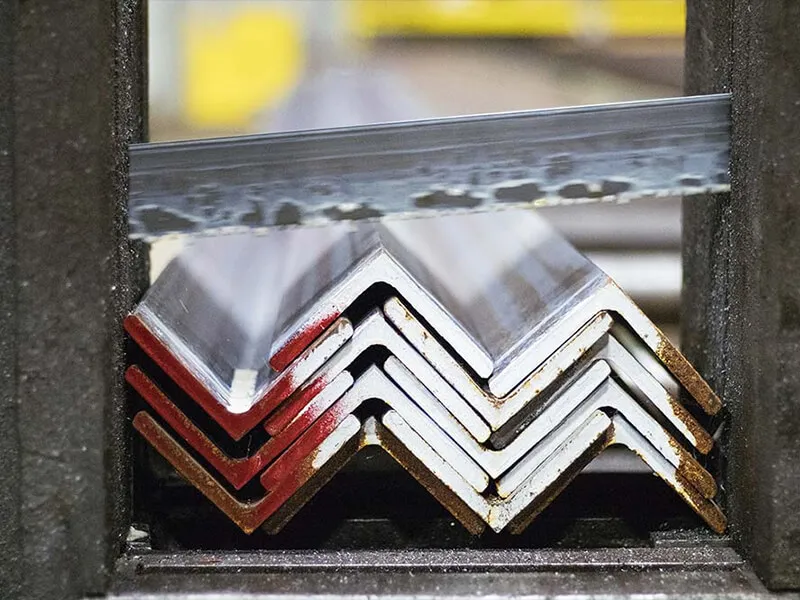
I learned this lesson from a client in Vietnam. He was building four bulk carriers at the same time. He ordered all the steel for all four vessels on one purchase order. The steel arrived in one month. His yard was small. He had to rent extra space. He also had to move the steel three times before it was used. That cost him time and money.
How to Plan Your Phases
The key is to know your customer’s build sequence. Every shipyard builds differently. But most follow a similar pattern.
Phase 1: Bottom and Bilge
This is where the ship starts. You need angle bars4 for the keel, bottom frames, and bilge keels. These parts go in first. They also use the heaviest sections.
Phase 2: Midship and Side Shell
Once the bottom is set, the sides go up. This phase uses medium-sized angle bars for side frames and longitudinal stiffeners. The quantities here are usually the largest.
Phase 3: Deck and Superstructure
The deck goes on last. This phase uses smaller angle bars and sometimes lower grades. The superstructure may use mild steel even if the hull uses high-strength.
Phase 4: Finishing and Outfitting
This is the final stage. You need smaller quantities for brackets, supports, and miscellaneous parts. These are often offcuts or smaller section sizes.
A Real Phased Delivery Schedule
Here is what a typical schedule looks like for a project with three vessels:
| Phase | Timing (Months from Start) | Material % of Total | Key Sections |
|---|---|---|---|
| Phase 1 | 0–2 | 20% | Heavy angle bars for bottom frames |
| Phase 2 | 3–5 | 40% | Medium sections for side frames |
| Phase 3 | 6–8 | 25% | Smaller sections for deck and superstructure |
| Phase 4 | 9–11 | 15% | Mixed sections for finishing work |
The Benefits You Will See
When you use phased deliveries, you get four clear benefits.
First, you save on storage. The steel arrives when you need it. It goes straight to the cutting table. You do not pay for extra yard space.
Second, you protect your material. Steel that sits outside for months gets surface rust. That rust has to be cleaned before welding. That is labor cost. Phased delivery means the steel is fresh.
Third, you improve cash flow. You pay for the steel in stages. You do not tie up all your working capital on day one. This matters for multi-vessel projects because the investment is large.
Fourth, you reduce mistakes. When you have too much steel on site, it is easy to grab the wrong section. With phased delivery, you only have what you need for the current work stage. The risk of mix-ups drops.
I always ask my clients for their build schedule5 before I quote. That way I can structure the deliveries to match their yard’s rhythm. It takes a bit more planning on my side. But it saves my clients weeks of headaches.
Why a Single-Supplier Strategy Reduces Risk Across Multiple Vessels?
You work with three different steel suppliers. One sends the wrong grade. Another delivers late. A third has inconsistent quality. You spend your days chasing shipments instead of building ships.
A single-supplier strategy1 means you choose one reliable partner for all your marine steel across the entire project. This gives you consistent quality, one point of contact, better pricing through volume, and traceability2 across every batch you receive.
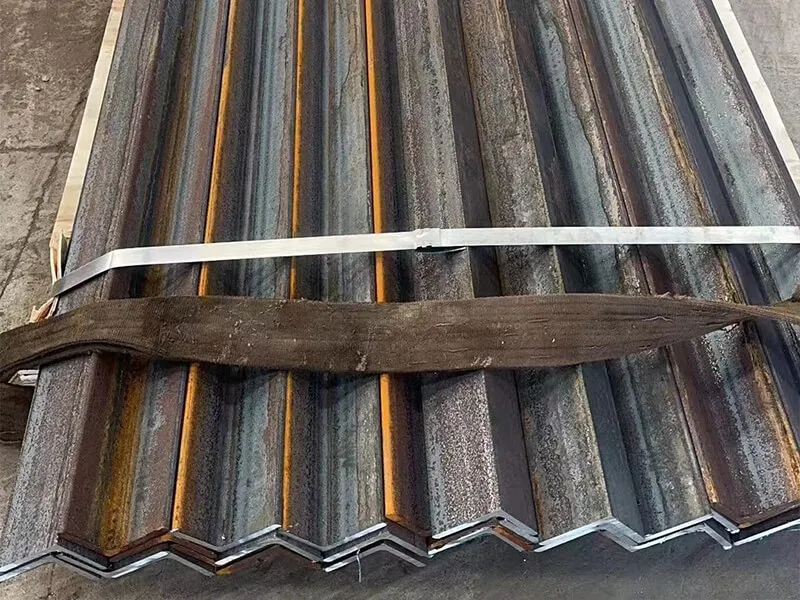
I saw this play out with Gulf Metal Solutions, a client in Saudi Arabia. Before they found us, they worked with three different Chinese suppliers. The experience was painful. One supplier responded slowly. Another had inconsistent surface finish. None of them had English-speaking staff for after-sales support.
They found us through one of my blog articles. They gave us a chance on a project with multiple vessels. Here is what changed.
The Four Pillars of a Single-Supplier Strategy
1. Quality Consistency
When you buy from one supplier, every batch comes from the same mills. The chemical composition stays the same. The mechanical properties stay the same. Your welding procedures do not need to change between batches.
With multiple suppliers, you get different mill sources. One might use a different carbon content. Another might have slightly different manganese levels. Your welders have to adjust. Or worse, they do not adjust and you get weak welds.
2. Traceability
Classification societies require traceability. They want to know which mill produced each piece of steel. When you have one supplier, the traceability is simple. One set of mill certificates covers the whole project.
When you have multiple suppliers, you have multiple sets of certificates. You have to track which batch came from which supplier. If there is a problem, you have to figure out who to call. That takes time you do not have.
3. Communication Efficiency
I am going to be honest with you. Many Chinese suppliers have weak English skills. Their export teams are small. When you have three suppliers, you are dealing with three separate communication channels. Each one has its own way of working.
We took a different approach. When Gulf Metal Solutions started working with us, I assigned a dedicated export sales rep. This person speaks fluent English. She responds within hours, not days. She knows the client’s project inside and out. There is no confusion about what was ordered and when it is coming.
4. Pricing Power
Volume matters in steel. When you bundle all your steel needs with one supplier, you become a bigger customer. You get better pricing. You also get priority during mill production. When capacity is tight, the supplier ships to their biggest clients first.
Gulf Metal Solutions told me after their first project: "The steel company was the first supplier to respond within two hours, and maintained this rapid response speed throughout the entire delivery process. The product quality is stable, and the packaging is the best among all the packaging for ship plates we have received so far."
What to Look for in a Single Supplier
Not every supplier can handle multi-vessel projects. Here is what I recommend you check:
- Mill relationships: Do they work directly with certified mills, or do they buy from traders?
- Export experience: Have they shipped to your country before? Do they know the port requirements?
- Language support: Do they have English-speaking staff for the full project duration?
- Inspection support: Can they arrange third-party inspections like SGS before shipment?
- Flexible MOQ: Can they handle phased deliveries with small batch sizes?
We built our business around these five points. We work with certified mills in Shandong. We ship to Vietnam, Mexico, Qatar, Saudi Arabia, and beyond. We offer SGS inspection support3. And we keep our MOQ flexible so clients can phase their orders.
When you manage multiple vessels, you have enough complexity already. Your steel supply should be the easy part.
Conclusion
A strong marine angle steel supply strategy rests on four choices: the right grades, the right timing, and one trusted partner.
-
Explore how a single-supplier strategy can streamline operations and reduce risks in your supply chain. ↩ ↩ ↩ ↩
-
Understand the significance of traceability in ensuring product quality and compliance in your supply chain. ↩ ↩ ↩ ↩
-
Learn about the critical role of inspection support in ensuring product quality and compliance during shipping. ↩ ↩ ↩
-
Learn about the critical role of angle bars in shipbuilding and how they contribute to structural integrity. ↩ ↩ ↩
-
A well-structured build schedule is essential for timely project completion and resource management. ↩ ↩