
Steel angles that are slightly out of tolerance can cause big assembly problems. Weld gaps, misaligned frames, and rework are common results. As a supplier, I see how tight tolerance control separates good projects from troubled ones.
Marine angle steel tolerances define the allowable variation in leg length, thickness, straightness, and squareness. Dimensional accuracy is critical for fit-up in shipbuilding. Standards like EN 10056 or ASTM A6 specify these limits. For example, leg length tolerance might be ±2mm for a 100mm angle, and thickness tolerance is typically ±0.5 to ±1mm. Always verify dimensions against the Mill Certificate.
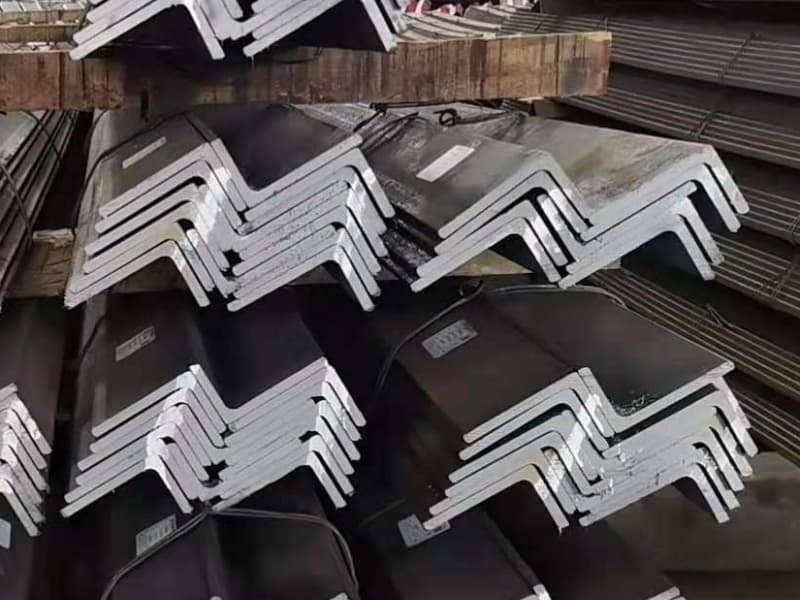
To manage tolerance, you must first know how to read the basic dimensions correctly. Let’s start with the foundation.
How to read steel angle dimensions?
Reading dimensions wrong is the easiest way to order the wrong size. A simple mix-up between leg length and thickness can ruin your project budget and timeline.
Steel angle dimensions are read as "Leg Length x Leg Length x Thickness" for equal angles, and "Long Leg x Short Leg x Thickness" for unequal angles, all in millimeters. For example, a 100x100x10 angle has two 100mm legs that are 10mm thick. A 150x100x12 angle has a 150mm leg, a 100mm leg, and is 12mm thick.
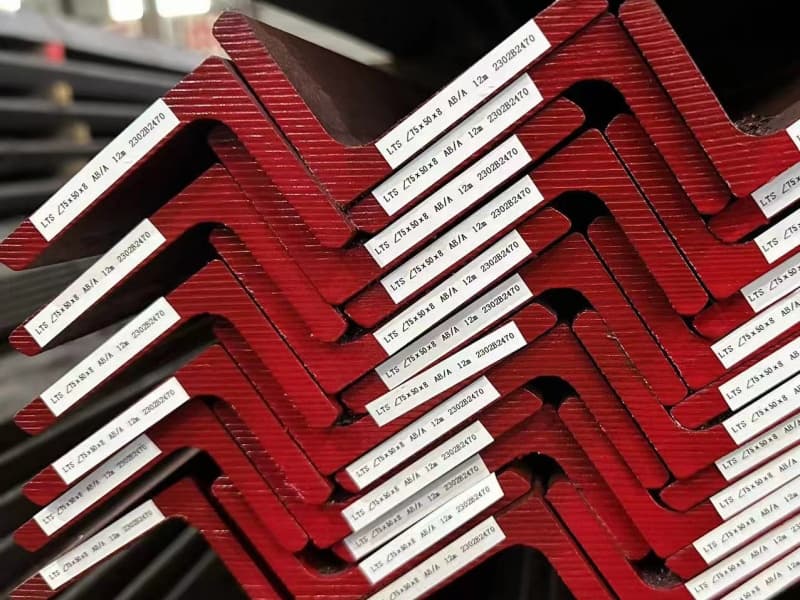
A Detailed Guide to Interpreting Angle Dimensions
The three-number system is standard, but you need to understand what each number represents and what it does not include. This knowledge is essential for checking material upon delivery.
1. Breaking Down the Three Numbers
- First Number (A): This is the length of the first leg. In an equal angle, both legs are this length. In an unequal angle, this is typically the longer leg, but you should confirm from the drawing or context.
- Second Number (B): This is the length of the second leg. For an equal angle, A = B. For an unequal angle, B is the shorter leg.
- Third Number (t): This is the nominal thickness of the steel. This thickness applies to both legs. It is the thickness of the flat surface, not counting the root radius.
2. What the Dimensions Do NOT Tell You
The basic "A x B x t" does not include several important geometric features:
- Root Radius (r1): The inner curve where the two legs meet. This radius means the actual inside corner is not a perfect sharp 90 degrees. The "leg length" is measured to the theoretical intersection point (the heel), not the inside surface.
- Toe Radius (r2): The small rounding on the outer tips of the legs.
- Center of Gravity Location: For unequal angles, the center (where it balances) is not in the middle.
- Theoretical Weight: This must be calculated or looked up in a standard table.
3. Practical Steps for Reading and Verifying
When you receive a drawing or a material list, follow these steps:
- Identify the callout (e.g.,
L 75x75x6). - Confirm the type: Equal (75=75) or Unequal.
- Understand that "6" is the nominal thickness. The actual delivered thickness could be between 5.5mm and 6.5mm, depending on the tolerance standard.
- Use a standard weight table or formula to calculate the weight per meter for cost estimation.
Here is a table illustrating how to read common size callouts:
| Drawing Callout | How to Read It | Type | Key Interpretation |
|---|---|---|---|
| L 50x50x5 | Leg x Leg x Thickness: 50mm, 50mm, 5mm. | Equal Angle | Both legs are 50mm long. The steel is 5mm thick. |
| L 100x75x8 | Long Leg x Short Leg x Thickness: 100mm, 75mm, 8mm. | Unequal Angle | One leg is 100mm, the other is 75mm. Thickness is 8mm. |
| L 200x200x20 | Leg x Leg x Thickness: 200mm, 200mm, 20mm. | Equal Angle | A large, heavy section for major structures. |
| L 65x65x6 | Leg x Leg x Thickness: 65mm, 65mm, 6mm. | Equal Angle | A common size for medium-duty bracing. |
For our clients, getting this right is the first step. When Gulf Metal Solutions sends an inquiry, they use this precise format: "Angle 100x100x10". This allows us to immediately pull the correct specifications and tolerances from the EN 10056 standard and provide an accurate quote. Misreading it as "100×10" (missing a leg) would have led to a quote for a 100mm x 10mm flat bar—a completely different product.
What is the angular tolerance of sheet metal?
Angular tolerance for sheet metal is different from angular tolerance for hot-rolled angles. Confusing the two standards will make you either too strict or too lax in your inspection, causing acceptance issues.
Angular tolerance for sheet metal refers to the allowable deviation from a perfect 90-degree bend in fabricated parts. For hot-rolled steel angles, the term is "squareness" or "leg straightness" tolerance. It measures how much the leg can deviate from being perfectly perpendicular. This tolerance is usually specified as a maximum gap (e.g., 1.5% of leg length) or an angle (e.g., ±1 degree).

Squareness Tolerance in Rolled Steel Angles
For structural angles, we don’t talk about "angular tolerance" in the sheet metal bending sense. We talk about "deviation from squareness" of the rolled section. This is a critical quality parameter for fit-up.
1. Defining Squareness Tolerance
When an angle is rolled, the two legs should form a perfect 90-degree angle. In reality, there is always a small deviation.
- How It’s Measured: Place the angle with one leg flat against a reference surface. Measure the gap between the other leg and the surface at a specified distance from the heel (the inside corner). The size of this gap indicates the lack of squareness.
- Standard Specification: Standards like EN 10056 define the permissible deviation. It is often expressed as a percentage of the leg length (B), such as 1.5% of B, but not less than 1.5mm.
2. Why Squareness Matters in Marine Construction
A lack of squareness has direct consequences:
- Poor Fit-Up: When you try to bolt or weld an out-of-square angle to a flat plate or another member, it will not make full contact. This creates a gap.
- Welding Problems: Gaps require more weld filler metal. They can also lead to weld distortion and stress concentrations, weakening the joint.
- Aesthetic Issues: In visible areas, a twisted frame looks unprofessional.
3. How to Check Squareness
You can perform a basic check on site:
- Place the angle on a known flat surface (a surface plate or a very flat floor).
- Press one leg firmly against the surface.
- Use a feeler gauge to measure the gap between the other leg and the surface at the free end.
- Compare this gap to the allowable tolerance from the standard.
4. Comparison: Sheet Metal Bend vs. Rolled Angle
It’s important to distinguish the two concepts:
| Feature | Hot-Rolled Steel Angle | Bent Sheet Metal (Fabricated Angle) |
|---|---|---|
| What is measured? | Deviation from 90° between the two rolled legs. | Deviation from the intended bend angle (could be 90°, 45°, etc.). |
| Tolerance Term | Squareness, Perpendicularity. | Angular tolerance. |
| Typical Tolerance | Strict, defined by structural steel standards (e.g., ± gap based on leg length). | Often looser, defined by fabrication standards (e.g., ± 2 degrees). |
| Cause of Error | Rolling mill alignment, cooling stresses. | Press brake accuracy, material springback. |
5. Allowable Tolerances from EN 10056
As an example, for angles with leg length (B) up to 100mm, the permissible deviation from squareness is 2.0% of B, min 1.5mm. For a 100mm angle, this allows a 2mm gap. For angles with B > 100mm, it’s 1.5% of B.
For marine projects, squareness is non-negotiable. A batch of angles with poor squareness can stop production in a shipyard. This is why our quality control process includes checking this parameter, especially for large orders. We know that for our client’s fabricators, time spent grinding and shimming to fix bad angles is money lost. Supplying in-tolerance material is a core part of our "stable quality" promise.
What is the weight of 75 75 6mm ms angle?
Knowing the weight is not just for shipping costs. It is fundamental for structural calculation, cost estimation, and verifying you received the correct material. A wrong weight can signal a dimensional defect.
The theoretical weight of a 75x75x6mm mild steel (MS) angle is approximately 6.9 kilograms per meter (kg/m). This is calculated based on the cross-sectional area and the density of steel (7850 kg/m³). The actual weight of a delivered piece may vary slightly due to manufacturing tolerances on dimensions and the specific steel density.
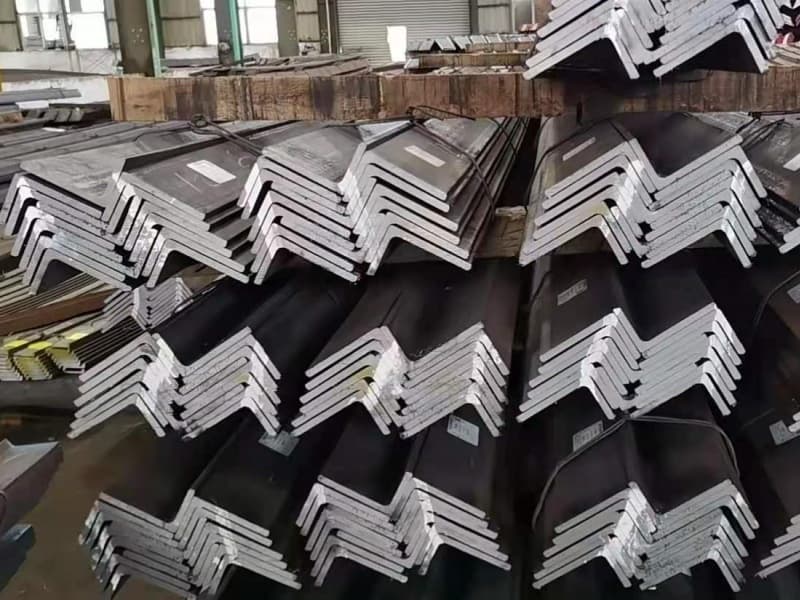
Understanding Weight Calculation and Its Importance
Weight is a derived property from the dimensions. It serves as a quick check for quantity and cost, and a red flag for quality issues.
1. How the Weight is Calculated
The formula used in standards is:
Weight per meter (kg/m) = (A + B – t) t ρ
Where:
- A = Leg length 1 (75mm = 0.075m)
- B = Leg length 2 (75mm = 0.075m)
- t = Thickness (6mm = 0.006m)
- ρ = Density of steel (7850 kg/m³)
For 75x75x6: (0.075 + 0.075 – 0.006) 0.006 7850 = 0.144 0.006 7850 ≈ 6.79 kg/m. Standard tables often round this to 6.9 kg/m.
2. Why "Theoretical" Weight?
It is called "theoretical" because it uses the nominal dimensions (75, 75, 6). The actual dimensions will be within tolerance. For example, if the actual thickness is 5.8mm, the actual weight will be slightly less. Mills usually have a tolerance on weight (e.g., ±2.5% to ±5%).
3. Practical Uses of the Weight Figure
- Cost Calculation: Suppliers often quote a price per metric ton. You multiply the total meter length you need by the kg/m weight to get the total weight in tons for costing.
- Logistics Planning: You need the total weight to arrange trucking, shipping, and on-site handling.
- Structural Design: Engineers use the weight to calculate dead loads on the structure.
- Receipt Verification: When the steel arrives, you can spot-check by weighing a random piece. If a 12-meter length of 75x75x6 weighs significantly less than 12m * 6.9 kg/m = 82.8 kg, it may be under-thickness.
4. Weight vs. "Mass" in Standards
In technical standards, you will see the term "mass per meter." It is the same as weight per meter for our purposes on Earth. The Mill Test Certificate will often list the "Theoretical Mass" and sometimes the actual measured mass of the test sample.
5. Weight Table for Common Angle Sizes
Here is a quick reference for some common marine angle sizes:
| Angle Size (mm) | Theoretical Weight (kg/m) Approx. | Common Marine Grade Equivalent |
|---|---|---|
| 50x50x5 | 3.8 | Used for light brackets, handrails. |
| 65x65x6 | 5.8 | Secondary bracing, small supports. |
| 75x75x6 | 6.9 | A very common size for general bracing and frames. |
| 100x100x10 | 15.1 | Primary structural bracing, strong frames. |
| 150x100x12 | 22.8 | Unequal angle for specific frame applications. |
For a rational buyer focused on results, like our contact in Saudi Arabia, weight is a key metric. They use it to calculate the exact cost per project for their clients. When we provide a quote, we always include the theoretical weight. If they order 5 tons of 75x75x6 angle, they know they should receive approximately 5,000 kg / 6.9 kg/m ≈ 725 meters of material. A significant deviation from this would trigger a dimension check with calipers, which is something a third-party inspection (like SGS) would do automatically.
What is the thickness of 50×50 L angle1?
The thickness is the third number in the size callout. But "thickness" has a specific meaning for angles, and it has an allowable tolerance. Assuming the nominal thickness2 is exact is a common inspection mistake.
In a 50×50 L angle1, the thickness is the dimension given by the third number. For a standard "50x50x5" angle, the thickness is 5 millimeters. This is the nominal thickness2 of the steel for both legs. The actual thickness3 on a delivered piece will be within a tolerance range4, typically between 4.5mm and 5.5mm for hot-rolled sections according to common standards.
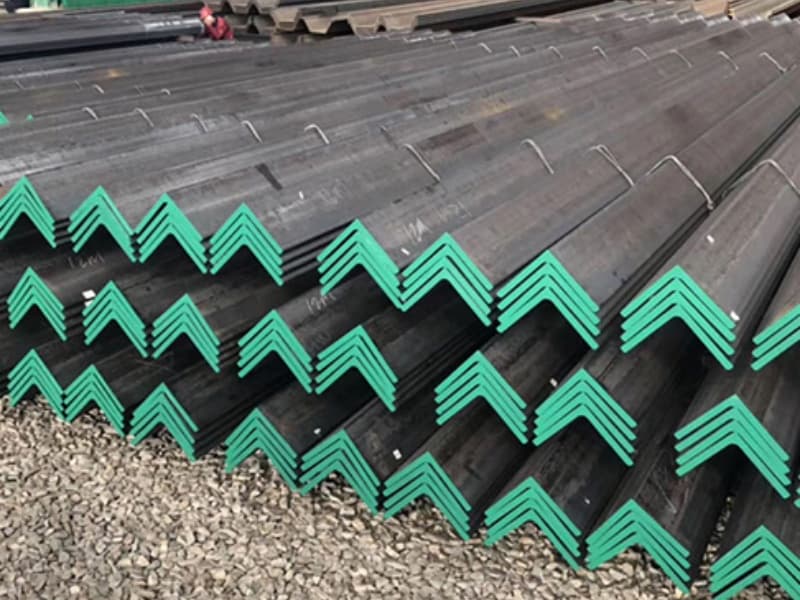
Nominal vs. Actual Thickness in Rolled Angles
Thickness is a critical dimension for strength5. Understanding the difference between the name of the size and the actual measured dimension is vital for quality acceptance.
1. The "Nominal" Thickness
The "5" in "50x50x5" is the nominal thickness2. It is the name of the product. It is the dimension used in all design calculations, weight tables, and catalog listings. When you order "50x50x5," you are ordering the product defined by that nominal size.
2. The "Actual" Thickness and Tolerances
No manufacturing process is perfect. The hot-rolling process has inherent variations. Therefore, international standards define an allowable range for the actual thickness3.
- Relevant Standard: For structural angles, EN 10056-16 is a common standard. It specifies tolerance classes. The most common is Class A (wide tolerance) and Class B (closer tolerance). Most general construction uses Class A.
- Typical Tolerance: For angles with thickness (t) ≤ 10mm, the common tolerance is ±0.5mm to ±1mm. For our 50x50x5 angle, the standard might allow the actual thickness3 to be anywhere from 4.5mm to 5.5mm. This is a ±10% variation on the nominal dimension.
3. Why Thickness Tolerance Matters
- Strength: The load-carrying capacity of the angle is directly related to its thickness. A section that is 0.5mm under-thickness has about 10% less cross-sectional area, which can affect its strength5.
- Weight: As discussed, thickness directly affects weight. Under-thickness means you get less steel (by weight) than you paid for.
- Connection: Bolt holes and weld details are designed for a certain thickness. A much thicker angle might cause connection problems.
4. How to Measure and Verify Thickness
You should not measure thickness at the very edge (toe) or right in the rounded corner (root).
- Correct Method: Use a digital caliper7. Place the jaws on the flat part of the leg, at least 10-15mm away from the edge. Take several readings along the length of the angle.
- What to Compare: Compare your measurements to the allowable tolerance from the agreed standard (e.g., EN 10056, ASTM A6). Do not expect it to be exactly 5.0mm.
5. Thickness Tolerances for Common Sizes
Here is an example of how nominal vs. actual works, based on typical mill practice:
| Ordered Size (Nominal) | Typical Allowed Thickness Range (mm) | Allowed Variation | Impact if at Minimum |
|---|---|---|---|
| 50x50x5 | 4.5 – 5.5 | ±0.5 mm | ~10% less cross-sectional area. |
| 75x75x6 | 5.5 – 6.5 | ±0.5 mm | Significant for structural calculations. |
| 100x100x10 | 9.0 – 11.0 | ±1.0 mm | Weight difference of ~1.5 kg/m at extremes. |
| 150x100x12 | 11.0 – 13.0 | ±1.0 mm | Must be considered in design safety factors. |
For a buyer who values stable quality, like our clients, understanding tolerance is key to setting realistic expectations. They know that a 5mm nominal angle will not always measure 5.00mm. However, they also expect consistency. If one batch averages 4.8mm and the next averages 5.3mm, it causes fabrication issues. Our solution is to source from certified mills with good process control and support pre-shipment inspection8. This way, the buyer knows the actual dimensions are within spec and consistent before the steel is loaded onto the ship.
Conclusion
Marine angle steel tolerance is about managing allowable variation, not expecting perfection. Knowing how to read dimensions, understanding squareness, calculating weight, and distinguishing nominal from actual thickness empowers you to inspect material correctly and ensure it fits your project’s needs without costly surprises.
-
Explore this link to understand the specifications and applications of 50×50 L angles in construction. ↩ ↩
-
Learn about nominal thickness and its importance in design calculations and material specifications. ↩ ↩ ↩
-
Discover the methods for measuring actual thickness and why it matters for structural integrity. ↩ ↩ ↩
-
Understanding tolerance ranges is crucial for quality assurance in steel fabrication. ↩
-
Explore the relationship between thickness and strength to ensure safe structural designs. ↩ ↩
-
This link provides detailed information on the EN 10056-1 standard and its relevance to steel angles. ↩
-
Learn the correct techniques for using a digital caliper to ensure accurate measurements. ↩
-
Understand how pre-shipment inspections can guarantee quality and consistency in steel products. ↩