
Asian shipyards are building faster. But they keep running out of marine angle steel. Why?
Asian shipyards are moving to higher strength grades, more modular prefabrication, and larger section sizes. Bulk carriers and containerships drive the biggest volume.
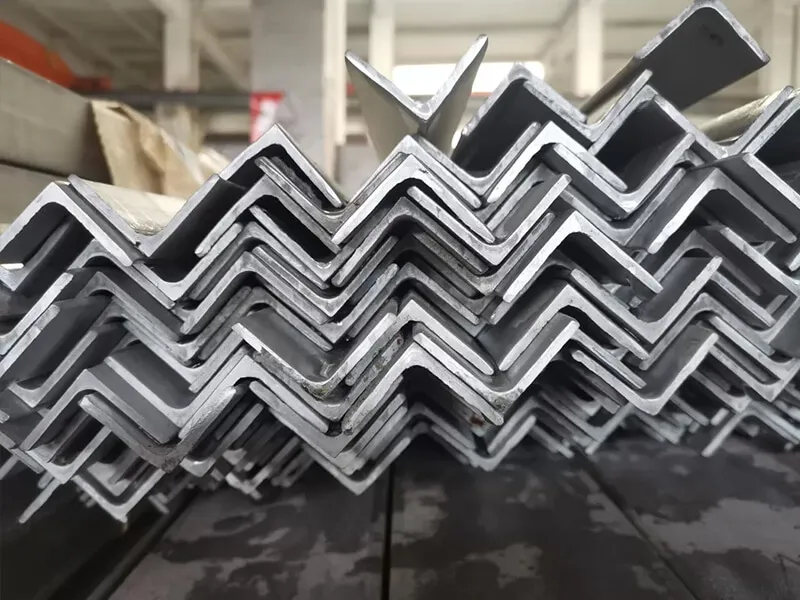
I ship angle steel to yards in Vietnam, the Philippines, and Malaysia every month. Let me share what I see changing.
Why Are Asian Shipyards Shifting Toward Higher Strength Angle Steel Grades for New Buildings?
A shipyard asks for ordinary grade angle steel. Then the naval architect says: “Use AH36 instead.” The buyer panics because he already ordered the cheap steel.
Higher strength grades (AH32, AH36, DH36) allow thinner sections. That reduces hull weight by 10‑15%. Lower weight means less fuel and more cargo.
What Are the Different Grade Levels?
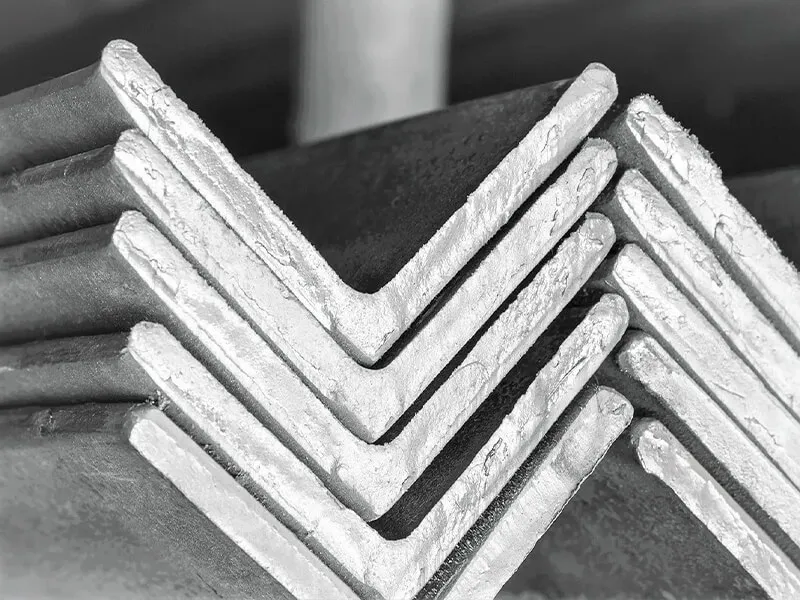
Marine angle steel comes in ordinary strength and higher strength. Ordinary grades are A, B, D, E. Higher strength grades are AH32, AH36, DH32, DH36, and even EH36.
| Grade | Minimum yield strength (MPa) | Typical use | Price premium vs. Grade A |
|---|---|---|---|
| A | 235 | Light structures, non‑critical | Baseline |
| AH32 | 315 | Bottom and deck of smaller ships | +8‑10% |
| AH36 | 355 | Most commercial ships today | +12‑15% |
| DH36 | 355 (better toughness) | Cold regions, tankers | +15‑18% |
Why Are Yards Switching?
I asked a designer at a Vietnamese shipyard. He gave me three reasons. First, classification societies (ABS, LR, DNV) encourage higher strength steel. It makes ships safer. Second, ship owners want lighter hulls. A 10% weight reduction on a bulk carrier means 500‑800 tons less steel. That saves fuel for 25 years. Third, yards can weld AH36 almost as easily as Grade A. So no extra labor cost.
But there is a catch. Higher strength steel is harder to roll into sharp corners. So not every mill can make AH36 angle steel in small sizes. That creates supply shortages. We work with certified mills in Liaocheng that specialize in AH36 and DH36 sections.
What Does This Mean for Buyers?
| Old practice | New trend | Implication |
|---|---|---|
| Buy Grade A angle steel | Buy AH36 or DH36 | Higher cost per ton, but less total tonnage |
| Order standard sizes 100x75x8mm | Order same size in AH36 | Mill selection is smaller |
| Buy from any trader | Need mills with higher strength capability | Vet suppliers carefully |
I have a client in Malaysia. He switched from Grade A to AH36 for a series of tankers. His total steel weight dropped by 12%. That saved him $200,000 in steel cost across three vessels. Even with the higher price per ton, he came out ahead.
So my advice: calculate the total cost, not the per-ton price. Higher strength often saves money overall. And start qualifying suppliers who can deliver AH36 reliably.
Which Ship Types – Containerships, Tankers, or Bulk Carriers – Drive the Largest Volume of Angle Steel Usage?
You sell angle steel to a containership builder. Then a tanker builder calls. Both need different sizes. Which one buys more?
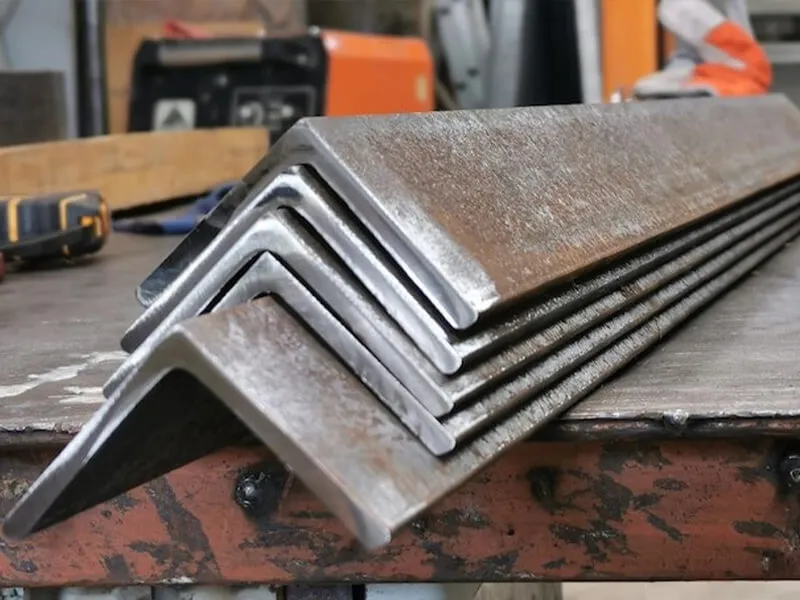
Bulk carriers use the most angle steel per vessel. Containerships use the most total volume because they build the most ships. Tankers use the heaviest sections.
How Does Each Ship Type Compare?
Let me break down my own shipment records from the last 12 months. I ship to yards building all three types.
| Ship type | Angle steel tons per vessel | Annual new builds (Asia) | Total angle steel demand (estimate) | Typical sizes |
|---|---|---|---|---|
| Bulk carrier (Handysize) | 800‑1,200 tons | ~300 | 240,000‑360,000 tons | 100x75x8, 120x80x10 |
| Containership (4,000 TEU) | 600‑900 tons | ~200 | 120,000‑180,000 tons | 150x90x12, 200x100x14 |
| Tanker (Aframax) | 700‑1,000 tons | ~150 | 105,000‑150,000 tons | Heavier, 160x100x14 |
Why Do Bulk Carriers Lead in Volume?
Bulk carriers have long, open holds. They need many transverse and longitudinal stiffeners. That means a lot of angle steel. Also, bulk carriers are built in large series. A single yard might build 10 identical vessels in two years. So orders repeat. That is good for suppliers like me because we can plan production.
Containerships use less angle steel percentage‑wise because they have cellular guide systems. But containerships are getting bigger. A 24,000 TEU vessel uses almost 1,200 tons of angle steel. That is close to a bulk carrier.
What About Tankers?
Tankers use heavier sections. The oil and chemical cargo creates higher sloshing loads. So tanker designers specify thicker angle steel, like 150x90x12mm or even 200x100x14mm. These sections are harder to roll. Fewer mills make them. So prices are 10‑15% higher.
I talked to a purchasing manager in Thailand who builds product tankers. He said: “I cannot find heavy angle steel locally. I have to import from China.” That is a common story.
So Which Ship Type Should You Target as a Buyer or Supplier?
- If you want steady, high volume: target bulk carrier yards.
- If you want premium prices: target tanker and large containership yards.
- If you want fast payment: target containership builders (they often have better cash flow).
In my business, I supply all three. But my biggest repeat orders come from bulk carrier yards in Vietnam and the Philippines. They order every 45 days like clockwork.
How Are Modular Construction and Prefabrication Changing Angle Steel Order Patterns in Asian Yards?
You used to order angle steel in random lengths. Now the yard asks for “sub‑assembly ready” cuts. You are not set up for that.
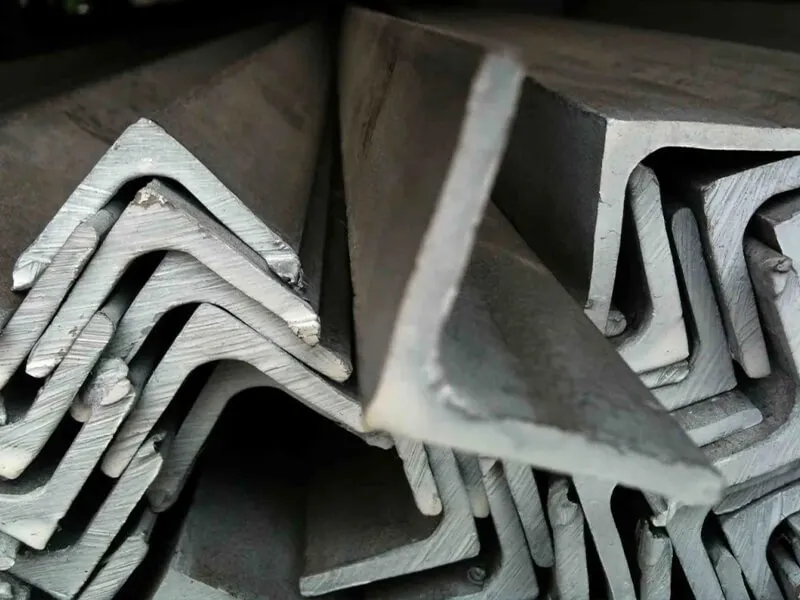
Modular construction means yards want pre‑cut angle steel at specific lengths. They also want bundles grouped by assembly station. That changes order patterns from bulk to just‑in‑time.
What Is Changing?
Old way: yard buys 12‑meter lengths. They cut on site. Waste is 5‑10%. New way: yard asks supplier to cut to exact lengths. Waste drops to 2‑3%. But the supplier needs cutting and drilling capability.
Here is a before‑after table.
| Factor | Traditional bulk ordering | Modular / prefab ordering |
|---|---|---|
| Lengths | Standard 10m or 12m | Custom lengths per drawing |
| Cutting | Yard’s workshop | Supplier’s workshop or yard’s pre-cut line |
| Lead time per order | 6-8 weeks | 4-5 weeks (supplier cuts faster) |
| Packing | Bundled by size | Bundled by assembly station (e.g., Block 5, Station 12) |
| Waste | 5-10% | 2-3% |
| Price per ton | Baseline | +3-5% for cutting service |
How Are Asian Yards Adapting?
Chinese mega‑yards like CSSC and Yangzijiang have built their own pre‑cut lines. They buy standard lengths and cut in‑house. But smaller yards in Vietnam and the Philippines cannot afford that. So they ask foreign suppliers to provide cut‑to‑length angle steel.
I started offering cutting service two years ago. We bought a CNC cold saw for angle steel. Now we can cut any length from 1m to 12m with ±1mm accuracy. Our clients send us a list of lengths and quantities. We cut, bundle, and label each piece. When the steel arrives, the yard takes each bundle directly to the assembly station. No cutting, no waste.
One client in Malaysia told me: “Your cut pieces saved us 8 hours of labor per block. That is $2,000 per block.” Over 20 blocks, that is $40,000 saved.
What Are the Challenges?
Cutting takes time and space. We need to store cut pieces separately. Also, custom cuts mean we cannot sell leftover lengths to another customer. So we charge a small cutting fee.
But the benefits for the yard are huge. So I see this trend growing. If you are a buyer, ask your supplier if they offer cut-to-length. If not, find one who does.
Also, modular construction changes order frequency. Yards no longer order once every two months. They order weekly small batches. That requires a supplier with flexible production. We keep safety stock of common angle steel sizes. Then we cut to order and ship within 7-10 days.
So my prediction: within 3 years, over 50% of marine angle steel sold to Asian yards will be cut‑to‑length, not standard 12m bars.
What Regional Differences in Angle Steel Specifications Exist Between China, South Korea, Japan, and Southeast Asia?
You send angle steel to a Korean yard. They reject it because the corner radius is wrong. You never knew there was a difference.
China uses GB/T 706 standards. Korea follows KS D 3502. Japan uses JIS G 3192. Southeast Asia accepts multiple standards but prefers JIS or GB.

What Are the Key Differences?
I learned these differences the hard way. A Korean buyer rejected 100 tons of angle steel from us because the inner radius was 5mm instead of 4.5mm. That small difference mattered to their automated welding robot.
| Standard | Common designation | Tolerances (thickness, length) | Corner radius typical | Popular grades |
|---|---|---|---|---|
| China GB/T 706 | Q235B, Q355B, AH36 | Moderate | R = 4‑6mm | Q235B, Q355B, AH36 |
| Korea KS D 3502 | SS400, SM490A | Tight | R = 4‑5mm | SS400, SM490A, AH36 |
| Japan JIS G 3192 | SS400, SM400A, SM490A | Very tight | R = 3‑5mm | SS400, SM490A |
| Southeast Asia (mixed) | Accepts GB, JIS, or ASTM | Varies | Varies | Usually follows GB or JIS |
How Do You Choose the Right Standard?
Simple rule: ask the yard for their preferred standard before you quote. Do not assume.
| Buyer location | Typical standard | Notes |
|---|---|---|
| China | GB/T 706 | Minimum requirement |
| South Korea | KS or JIS (Korean yards often accept JIS) | Very strict on dimensions |
| Japan | JIS only | Will reject non‑JIS |
| Vietnam | GB or JIS (mixed) | Accepts GB for local projects, JIS for export ships |
| Philippines | GB or ASTM | More flexible |
| Thailand | JIS or GB | Large yards prefer JIS |
What About Southeast Asia?
Southeast Asia is a patchwork. Vietnam has many Chinese-invested yards. They accept GB standards easily. But Vietnamese yards building for European owners ask for JIS. The Philippines is more relaxed. They accept GB JIS, or even ASTM. Thailand has strong Japanese influence, so JIS is common.
I keep mill test certificates (MTC) in multiple formats. Our mills can produce angle steel to GB, JIS, or ASTM standards. We just need to know at the order stage.
One more tip: mill certificates must match the standard. A Chinese mill can roll to JIS dimensions. But the MTC still says “GB/T” unless you specifically ask for a JIS-format certificate. So always ask for “MTC in (KS/JIS/GB) format.”
A Real Example
I had a client in South Korea. He built small chemical tankers for domestic owners. He needed KS D 3502 SS400 angle steel. Our mill could make the dimensions, but the test certificate format was Chinese. The client’s inspector rejected the first shipment. We had to reissue certificates with Korean translation and standard references. That added 10 days.
Now, for Korean and Japanese buyers, we prepare JIS‑format certificates from the start. No more rejection.
So before you order, confirm the standard. Ask for a sample certificate. Save yourself the headache.
Conclusion
Higher strength grades, bulk carriers lead, cut‑to‑length orders, and regional standards matter. Adapt to each yard.