
Modular shipbuilding speeds up production. But wrong angle steel connections can ruin the whole assembly process.
Marine angle steel works well in modular construction when you design strong module joints, use precise cutting methods, adjust corrosion protection for block assembly, and keep tight tolerances. These four steps prevent rework and delays.
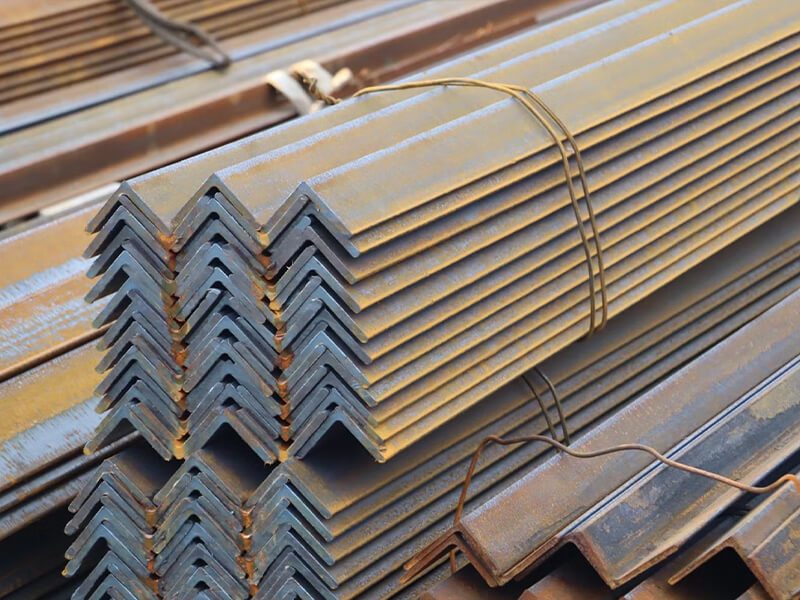
I have supplied angle steel to modular shipyards in Vietnam, Mexico, and Saudi Arabia. The process is different from traditional building. You make blocks in one place. Then you ship them to the dry dock for final assembly. That means every piece of angle steel must fit perfectly the first time. No grinding or forcing on site. Let me share what I have learned from my customers.
How Do You Connect Marine Angle Steel at Module Joints Without Creating Weak Points?
The joint between two modules is the most stressed part of the whole hull. If you mess up the angle steel connection there, the ship can crack during sea trials.
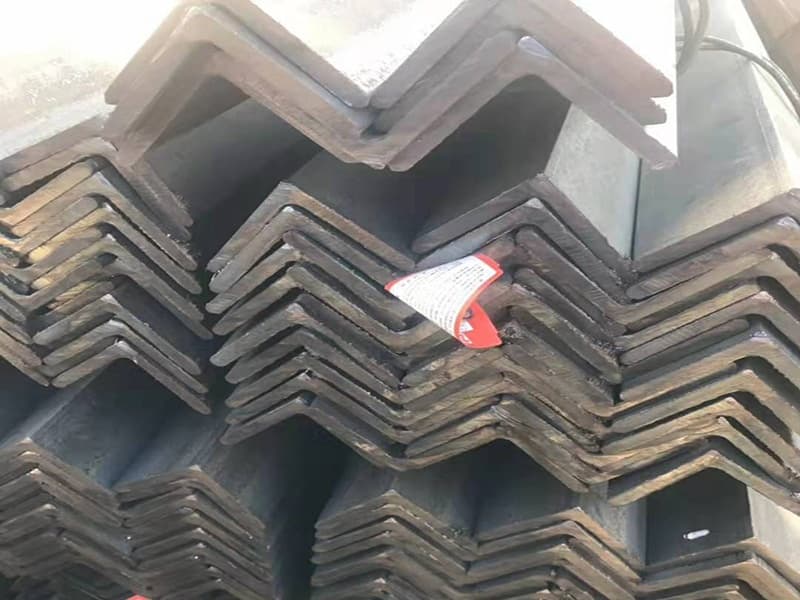
You connect angle steel at module joints1 by using splice plates2 on both sides of the web, staggered welds3, and a 50mm minimum overlap beyond the joint. This spreads the load and keeps the stiffness continuous across the module boundary.
Why module joints are different from continuous frames
In traditional shipbuilding, you weld angle steel in one long continuous run from bow to stern. The load flows smoothly. In modular construction, you cut the angle steel at the module edge. Then you join it again when you connect the modules. That cut creates a natural weak spot.
The key is to make the joint as strong as the original bar. You cannot just butt weld the two ends together. The weld will have a notch effect. The stress concentration will be too high.
Three proven connection methods
| Method | How it works | Strength compared to original bar | Best for |
|---|---|---|---|
| Double splice plate | Two plates, one on each side of the web, bolted or welded | 90-100% | High-load areas like bottom longitudinals |
| Single splice plate | One plate on one side only | 70-80% | Low-load internal bulkheads |
| Full penetration butt weld with backing bar | Complete weld through the full thickness | 85-95% | When access is limited |
My recommended double splice plate4 detail
I tell all my modular shipyard clients to use double splice plates for main hull angle bars. Here is the recipe:
- Cut the angle steel ends square and clean.
- Leave a 5mm to 10mm gap between the two bar ends.
- Make two splice plates from the same grade and thickness as the angle bar legs. Each plate should be about 150mm long.
- Place one plate on the outside of the web. Place the other plate on the inside (the side facing the plating).
- Weld the plates to both angle bars using fillet welds. The weld leg length should be at least 0.7 times the plate thickness.
- Stagger the weld starts and stops. Do not line them up.
I learned this from a project in Thailand. The shipyard was using single plate connections. The angle bars kept cracking at the weld toe. We switched to double plates. The cracks stopped completely.
The overlap rule5
Do not make the splice plates too short. The overlap beyond the joint on each side should be at least 50mm for angle bars up to 150mm leg length. For larger bars, use 75mm or more. The overlap gives the load enough distance to transfer from one bar to the splice plate and then to the other bar.
A customer from Pakistan once used 30mm overlaps to save steel. The joint failed during a load test. The repair cost ten times the steel he saved.
Stagger your welds
When you weld the splice plates, do not weld all four sides continuously. Weld in short segments. Start at the center of the plate and work outward. Use a backstep pattern. This reduces distortion. It also keeps the heat input low. Too much heat can warp the angle bar and ruin the alignment.
So remember: double plates, 50mm minimum overlap, staggered welds. That is how you make a module joint that lasts.
What Is the Best Way to Cut and Fit Angle Steel for Prefabricated Ship Blocks?
Cutting angle steel for prefab blocks is not like cutting for continuous construction. You need accuracy down to 1mm. Any error gets multiplied when you assemble the blocks.
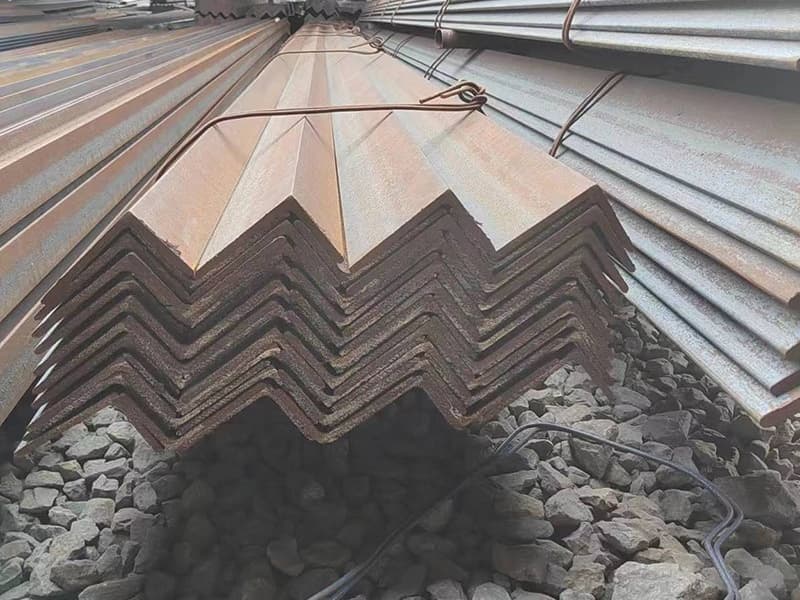
The best way is to use CNC plasma cutting1 for the main cuts and a band saw2 for miters. Mark every piece with its block ID and position number. Then dry-fit the angle steel inside the block before final welding.
The two cutting methods compared
| Cutting method | Accuracy | Speed | Heat affected zone | Best for |
|---|---|---|---|---|
| CNC plasma | ±0.5mm | Fast | 2-3mm | Straight cuts and large quantities |
| Band saw | ±0.2mm | Medium | None | Miters and small batches |
| Oxy-fuel | ±2mm | Medium | 5-8mm | Thick sections over 25mm |
| Abrasive saw | ±1mm | Slow | Small | Field cuts and adjustments |
I recommend CNC plasma for most production cuts. It is fast and accurate. But you must clean the slag off the cut edge. Slag makes welding difficult. A band saw gives you the cleanest cut, but it is slower. Many of my clients in Vietnam use a combination: plasma for long straight cuts, band saw for miters and short pieces.
The numbering system3 that saves time
In modular construction, every piece of angle steel has a home. You cannot just cut a bar and send it to the yard. You need a clear marking system. Here is what works:
- Block number (B01, B02, etc.)
- Position within the block (F01 for frame 1, L01 for longitudinal 1)
- Piece ID (A, B, C for multiple pieces on the same frame)
- Orientation mark (TOP, BOTTOM, FWD, AFT)
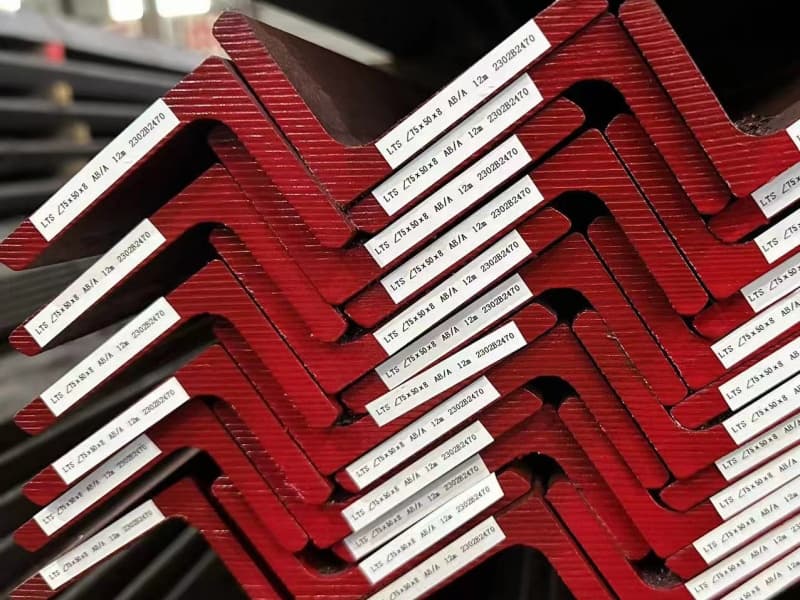
I had a buyer from Malaysia who skipped this system. His team cut 200 angle bars with only a length written on each. When the blocks came together, no one knew which bar went where. They spent three weeks sorting and measuring. Now he uses my numbering system on every project.
Dry fit before welding
Dry fitting means you put the angle steel pieces into the block fixture without welding. You clamp them in place. You check every measurement. You look for gaps and interferences. Then you mark any pieces that need trimming. Only after the dry fit6 passes do you start welding.
I learned this from a shipyard in Romania. They had a rule: no welding on a block until every piece of angle steel was dry fitted and signed off. Their rework rate was 2%. Another yard nearby skipped dry fit. Their rework rate was 15%. The dry fit time was only 5% of the total labor. It paid for itself many times over.
Gap tolerances for prefab
In modular construction, you cannot fix a bad fit by hammering the steel. The gap between the angle bar and the plating must be within 1mm for most welds. For butt joints between two angle bars, the gap should be 2mm to 4mm. Too small, and the weld cannot penetrate. Too large, and you need backing bars.
I always tell my clients to order angle steel with a straightness tolerance of 0.1% of length, not the standard 0.2%. That extra straightness costs a little more. But it makes dry fitting much faster. A customer from Saudi Arabia tried the tighter tolerance. His fitters finished the block assembly two days ahead of schedule.
A practical tip from my shop floor
Keep a set of sample templates4 for common angles. A 45-degree miter on an L100x100 angle bar is the same on every block. Cut one master template from thin steel plate. Use it to check every miter cut. This catches errors before the pieces leave the cutting table. I have a set of these templates for all our standard sizes. We lend them to customers who order large quantities.
How Does Modular Construction Change the Corrosion Protection Requirements for Marine Angle Steel?
In traditional building, you coat the steel after the whole hull is welded. In modular construction, you coat the angle steel inside each block before assembly. Then you damage the coating during final welding.
Modular construction1 requires a three-coat system with a weldable primer2 on the cut edges and touch-up coating3 on all weld zones. You cannot use standard shop primers because they burn off and leave bare steel behind.
[^4] coating to [marine angle steel](https://www.bushwickmetals.com/steel-angle-sizes/)[^5] in a prefabricated ship block](https://cnmarinesteel.com/wp-content/uploads/2025/10/Marine-angle-steel-24.jpg)
The coating damage problem explained
Here is what happens. You cut and fit angle steel inside a block. You apply a full coating system to the whole block. Then you ship the block to the assembly yard. At the assembly yard, you weld the block to the next block. The welding heat burns off the coating within 50mm of every weld. The grinding for fit-up also removes coating. So all the joint areas become bare steel.
If you do nothing, those bare areas will rust fast. The rust will start behind the final weld. You cannot see it. But it grows. After a few years, the angle steel loses thickness right at the most stressed spot.
A three-part solution
| Step | What to apply | When to apply | Thickness |
|---|---|---|---|
| 1 | Weldable inorganic zinc primer | Immediately after cutting, before fit-up | 20-30 microns |
| 2 | Full epoxy coating system5 | After block welding is complete | 200-300 microns total |
| 3 | Touch-up coating | After final module assembly at dry dock | 150 microns over bare areas |
The weldable primer trick
Most shop primers are not weldable. They contain zinc or other metals that cause weld porosity. You need a special weldable primer. This primer is thin. It conducts electricity for grounding. It does not produce toxic fumes when welded. And it protects the steel for up to 6 months.
I supply this primer to several modular shipyards in Vietnam. They apply it within 24 hours of cutting every angle bar. Then they can store the cut bars outside for weeks without rust. The welders do not need to grind off the primer. They just weld through it.
The touch-up zone
After the final module weld, you have a bare steel zone about 100mm wide around every joint. You need to clean that zone with a grinder. Remove all rust and burnt coating. Then apply a two-part epoxy touch-up coating. Use the same coating system as the original block. Apply two coats. The total thickness should match the original.
I remember a buyer from Mexico who skipped the touch-up step. He thought the final dry dock coating would cover everything. But the dry dock painters only sprayed the outside of the hull. The inside of the double bottom had no coating at the joints. After two years, the ship had severe pitting at every module joint. The repair required cutting open the hull.
Inspection points for modular coating
Here is what I tell my clients to check:
- Before cutting – Verify that the angle steel has its original mill scale or a shop primer. No rust allowed.
- After cutting – Check that the cut edges are clean and coated with weldable primer within 24 hours.
- After block welding – Inspect all weld zones for burnt coating. Mark any area larger than 25mm wide for re-coating.
- Before final assembly – Measure the dry film thickness of the block coating. It should be at least 80% of the specification.
- After final welding – Do a spark test on all touch-up areas. A spark test finds pinholes in the coating.
A cost-saving observation7
Some yards try to save money by using a single full coating after final assembly. They leave the angle steel bare during block construction. This does not work. The angle steel rusts during storage. The rust must be blasted off later. The blasting cost is higher than the cost of a weldable primer. I have seen this mistake many times. The primer is cheap. The rework is expensive.
So use weldable primer on every cut edge. Apply full coating to each block. And touch up every weld zone after final assembly. That is the modular way.
Why Is Tolerancing More Critical for Angle Steel in Module Assembly Than in Traditional Building?
In traditional building, you can adjust the fit as you go. In modular assembly1, the blocks come together from different directions. If the angle steel is off by 3mm, the whole block may not line up.
Tolerancing is more critical because module assembly has no room for adjustment. Each block is built independently. The angle steel in block A must match the angle steel in block B within 1.5mm. Any larger gap requires cutting and rewelding, which costs days of delay.
The tolerance stack-up problem2
When you build a ship continuously, you have one tolerance chain. You measure from the keel up. Errors add up slowly. When you build in modules, you have many tolerance chains. Each block has its own reference points. When you join two blocks, the errors from both blocks add together.
Let me give you an example. Block A has a 1.5mm error in the angle steel position. Block B has a 1.5mm error in the opposite direction. That is a 3mm total mismatch. The angle bars do not line up. You cannot weld them together with a 3mm step. You must cut one bar and add a shim. That takes half a day per joint. On a ship with 200 joints, that is 100 days of delay.
Critical tolerances for modular angle steel
| Measurement | Traditional tolerance | Modular tolerance | Why tighter |
|---|---|---|---|
| Cut length | ±3mm | ±1mm | Joint gaps add up |
| Leg angle (90°) | ±2° | ±0.5° | Angled bars must match exactly |
| Hole position (if bolted) | ±1.5mm | ±0.5mm | Bolted modules need perfect alignment |
| Straightness per 6m | 12mm | 5mm | Bent bars do not align across modules |
| Twist per meter | 4mm | 2mm | Twist prevents flush mating |
How to achieve modular tolerances
I have worked with shipyards that hit these tight tolerances every day. Here is their formula:
Use a common datum system. Every block is measured from the same reference points. You do not use local measurements. You use laser trackers or total stations. These tools measure absolute positions, not relative ones.
Cut with CNC, not by hand. Hand cutting cannot hold ±1mm. CNC plasma can, if you calibrate it daily. I visit my mill partners every quarter to check their calibration logs. If the logs show drift, I do not buy from that mill.
Inspect every tenth piece. You cannot measure every angle bar. That takes too long. But you can measure 10% of the bars from each heat. Use a go/no-go gauge for the leg angle. Use a straightedge for straightness. Keep a log of all measurements.
Use match marks3. Before you cut a pair of angle bars that will join across a module boundary, cut them from the same parent bar. Mark them with matching numbers. Weld them in the same orientation. This ensures the thermal expansion is the same on both sides.
A real story from Qatar
A client in Qatar was building five modular barges. The first barge had alignment problems. The angle steel in the side shell did not line up across the module joint. The gap was 5mm at some spots. We looked at the mill certificates. The angle steel had a straightness of 12mm per 6m, which was within normal tolerance. But for modular work, that was too much.
The client switched to our premium straightness option6: 5mm per 6m. The cost went up by 3%. But the alignment problems stopped. The second barge went together in half the time. The client told me the extra cost was the best money he spent.
The hidden cost of loose tolerances4
Many buyers only look at the price per ton. They choose the cheapest angle steel. That steel usually has standard tolerances. For traditional building, standard tolerances work fine. For modular building, they cause rework. The rework cost is often higher than the steel saving.
I always ask my modular shipyard clients: how much does one hour of delay cost you? For a large yard, it can be $5,000 per hour. If loose tolerances cause a 20-hour delay, that is $100,000. The steel saving was maybe $2,000. The math does not work.
So if you build in modules, pay for tighter tolerances. Ask your supplier for straightness of 0.1% of length (not 0.2%). Ask for cut length accuracy of ±1mm. And ask for a measurement report for every bundle5. We offer this service. It costs a little more. But it saves you from the biggest risk in modular construction: misalignment.
Conclusion
Modular shipbuilding with marine angle steel needs strong splice joints, precise cutting, adjusted corrosion protection, and tighter tolerances. Get these right, and modules fit perfectly every time.
-
Understanding modular assembly can help you grasp its efficiency and challenges in construction. ↩ ↩ ↩ ↩
-
Exploring this concept will reveal how errors accumulate in modular construction, impacting project timelines. ↩ ↩ ↩ ↩
-
Understanding match marks can help ensure alignment and reduce errors in modular builds. ↩ ↩ ↩ ↩
-
Identifying these costs can help you make informed decisions about material quality and project budgeting. ↩ ↩ ↩
-
This report ensures accountability and precision, vital for successful modular assembly. ↩ ↩ ↩
-
This option can significantly impact the quality of modular construction, making it worth exploring. ↩ ↩
-
Explore strategies to save costs without compromising quality in modular construction. ↩