
You are designing a ship’s structure and need to choose between angle steel and bulb flat steel. The wrong choice can lead to a weaker frame, wasted material, and higher construction costs. Understanding their core differences is essential.
Marine angle steel (L-shaped) is primarily used for brackets, frames, and secondary stiffening where multi-directional support is needed. Bulb flat steel (T-shaped with a rounded end) is optimized as a unidirectional stiffener for hull plates and decks, offering superior bending resistance per unit weight due to its efficient shape and bulb tip.
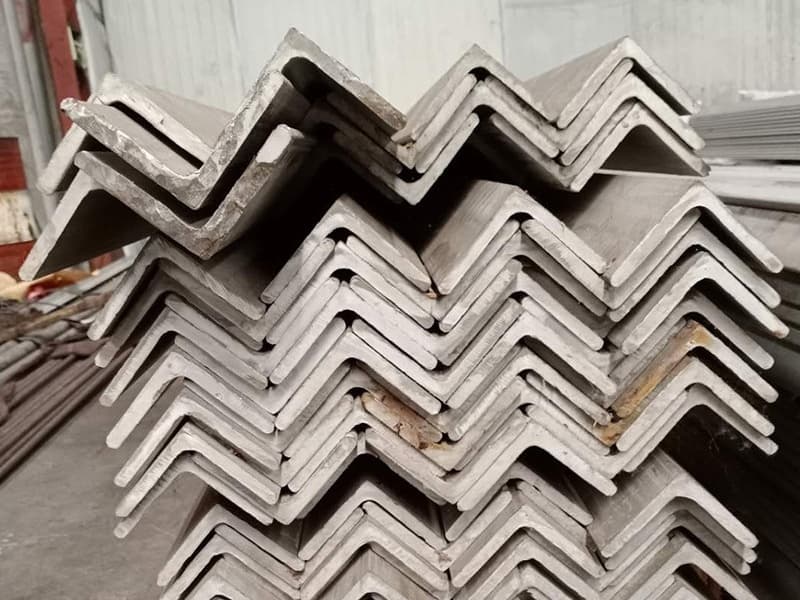
Both are essential in shipbuilding, but they are not interchangeable. They are specialized tools for specific jobs. To use them correctly, we need to understand the principles of marine structural design, starting with the fundamental question of material selection.
What is the best steel1 for ship building?
You want the strongest, most durable steel for your ship. However, the "best" steel is not a single product. It is the right grade, applied to the right structural member, to meet specific demands of strength, toughness, and weight.
There is no single ‘best’ steel. The optimal choice balances strength, toughness, weldability, and cost for each application. Normal strength Grades A-D are common for general structures. High-strength AH/DH/EH grades are best for critical, high-stress areas like the keel or for weight-saving on decks. The steel must also carry proper classification society certification2 (ABS, BV, LR).
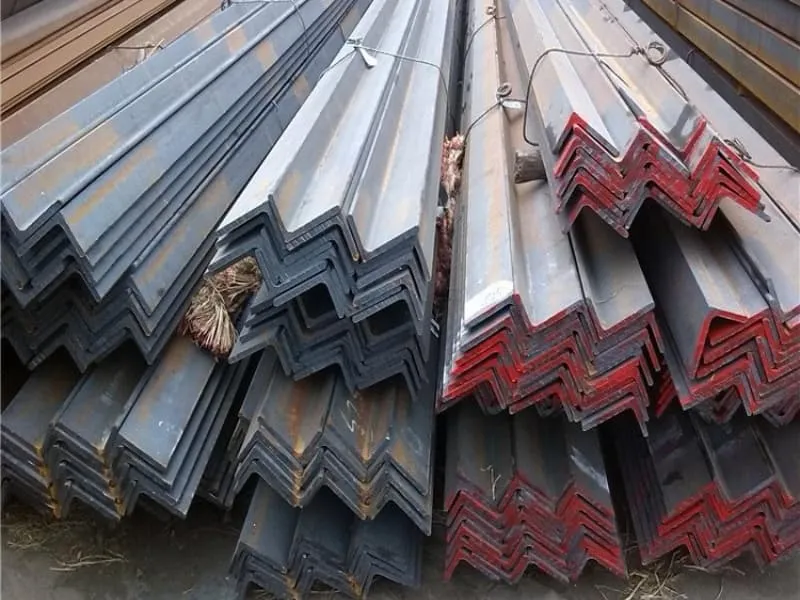
The concept of "best" is contextual in shipbuilding. A material perfect for the hull bottom may be unsuitable or wasteful for an interior bracket. We need to think in terms of a material strategy3.
The Two Key Selection Criteria: Property and Profile
Choosing steel involves two separate decisions that work together:
- Selecting the Material Grade: This defines the steel’s inherent properties—its yield strength, impact toughness at low temperatures, and chemical composition for weldability. Grades like AH36 or DH36 offer higher strength (355 MPa yield) than Grade A (235 MPa).
- Selecting the Structural Profile: This is the shape—like angle, bulb flat, plate, or beam. The profile determines how efficiently the material grade4 can resist specific types of loads (bending, compression, tension).
The "best" system uses the most efficient profile made from the most appropriate grade for each job.
Strategic Material Application: A Ship-Zone Approach
A ship is divided into zones with different structural demands. Here is how material selection works in practice:
| Ship Zone / Component | Typical ‘Best’ Steel Grade | Typical ‘Best’ Profile | Reasoning |
|---|---|---|---|
| Primary Hull Framing (Longitudinals) | DH36, EH36 | Bulb Flat Steel | High strength and toughness are needed. The bulb flat’s shape offers maximum bending stiffness to support the hull plate against water pressure. |
| Deck Beams & Girders | AH32, DH36 | Bulb Flat or Built-up T-Beams | High strength saves weight topside. Bulb flats provide efficient stiffening for deck plates. |
| Brackets, Knee Braces, Secondary Stiffeners | Grade A, B, or D | Angle Steel | These parts connect members in different planes. The angle’s two legs are perfect for welding to perpendicular surfaces, providing tri-axial support. |
| Keel, Sheer Strake | EH36, FH40 | Thick Plate & Heavy Sections | These are the most critical, high-tensile areas. They use the highest toughness grades, often in plate form for the main structure, supported by heavy sections. |
| Internal Bulkheads | Grade A, B | Angle Steel & Plate | Lower stress areas. Angles are used as stiffeners welded to bulkhead plates for rigidity. |
Therefore, asking for the "best steel1" is not enough. You must ask: "What is the best grade and profile for this specific structural function?" For a longitudinal stiffener, the answer is often a DH36 Bulb Flat. For a bulkhead bracket, it is Grade A Angle Steel. This precision is the mark of professional design and sourcing.
What is the difference between light gauge steel and structural steel?
This question gets to the heart of structural function versus form. In shipbuilding, both angle and bulb flat steel are structural, but they serve in different structural systems within the vessel.
Light gauge steel refers to thin, cold-formed sheets (usually under 3mm) used for non-load-bearing partitions, ducts, or lining. Structural steel refers to hot-rolled sections (like angles, bulbs, I-beams) and thick plates designed to carry the ship’s primary loads. Both marine angle and bulb flat steel are structural steel components.
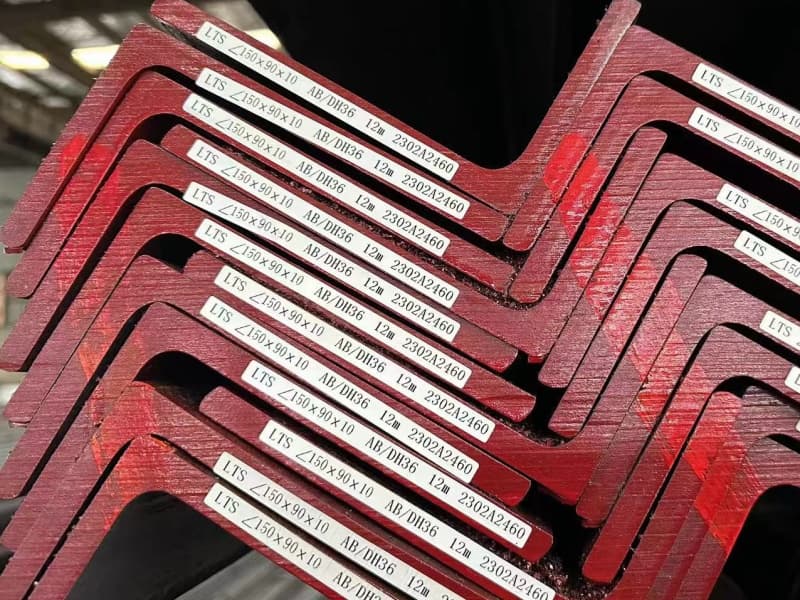
Confusing these two categories can lead to catastrophic design failures. A ship’s strength comes from its hot-rolled structural skeleton, not from its lightweight interior fittings.
Defining the Divide: How They Are Made and What They Do
The difference starts at the manufacturing stage and defines their entire purpose.
-
Light Gauge Steel (Cold-Formed):
- Production: Made by bending thin steel sheets or coils at room temperature in a rolling mill.
- Thickness: Typically 0.5mm to 3.0mm.
- Primary Role: Non-structural or secondary structural. It is used for walls, ceilings, cabinets, electrical conduits, and HVAC ducts inside the ship’s superstructure. It provides shape and enclosure but does not contribute significantly to the hull’s global strength.
-
Structural Steel (Hot-rolled):
- Production: Made by heating steel slabs to over 1,200°C and passing them through rollers to form the final shape (angle, bulb flat, etc.).
- Thickness/Dimensions: Much larger. Angles can have legs from 20mm to 200mm thick. Bulb flats have webs of 10mm+ and heights over 300mm.
- Primary Role: Primary load-bearing. These members form the ship’s backbone. They resist global forces like hull bending, wave loads, and cargo weight.
Marine Angle and Bulb Flat: Core Members of the Structural Family
Both profiles belong squarely in the structural steel family. Their comparison is about which type of structural job they excel at.
- Marine Angle Steel (L-Shape): This is a versatile, general-purpose structural section. Its two legs provide strength in two perpendicular directions. This makes it ideal for connections and bracing. It is used to build frames, fabricate brackets that connect decks to walls, and stiffen bulkheads. It handles complex, multi-directional forces.
- Bulb Flat Steel (T-Shape with Bulb): This is a specialized, high-efficiency structural section. Its design is optimized for one primary job: resisting bending in one direction. When welded to a plate, it forms a "T-beam." The bulb places extra material at the farthest point from the plate, dramatically increasing the section’s moment of inertia. This makes it the most weight-efficient choice for long, continuous stiffeners on hull plates and decks.
Think of it this way: On a ship, the light gauge steel makes the interior walls of the cabins. The structural angle steel builds the frame of those cabins and connects them to the main deck. The structural bulb flat steel is part of the deck and hull itself, giving the ship its fundamental strength against the sea. Using a light gauge section where a structural angle is needed would result in collapse. Similarly, using an angle where a bulb flat is specified would create a heavier, less stiff structure.
What are bulb flats used for?
The bulb flat has a unique shape for a unique purpose. It is not a general-purpose item. Using it correctly is key to lightweight, strong ship design.
Bulb flats are used almost exclusively as longitudinal and transverse stiffeners for ship hulls, decks, and bulkheads. They are welded perpendicular to steel plates to form T-beams, preventing the large, thin plates from buckling under pressure and increasing the overall bending strength of the structure.
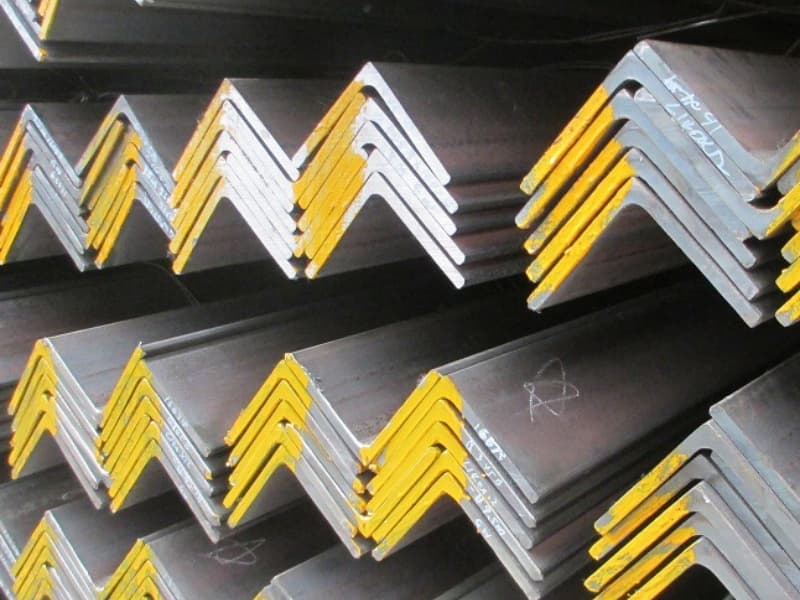
The bulb flat is a solution to a classic engineering problem: how to make a thin plate act like a deep, strong beam without using a massive amount of material.
The Core Function: Creating a Composite T-Beam
A steel plate by itself is weak against bending. When you weld a bulb flat to it, you create a composite section. The plate becomes the "flange" of the T-beam, and the bulb flat becomes the "web." This combined shape is extremely resistant to bending along the length of the bulb flat.
- Longitudinals: These are stiffeners that run fore and aft (bow to stern). They are closely spaced along the bottom, sides, and deck. Their main job is to resist the ship’s longitudinal bending (sagging in a wave trough, hogging on a wave crest).
- Transverses: These run athwartships (side to side). They support the longitudinals and transfer local loads (like cargo point loads) to the main frames and bulkheads.
Advantages Over a Simple Flat Bar
Why not just use a rectangular flat bar? The bulb provides critical advantages:
- Higher Section Modulus: The bulb adds mass at the farthest point from the plate. This significantly increases the section modulus, which is a direct measure of bending strength. A bulb flat can be 30-50% more efficient than a flat bar of the same weight.
- Improved Weld Connection: The rounded bulb tip allows for a smoother, larger weld fillet. This reduces stress concentration at the weld toe, making the connection stronger and more fatigue-resistant—vital for a ship’s life in a dynamic sea.
- Torsional Stability: The bulb adds some resistance to twisting, making the stiffener more stable.
- Standardization: Bulb flats are produced to international standards (like EN 10067 or JIS G 3192), with defined dimensions and tolerances. This allows for precise design and interchangeable parts.
Specific Applications on Different Vessel Types
- Bulk Carriers & Oil Tankers: Extensive use of bulb flats as longitudinals on the wide, flat bottom and side shells.
- Container Ships: Used on the hull and especially on the large, open deck areas to support container loads.
- Offshore Platforms: Used as stiffeners on jacket legs, decks, and floating hulls.
In practice, when a shipyard orders steel, they will order "DH36 bulb flats, 300mm x 12mm" for the hull longitudinals and "Grade A angles, 100x100x10mm" for internal brackets. The bulb flat is the specialized, high-performance tool for the main load-bearing "skin and bones" of the ship. Its use is a sign of optimized, modern marine engineering.
What are the grades of marine steel plates?
The grade of steel defines its quality and capability. Since bulb flats and angles are often welded to plates, and sometimes cut from plates, understanding plate grades is essential to understanding the whole structural system.
Marine steel plates are graded primarily by toughness and strength. Normal strength grades are A, B, D, E (increasing toughness). High-strength grades are AH, DH, EH, FH, where the letter indicates toughness and ‘H’ and the number (32,36,40) indicate higher yield strength (e.g., 355 MPa for 36). These grades are standardized by classification societies like IACS.
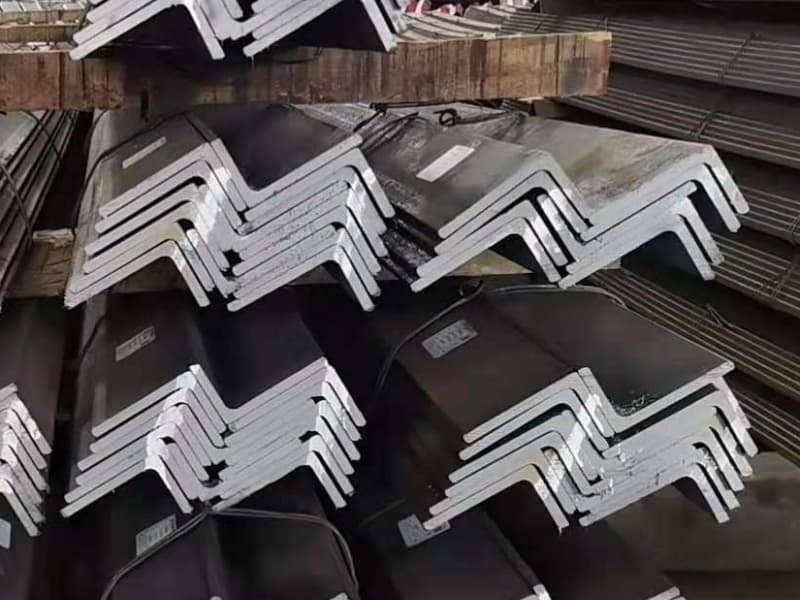
The grade is a code that communicates a precise set of mechanical and chemical properties. It ensures that steel made in China, Korea, or Japan performs identically in a ship’s structure.
Decoding the Grade Designation System
The system, used by all major classification societies (ABS, BV, LR, DNV, etc.), is logical:
- The Letter (A, B, D, E, F): This primarily indicates the notch toughness level—the steel’s resistance to brittle fracture at low temperatures.
- Grade A: Basic grade. May not require impact testing for thinner plates.
- Grade B: Impact tested at 0°C.
- Grade D: Impact tested at -20°C.
- Grade E: Impact tested at -40°C.
- Grade F: Impact tested at -60°C (for Arctic service).
- The ‘H’ and Number (e.g., AH32, DH36):
- ‘H’ stands for High Tensile Strength.
- The number indicates the minimum yield strength in ksi (kilopounds per square inch). 32 = 315 MPa, 36 = 355 MPa, 40 = 390 MPa.
So, DH36 means: A steel with D-level toughness (tested at -20°C), High tensile strength, and a 36 ksi (355 MPa) yield strength.
How Grades Correspond to Profiles and Locations
Plates and the profiles welded to them are typically matched in grade. The grade choice is driven by the structural criticality and operating temperature.
| Grade | Key Property | Typical Use in Plates & Profiles |
|---|---|---|
| A, B | Good weldability, basic toughness. | Internal decks, non-critical bulkheads, secondary structures. Angle steel for internal brackets often uses these grades. |
| D, DH32/36 | Good low-temperature toughness (-20°C). | Midship hull plating, bilge region. Bulb flats and angles in these areas will be Grade D or DH. |
| E, EH36/40 | High toughness for critical zones (-40°C). | Keel, sheer strake (top side), ice-going vessels. Plates and accompanying bulb flats here will be E or EH grades. |
| FH40+ | Exceptional toughness for Arctic service. | Icebreaker hulls, offshore structures in polar regions. |
This grading system allows for selective strength. A ship does not need to be built entirely from expensive EH40 steel. Instead, high-grade steel is used only in the most critical areas, while more economical grades are used elsewhere. This achieves safety and performance at an optimal cost. When you source marine angle or bulb flat steel, you must specify the grade. A request for "DH36 bulb flats" is complete and precise. It tells the mill exactly what to produce and gives the shipyard confidence that the material will perform as required in the specific location on the ship. This precision in grading is what separates marine steel from ordinary construction steel.
Conclusion
Choosing between angle steel and bulb flat steel depends on their structural role: angles for multi-directional bracing and connections, bulb flats for efficient, unidirectional stiffening of plates. Both must be made from the correct marine-grade steel for their specific location and function.
-
Explore the best steel options for shipbuilding to ensure durability and strength in your projects. ↩ ↩
-
Find out why certification from classification societies is essential for shipbuilding materials. ↩
-
Explore the concept of material strategy to optimize steel selection for various ship zones. ↩
-
Understanding material grades is crucial for selecting the right steel for specific ship components. ↩