
A small weight error looks harmless on paper. On a 40-tonne marine angle steel order it becomes two unbudgeted tonnes, a loading plan that fails at the gate, and an invoice nobody approved.
Marine angle steel weight estimation fails in five predictable ways: the corner is counted twice, the density constant is rounded up, units get mixed, the sharp-corner formula replaces the standard table on the final order, and tolerance plus packing are left out of the shipping plan.
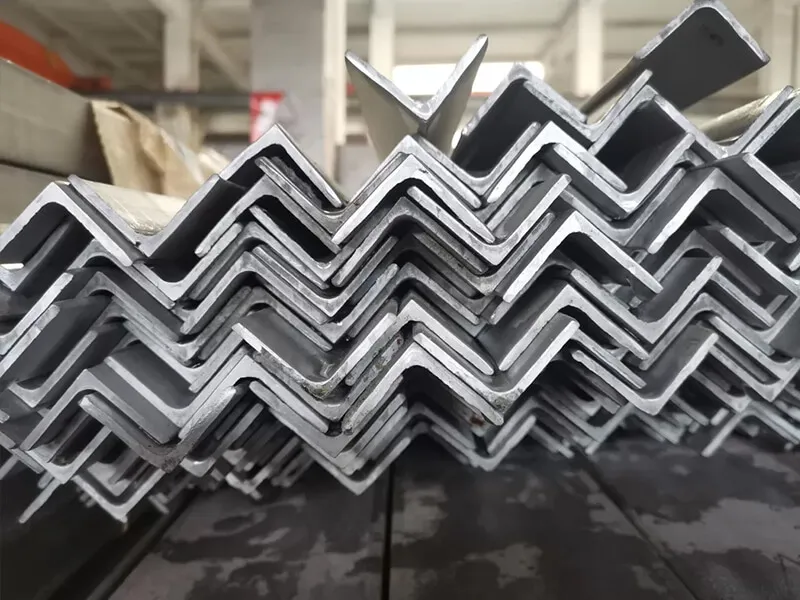
I quote marine angle steel every working day, and I can tell you that the buyers who argue with our invoices are almost never dishonest. They are almost always working from a calculation with a quiet mistake inside it. The formula itself is simple enough to write on a business card, but the gap between a formula on paper and a bar on the weighbridge is where money disappears. I stand at our loading yard most weeks and watch bundles go onto trucks, and the weight on my paperwork and the weight on the driver’s waybill agree because both sides learned the same handful of rules. In this article I walk through the errors I see most often, why each one happens, and how I check a calculation before it becomes a purchase order. Most of these fixes cost nothing. They just need a few minutes and a little discipline.
Which Formula Mistakes Cost Marine Angle Steel Buyers the Most Money?
Most buyers can recite the weight formula, yet most weight disputes start inside that formula. The geometry is easy to get almost right, and almost right is the most expensive kind of wrong.
The costliest formula errors are counting the corner of the angle twice, rounding the density up to 8, mixing millimetres with metres, and trusting the sharp-corner formula for the final order instead of the published kg/m table. Each one shifts the result by 1% to 5% silently.

Counting the Corner Twice
An angle is two rectangles joined at a corner. The corner belongs to both rectangles, so if you multiply each leg by the thickness and add them, you count that small square twice. The honest cross-section area is t x (A + B − t), not t x A + t x B. On a 50 x 50 x 5 angle, the correct area is 5 x (50 + 50 − 5) = 475 mm². The double-count version is 5 x 50 + 5 x 50 = 500 mm². That is a 5.3% error, and it runs in your favour, which means your budget says you need more steel than you do. On the other side of the mistake, if the supplier’s quotation came in lower than your number, you might reject a perfectly good offer because you trusted your own wrong figure. I have watched a buyer do exactly that. He recalculated three times, got the same inflated number three times, and called our price “suspicious”. The conversation took two days to untangle over one small square millimetre of corner.
Rounding the Density Up
The repair-estimating world loves to round the density of steel up from 7.85 g/cm³ to 8, because it makes mental math faster. It also inflates every result by about 1.9%. For a repair budget, fine. For a purchase order priced per tonne, you have just added roughly 19 kg of phantom steel to every tonne you buy. On a 20-tonne order that is about 380 kg you budgeted for but will never receive. The 0.00785 constant in the standard formula is not a random number; it is the density rearranged into convenient units. Use it as it is.
Mixing Units
The formula t x (A + B − t) x 0.00785 gives kilograms per metre only when the dimensions are in millimetres and the length is in metres. Type the leg widths in metres, or the length in millimetres, and the result is wrong by factors of a thousand in either direction. Spreadsheets hide this beautifully. A cell that pulls dimensions from one sheet and lengths from another, with one column in inches from an old ASTM drawing, will produce a number that looks completely plausible. I always sanity-check one section against a published table before I trust the rest of the sheet. Thirty seconds of checking beats thirty emails after the container arrives.
Copy-Paste From an Old Order Is Not an Estimate
There is one more error that does not live inside the formula at all, and it is the most common one I meet. The buyer opens last year’s purchase order, finds a section that looks close, and copies the kg/m figure across. It works until the new drawing uses a different section, or the same section in a different standard. A 100 x 100 x 10 angle in the EN table and the same nominal size in an older handbook can differ by a percent or two, and a rounded figure copied through three hands can drift further. Nothing looks wrong. Every line is a real number from a real document. The total is simply wrong, and nobody notices until the container is unloaded. I tell every new buyer the same thing: rebuild the sheet from the current standard table for each new project, and keep the old order as a reference for prices and lead times, not for weights. Copy prices freely. Copy weights never.
The Formula Is the Sanity Check, the Table Is the Number
Even a perfect sharp-corner formula is only an approximation. Real hot-rolled angles have a root radius and rolled toes, and that geometry adds real material the formula ignores. Published section tables in EN 10056, GB/T 706, and the classification society rules carry the correct kg/m values. The mill invoices against those tables, so your order should be built on them too.
| Section (mm) | Formula kg/m (t x (A+B−t) x 0.00785) | Typical table kg/m | Difference |
|---|---|---|---|
| 50 x 50 x 5 | 3.73 | 3.77 | +1.1% |
| 75 x 75 x 6 | 6.78 | 6.85 | +1.0% |
| 100 x 100 x 10 | 14.92 | 15.10 | +1.2% |
| 150 x 90 x 10 | 18.05 | table varies | check per table |
The difference is small on one bar. On an 8-tonne order it is over 100 kg, and the weighbridge counts every gram. So my habit is fixed: the formula is for checking, the table is for ordering.
Why Does the Delivered Weight Never Match Your Marine Angle Steel Calculation?
You did the formula right, you used the table, and the delivery still does not match. Before you write an angry email, understand that a calculation is a model and a delivery is a measurement. They are legally allowed to differ.
Delivered weight differs from calculated weight because of rolling tolerance on thickness and leg length, the difference between table mass and scale mass, packing materials in the gross figure, and coatings such as galvanizing. A deviation inside about ±5% is normal; a consistent one-direction deviation is a signal to inspect.

Thickness Tolerance Is the Biggest Lever
Thickness enters the weight formula linearly, so a small thickness deviation moves the whole number. Standards allow a band. On a 10 mm leg, the common tolerance is about ±0.4 mm, and similar bands exist in EN 10056, GB/T 706, and ASTM A6. An angle rolled at 9.7 mm is 3% lighter than nominal and still fully compliant. Nobody cheated you. An angle rolled at 9.2 mm is not compliant, and that is a conversation for the inspection report. The problem for buyers is that both situations look identical from the outside until you measure. This is why we encourage sample measurement on arrival, and it is one of the reasons our Gulf customers ask for third-party inspection before shipment. SGS crews measure and weigh at the mill, so the deviation is known before loading, not after landing. One of our regular buyers once told me the inspection report saved the friendship with his own boss, because the 3% variance was documented as normal before anyone panicked.
Leg Length, Table Values, and the Weighbridge
Leg length also moves the number, but less. A 100 mm leg rolled at 99 mm costs roughly 0.5% on mass, because each leg contributes only one thickness of area. Then there is the difference between the table value and the physical scale. Mills in our region usually invoice sections on theoretical weight using the standard table, while plate is more often invoiced on weighed weight. If your expectation is built on the scale and the invoice is built on the table, you will always find a gap, and the gap is not an error. It is two different measurement philosophies. Ask which basis the invoice uses before you order, not after.
Packing and Coatings Never Appear in the Formula
Export bundles are strapped with steel banding, separated with timber, and sometimes cradled. That adds roughly 1% to 3% to the gross shipped weight. Galvanizing adds another 3% to 5% if your order is coated. None of this is steel, so none of it appears in your kg/m calculation, but all of it appears on the weighbridge and on the freight plan. The clean way to handle it is to keep three numbers on your sheet: theoretical steel weight, expected gross with tolerance and packing, and the container payload limit. When I plan a shipment to Dammam or Ho Chi Minh City, I size the containers against the gross figure, never the steel figure. A loading plan built on the steel number is how a 20-footer ends up rejected at the terminal gate with the clock running.
| Deviation source | Typical size | Legal? | Where to catch it |
|---|---|---|---|
| Thickness tolerance (10 mm leg, ±0.4 mm) | up to about ±3% | yes, inside the band | sample measurement on arrival |
| Leg length tolerance (100 mm leg at −1 mm) | about −0.5% | yes, inside the band | caliper check with the sample |
| Table vs scale measurement basis | 1% to 2% | yes, method difference | confirm invoice basis before order |
| Packing materials | +1% to +3% of steel weight | yes, not steel | weighbridge vs steel figure on plan |
| Galvanizing coating | +3% to +5% | yes, coating mass | spec sheet, before ordering |
| Under-thickness beyond tolerance | −3% or more | no | reject at inspection, before shipment |
How Should You Audit a Supplier’s Marine Angle Steel Weight Figures?
Knowing the errors is half the job. The other half is a repeatable audit that catches them in the quotation, before they become a delivery problem. The audit takes about an hour and it has saved me more arguments than any discount ever has.
Audit a weight figure by rebuilding one line of the quotation from the standard table, checking the invoicing basis, requesting the mill test certificate mass values, and weighing a small sample on arrival. Compare the deviation against the ±5% band, and treat a consistent one-direction deviation as a trigger for full inspection.
Rebuild One Line, Not the Whole Order
Do not audit the whole quotation. Pick the heaviest line item, the one that drives the money, and rebuild its weight from the published table yourself. If your number matches the supplier’s, the method is sound and you can trust the rest at high confidence. If it does not match, you have found the problem in one line instead of hunting through forty. Check two things while you rebuild: that the section size on the quotation matches the drawing, and that the kg/m figure matches the current edition of the standard, not a remembered one. Small mismatches here are where most silent errors hide. I do this on our own quotations before they leave the office, because a customer who catches an arithmetic slip stops reading the price and starts reading everything else with suspicion. Trust is expensive to rebuild and cheap to protect.
Check the Basis, the Certificate, and the Sample
Three documents settle most weight questions. First, the quotation should state the invoicing basis: theoretical table weight or actual weighed weight. Second, the mill test certificate lists the heat number and the mass values from the mill’s own measurement, and it travels with the steel. Third, the arrival sample: weigh a few random pieces, measure their exact lengths, divide weight by length, and compare against the table kg/m. If the deviation sits inside the tolerance band, sign and move on. If pieces within one bundle disagree with each other significantly, the mill’s process is inconsistent, and that is a quality signal that matters more than the kilograms. A light bar here and there inside the band is rolling. A whole shipment trending light is a pattern, and patterns get escalated. Set the band before the steel ships, in writing, so the arrival check is a comparison against an agreed number instead of an argument about what should count as acceptable.
Clean Estimate vs Careless Estimate
The difference between a professional estimate and a careless one is not the arithmetic. It is the structure around the arithmetic. The table below is the comparison I share with buyers who are setting up their own checking routine.
| Aspect | Careless estimate | Audited estimate |
|---|---|---|
| kg/m source | formula remembered from memory | standard table, formula used as cross-check |
| Corner handling | corner counted twice | t x (A + B − t) applied once |
| Density constant | rounded to 8 for fast math | 7.85 / 0.00785 as printed |
| Units | mixed across spreadsheet cells | one unit system, one sanity row |
| Tolerance | ignored | ±5% band shown next to the number |
| Packing and coating | forgotten | gross weight line added for freight |
| Invoice basis | assumed weighed | confirmed in writing before order |
| Arrival check | none, disputes later | sample weighed, deviation logged |
| Dispute rate | frequent, slow to resolve | rare, settled by documents |
An audited estimate takes perhaps an hour longer to build. It removes the argument from the delivery, and it tells your supplier you are paying attention, which quietly improves the service you get on everything else. We answer weight queries within two hours when they arrive, and I can promise you the buyers with clean calculation sheets get the fastest, most detailed answers, because there is a shared foundation to stand on.
Conclusion
Marine angle steel weight errors are predictable: corners, density, units, tables, and tolerance. Build the estimate from the table, show the tolerance band, and weigh a sample on arrival.