
You receive a shipment of L-shaped steel. You start welding it into the hull. Then you find a crack. The classification surveyor stops work. Your project is delayed.
The marine L-shaped steel inspection process at shipyards involves checking material certificates, measuring dimensions, inspecting surface quality, and verifying mechanical properties. Each step follows classification society rules like ABS, DNV, or CCS.
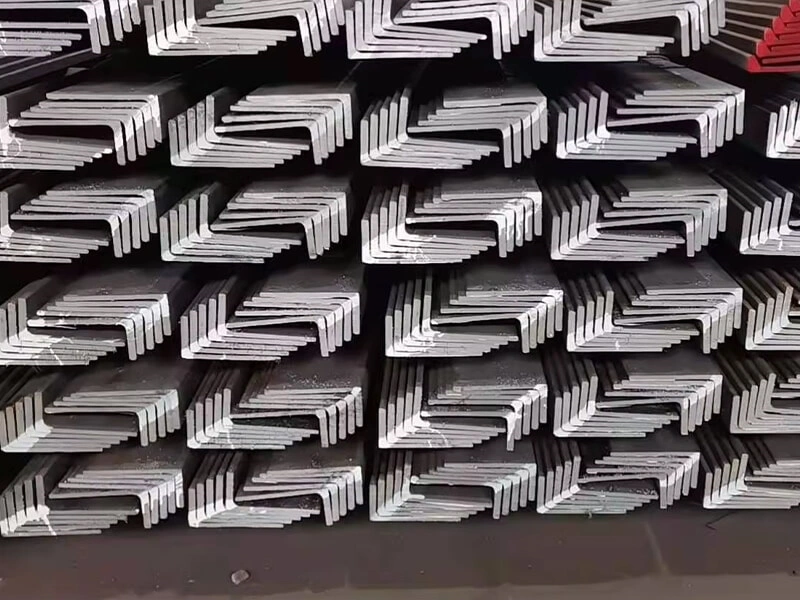
I have worked with shipyards across Southeast Asia and the Middle East. I have seen inspections go smoothly. I have also seen them fail. The difference is always in the preparation. Let me walk you through what you need to know.
What Type of Steel Is Used in Shipbuilding?—Understanding What You Are Inspecting
You look at a piece of steel. It looks like steel. But you know there are different grades. You are not sure what to check first. You worry about picking the wrong one.
Shipbuilding uses marine steel grades1 approved by classification societies. These include ordinary strength grades (A, B, D, E) and high-strength grades2 (AH32, DH36, EH36). Each grade has specific chemical composition and mechanical properties that must be verified during inspection.
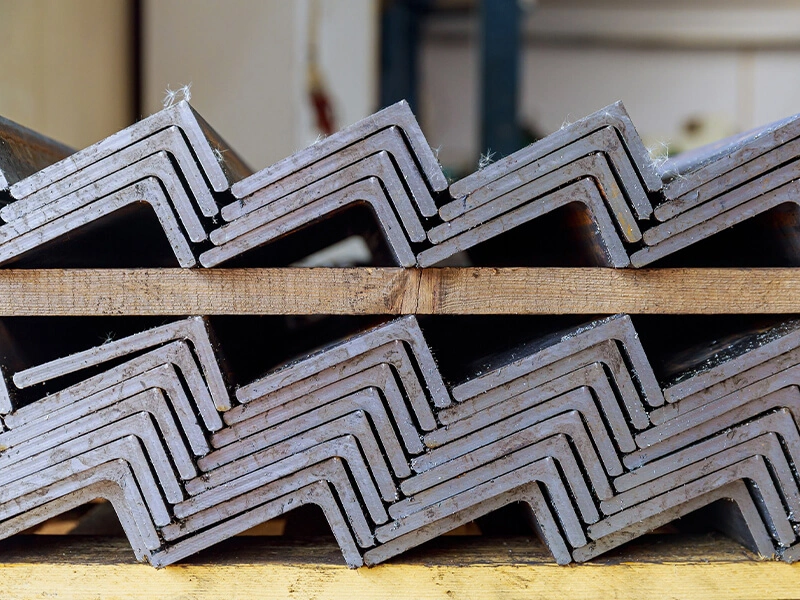
Let me help you understand what you are actually looking at when you inspect L-shaped steel.
The Classification Society Framework
Every piece of marine steel must be approved by a classification society. The main ones are ABS (American Bureau of Shipping), DNV (Det Norske Veritas), LR (Lloyd’s Register), and CCS (China Classification Society). Each society has its own rules. But they are all similar in what they require.
The approval is shown on the steel itself. You will see a stamp. It might say ABS-A for ordinary strength Grade A. It might say DNV-AH32 for high-strength steel. If you do not see this stamp, the steel is not approved for marine use.
What the Grades Actually Mean
Here is a simple breakdown of what you will see:
| Grade | Type | Yield Strength | Impact Test Temperature | Typical Use |
|---|---|---|---|---|
| A | Ordinary | 235 MPa | None | Interior structures, non-critical areas |
| B | Ordinary | 235 MPa | 0°C | Decks, bulkheads |
| D | Ordinary | 235 MPa | -20°C | Hull structures in moderate climates |
| E | Ordinary | 235 MPa | -40°C | Cold climate applications |
| AH32 | High-strength | 315 MPa | -20°C | Bottom shells, frames |
| DH36 | High-strength | 355 MPa | -20°C | Heavy-load structures |
| EH36 | High-strength | 355 MPa | -40°C | Arctic or very cold conditions |
Why This Matters for Inspection
When you inspect L-shaped steel, the first thing you check is the grade stamp. I have seen shipments where the supplier sent Grade A but the customer ordered AH32. The steel looked the same. But the mechanical properties were different.
One client in Vietnam ordered AH32 for his hull frames. The supplier sent Grade A by mistake. The frames went into the hull. A few months later, the classification surveyor did a spot check. He found the mismatch. The client had to cut out all the frames and replace them. That cost him three months and a lot of money.
So here is my advice. When steel arrives, do these three things:
- Check the stamp on every bundle. Make sure it matches your order.
- Request the mill certificates3 before shipment. Review them before the steel leaves the supplier.
- If you are unsure, use a third-party inspection service4 like SGS. They will verify everything before the steel is shipped.
What Are the Common Steel Sections Used in Modern Shipbuilding?—And Why L-Shaped Steel Needs Special Attention
You order steel for a ship. You get plates, angles, and bulbs. They all look different. You are not sure which one needs the most careful inspection. You treat them all the same.
Modern shipbuilding uses four main steel sections: flat plates, L-shaped angle bars, bulb flat bars, and I-beams. L-shaped steel needs special attention because its non-symmetrical shape makes it prone to twisting, and its corners are critical points for stress concentration.

Let me show you the different sections and explain why L-shaped steel is the one you need to watch closely.
The Four Main Sections
1. Flat Steel Plates1
These are the most common. They form the hull shell, decks, and bulkheads. Inspection focuses on thickness, flatness, and surface defects.
2. L-Shaped Angle Bars2
These are used for frames, stiffeners, and structural supports. They have two legs of equal or unequal length. The shape makes them strong for their weight. But it also makes them harder to inspect.
3. Bulb Flat Bars3
These look like a flat bar with a rounded edge on one side. They are used for longitudinal stiffening. They are easier to inspect than angles because they have a simpler shape.
4. I-Beams and Channels4
These are used for heavy structural members like deck girders and support columns. They are less common in smaller vessels but appear in larger ships.
Why L-Shaped Steel Is Different
L-shaped steel has three features that make inspection more critical.
The Non-Symmetrical Shape5
An angle bar has two legs. They are not the same width. This shape is strong. But it also means the bar can twist if the legs are not perfectly straight. A twisted angle bar will not fit properly against a flat plate. The weld will have gaps.
The Corner Radius
The inside corner of an angle bar has a radius. If this radius is too small, the corner becomes a stress concentration point. Cracks can start there. If the radius is too large, the bar does not sit flush against the plate. Both are problems.
The End Cuts
Angle bars are often cut at angles to fit the hull shape. The cut ends need to be clean and square. A bad cut means the part does not fit. It also means the welder has to add extra filler metal.
A Real Example
I had a client in Malaysia building a series of tugboats. He was using L-shaped angle bars for the frames. He received a shipment where the angle bars had a small twist. It was only 2 mm over 6 meters. He thought it was fine.
His welders started fitting the frames. Every frame needed extra clamping to line up. The welds were uneven. The classification surveyor failed the first hull section. He had to cut out the frames and redo them.
Now he checks every angle bar for twist before he accepts the shipment. He uses a simple straight edge. He lays it along the length of the bar. If there is a gap of more than 1 mm per meter, he rejects it.
So when you inspect L-shaped steel, pay extra attention to the shape. Flat plates are forgiving. Angle bars are not.
What Are the Critical Checkpoints During L-Shaped Steel Inspection?
You have the steel at your yard. You have the certificates. You start the inspection. But you are not sure what to check first. You worry about missing something important.
The critical checkpoints for L-shaped steel inspection are material certificates, dimensional accuracy, surface quality, mechanical properties, and end cut condition. Each checkpoint must pass classification society requirements before the steel can be used.
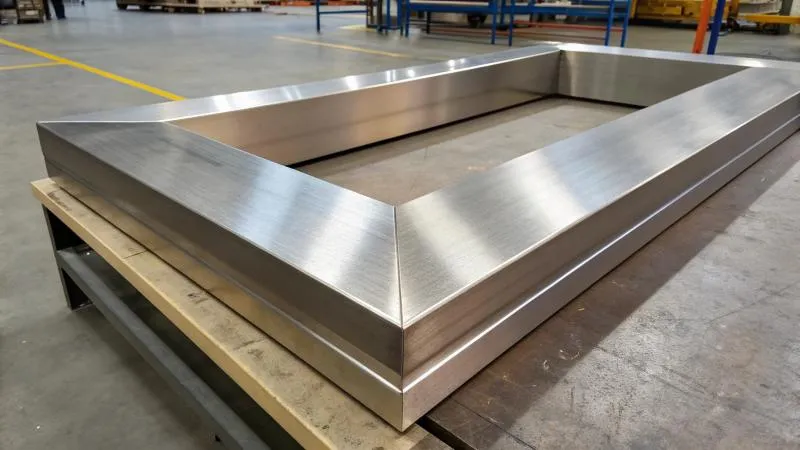
Let me walk you through the inspection process step by step. I will tell you what to check and what to look for.
Checkpoint 1: Material Certificates1
This is where you start. Do not touch the steel until you have the certificates.
| What to Check | What to Look For |
|---|---|
| Mill name and country | Recognized steel mill with classification society approval |
| Grade designation | Matches your purchase order exactly |
| Heat number | Same as the stamp on the steel itself |
| Mechanical properties | Yield strength, tensile strength, elongation meet grade requirements |
| Chemical composition | Carbon, manganese, silicon, sulfur, phosphorus within limits |
| Classification society stamp2 | ABS, DNV, LR, CCS, or other approved society |
If any of these do not match, stop the inspection. Do not proceed until you get correct certificates.
Checkpoint 2: Visual Surface Inspection3
Walk along each bar. Look at the surface. Here is what you are looking for:
- Scale and rust: Light surface rust is normal. Heavy scaling or pitting is not.
- Cracks: Any crack is a failure. Do not accept it.
- Laminations: These are layers in the steel. They look like seams. They weaken the bar.
- Bends and twists: Lay the bar on a flat surface. Any visible twist is a problem.
I tell my clients to do this inspection with good light. Morning light is best. Walk the length of each bar. If you see something that looks wrong, mark it with chalk and set it aside.
Checkpoint 3: Dimensional Measurement4
This is where most problems show up. You need a caliper, a tape measure, and a square.
| Dimension | Tolerance (Typical) | How to Check |
|---|---|---|
| Leg length | ± 2 mm | Measure both legs at both ends and the middle |
| Leg thickness | ± 0.5 mm | Measure at three points along each leg |
| Straightness | 1 mm per meter | Lay straight edge along the bar length |
| Squareness | 90° ± 1° | Use a square at the corner |
| End cut angle | ± 1° | Check with protractor or template |
I saw a shipment once where the leg thickness was inconsistent. One end was 8 mm. The other end was 7 mm. The mill had rolled the bar unevenly. The welder could not get consistent penetration. The frames were weak.
Checkpoint 4: Mechanical Testing5
Sometimes you need to do physical tests. This is more common for large projects or when classification society asks for it.
- Tensile test: Pull a sample until it breaks. This gives yield strength and elongation.
- Bend test: Bend the sample to check ductility.
- Impact test: Hit a notched sample at low temperature to check toughness.
These tests are destructive. You take a sample from the steel. The sample is destroyed. You need to have extra material for this.
Checkpoint 5: Marking and Traceability6
Every piece of marine steel must be traceable. Check these marks:
- Heat number: Same as the certificate
- Grade stamp: Visible and legible
- Classification society stamp: Present and correct
If the stamp is missing, the steel is not approved. Even if the certificate says it is approved, the surveyor will reject it without the stamp.
Putting It All Together
Here is the order I recommend:
- Check certificates first
- Check surface and straightness second
- Measure dimensions third
- Pull samples for testing if required
- Verify stamps and markings last
This order saves you time. If the certificates are wrong, you do not waste time measuring. If the surface is bad, you do not waste time testing.
How to Handle Common Inspection Failures at the Shipyard?
You find a problem during inspection. The steel does not pass. You do not know what to do. You worry about the project timeline1. You worry about who pays for the replacement.
When inspection fails, the first step is to document everything with photos and measurements2. Then contact your supplier immediately3. Most failures fall into three categories: dimensional issues, surface defects, or certificate problems. Each has a different solution.
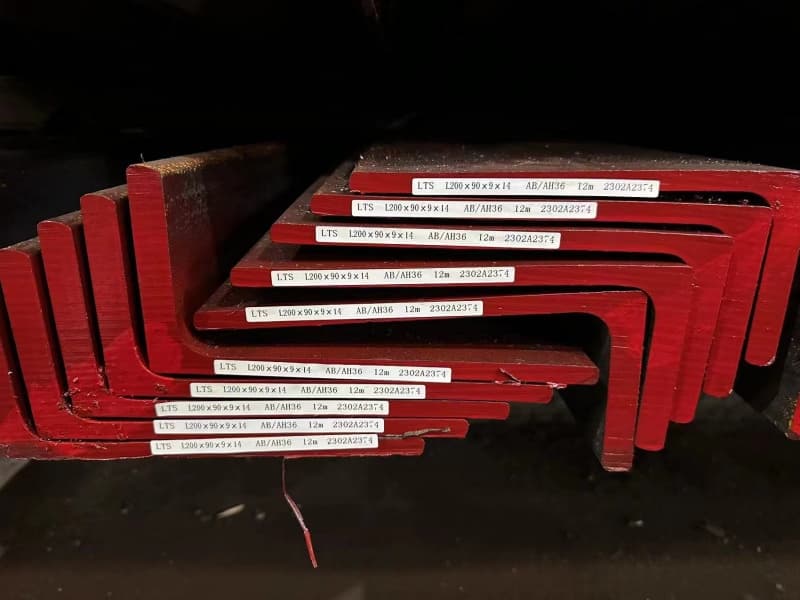
Let me share what I have learned from handling these situations. I have been on both sides. I have seen failures from my own shipments. I have helped clients deal with failures from other suppliers.
Category 1: Dimensional Failures4
This is when the leg length, thickness, or straightness is out of tolerance.
What to Do:
- Take clear photos with a ruler showing the measurement
- Measure at least three points and record all readings
- Send the photos and measurements to your supplier immediately
Possible Outcomes:
- Minor deviation: If the deviation is small and the part can still be used, you can ask for a discount. I have seen suppliers offer 5% to 15% off for dimensional issues.
- Major deviation: If the bar cannot be used, you need replacement. The supplier should cover the replacement cost5 and shipping. They may also cover the cost of the unusable material.
I had a shipment where the angle bars were 5 mm short on one leg. The client could not use them for the intended frames. I arranged replacement bars within two weeks. We air freighted them to keep the project on schedule. It cost me more. But the client stayed happy.
Category 2: Surface Defects6
This includes cracks, laminations, deep pitting, or heavy scale.
What to Do:
- Photograph the defect with a scale next to it
- If it is a crack, mark the ends with chalk so it does not spread
- Stop using that bar immediately
- Send photos to your supplier
Possible Outcomes:
- Localized defect: If only a few bars have defects, you can reject just those bars. The supplier replaces them.
- Widespread defect: If many bars have the same problem, the whole batch may be bad. This often happens when the mill had a rolling issue. The supplier should replace the entire batch.
A client in the Philippines received angle bars with laminations along the edge. Every bar had the same problem. The mill had a bad rolling run. The supplier replaced all 45 tons. It took six weeks. The client used that time to work on other parts of the vessel.
Category 3: Certificate Problems7
This is when the grade on the certificate does not match the stamp, or when the certificate is missing.
What to Do:
- Check every bar. See if the stamp matches the certificate.
- If the certificate is missing, request it from your supplier immediately
- If the stamp does not match, take photos of the stamp and the certificate
Possible Outcomes:
- Missing certificate: This is common. Many suppliers ship the steel and then send the certificate by email. You can usually get it within a few days.
- Mismatched grade: This is serious. If the stamp says Grade A but the certificate says AH32, the steel is not approved. The supplier must either provide correct certificates or replace the steel.
I will tell you something from my own experience. Always get the certificates before the steel leaves the supplier. I send my clients the mill certificates by email before I load the container. That way they can review them. If there is a mistake, I fix it before the steel ships.
A Final Word on Communication
When a failure happens, how you communicate matters.
- Be calm: Do not shout or threaten. Most suppliers want to fix the problem.
- Be clear: Send photos, measurements, and exact details.
- Be fast: The sooner you report the problem, the sooner it gets fixed.
I learned this from a client in Saudi Arabia. He found a surface defect on some plates. He sent me photos with a clear description. I was able to contact the mill that same day. We arranged replacement plates in two weeks. He later told me that my response speed was why he kept working with me.
When you handle failures well, the relationship gets stronger. When you handle them poorly, you lose a supplier and delay your project.
Conclusion
A solid inspection process for marine L-shaped steel means knowing the grades, checking the critical points, and acting fast when problems appear.
-
Understand the impact of inspection failures on project timelines to better plan your operations. ↩ ↩ ↩ ↩
-
Learn best practices for accurate measurements to avoid inspection failures. ↩ ↩ ↩ ↩
-
Discover the benefits of prompt communication with suppliers to resolve issues quickly. ↩ ↩ ↩ ↩
-
Understanding the causes of dimensional failures can help you prevent them in future inspections. ↩ ↩ ↩ ↩
-
Find out who typically bears the replacement costs to better manage your project budget. ↩ ↩ ↩
-
Learn how to effectively identify and manage surface defects to ensure quality in your projects. ↩ ↩
-
Explore the importance of certificates in steel supply to avoid costly mistakes and ensure compliance. ↩