
You are planning an offshore project for 2027. The engineering is complex. The budget is tight. And somewhere in the material take-off, you see "L-shaped steel" listed in hundreds of places. What is the market outlook for this critical material? Will prices rise? Will supply be tight? Understanding the trends helps you plan.
The marine L-shaped steel market for offshore projects is expected to see steady demand growth through 2027, driven by offshore wind farm construction, oil and gas platform maintenance, and new shipbuilding. Prices will likely remain volatile due to raw material costs and energy prices. Supply chain stability will depend on mill capacity and trade policies. Buyers should focus on long-term partnerships with certified suppliers to secure reliable supply.
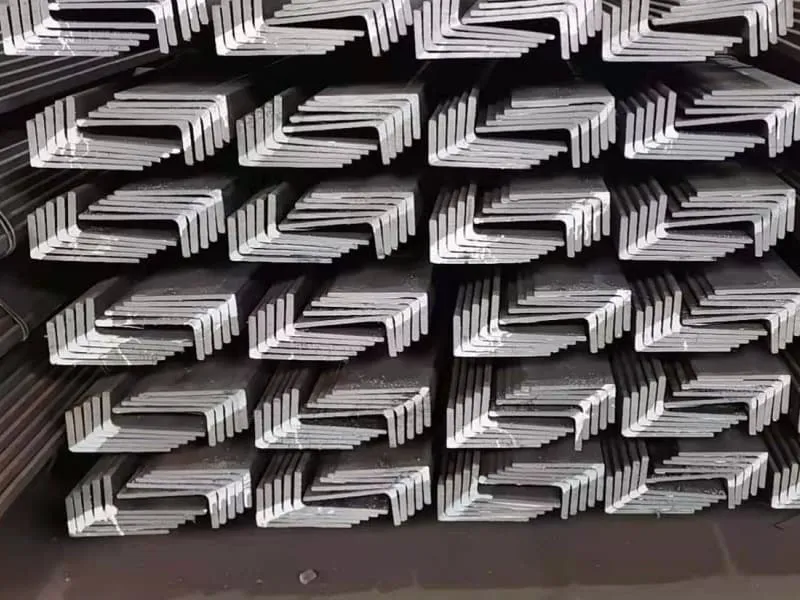
To understand the market outlook, we must first understand the product. The terminology around L-shaped steel can be confusing. Different names are used interchangeably, but they can mean different things. Let’s start with the basics.
What is L-shaped steel called?
You are reading a market report. It uses the term "angle steel1." Another report says "L-section2." A third says "marine angles." Are they all the same? Knowing the terminology helps you interpret market data and communicate with suppliers.
L-shaped steel is most commonly called angle steel1 or angle bar in general construction and fabrication. In technical drawings and standards, it is referred to as an L-section2 or angle section. When used in marine and offshore applications, it is called marine angle steel3l](https://cnmarinesteel.com/what-are-the-applications-of-marine-angle-steel-beyond-shipbuilding/)[^1] or ship angle steel4l](https://cnmarinesteel.com/what-are-the-applications-of-marine-angle-steel-beyond-shipbuilding/)[^1], indicating it meets classification society requirements. All these terms refer to the same basic L-shaped product, but the modifiers ("marine," "ship") indicate a higher grade and certification.
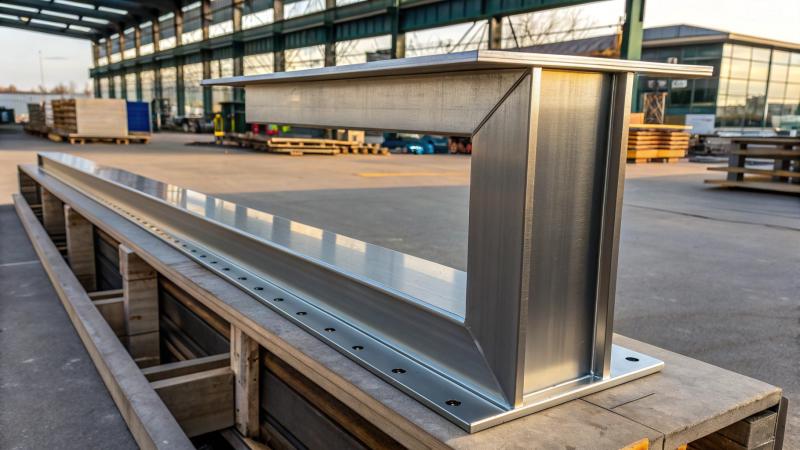
Market Outlook Implications of Terminology
The terms used reflect the market segment and quality level.
| 1. Market Segments by Terminology. | Term | Market Segment | Quality Level | Price Trend |
|---|---|---|---|---|
| Angle Steel / Angle Bar | General construction, fabrication | Standard structural steel | Follows commodity steel prices | |
| L-Section | Engineering, technical specifications | Varies by specification | Depends on grade specified | |
| Marine Angle Steel | Shipbuilding, offshore projects | Certified marine grade | Premium over commodity steel | |
| Ship Angle Steel | Same as marine | Same | Same |
2. Why This Matters for Market Outlook.
- Demand Drivers: Marine grade demand is tied to shipbuilding and offshore energy. General construction grade follows building activity.
- Price Premium: Marine grades command a premium that fluctuates with certification costs and mill availability.
- Supply Chain: Marine grade requires certified mills. The number of such mills is limited, affecting supply elasticity.
3. Outlook by Segment.
- General Construction Angles: Demand tied to global construction activity. Expected to grow modestly with infrastructure spending.
- Marine Angles: Stronger growth expected due to offshore wind and shipbuilding recovery. Supply may be tighter.
My Insight from the Field
A client in the Middle East once asked us to quote "angles" for an offshore project. We clarified that they needed marine-grade, certified angles, not construction-grade. The price difference was significant. They had budgeted for construction-grade and were surprised. This taught us that market outlook discussions must start with precise terminology. The "angle steel1" market is not one market; it is several.
What is the L-shaped piece of steel?
You are looking at a fabrication drawing for an offshore platform. It shows L-shaped pieces at every connection. Are these the same as the L-shaped steel you order in bulk? Understanding the difference helps you forecast demand for both rolled sections and fabricated pieces.
An L-shaped piece of steel can refer to two different things. First, it is a rolled angle section1, manufactured in a steel mill and used as a continuous stiffener or frame. Second, it is a fabricated bracket2, cut from a steel plate and used as a local connection or reinforcement. Both are L-shaped, but they are produced differently and serve different purposes. The market outlook for rolled sections3 is tied to mill capacity. The outlook for fabricated pieces is tied to plate prices and fabrication shop capacity4.
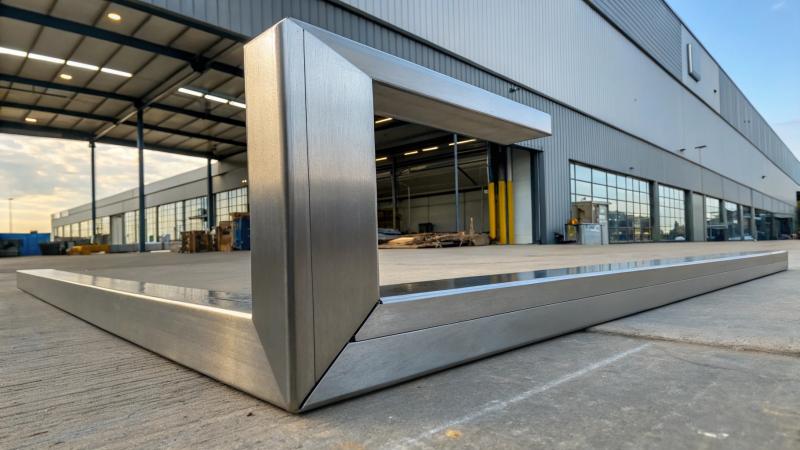
Market Outlook for Rolled vs. Fabricated
Each has its own supply chain and price drivers.
| 1. Rolled Angle Sections. | Factor | Outlook |
|---|---|---|
| Production | Made in specialized section mills. Limited number of mills globally. | |
| Capacity | Tight when shipbuilding is strong. Lead times extend. | |
| Price Drivers | Raw material costs, mill utilization, energy prices. | |
| Substitutability | Difficult to substitute with fabricated pieces for long runs. |
| 2. Fabricated Brackets (Cut from Plate). | Factor | Outlook |
|---|---|---|
| Production | Cut from steel plate in fabrication shops. Capacity is more flexible. | |
| Capacity | Can be scaled up with more labor and cutting machines. | |
| Price Drivers | Plate prices, cutting labor costs, shop utilization. | |
| Substitutability | Can substitute for rolled angles in discrete locations, but not for long runs. |
3. Combined Outlook for Offshore Projects.
- Rolled Angles: Demand will remain strong for primary stiffening. Buyers should secure mill capacity early.
- Fabricated Brackets: Demand will grow with project complexity. Fabrication shop capacity may become tight in busy periods.
- Price Trends: Both will follow steel prices, but fabricated pieces add labor cost, which may rise with inflation.
My Insight from the Field
A client in Qatar was designing a complex offshore platform. They optimized the design to use rolled angles for all long runs and fabricated bracket2s only at connections. This balanced cost and lead time. They ordered rolled angles early, locking in mill capacity. They sourced plate for brackets later, as the fabrication schedule allowed. This hybrid approach managed their risk.
Is 304 stainless steel1 ok for marine use?
You are specifying stainless steel for an offshore project. The budget is tight. 304 is cheaper than 316. Can you use it? The answer affects your material selection, your project’s longevity, and your maintenance costs. Understanding the limitations of 304 is essential for offshore projects.
No, 304 stainless steel1 is generally not ok for marine use, especially in offshore applications with direct and continuous exposure to saltwater. The chlorides in seawater cause pitting and crevice corrosion in 304, leading to premature failure. For offshore projects, where maintenance is difficult and costly, 316 stainless steel2 is the minimum required grade. For the most demanding applications, duplex stainless steels3 (like 2205) may be specified. Using 304 in a marine environment is a false economy.

Market Outlook for Marine Stainless Steel
The choice between 304 and 316 has market implications.
| 1. Demand Trends. | Grade | Applications | Demand Outlook |
|---|---|---|---|
| 304 | Interior, freshwater, mild environments | Steady, tied to general construction. | |
| 316 | Seawater-exposed, offshore, shipbuilding | Growing with offshore wind and marine projects. | |
| Duplex (2205, 2507) | High-strength, highly corrosive environments | Niche but growing for critical offshore components. |
| 2. Price Trends. | Factor | Impact on 316 Price |
|---|---|---|
| Nickel Price | 316 has higher nickel than 304. Nickel price volatility affects 316 more. | |
| Molybdenum Price | 316 contains molybdenum. Molybdenum is a specialty metal with its own market. | |
| Demand | Growing demand for 316 in offshore energy puts upward pressure on price. |
3. Supply Chain Considerations.
- Availability: 316 is widely available from stainless mills, but lead times may extend during demand peaks.
- Certification: Offshore projects often require certified material with traceability. This adds to cost and lead time.
- Substitution Risk: Some suppliers may offer 304 as a "substitute" for 316. This must be rejected.
4. Lifecycle Cost Analysis.
For offshore projects, the initial material cost is a small part of total project cost. The cost of failure and replacement at sea is enormous. 316 is the only sensible choice.
My Insight from the Field
A client in the North Sea once used 304 for small fittings on an offshore platform. Within two years, the fittings were severely pitted. Replacing them required a multi-day vessel charter and specialist divers. The cost was 20 times the material saving. Now, they specify 316 for everything, and duplex for critical areas. The lesson: offshore is not the place to save on stainless steel.
What does L mean in steel?
You are reading a drawing for an offshore project. It says "L 150x90x121." What does the "L" mean? Understanding this notation helps you interpret drawings and order the correct material. It is the language of the industry.
In steel industry notation, "L" stands for "L-shaped section2" or "angle." It is the standard prefix used on drawings and in material lists to indicate that the section is an angle profile3. For example, "L 150x90x121" means an unequal angle with a 150mm long leg, a 90mm short leg, and 12mm thickness. The "L" does not indicate the steel grade; it indicates the shape. The grade is specified separately (e.g., "L 150x90x12, Grade DH36").
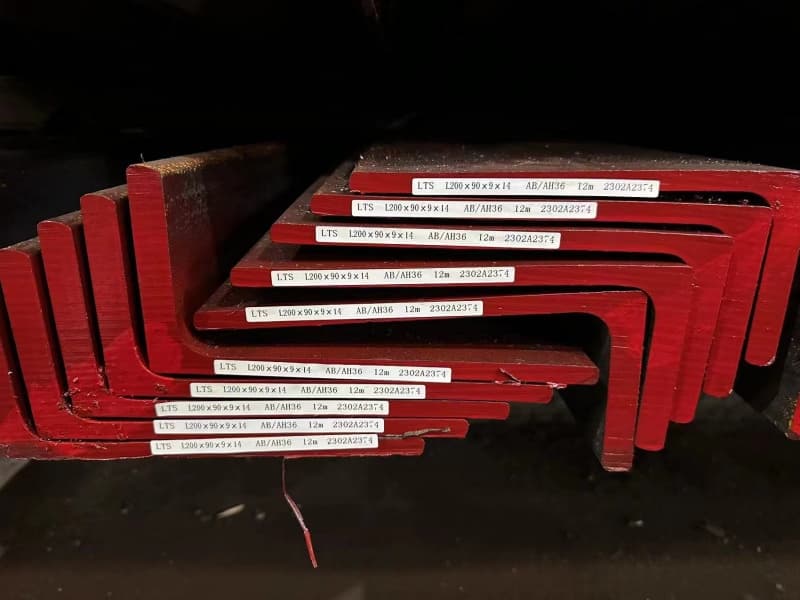
Market Outlook and the "L"
The "L" is constant, but what follows it changes with market trends.
1. What the "L" Tells You.
- Shape: It is an angle, not a flat bar or bulb flat.
- Dimensions: The numbers that follow are leg lengths and thickness.
- Standard: The dimensions refer to a specific standard (EN, ASTM, JIS), which should be noted elsewhere.
2. Market Trends in L-Section Dimensions.
- Larger Sizes: As ships and offshore platforms grow, demand for larger L-sections increases.
- Higher Strength: More projects specify high-strength grades4 (AH36, DH36) within the same L-shape, allowing lighter structures.
- Tighter Tolerances: Some projects require precision L-sections with tighter tolerances for automated fabrication.
3. What This Means for Procurement.
- Specify Completely: "L 150x90x121" is not enough. Include the standard and grade.
- Check Availability: Not all sizes are equally available. Common sizes have shorter lead times.
- Plan Ahead: For large projects, order early to secure mill capacity for your specific sizes.
My Insight from the Field
A client in Vietnam sent us a drawing with hundreds of "L" callouts. They had specified the dimensions but not the grade. We had to go back to their engineering team to get the grade information for each location. This added weeks to the procurement process. Now, their drawings include the grade in the callout: "L 150x90x121 DH36." This saves time and prevents errors.
Conclusion
The marine L-shaped steel market for offshore projects is poised for growth, driven by energy transition and infrastructure renewal. Understanding terminology, product forms, stainless steel grades, and drawing notation helps buyers navigate this market and secure reliable supply.
-
Explore the meaning of L 150x90x12 to accurately interpret steel specifications and avoid procurement errors. ↩ ↩ ↩ ↩ ↩ ↩ ↩ ↩ ↩ ↩
-
Understanding L-shaped sections is crucial for interpreting steel drawings and ensuring correct material orders. ↩ ↩ ↩ ↩ ↩ ↩
-
Learn about angle profiles to better understand their applications and specifications in construction projects. ↩ ↩ ↩ ↩
-
Discover the benefits of high-strength grades in steel for modern construction and their impact on design efficiency. ↩ ↩ ↩