
You send a container of steel to the other side of the world. Then the buyer says it fails inspection. That is a nightmare.
We follow a four-step quality control flow for marine L-shaped steel export orders: raw material checks, rolling process monitoring, finished product tests, and final packaging verification. Each step has clear standards and records.
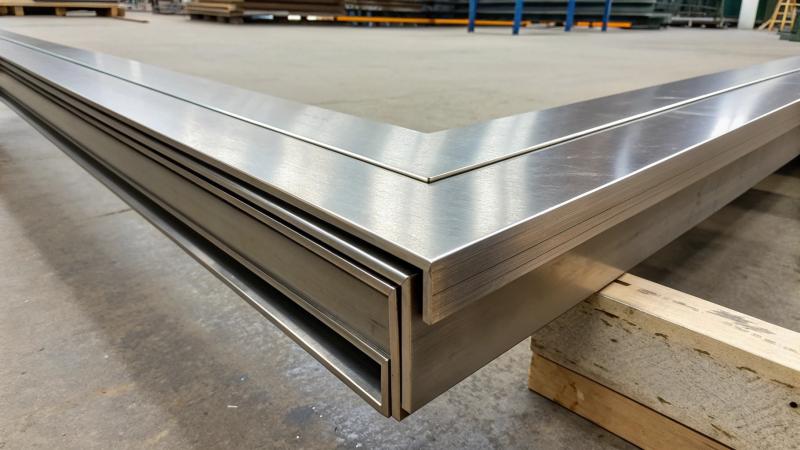
I have shipped thousands of tons of marine L-shaped steel to countries like Saudi Arabia, Vietnam, and Mexico. The secret is not luck. It is a system. Let me walk you through exactly what we do. You can use this checklist for your own orders.
What Raw Material Checks Are Done Before Production Starts?
Some suppliers skip raw material checks. They trust the mill’s word. I learned not to do that.
We check three things on every batch of raw steel billets1 before production: the mill certificate2 from the billet maker, the surface condition3 for cracks or scabs, and the dimensions for squareness. If the billet fails any check, we send it back. No exceptions.

Why do raw material checks matter so much?
Let me explain with a real story. A few years ago, I got an order from a customer in Mexico. They needed 80 tons of marine L-shaped steel for a fishing vessel. I ordered the billets from a regular supplier. But my team did the usual check.
We found small cracks on the surface of five billets. The cracks were only 1mm deep. Some people would say it is fine. But I knew better. Those cracks can grow during rolling. They become long seams on the finished L-shaped steel. The shipyard would reject every piece from those billets.
So we rejected the whole batch of billets. The mill was unhappy. But my customer never got bad steel. That is my rule.
What exactly do we check on raw billets?
| Check item | What we look for | Accept / Reject |
|---|---|---|
| Mill certificate | Chemical composition matches grade (A, B, AH32, etc.) | Reject if mismatch |
| Surface visual | No deep cracks, no scabs, no laps | Reject if any crack over 0.5mm |
| Corner condition | No sharp edge cracks or broken corners | Reject if corner missing >5mm |
| Length | Within ±50mm of ordered size | Reject if too short |
| Cross section | Square within 5mm tolerance | Reject if out of shape |
We also take a small sample from each heat. We send it to a lab for a quick chemistry test4. This costs extra money. But it gives me peace of mind. I have caught wrong grades twice this way.
What happens when a billet fails?
We mark it with red paint. We move it to a separate area. Then we call the billet supplier. They have to replace it. Sometimes they argue. But I show them the photos and the test results. They usually agree.
I tell all my customers: “You are not paying for the steel that passes. You are paying for the steel that fails but never reaches you.”
How can you check raw material quality without visiting the mill?
Ask your supplier for three things. First, a photo of the billet stockpile. Second, a video of the surface inspection. Third, the heat number of the billets that will be used for your order. If they cannot provide these, be careful.
How Do We Monitor the Rolling and Shaping Process?
Rolling is not just heating and pressing. The temperature, speed, and cooling all change the steel’s final properties.
We monitor the reheating furnace temperature1, the rolling passes, and the cooling rate during production. The L-shape must form evenly. The radius between the leg and the back must be smooth. We take samples every 30 minutes to check dimensions while the mill is running.
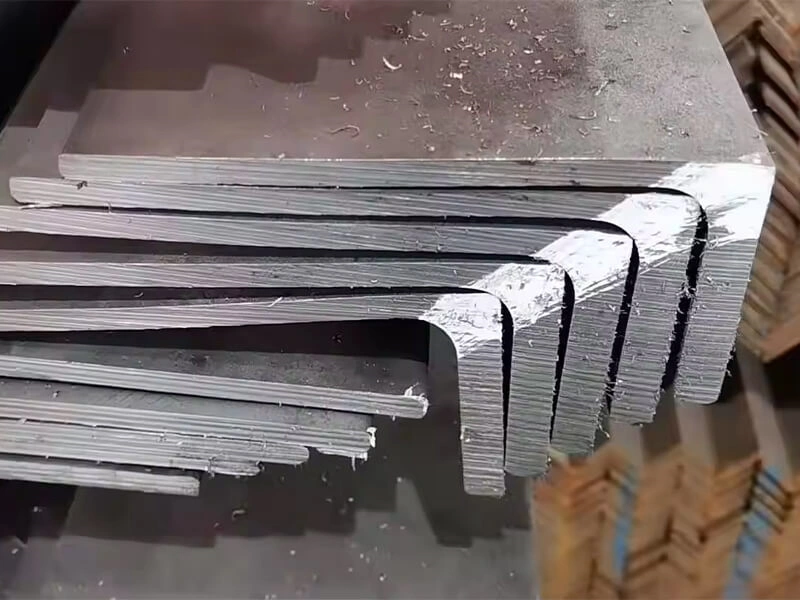
The critical points that most people miss
I have visited many rolling mills in Liaocheng, Shandong. The good ones all do the same thing. They control three key points.
First is the reheating temperature. The billet goes into a furnace at 1200°C to 1250°C. If the temperature is too low, the steel does not flow into the L-shape properly. If too high, the grain grows too big. That hurts impact strength.
Second is the rolling sequence2. L-shaped steel needs a special set of rollers. The shape is not symmetrical. One leg is usually longer than the other. The mill must use a “universal mill” or a “roughing and finishing” setup. I always ask for the rolling schedule3. That is a document that shows each pass.
Third is the cooling after rolling4. Some mills just pile the steel on the ground. That causes uneven cooling. The steel can twist or bend. Good mills use a cooling bed with straightening rollers.
A table of what we check during rolling
| Control point | Target value | How we check | ||
|---|---|---|---|---|
| Furnace temperature | 1220°C ± 20°C | Thermocouple + visual recorder | ||
| Rolling start temp | 1100°C to 1150°C | Infrared pyrometer | ||
| Finish rolling temp | 850°C to 900°C | Handheld thermometer | ||
| Cooling rate | Air cool, no forced water | Visual check of cooling bed | ||
| Straightening | Twist 12.5mm) | 180° no crack | ||
| B | ≥235 | 400-520 | 27 | 180° no crack |
| D | ≥235 | 400-520 | 27 at -20°C | 180° no crack |
| AH32 | ≥315 | 440-590 | 34 | 180° no crack |
| AH36 | ≥355 | 490-620 | 34 | 180° no crack |
What about non-destructive testing4?
Sometimes we do ultrasonic testing (UT) or magnetic particle inspection (MPI). These find internal cracks or surface cracks that you cannot see with your eyes.
UT sends sound waves through the steel. If there is a void or lamination, the sound bounces back. MPI uses magnetic powder. It collects around surface cracks.
I recommend UT for L-shaped steel thicker than 15mm. It adds cost but finds problems early. For my customer in Saudi Arabia, we did UT on all pieces thicker than 20mm. They appreciated that.
How many samples do we test?
For each heat (same batch of liquid steel), we test one sample per 50 tons. So for a 100-ton order, we test two samples from different pieces. If the order has different thicknesses, we test each thickness.
Third-party inspection is different. SGS or DNV will pick samples randomly. They may test more pieces. They also witness the testing. Then they stamp the certificate. That stamp is gold for shipyards.
How Is Final Packaging, Marking, and Documentation Verified for Export?
You have good steel. But if the packaging breaks on the ship, the steel rusts. If the marking is wrong, the customer cannot find the right pieces. If the documents are missing, customs stops the shipment.
We verify four things before loading: each piece is stamped with the heat number and grade1, the steel is bundled with steel straps and protected corners, the packing list2 matches the actual count, and the mill certificate3 and third-party report are attached to the shipping documents. We take photos of every bundle.
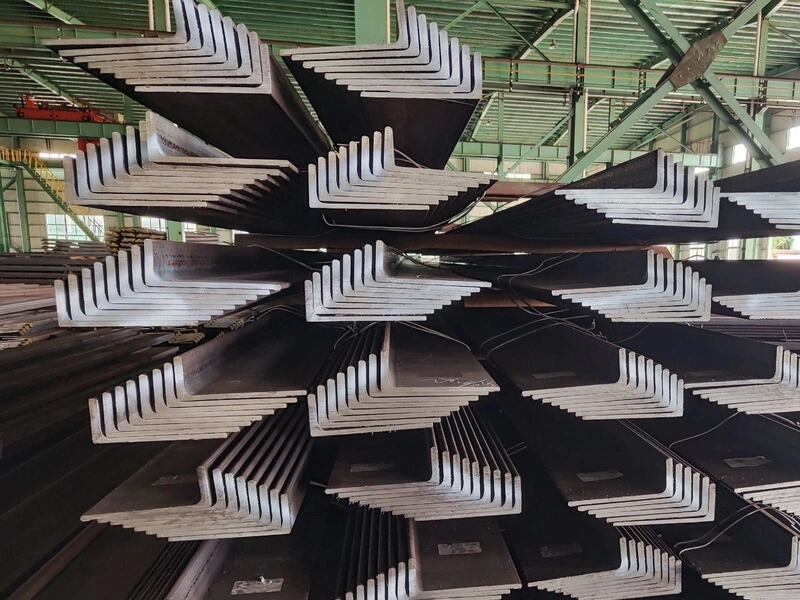
Why packaging is more important than you think
I learned this lesson with a customer in the Philippines. We sent a container of L-shaped steel. The packaging looked fine at the mill. But during the sea voyage, the ship hit rough weather. The bundles shifted. The steel straps broke. The steel pieces rubbed against each other. The surface got scratched and rusted.
The customer rejected the whole container. Now I use stronger packaging. Let me show you what we do.
Each bundle has no more than 2 tons. We use four steel straps. Not two. We put plastic or rubber pads between the steel layers. We put edge protectors on the corners. Then we wrap the bundle with waterproof cloth. Finally we put a plywood sheet on top and bottom. This protects against forklift damage.
Marking must be clear and permanent
Shipyards have a simple rule: if you cannot read the mark, you cannot use the steel. We stamp the heat number and grade on the web of the L-shaped steel. The stamp is 8mm high. We also paint the grade in yellow on the leg. And we attach a plastic tag with a barcode.
For example, a piece might show: “AH36 – 150x90x10 – Heat# 220815 – Zora 01.” That tells the shipyard everything.
Documentation checklist for export
| Document | What it must show | Common mistake |
|---|---|---|
| Packing list | Bundle numbers, piece count, length per piece, total weight | Missing bundle numbers |
| Commercial invoice | HS code (7216.31 for L-shaped steel), unit price, total value | Wrong HS code |
| Mill certificate | Heat number, grade, test results, stamp | Missing third-party stamp |
| Bill of lading | Shipped on board date, port of loading, port of discharge | Wrong consignee name |
| Inspection report (if SGS) | Same heat numbers as mill certificate | Different heat numbers |
How do we make sure nothing is missed?
We use a simple checklist for each export order. My warehouse manager signs off on each item. Then I do a random check. I pick two bundles from the order. I count the pieces. I check the stamps. I take photos. I send these photos to the customer before loading.
This process takes one extra hour. But it prevents so many problems. My customer in Saudi Arabia told me that our packaging was the best they had ever seen. That is not luck. That is the system.
One more tip: take loading photos4
I take photos of every bundle inside the container. I also take a photo of the container door with the seal number. Then I send these to the customer. They know exactly what is coming. If the seal is broken at arrival, they have proof. This saved me twice when containers were opened at transshipment ports.
Conclusion
Check the raw steel, watch the rolling, test the finished pieces, and verify the packaging. That is the complete quality control flow.
-
Understanding heat numbers and grades is crucial for ensuring quality and traceability in steel exports. ↩ ↩ ↩
-
A comprehensive packing list is essential to avoid common mistakes and ensure smooth customs clearance. ↩ ↩ ↩
-
A mill certificate verifies the quality and specifications of steel, making it vital for compliance and customer trust. ↩ ↩ ↩
-
Loading photos serve as proof of condition and compliance, protecting against disputes during transit. ↩ ↩ ↩ ↩