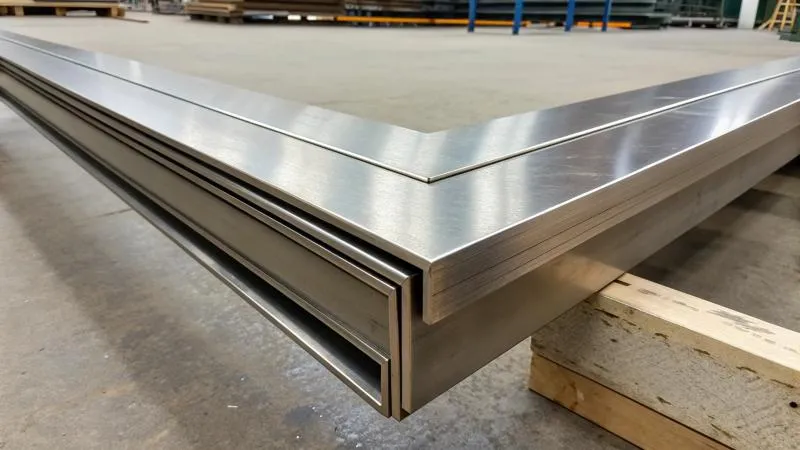
Modular shipbuilding is getting popular fast. But picking the wrong L-shaped steel can ruin your whole module fit-up.
Marine L-shaped steel for modular construction needs standard sizes, tight tolerances, good weldability, and strong corrosion protection. The right selection cuts fabrication time and saves money.
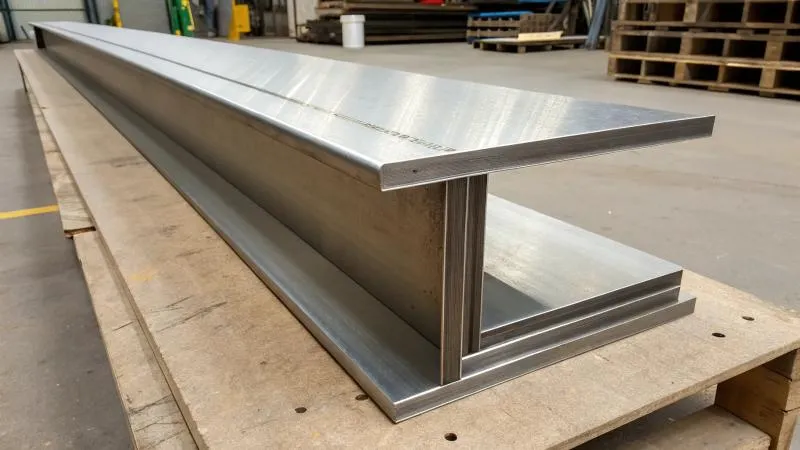
You might think all L-shaped steel is the same. That is not true. I have shipped thousands of tons of L-sections from Liaocheng to shipyards in Vietnam, Saudi Arabia, and Malaysia. The yards that use modular construction have very specific needs. Let me walk you through what I have learned from real orders and real problems.
Why Does Standardizing L‑Section Sizes and Grades Streamline Module Fabrication and Repeatability?
Shipyards build modules in separate workshops. Then they join them in the dry dock. So what happens if the L-sections do not match?
Standardizing sizes and grades means every module fits together without rework. Repeat orders become faster and cheaper. Yards can stock common L-sections and reduce waiting time.
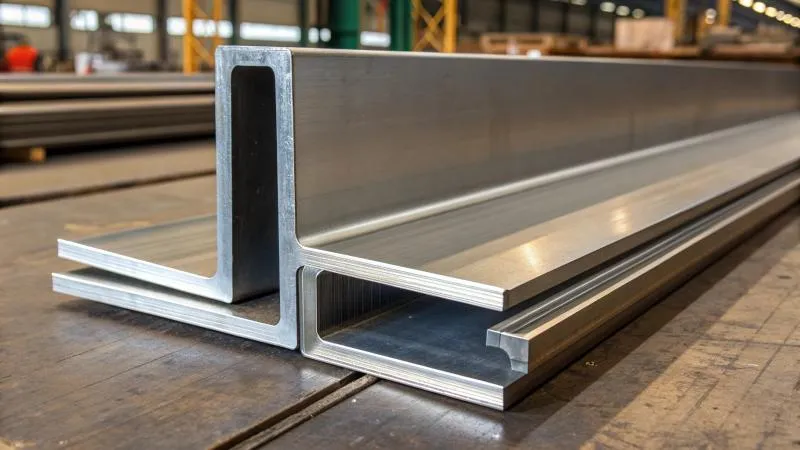
The chaos of non-standard orders
Early in my export career, I sent a shipment of L-shaped steel to a buyer in Mexico. He ordered five different sizes for one project. The sizes were not common ones. They were odd: 63x40mm, 80x50mm, and so on. The mill produced them. But when the yard tried to assemble the modules, the holes did not line up. The problem was not the steel quality. The problem was that different module teams used slightly different reference points. Standard sizes would have made the error obvious. Odd sizes hid the problem.
That buyer never ordered from me again. I learned a hard lesson. Now I always ask buyers: can you use standard sizes like 75x75mm or 100x75mm? Most of the time, they can.
Which sizes and grades work best for modular building?
From my shipping records, these L-section sizes appear most often in modular ship orders:
| Size (mm) | Most Common Grade | Typical Module Type |
|---|---|---|
| 75x75x8 | AH36 | Bilge keels, bottom modules |
| 100x75x10 | AH36 | Side shell modules |
| 120x80x8 | AH36 | Deck modules |
| 150x90x10 | DH36 | Heavy structural modules |
Grades also matter. AH36 is the most popular for modular construction. Why? It gives high strength without the higher cost of DH36. I have also seen some yards use A36 for non-critical modules like superstructures. But for hull modules, AH36 is the safe choice.
Repeatability saves real money
Let me give you a simple example. A customer in Vietnam builds bulk carriers using modular methods. He orders 200 tons of L-section every three months. He always asks for the same four sizes and AH36 grade. Because of this, I can keep those sizes in my local warehouse. His delivery time drops from 4 weeks to 7 days. His price per ton is 5% lower because I do not need to rush the mill. He saves about $50 per ton. On 200 tons, that is $10,000 per order. Over a year, that is $40,000 saved just by standardizing.
My advice for buyers
Pick three to five L-section sizes that cover 80% of your module needs. Stick to AH36 or AH36. Tell your supplier to keep those sizes in stock. You will get faster delivery and better prices. And your fabrication teams will thank you because every module fits the next one.
How to Select L‑Shaped Steel with Tight Tolerances and Straightness for Precise Module Fit‑Up?
One crooked L-bar can stop a whole module line. So how do you check straightness and tolerances before you buy?
Look for EN 10056-2 tolerances. Ask for straightness of 2mm per meter or better. Use third-party inspection to verify before shipment. Tight tolerances mean modules connect without grinding or rework.
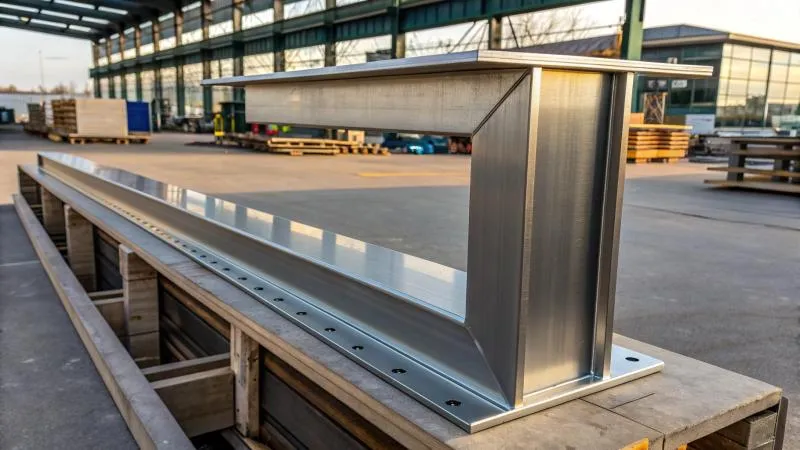
What tolerances actually mean for your workshop
Many buyers only look at price and grade. They forget about straightness. I made this mistake once for a buyer in the Philippines. He ordered 80 tons of L-shaped steel for a module project. The mill said they followed "standard tolerances." But when the steel arrived, the legs were not square. Some bars had a bow of 8mm over 6 meters. The yard spent three days straightening and trimming. That cost more than the steel itself.
Now I always ask the mill for a tolerance report. For modular construction, you need these numbers:
| Property | Standard Tolerance | Recommended for Modules |
|---|---|---|
| Leg length | ±2mm | ±1.5mm |
| Leg thickness | ±0.5mm | ±0.3mm |
| Straightness | 4mm per meter | 2mm per meter |
| Squareness (90°) | ±2° | ±1° |
How to get tight tolerances without paying too much
Tight tolerances cost more. But not as much as you think. My mill charges about 8% extra for "precision rolling" that meets the tighter numbers. For a 100-ton order, that is maybe $500 extra. Compare that to workshop rework costs of $50 per hour for ten workers. The math is clear.
I also recommend using a third-party inspector like SGS. Before shipment, the inspector checks straightness on random samples. They use a straightedge and feeler gauges. They also check the angle between legs with a protractor. I pay for this service for every modular project order. Then I send the report to the buyer. This builds trust. My customer in Saudi Arabia, Gulf Metal Solutions, started using this service after their first order. Now they ask for it every time.
A real straightness story
Last year, a buyer from Thailand ordered 150 tons of L75x75x8 in AH36. He was building modules for a new container ship. He told me a horror story about his previous supplier. The steel arrived with a curve of 12mm per meter. His team had to use hydraulic presses to straighten each bar. It took two weeks.
I promised him straightness below 2mm per meter. I asked the mill to use their precision line. Then I sent videos of the straightness check. The buyer approved the shipment. When the steel arrived, his team measured it. The worst bar was 1.8mm per meter. He sent me a photo of his worker smiling. That customer now orders from me every quarter.
Quick checklist for buyers
- Ask your supplier for EN 10056-2 tolerance class "normal" or "special." Special is better for modules.
- Request straightness data for each heat number.
- Hire an independent inspector if the order is over 50 tons.
- Reject any bar with straightness over 3mm per meter.
What Weldability and Connection Details Make L‑Sections Ideal for Joining Prefabricated Modules?
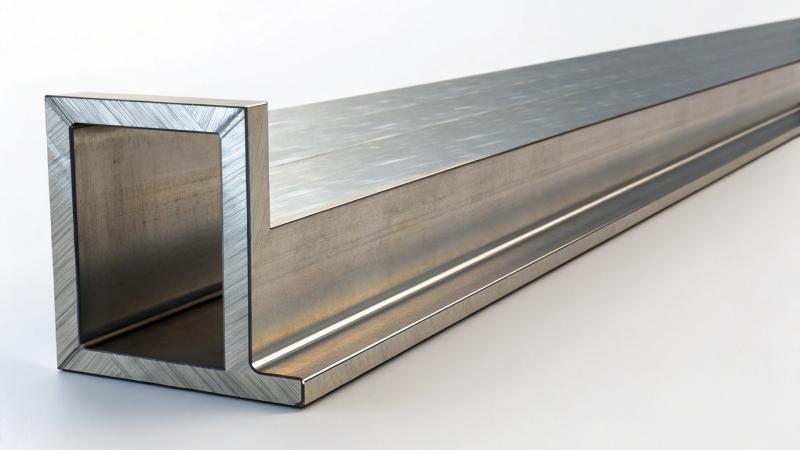
Modules come together with welds. Bad weldability means cracks and delays. So what makes L-shaped steel easy to weld?
L-shaped steel with low carbon equivalent (CEV) welds easily. AH36 and A36 have CEV under 0.40%. This means no preheating for most plates. Simple butt and fillet welds join modules fast.
The chemistry behind good welds
Not all steel welds the same. The carbon equivalent value tells you how crack-sensitive the steel is. Low CEV means less risk. For modular construction, you want CEV below 0.40%. Here is what I see from my mill’s test reports:
| Grade | Carbon Equivalent (CEV) | Preheating Needed? | Best For |
|---|---|---|---|
| A36 | 0.25-0.32% | No (above 5°C) | Non-structural modules |
| AH36 | 0.32-0.38% | No (above 0°C) | Hull modules |
| DH36 | 0.36-0.42% | Sometimes below 10°C | High-stress connections |
| EH36 | 0.38-0.44% | Often below 15°C | Arctic or deep sea |
I always recommend AH36 for most modular work. It welds easily. It does not need preheating in normal workshop conditions. That saves time and gas.
Common connection details for modules
L-shaped steel connects modules in three simple ways:
-
Butt welds: You join two L-bars end to end. This is common for longer stringers. Use a full penetration weld. Backing bars help.
-
Fillet welds: You weld the leg of one L-bar to the face of another. This makes T-joints and corner joints. It is the most common connection in module assembly.
-
Gusset plates: You weld a flat plate between L-bars. This spreads the load. It is useful for heavy connections.
I learned about these details from a customer in Pakistan. He was building a barge using modules. His team used fillet welds everywhere. But one module kept cracking. I asked him to send photos. The problem was not the steel. The problem was the weld leg size was too small. He increased the fillet size from 6mm to 8mm. The cracking stopped.
A practical welding tip
Before you weld L-shaped steel, check the mill certificate for the CEV value. Also check the thickness. Thicker bars need more heat input. For L-sections over 12mm thick, use low-hydrogen electrodes. I suggest E7018 for AH36. For A36, E6013 works fine.
Many modular shipyards now use robotic welding. Robots need consistent fit-up. That is where tight tolerances help again. If the L-bar is straight and the legs are square, the robot can weld fast. If not, the robot stops and needs reprogramming.
What buyers should ask suppliers
Ask your L-section supplier for these three things:
- A mill certificate showing CEV value
- A recommendation for welding parameters (heat input, electrode type)
- A test weld report if you are ordering a new grade
I provide these to all my modular project buyers. It takes me 10 minutes to ask the mill. It saves the buyer hours of testing.
How Does Modular Construction Influence the Choice of Coating and Corrosion Protection for L‑Sections?
Modules are built indoors but used at sea. The coating must survive handling, welding, and then salt water. So what works best?
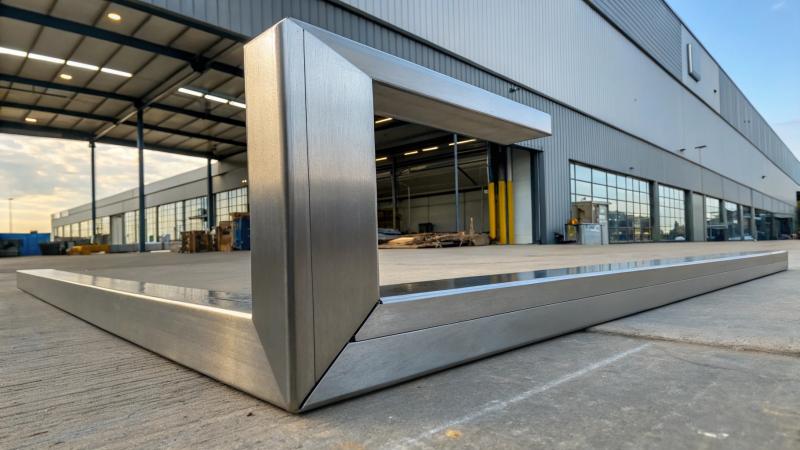
Modular construction needs shop primer that survives welding. Epoxy zinc-rich primer is the standard. For final coating, choose high-build epoxy or polyurethane. Avoid alkyd paints because they burn during module welding.
The problem with coating in modular building
In normal shipbuilding, you build the whole hull first, then you coat it. In modular construction, you coat each module before assembly. This creates a challenge. When you weld modules together, the heat burns the coating near the weld. That burned area then rusts. You need a coating system that can handle this.
I saw this problem with a buyer in Romania. He ordered L-shaped steel with a standard alkyd primer. The modules looked good before welding. But after welding, the primer turned to ash for 50mm around each weld. His team had to grind off the ash and re-apply primer. That added two days to each module join. He switched to zinc-rich epoxy on my advice. The next order had no ash problem.
Coating systems for modular L-sections
Based on what my buyers use, here are the three most common coating systems:
| Coating Type | Survives Welding? | Best For | Cost Index |
|---|---|---|---|
| Zinc-rich epoxy primer (70-80% zinc) | Yes (less than 15mm burnback) | All hull modules | 100 |
| High-build epoxy (2 coats) | No (needs touch-up) | Modules welded at edges only | 120 |
| Inorganic zinc silicate | Yes (excellent) | High-performance vessels | 150 |
For most modular projects, I recommend the zinc-rich epoxy primer as a shop coat. It survives welding because the zinc particles create a barrier. The burnback zone is only 5-10mm. Your welder can touch that up in minutes.
Coating thickness and inspection
I learned to be very specific about coating thickness. A buyer in Mexico rejected a shipment because the primer was too thin. He measured 30 microns instead of 40. His specification said "minimum 40 microns." I had to take the steel back and recoat it.
Now I always confirm these numbers before production:
- Minimum dry film thickness: 40 microns for shop primer
- Maximum dry film thickness: 80 microns (thicker coating can crack during rolling)
- Inspection method: Magnetic gauge on both legs, three points per meter
I also suggest asking for a coating certificate. The mill should provide a report showing the batch number, thickness readings, and adhesion test results.
A final thought on touch-up
Even with good primer, you will need touch-up after welding. Keep the same coating material in small cans. Train your welders to clean the weld area first. Remove all ash and rust. Then apply the touch-up coating with a brush. Do not spray it. Spraying wastes material and creates overspray on nearby surfaces.
My customer in Vietnam does this very well. He buys extra 5-liter cans of the same primer with every steel order. His touch-up team can recoat a weld in 60 seconds. That is efficiency.
Conclusion
Pick standard L-section sizes and AH36 grade. Demand tight straightness tolerances. Confirm low CEV for easy welding. Use zinc-rich epoxy primer.