An offshore platform faces waves, wind, and salt every day. The steel must be strong and last for decades.
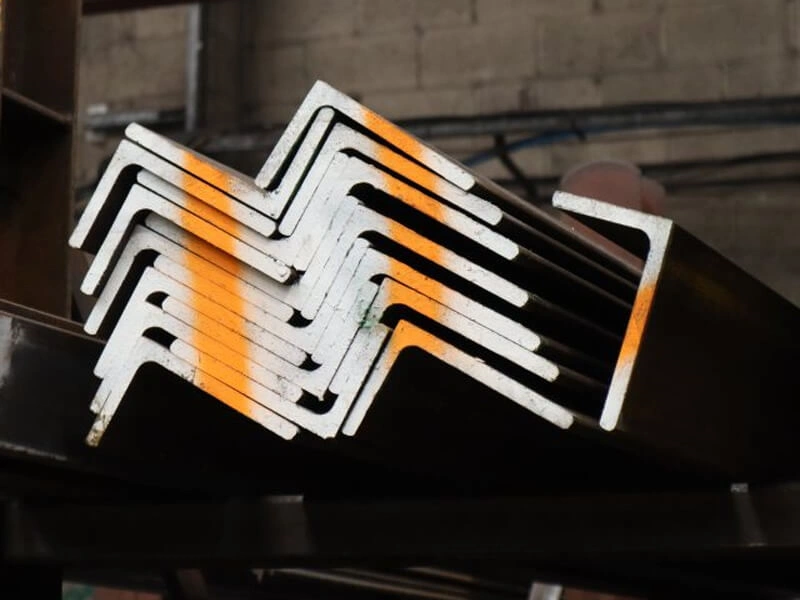
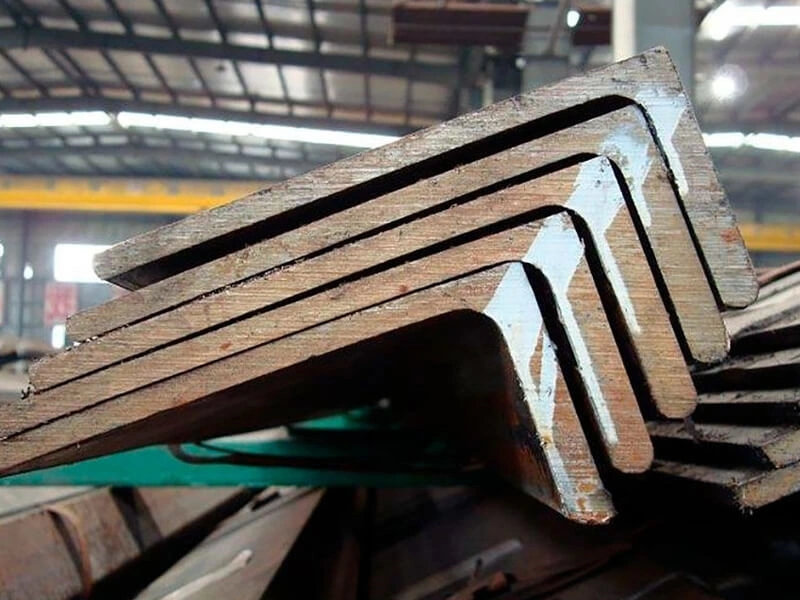
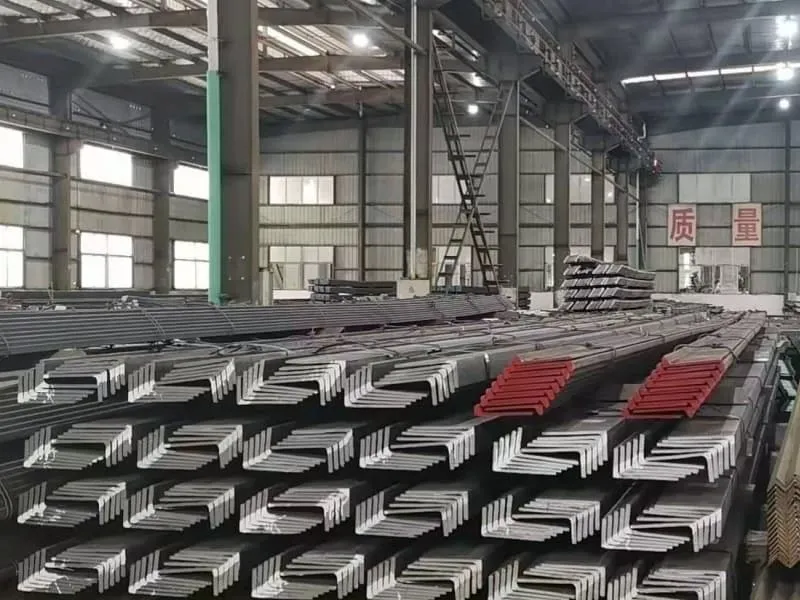
Marine L‑shaped steel (angle bar) is widely used in offshore platforms for jacket bracing, deck framing, helideck support, and secondary stiffening. Its 90‑degree shape provides excellent bending strength in two directions, and it is easy to weld into complex nodes.
I am Zora Guo from cnmarinesteel.com. I supply marine L sections to offshore fabricators in the Middle East and Southeast Asia. Offshore platforms are different from ships — they sit in one place for 20‑30 years. The steel must handle fatigue, corrosion, and extreme weather. Let me explain where and how L sections are used.
What Critical Roles Do L‑Sections Play in Offshore Platform Jackets, Decks, and Helidecks?
You see an offshore platform. The big legs are made of pipe. But the connections and smaller members are often L sections. They do the detailed work.
L‑sections play three critical roles in offshore platforms. First, in the jacket (the underwater support structure), L sections are used as diagonal bracing between main legs. Second, on the deck, L sections stiffen the plates and support equipment. Third, for helidecks, L sections form the beam framework under the landing area. These applications take advantage of the L section’s high strength‑to‑weight ratio and easy weldability.
Let me describe each role in detail.
Role 1: Jacket Bracing (Subsea Structure)
The jacket is the steel lattice that sits on the seabed and supports the platform deck. Main legs are large pipes. Between them, diagonal braces resist wave forces and keep the structure stiff. Many of these braces are L sections, especially for smaller jackets and for secondary bracing.
Why L sections for bracing?
- The 90‑degree shape gives good bending strength in two directions.
- L sections are lighter than pipes for the same strength (open shape, no wasted metal).
- They are easy to cut and weld at the nodes where braces meet the main legs.
Typical sizes: L150x90x12 to L250x100x16, often in higher grades like DH36 or even S355ML for cold‑water jackets (e.g., North Sea).
Role 2: Deck Framing and Stiffening
The platform deck is a large flat area. It holds equipment, living quarters, and drilling machinery. The deck plates (15‑25mm thick) need stiffeners underneath to prevent buckling. L sections are the most common stiffener.
Where you find L sections on the deck:
- Under the main deck plate — L sections welded every 600‑800mm.
- Under heavy equipment — multiple L sections placed close together.
- At the edges of the deck — as perimeter beams.
Why L sections work well: The horizontal leg welds flat to the deck plate, giving a large weld area. The vertical leg provides bending stiffness. This is the same as ship deck beams.
Role 3: Helideck Support
A helideck must be very strong and stiff. Helicopters weigh several tons and land with impact. The structure under the helideck is often a grid of L‑shaped steel beams.
Typical design: A grid of primary beams (larger L sections or built‑up beams) and secondary beams (smaller L sections) spaced 1‑1.5 meters apart. The helideck plate (12‑18mm) is welded to the top of the beams.
Splash zone requirement: Helidecks are often at the top of the platform, far from sea spray. But in some designs, lower helidecks (on small platforms) can be wetted by waves. Then the L sections need extra corrosion protection (more on that later).
A Real Example from a Gas Platform in Qatar
A client in Qatar (similar to Gulf Metal Solutions) built a small unmanned gas platform. The jacket used 300 tons of L sections for diagonal bracing — sizes L150x90x12 and L200x100x14 in DH36 grade. The fabricator told me: “Pipes would have been heavier and harder to fit at the nodes. L sections were faster to cut, faster to weld, and cheaper per ton.”
How Do L‑Shaped Steel Members Compare with Other Profiles for Bracing and Secondary Framing?
You have choices for platform steel: pipes, L sections, flat bars, or bulb flats. Each has pros and cons for offshore use.
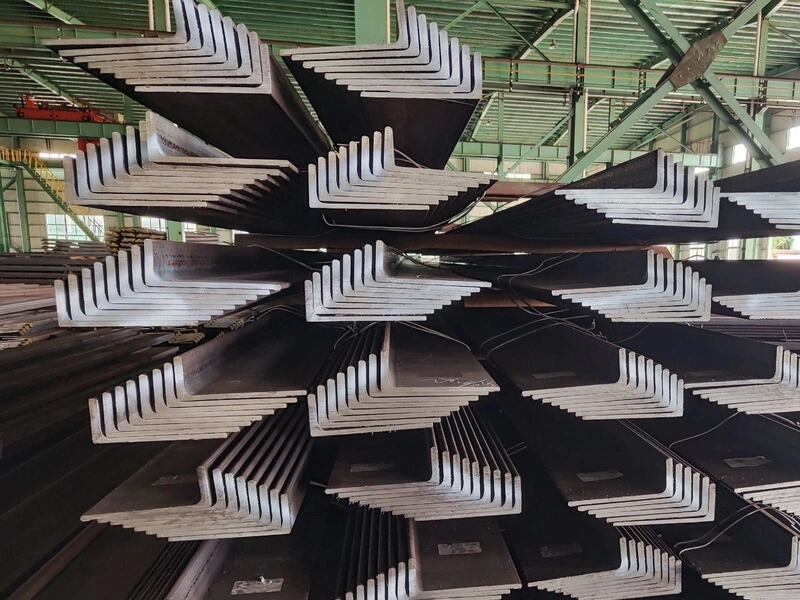
For bracing and secondary framing on offshore platforms, L sections sit between pipes (very strong but expensive and heavy) and flat bars (weak but cheap). L sections offer a good balance — they are much stronger than flat bars for the same weight, and much cheaper than pipes. For non‑critical braces, L sections are the most cost‑effective choice. Bulb flats are rarely used in jacket bracing because they do not resist bending from all directions.
Let me compare the main profiles.
Pipe vs L Section
Pipes are very strong in all directions. They are the best for main legs. But pipes cost more per ton than L sections. Welding pipes to each other is also harder — you need beveled ends and full penetration welds.
| Profile | Strength‑to‑weight | Cost per ton | Welding complexity | Best use |
|---|---|---|---|---|
| Pipe (main leg) | Excellent | High | High | Main legs, primary braces |
| L section (angle) | Good | Moderate (20‑30% less than pipe) | Low to medium | Secondary braces, deck beams |
| Flat bar | Poor | Low | Low | Light stiffening only |
Flat Bar vs L Section
Flat bars are cheap and simple. But they are weak in bending. For the same weight, an L section is 2‑3 times stiffer. For offshore platforms, flat bars are only used for very light duties like grating supports or handrails. For any real bracing, L sections are much better.
Bulb Flat – Rarely Used Offshore
Bulb flats are optimized for one‑way bending (like ship longitudinals). Offshore platforms have loads from waves, wind, and equipment in many directions. So bulb flats are not a good fit. I have rarely seen them in jacket bracing. L sections are the better choice.
Summary for Offshore Use
| Application | Recommended profile | Why |
|---|---|---|
| Main jacket legs | Pipe | Highest strength in all directions |
| Primary diagonal braces | Pipe or large L section | Pipe for heavy loads, L section for lighter |
| Secondary braces | L section | Good strength, low cost, easy welding |
| Deck stiffeners | L section | Standard practice |
| Helideck beams | L section (or built‑up L) | Good stiffness |
| Handrails and light supports | Flat bar or small L | Cheap and simple |
What Grade and Corrosion Protection Specifications Are Required for L‑Sections in Splash Zone and Subsea Areas?
Offshore is corrosive. The splash zone (where waves hit) is the worst. Subsea (always underwater) is also bad but easier to protect. You cannot use ordinary A grade steel there.
**For L‑sections in the splash zone, class rules (DNV, ABS) require DH36 or EH36 grade with enhanced toughness (Charpy impact at -20°C or -40°C). For subsea areas, DH36 is typical. Corrosion protection requires heavy coatings (epoxy or polyurethane) plus sacrificial anodes (zinc). Thickness also gets an extra corrosion allowance of 3‑6mm beyond strength requirements. For non‑wetted areas (above
Let me break down the requirements by zone.
Three Offshore Zones
- Splash zone – The area between high tide and low tide, plus a few meters up where waves hit. This is the most corrosive. It gets wet, then dries, then wet again. Oxygen and salt accelerate rust.
- Subsea – Always underwater. Corrosion is slower than splash zone, but still high. Marine growth (barnacles) also attaches.
- Atmospheric – Above the wave height, like the deck. Corrosion is lower, but salt spray still affects.
Grade Requirements by Zone
| Zone | Minimum grade | Charpy temperature | Typical thickness |
|---|---|---|---|
| Splash zone (below deck) | DH36 or EH36 | Charpy impact at -20°C (DH36) or -40°C (EH36) | Add 3‑6mm corrosion allowance |
| Subsea (below water) | DH36 | Charpy impact at -20°C | Add 3‑4mm |
| Atmospheric (deck, helideck) | AH32 or AH36 | Charpy impact at 0°C (AH32/36) | Standard + 2mm |
Corrosion Protection Systems
For splash zone L sections (most critical):
- Heavy coating – Epoxy or polyurethane, total thickness 300‑500 microns. Apply at the fabrication shop.
- Sacrificial anodes – Zinc or aluminum blocks welded to the L section. They corrode instead of the steel. Anode design based on surface area and expected life (typically 20‑25 years).
- Corrosion allowance – Extra thickness built into the steel (e.g., design requires 12mm strength, specify 15mm). This is a backup if coating fails.
For subsea L sections:
- Same as splash zone, but coating thickness can be lower (200‑300 microns) because anodes do most of the work.
For atmospheric (above deck):
- Standard marine coating (epoxy primer + top coat, 150‑200 microns).
- No anodes needed.
Real Example from a Saudi Arabia Gas Platform
A client built a platform in the Arabian Gulf. The splash zone L sections (L200x100x16) were specified as DH36 with 4mm corrosion allowance (so actual thickness 20mm). They were coated with 400 micron epoxy and fitted with zinc anodes. The platform has been in service for 8 years. Inspection showed no significant rust. The coating had minor damage, but the anodes and extra thickness kept the steel safe.
What Connection Details and Welding Access Considerations Apply When Using L‑Sections in Complex Platform Nodes?
Offshore platform joints (called nodes) are more complex than ship frames. Several braces meet at one point. L sections are often used for the smaller braces. You need good access for welding.
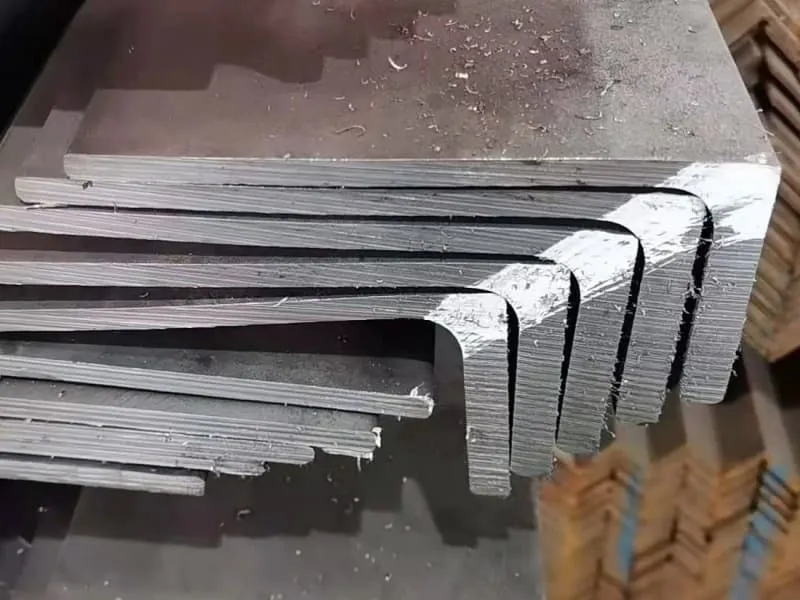
At complex platform nodes, L sections are typically welded to a tubular (pipe) or to another L section. The key is to provide weld access — enough space for the welder to reach the inside corner. Use sniped ends (notches) on the free leg of the L section. For connections to pipes, cut the L section leg to fit the pipe curvature (profile cutting). Always specify a minimum clearance of 40‑50mm for the welding torch. These details prevent incomplete welds and improve fatigue life.
Let me walk you through the most common connection details.
Connection 1: L‑Section to Pipe (Tubular)
This is very common for jacket bracing. The L section brace is welded to a large pipe (main leg).
How to prepare the L section:
- Cut the end of the L section to match the pipe’s curvature. This is called a profile cut or cope. Use a CNC pipe cutting machine or a template.
- Snipe the free leg (cut back 40‑60mm) to allow welding access to the back of the leg.
- Bevel the edge of the leg that touches the pipe for full penetration weld.
Weld access: The snipe gives room for the welding torch to reach the inside corner. Without it, the free leg blocks access.
Connection 2: L‑Section to L‑Section (Cross or K‑Joint)
Two L sections meeting at an angle. This is common for deck framing.
How to prepare:
- Cut one L section to fit around the other (fish mouth cut).
- Snip the free leg of the secondary L section to allow access.
- Weld both sides where possible.
Tip: For high‑fatigue joints (e.g., at the bottom of the jacket), add a triangular gusset plate between the two L sections. This distributes the load and reduces stress.
Connection 3: L‑Section to Deck Plate (Stiffener)
The L section is welded flat to the underside of the deck plate.
How to prepare:
- No complex cut needed. Just cut the L section to length.
- Snipe the free leg at both ends (where the stiffener ends at a beam or bulkhead).
- Weld the full length of the leg that contacts the deck. Use a continuous fillet weld.
Weld access: The snipe at the end allows the welder to start and stop the weld properly.
Table of Connection Details
| Connection type | L section preparation | Minimum clearance for torch | Fatigue critical? |
|---|---|---|---|
| L to pipe (brace) | Profile cut + snipe | 50mm | Yes |
| L to L (cross) | Fish mouth cut + snipe | 50mm | Yes (if load varies) |
| L to deck plate | Snipe at ends only | Not applicable (open) | No (secondary) |
A Real Example from a Jacket Fabrication in Vietnam
A fabricator built a jacket with L150x90x12 diagonal braces. The welders complained that they could not reach the back side of the leg where it met the main pipe. The design had no snipe. We added a 50mm snipe to the free leg of each L section. The welder’s torch fit easily. The welds were done in half the time, and inspection passed with no defects.
Pre‑Fabrication Review
Before you start cutting steel, do a mock‑up of a complex node. Make a small sample or use a 3D model. Check that the welder can reach every weld joint. Adjust the snipe length or bevel angle as needed. This small step saves hours of rework later.
Conclusion
L‑sections are essential for jacket bracing, deck stiffening, and helideck support on offshore platforms. They offer a good balance of strength, weldability, and cost. Use higher grades (DH36) with extra corrosion protection in the splash zone. Always design for weld access with sniped ends.