
You’re specifying steel for a new vessel. The hull, deck, and internal structures each face unique stresses and environments. Using one grade for everything is inefficient and risky. I’ve worked with designers to optimize material selection, balancing strength, toughness, and cost across the entire ship.
Marine steel grades are selected based on application: hulls use high-strength grades like ABS AH36 for weight savings and DH36 for impact zones; decks use AH36 for cargo support; internal structures may use ordinary grades like A or B for cost efficiency. For corrosion resistance in fittings, stainless 316 is superior to 304 in saltwater. Proper grade selection ensures safety, durability, and optimal project economics.
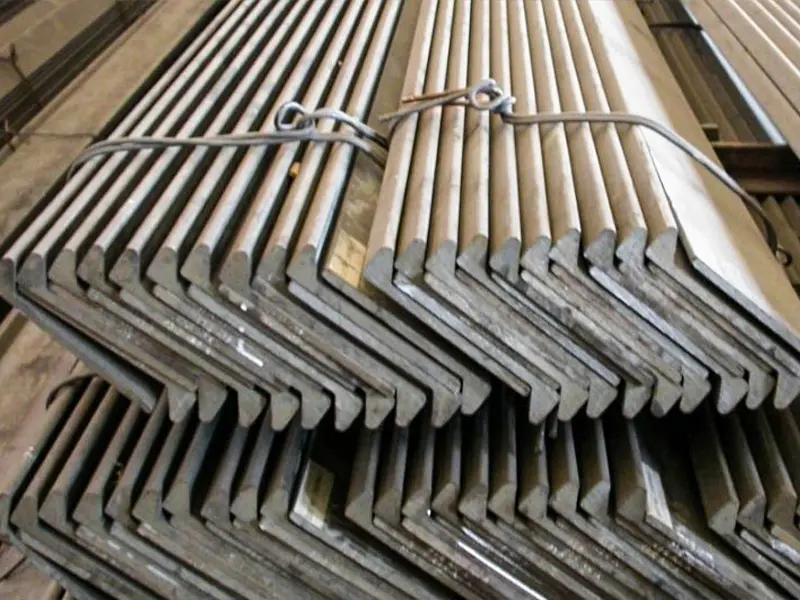
For naval architects, shipyards, and steel buyers, this application-specific knowledge is crucial. It turns a generic material order into a precise engineering specification. Let’s examine the key grades for each major part of a ship, starting with the most critical: the hull.
What grade of steel is used in ship hulls?
The hull is the ship’s backbone, constantly battling water pressure, wave impact, and corrosion. The steel here must be exceptionally reliable. I recall a project where specifying the wrong hull grade led to costly redesigns before construction even began.
Ship hulls primarily use marine-grade carbon steel1 certified by classification societies like ABS or DNV. Common grades include ABS Grades A, B, D, E2 for ordinary strength, and high-strength grades like AH32, AH36, DH36, EH36. The specific grade is chosen based on the hull’s location: high-strength steel3 (AH36) in midship areas for weight savings, and high-toughness steel4 (DH36/EH36) in the bow for impact resistance. This zoned approach optimizes performance and cost.
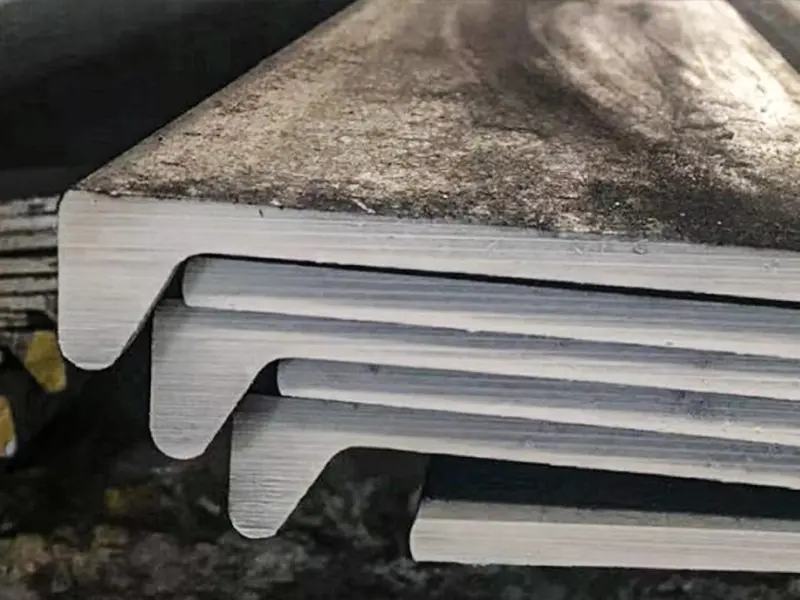
A Zoned Approach to Hull Steel Selection
The hull is not uniform. It is divided into zones based on stress, risk, and temperature exposure. The steel grade changes accordingly.
1. The Midship Region (Engine Room to Cargo Holds):
This area experiences the highest global bending stresses as the ship rides waves.
- Primary Need: High strength to resist bending, good fatigue life.
- Typical Grade: High-strength steel, such as ABS AH36 or DNV NV A36. The 355 MPa yield strength allows for thinner plates, reducing hull weight and increasing cargo capacity. This is a standard choice for modern vessels.
2. The Forward Region (Bow Area):
This is the most punishing environment. It takes the direct force of waves and is more exposed to cold water.
- Primary Need: Exceptional notch toughness to resist brittle fracture from impact (wave slamming) and low temperatures.
- Typical Grade: High-toughness, high-strength steel3, such as ABS DH36, EH36 or DNV NV D36, NV E36. The ‘D’ and ‘E’ designations guarantee impact resistance at -20°C and -40°C respectively.
3. The Bottom Shell and Keel:
Subject to water pressure and potential grounding.
- Primary Need: High strength and thickness. Often uses the same grade as the midship but in thicker plates.
- Typical Grade: AH36 or DH36 in increased thicknesses.
4. The Side Shell (Above Waterline):
Less critical for global bending but exposed to corrosion and local loads.
- Typical Grade: Often Grade B or AH32, transitioning to higher grades near the bow.
Hull Zone Grade Selection Table:
| Hull Zone | Stress & Environmental Challenge | Recommended ABS Grade | Key Property Provided |
|---|---|---|---|
| Midship Bottom & Side Shell | High global bending, fatigue. | AH36 | High Strength (355 MPa) for weight reduction. |
| Forward Bottom & Bow | Wave impact, low temperatures. | DH36 or EH36 | High Toughness at -20°C / -40°C to prevent brittle fracture. |
| Sheer Strake (Top of Side) | High stress concentration. | Grade D or DH36 | Enhanced toughness for this critical junction. |
| Aft Shell (Near Stern) | Moderate stress, vibration. | Grade B or AH32 | Good balance of strength and cost. |
For a supplier, providing hull steel means offering this full spectrum of grades and ensuring the Mill Test Certificates (MTCs)5 validate the required properties for each zone, especially the Charpy impact values6 for D/E grades. While the hull is carbon steel, other parts of the ship require materials chosen for pure corrosion resistance, which brings us to a common comparison.
Is 304 or 316 better for saltwater?
This is one of the most frequent questions in marine material selection. The answer has significant implications for maintenance and longevity. A shipowner in the Gulf chose 304 for deck fittings to save cost, but within two years, they were replacing pitted and rusting components.
For saltwater exposure, 316 stainless steel is definitively better than 304. The key difference is molybdenum (2-3%), which 316 contains and 304 does not. Molybdenum dramatically increases resistance to pitting and crevice corrosion caused by chloride ions in saltwater. For any marine component exposed to splash, spray, or immersion, 316 is the standard and reliable choice. 304 may be acceptable only for interior or fully sheltered applications.
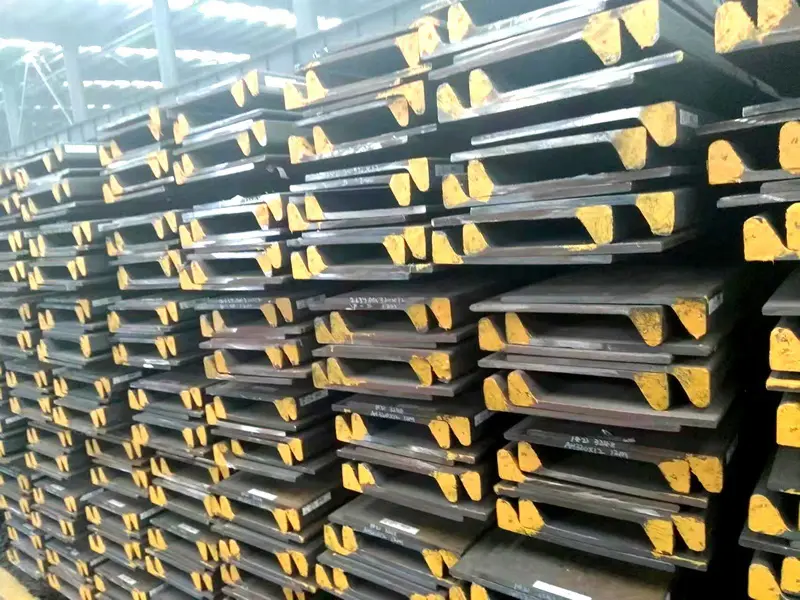
The Critical Role of Molybdenum in Marine Environments
Both 304 and 316 are austenitic stainless steels, but the addition of molybdenum in 316 changes its performance in chloride-rich environments.
The Corrosion Mechanism in Saltwater:
Saltwater contains chloride ions. These ions can attack and locally break down the protective chromium oxide layer on stainless steel, leading to:
- Pitting Corrosion: Small, deep holes that penetrate the metal.
- Crevice Corrosion: Occurs in shielded areas (under gaskets, bolts) where oxygen is limited.
Molybdenum strengthens the passive layer, making it much more resistant to this chloride attack.
Practical Application Guidelines:
Where 316 is Non-Negotiable (High Chloride Exposure):
- Deck Hardware: Cleats, chocks, railings, stanchions, ladders.
- Marine Fasteners: Bolts, screws, nuts in exposed locations.
- Piping and Fittings: For systems handling seawater or exposed to salt spray.
- Splash Zones: Any component constantly wetted by saltwater.
- Offshore Structures: Handrails, platform gratings, cable trays.
Where 304 Might Be Considered (Lower Risk):
- Interior Cabinetry and Trim: Inside the superstructure, away from salt spray.
- Galley Equipment (Interior surfaces): Where frequent cleaning occurs and exposure is minimal.
- Decorative Elements in Sheltered Areas.
Consequences of Choosing 304 in a 316 Environment:
You will likely observe rust stains, visible pitting, and eventually, loss of material thickness and strength. This leads to premature failure, safety concerns (e.g., with railings), and higher lifetime costs due to replacement.
Recommendation for Specifiers:
For marine engineering projects, make 316 (or 316L for welded components to prevent carbide precipitation) your default specification for all exterior stainless steel. The marginal increase in material cost is insignificant compared to the lifecycle cost of maintenance, repair, or failure. This stainless steel is a specific type of "structural" material, but the term "structural steel" more commonly refers to carbon steel for frameworks.
What grade of steel is used for structural steel?
In general construction, "structural steel" refers to the carbon steel used for the frames of buildings, bridges, and industrial plants. It’s different from marine structural steel, though they share some similarities. A fabricator building both land-based plants and ship modules needs to understand this distinction.
For land-based construction, common structural steel grades include ASTM A36 (USA), S235JR, S355JR (Europe), and SM400 (Japan). These are carbon steels with yield strengths typically ranging from 235 MPa to 355 MPa. They are selected for strength, weldability, and cost, but they do not have the mandatory low-temperature toughness testing required for marine grades. They are not suitable for primary ship hulls without additional certification.
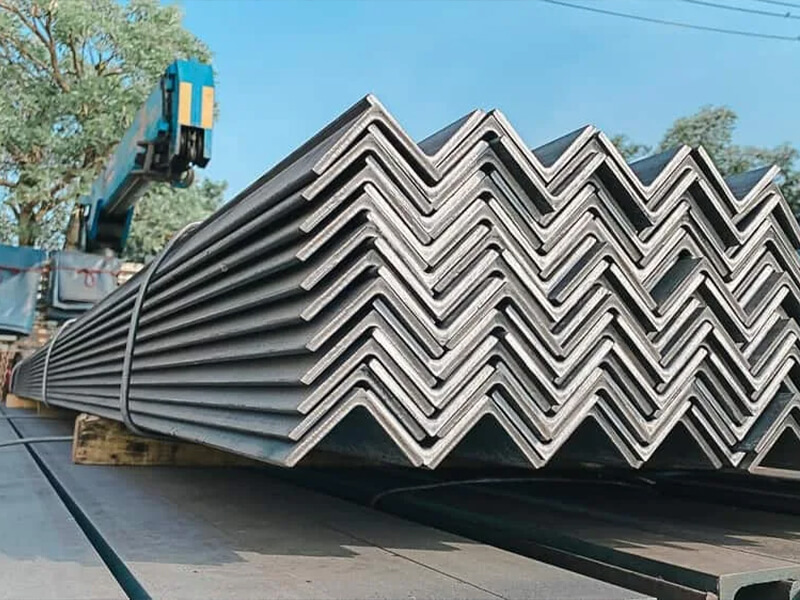
Comparing Land-Based Structural Steel to Marine Steel
While an A36 beam and an AH36 ship plate may have similar yield strengths, their suitability for marine service is worlds apart.
Key Differences:
-
Toughness Certification:
- Marine Steel (e.g., ABS AH36): Must undergo and pass Charpy V-notch impact tests at specified low temperatures (e.g., 0°C for ‘A’ grade). This is mandatory and reported on the MTC.
- General Structural Steel (e.g., ASTM A36): Charpy testing is often not required by the standard. If performed, it’s usually at room temperature. There is no guarantee of performance in cold conditions.
-
Chemical Composition Control:
- Marine Steel: Strict limits on impurities like Sulfur (S) and Phosphorus (P) to enhance toughness and weldability. Maximum Carbon Equivalent (CE) is controlled for weldability.
- General Structural Steel: Allowable levels of S and P are typically higher. CE may not be as tightly controlled.
-
Approval and Traceability:
- Marine Steel: Must be produced by a mill approved by a classification society. Full heat number traceability is required.
- General Structural Steel: May come from any mill; traceability is good practice but not always as rigorously enforced.
When Might General Structural Steel Be Used on a Ship?
On a vessel, "structural steel" in the general sense might be used for:
- Non-critical, secondary structures: Interior platforms, non-watertight partitions, furniture frames.
- Temporary construction aids: Staging, strongbacks.
- Interior outfitting: Where corrosion is controlled by the internal environment.
Grade Comparison Table:
| Property | Marine Structural Steel (ABS AH36) | General Structural Steel (ASTM A36) |
|---|---|---|
| Minimum Yield Strength | 355 MPa | 250 MPa |
| Key Application | Primary ship hull, offshore structures. | Building frames, bridges, general fabrication. |
| Mandatory Low-Temp Impact Test | Yes (e.g., at 0°C) | No (may be tested at +21°C if required). |
| Typical Max Sulfur/Phosphorus | ~0.025% each | ~0.05% each |
| Governance | Classification Society Rules (ABS, DNV) | National/International Standards (ASTM, EN) |
For a supplier serving both markets, clarity is key. We ensure our marine steel clients receive society-certified AH36 with impact test reports, while our construction clients receive standard A36 or S355JR with appropriate commercial documentation. This brings us to the umbrella term that encompasses these specialized marine materials.
What grade is marine steel?
"Marine steel" is not a single grade; it is a category encompassing many specific grades defined by classification societies. Asking for "marine steel" without specifying a grade is like asking for "medicine" without a diagnosis—it’s too vague. We always ask clients for the exact grade and society to provide the correct material.
"Marine steel" refers to a range of grades defined by classification societies (ABS, DNV, LR, etc.) for use in ship and offshore construction. These grades are systematically named, such as ABS Grades A, B, D, E (ordinary strength) and AH32, AH36, DH36, EH36 (high strength), where letters indicate toughness and numbers indicate yield strength in kgf/mm² (e.g., 36 = 355 MPa). The correct grade is always specified with its society prefix (e.g., ABS AH36).
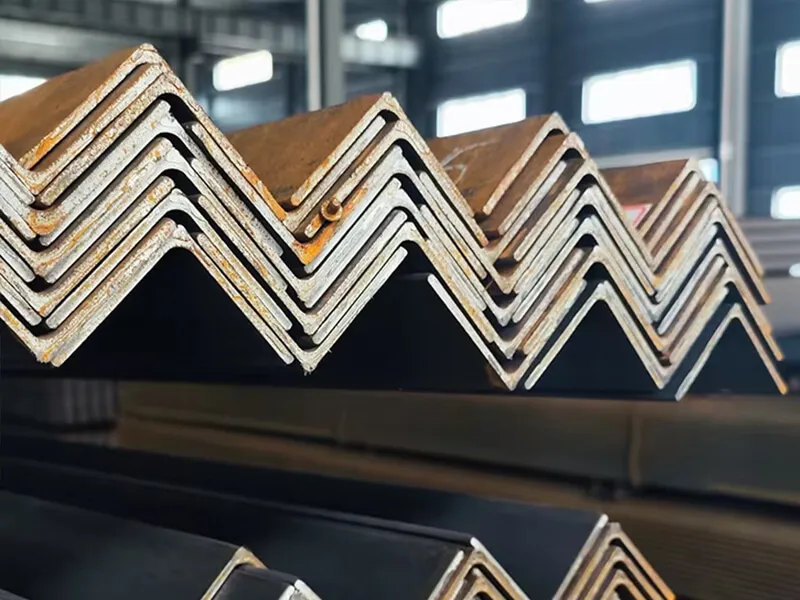
Decoding the Marine Steel Grade System
Understanding the naming convention is essential for accurate procurement and technical communication.
The Naming Logic:
The system is logical and consistent across societies with slight variations.
- Ordinary Strength Grades: A single letter.
- A, B, D, E: Progressive improvement in toughness (impact resistance at lower temperatures).
- High Strength Grades: Letter(s) + Number.
- The Letter(s): Indicates the toughness level (A, D, E).
- The Number: Indicates the minimum yield strength in kgf/mm².
- Example – DH36: ‘D’ toughness (tested at -20°C), ‘H’ for High Strength, ’36’ for 355 MPa yield.
Equivalent Grades Across Different Societies:
Different societies use different prefixes, but the properties are harmonized.
- ABS: AH36, DH36
- DNV: NV A36, NV D36
- Lloyd’s Register: Grade AH36, Grade DH36
- BV (Bureau Veritas): A36, D36
- Important: They are not interchangeable on paperwork. The MTC must state the grade according to the society specified in the order.
Selection Based on Application (Putting It All Together):
Here is how the grades apply across a vessel, integrating the previous sections:
| Ship Application / Structure | Primary Requirement | Typical Marine Steel Grade | Notes |
|---|---|---|---|
| Hull – Midship Bottom | High Strength, Fatigue | ABS AH36 / DNV NV A36 | High-strength for weight savings. |
| Hull – Forward Section | High Toughness, Impact | ABS DH36 / DNV NV D36 | High-toughness for wave slam and cold. |
| Main Deck (Cargo) | High Strength | ABS AH36 | Supports heavy loads. |
| Internal Bulkheads | Cost-effectiveness, Strength | ABS Grade A or B | Lower stress area. |
| Superstructure | Weight Saving (high up) | Lower strength grades or AH32 | Improves stability. |
| Deck Fittings | Corrosion Resistance | Stainless Steel 316 (Not a carbon "marine grade") | Different material family for a different primary need. |
For a project, the bill of materials will list these specific grades. A reliable supplier’s role is to source all these different grades—from Grade A for an interior bulkhead to DH36 for the bow frame—from approved mills, ensure perfect certification, and deliver them as a coordinated package. This comprehensive service turns a list of grades into a complete, buildable structure.
Conclusion
Selecting marine steel grades requires a zoned approach: AH36/DH36 for hull strength and toughness, appropriate grades for decks and internal structures, and 316 stainless for corrosion resistance. Understanding this hierarchy and the specific grade nomenclature ensures optimal material performance for every part of a vessel.
-
Explore the importance of marine-grade carbon steel in shipbuilding for durability and safety. ↩
-
Learn about ABS grades and their significance in ensuring ship hull integrity and performance. ↩
-
Discover how high-strength steel enhances ship hull design and performance. ↩ ↩
-
Understand the role of high-toughness steel in protecting ships from harsh marine conditions. ↩
-
Find out how MTCs ensure the quality and compliance of steel used in shipbuilding. ↩
-
Learn about Charpy impact values and their critical role in assessing steel toughness for ship hulls. ↩