
You receive steel plates from two different batches. One welds fine. The other cracks. Your project stops.
Batch consistency means steel plates from different heats have nearly the same chemistry, mechanical properties, and weldability. Poor consistency leads to welding cracks, failed class tests, production delays, and higher costs. Consistent batches keep your project on track.
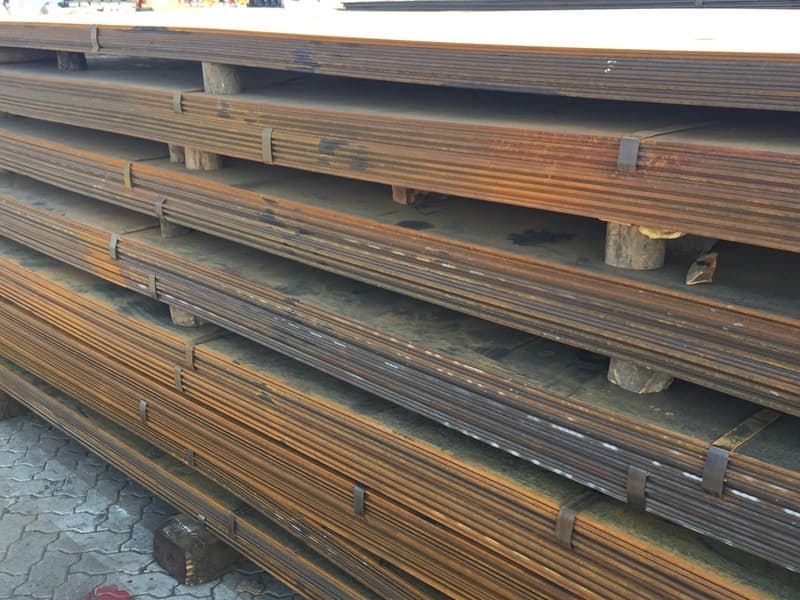
I am Zora Guo from cnmarinesteel.com. I have seen projects derailed because of batch inconsistency. A shipyard buys steel from one supplier. The first batch works fine. The second batch is different. Welders complain. Tests fail. Let me explain why consistency matters and how to get it.
How Does Inconsistent Batch Chemistry Affect Weldability and Structural Strength of Marine Steel Plates?
You have two plates. Both are AH36. But one has more carbon. That plate is harder to weld. It cracks.
Inconsistent batch chemistry changes the carbon equivalent (CEV), manganese, sulfur, and phosphorus levels. Higher CEV makes steel harder to weld – it requires preheating and special electrodes. Higher sulfur causes hot cracking during welding. Lower manganese reduces strength. Even small changes in chemistry can turn a good batch into a problem batch for your welders.
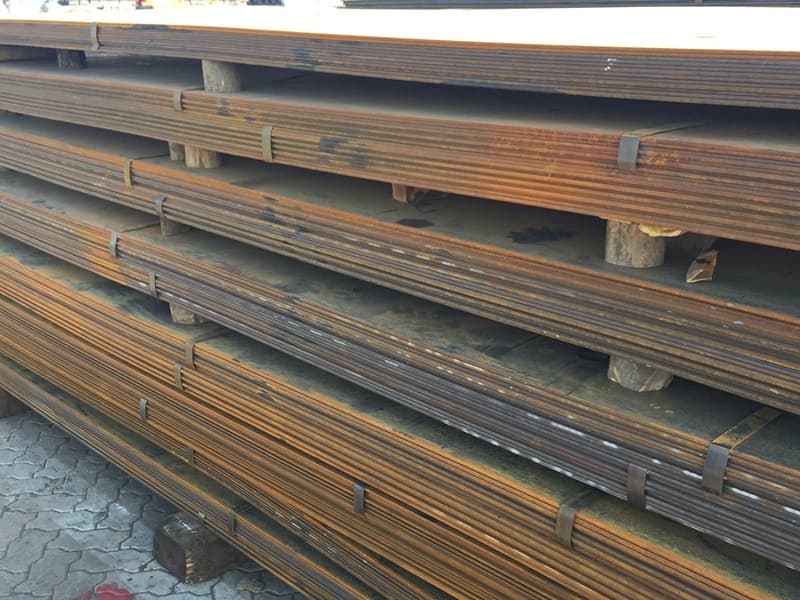
Let me explain how each element affects performance.
Carbon Equivalent (CEV) – The Weldability Killer
Carbon equivalent is a formula that combines carbon, manganese, and other elements. A higher CEV means the steel is harder to weld.
Typical CEV for AH36: 0.38‑0.42%
What happens when CEV varies:
| CEV range | Weldability | Required action |
|---|---|---|
| Below 0.38% | Excellent | Standard welding, no preheat |
| 0.38‑0.42% | Good | Preheat 50‑75°C for thick plates |
| 0.42‑0.45% | Fair | Preheat 100°C, low‑hydrogen rods |
| Above 0.45% | Poor | Special procedure, high risk of cracking |
If one batch has CEV 0.39% and another has 0.44%, your welders may not adjust their process. The higher CEV batch will crack.
Sulfur and Phosphorus – The Cracking Agents
Sulfur (S) and phosphorus (P) are impurities. They make steel brittle.
Acceptable levels for marine steel:
- Sulfur: below 0.025%
- Phosphorus: below 0.025%
If a batch has sulfur at 0.035%, it will have hot cracks during welding. The weld solidifies around the sulfur‑rich areas, and cracks form.
Manganese – The Strength Giver
Manganese increases strength and toughness. AH36 requires 1.0‑1.3% manganese.
If one batch has 1.1% and another has 0.9%, the lower batch will have lower strength. It might still pass the minimum 355 MPa yield, but the margin is smaller.
A Real Example
A shipyard in Vietnam ordered 500 tons of AH36 plates. The first 250 tons came from one heat. The second 250 tons from a different heat. The second heat had CEV of 0.44%. Welders did not preheat. Cracks appeared on 15% of the welds. The yard had to cut out and re‑weld. Cost: $30,000. The supplier paid, but the delay was 3 weeks.
Why Do Batch-to-Batch Variations in Mechanical Properties Complicate Design and Class Certification?
Your design assumes a certain yield strength. You test a sample from one batch. It passes. But another batch has lower yield. You do not know until you cut and test.
Batch‑to‑batch variations in yield strength, tensile strength, and Charpy impact values mean you cannot rely on past tests. Class societies require testing of every heat. If a batch has yield at 340 MPa instead of 355 MPa, the entire batch may be rejected or downgraded. This forces design changes, re‑certification, or scrapping of plates. Consistent batches simplify class approval and reduce surprises.
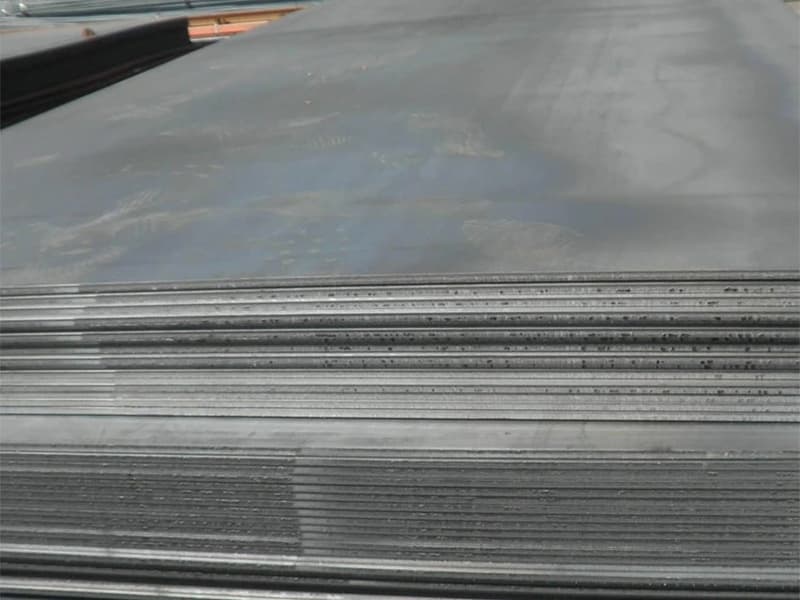
Let me show you the real impact.
Yield Strength Variation
AH36 minimum yield is 355 MPa. A good batch might have 380 MPa. A poor batch might have 360 MPa. Both pass. But the design uses a safety factor based on 355 MPa. The batch with 360 MPa is fine. The problem is when a batch drops below 355 MPa.
What happens when yield is below minimum:
- The batch is rejected for the intended grade.
- It may be downgraded (e.g., AH36 to AH32).
- You must get class approval for the lower grade.
- Or you scrap the plates.
Charpy Impact Variation
Charpy impact tests at 0°C for AH36 require minimum 34 Joules average. A consistent batch might give 50‑60 J. An inconsistent batch might have one plate at 45 J and another at 28 J (fail).
Consequences of Charpy failure:
- The entire heat is rejected if one sample fails.
- You cannot use those plates in cold‑weather zones.
- Class surveyor may require additional testing.
Design Complications
Engineers design with a single set of properties. If batch A has yield 380 MPa and batch B has 360 MPa, both are acceptable. But if batch C has 340 MPa, it is not. You cannot design for unknown variation. So you must test every batch.
Class Certification Headaches
For class approval, each heat must have its own mill certificate with test results. The class surveyor reviews the certificate. If the results are close to the minimum, they may ask for extra tests. This takes time and money.
A Real Example
A shipyard in Malaysia received two batches of DH36 plates. One batch had Charpy impact values of 45‑55 J. The other batch had 28‑35 J – failing the 34 J minimum. The yard rejected the second batch. The supplier replaced it. But the yard lost 4 weeks waiting for replacement plates. The project schedule slipped.
How Can Poor Batch Consistency Lead to Production Delays, Rework, and Higher Project Costs?
Inconsistent batches do not just affect quality. They hit your schedule and your budget.
Poor batch consistency causes production delays because you must stop and test each new batch before use. It leads to rework when welds crack or plates fail inspection. It increases costs for extra testing, preheating, special electrodes, and replacement plates. A single bad batch can add 2‑6 weeks and $20,000‑50,000 to a project.
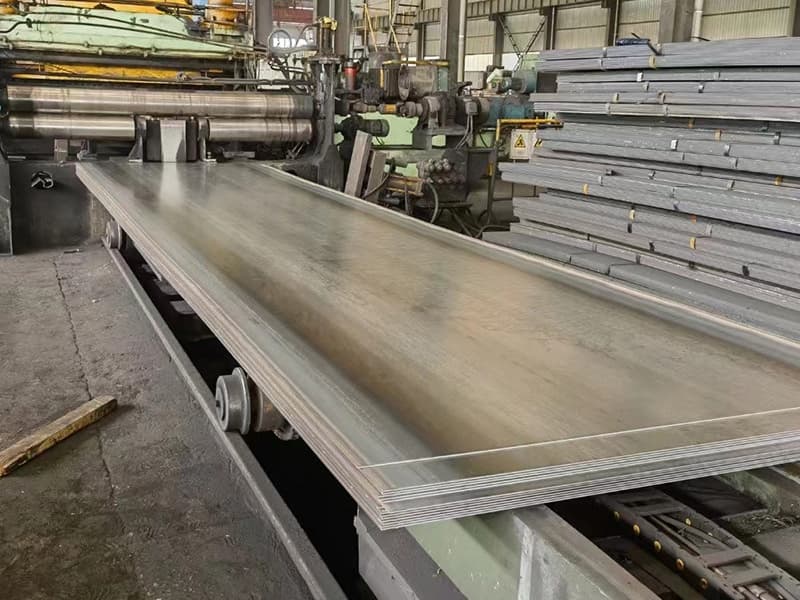
Let me break down the costs.
Delay Costs
When a new batch arrives, you must:
- Verify the mill certificate.
- Take sample plates for testing (if required).
- Wait for lab results (2‑5 days).
- If results are marginal, consult class surveyor (1‑3 days).
- If results fail, negotiate with supplier (1‑2 weeks).
- Wait for replacement plates (2‑6 weeks).
Total potential delay: 3‑10 weeks.
For a large shipyard, a 4‑week delay can cost $100,000‑500,000 in idle labor, crane time, and late delivery penalties.
Rework Costs
When welds crack due to inconsistent chemistry:
- Cut out the cracked weld.
- Grind the base metal.
- Re‑weld with proper procedure.
- Re‑inspect (dye penetrant or X‑ray).
Cost per cracked weld: $500‑2,000 depending on location and access.
If 20 welds crack, that is $10,000‑40,000.
Testing and Inspection Costs
Extra testing adds cost:
| Test | Cost per test |
|---|---|
| Tensile + Charpy (one sample) | $200‑300 |
| Third‑party witness (SGS, class) | $500‑1,000 per day |
| Additional UT scanning | $200‑500 per plate |
A Real Example
A contractor in Saudi Arabia received 300 tons of AH36 plates from a new supplier. The first batch (100 tons) was good. The second batch (200 tons) had variable chemistry. The contractor had to:
- Test 10 extra samples ($2,500)
- Hire SGS to witness testing ($1,500)
- Reject 50 tons and wait for replacement (4 weeks delay)
- Rework 15 cracked welds ($15,000)
Total extra cost: $19,000 + 4 weeks delay. The contractor switched to a more consistent supplier.
What Quality Control Measures (Mill Testing, Heat Number Tracking, Third‑Party Inspection) Ensure Uniformity Across Batches?
You cannot control the mill’s process. But you can verify consistency before the steel reaches your yard.
To ensure batch consistency, require the mill to provide test results for every heat. Track heat numbers through production. Use third‑party pre‑shipment inspection to test random samples from each batch. Specify acceptable variation limits in your purchase order (e.g., CEV variation within 0.03%). For critical projects, require that all plates come from a single heat or a small number of heats. These measures catch inconsistencies before they become problems.
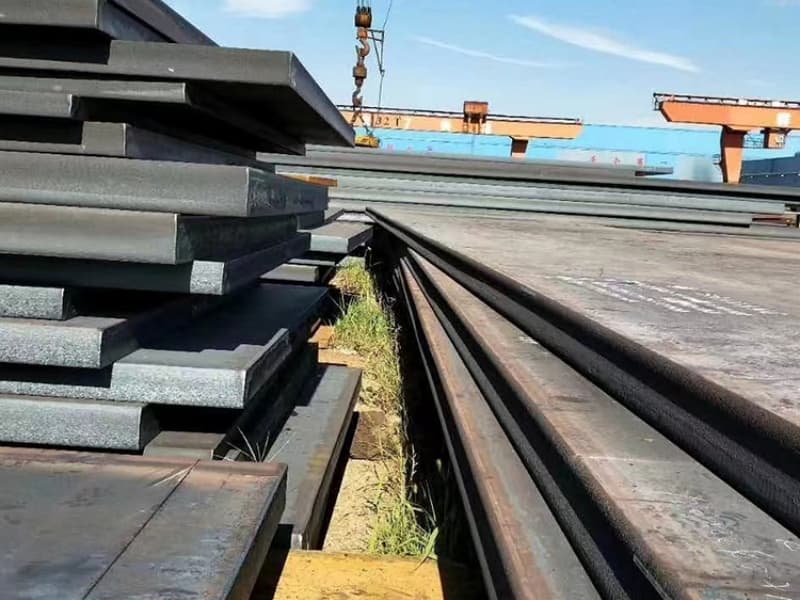
Let me detail each measure.
Measure 1: Mill Testing per Heat
Every heat (batch) must have its own mill test certificate (MTC). The MTC must include:
- Chemical composition (C, Mn, Si, P, S, CEV)
- Tensile results (yield, tensile, elongation)
- Charpy impact results (temperature and energy)
What to check: Compare MTCs across heats. Look for variation in CEV, sulfur, and Charpy values. If one heat has CEV 0.44% and another 0.38%, that is a red flag.
Measure 2: Heat Number Tracking
Each plate must be stamped with its heat number. You can trace every plate back to its MTC.
Procedure:
- Record the heat number of every plate you receive.
- Keep a log that maps heat numbers to project locations.
- If a problem occurs, you know which heat is affected.
Measure 3: Third‑Party Pre‑Shipment Inspection
Hire SGS, Bureau Veritas, or a class surveyor to visit the mill or supplier’s warehouse. The inspector will:
- Select random plates from each heat.
- Measure thickness and flatness.
- Take samples for independent tensile and Charpy tests.
- Compare results to the MTC.
What the inspector looks for: Variation between heats. If Heat A and Heat B have significantly different properties, the inspector will flag it.
Measure 4: Specify Variation Limits in Your PO
Write these limits into your contract:
"All plates supplied under this order shall have:
- Carbon equivalent (CEV) variation between heats not to exceed 0.03% (e.g., max 0.42%, min 0.39%).
- Sulfur content below 0.025% for all heats.
- Phosphorus content below 0.025% for all heats.
- Charpy impact values for each heat shall be at least 10% above the minimum requirement (e.g., ≥ 37 J for AH36 where minimum is 34 J)."
These limits ensure that the supplier cannot mix a poor heat with a good one.
Measure 5: Single Heat or Limited Heats
For critical projects (e.g., offshore platforms, naval vessels), require that all plates for a given thickness and grade come from a single heat or no more than two heats. This eliminates batch‑to‑batch variation entirely.
Example specification: "All 20mm AH36 plates for the bottom shell shall be from a single heat. The supplier shall provide the heat number at the time of order confirmation."
A Real Example
A customer in Qatar ordered plates for an offshore platform. They specified that all plates of the same thickness and grade must come from the same heat. The mill provided three heats for three different thicknesses. Each thickness had its own heat. The customer tested samples from each heat. All were consistent within the heat. No cross‑heat issues. The project passed class inspection with no problems.
Conclusion
Batch inconsistency causes welding cracks, class failures, delays, and rework. Use mill testing, heat tracking, third‑party inspection, and variation limits to ensure uniform steel across your project.