
A shipyard in Saudi Arabia recently received steel with incorrect chemical composition. This caused welding problems that delayed their vessel construction.
Marine steel plate composition includes carbon 0.16-0.18%, manganese 0.90-1.60%, silicon ≤0.50%, phosphorus ≤0.025%, and sulfur ≤0.025% for AH36 grade. These elements provide 355 MPa yield strength, good toughness, and excellent weldability required for shipbuilding applications in marine environments.
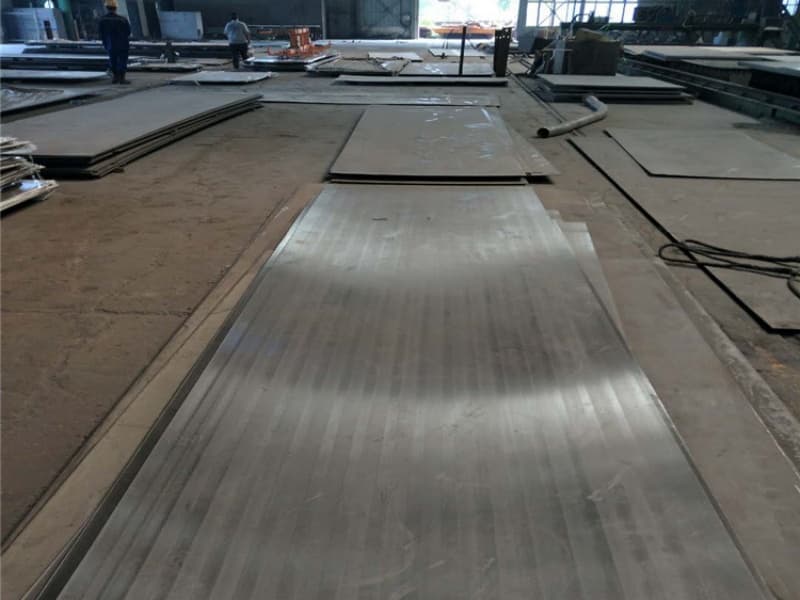
Understanding chemical composition helps ensure proper material selection and performance. Let me explain the key elements and their roles in marine steel.
What is the composition of marine steel?
A naval architect from Qatar needed to verify material specifications for their new vessel design. Chemical composition knowledge informed their material selection.
Marine steel composition varies by grade but typically contains carbon 0.10-0.18%, manganese 0.90-1.60%, silicon ≤0.50%, phosphorus ≤0.025%, sulfur ≤0.025%, plus micro-alloys. AH36 has carbon ≤0.18% and manganese 0.90-1.60%, while DH36 and EH36 have tighter controls for enhanced toughness at lower temperatures.
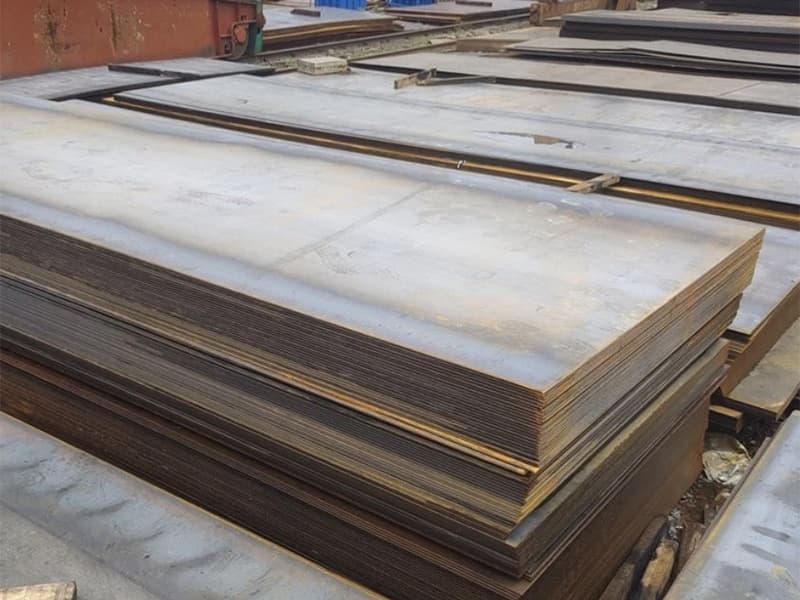
Comprehensive Marine Steel Composition Analysis
Marine steel composition is carefully controlled to achieve specific mechanical properties and performance characteristics. Each element serves particular purposes in the final material behavior.
Carbon Content Role and Limits1
Carbon is the primary strengthening element in steel. In marine grades, carbon typically ranges from 0.10% to 0.18%. Higher carbon increases strength but reduces weldability and toughness. AH36 maintains carbon below 0.18% for good balance. DH36 and EH36 may have lower carbon for better toughness. The control ensures adequate strength without compromising other properties.
Manganese Function and Ranges2
Manganese enhances strength and toughness simultaneously. Content typically ranges from 0.90% to 1.60% in marine steels. Manganese combines with sulfur to form manganese sulfide inclusions. This prevents iron sulfide formation that causes hot shortness. The element also improves hardenability and strength. Proper manganese levels ensure good impact toughness.
Silicon Purpose and Limitations3
Silicon serves as a deoxidizer during steelmaking. Content is typically limited to 0.50% maximum. Silicon removes oxygen from molten steel. This improves soundness and reduces porosity. Excessive silicon may reduce toughness and weldability. The controlled addition ensures clean steel with good properties.
Phosphorus and Sulfur Control
These elements are strictly limited in marine steels. Phosphorus is typically below 0.025%. Sulfur is controlled below 0.025%. Both elements can cause embrittlement if excessive. Phosphorus increases strength but reduces toughness. Sulfur forms inclusions that affect properties. The low limits ensure good toughness and weldability.
Micro-Alloying Elements4
Some marine steels include micro-alloying elements. Niobium, vanadium, or titanium may be added. These elements refine grain size through precipitation. The refinement improves both strength and toughness. The additions are typically below 0.10% total. The micro-alloys enhance properties without significant cost increase.
Impurity Element Restrictions5
Marine steels have strict impurity controls. Copper is typically limited to 0.35% maximum. Tin, arsenic, and antimony have very low limits. These elements can cause hot shortness or reduce toughness. The restrictions ensure consistent performance in marine environments. Proper control prevents unexpected failure modes.
Marine Steel Composition by Grade
| Element | AH36 | DH36 | EH36 | Purpose |
|---|---|---|---|---|
| Carbon | ≤0.18% | ≤0.16% | ≤0.16% | Strength |
| Manganese | 0.90-1.60% | 0.90-1.60% | 0.90-1.60% | Toughness, strength |
| Silicon | ≤0.50% | ≤0.50% | ≤0.50% | Deoxidation |
| Phosphorus | ≤0.025% | ≤0.025% | ≤0.020% | Toughness |
| Sulfur | ≤0.025% | ≤0.025% | ≤0.020% | Weldability |
| Aluminum | ≥0.015% | ≥0.015% | ≥0.015% | Grain refinement |
We ensure all supplied marine steel meets exact composition requirements. Clients receive materials with guaranteed chemical properties.
What is the composition of the steel plate?
A fabricator from Mexico needed to understand steel plate composition for their quality control. The knowledge improved their material verification process.
Steel plate composition varies by grade and application, with structural plates containing carbon 0.15-0.25%, manganese 0.50-1.50%, silicon ≤0.40%, while marine plates have tighter controls with carbon ≤0.18%, manganese 0.90-1.60%, and lower phosphorus/sulfur for enhanced toughness and weldability.
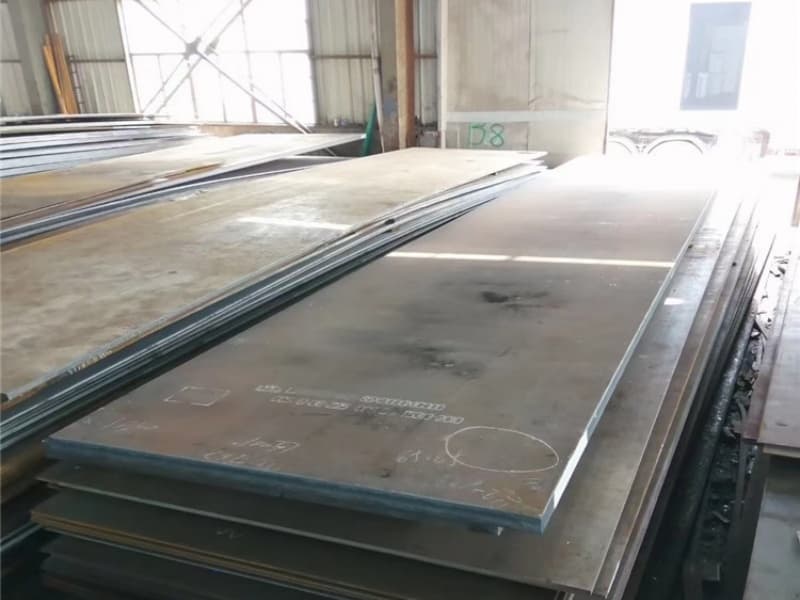
Steel Plate Composition Variations
Steel plate composition differs significantly based on the intended application and performance requirements. Understanding these variations helps in proper material selection and application.
Structural Steel Plate Composition
General structural plates have relatively simple compositions. Carbon typically ranges from 0.15% to 0.25%. Manganese content is usually 0.50% to 1.50%. Silicon is limited to 0.40% maximum. Phosphorus and sulfur are controlled below 0.035%. These compositions provide adequate strength for building and bridge applications. The balance ensures good fabricability and economy.
Marine Grade Plate Composition
Marine plates have more stringent composition controls. Carbon is typically lower, ranging from 0.10% to 0.18%. Manganese is higher, usually 0.90% to 1.60%. Phosphorus and sulfur have tighter limits below 0.025%. Additional elements may include micro-alloys for grain refinement. The composition ensures good toughness in marine environments.
Pressure Vessel Steel Composition
Pressure vessel steels require specific compositions. Carbon is typically controlled below 0.20%. Manganese ranges from 0.50% to 1.00%. Molybdenum may be added for high-temperature strength. The composition ensures good creep resistance and fracture toughness. Strict controls prevent failure under pressure.
High-Strength Low-Alloy Composition
HSLA steels use micro-alloying for strength. Carbon is typically low, below 0.15%. Niobium, vanadium, or titanium are added in small amounts. These elements precipitate to strengthen the steel. The composition provides high strength with good weldability. The approach reduces weight in structural applications.
Stainless Steel Plate Composition
Stainless steels have completely different compositions. Chromium content is typically 10.5% or higher. Nickel may be added for austenitic grades. Molybdenum enhances corrosion resistance in some grades. The composition provides corrosion resistance rather than strength. The elements create passive surface layers.
Composition Control Importance
Proper composition control ensures consistent properties. Variations affect mechanical properties significantly. Composition determines weldability and toughness. Control prevents unexpected failure modes. Consistent composition supports reliable performance. Understanding composition helps in material selection.
Steel Plate Composition Comparison
| Application | Carbon Range | Manganese Range | Special Elements | Key Properties |
|---|---|---|---|---|
| Structural | 0.15-0.25% | 0.50-1.50% | None | Strength, weldability |
| Marine | 0.10-0.18% | 0.90-1.60% | Micro-alloys | Toughness, corrosion |
| Pressure Vessel | 0.10-0.20% | 0.50-1.00% | Molybdenum | Creep resistance |
| HSLA | 0.05-0.15% | 0.80-1.50% | Nb, V, Ti | High strength |
| Stainless | ≤0.08% | ≤2.00% | Cr, Ni, Mo | Corrosion resistance |
We supply steel plates with verified compositions for all applications. Proper composition ensures expected performance.
What is the chemical composition of SPCC steel1?
A manufacturer from Philippines asked about SPCC steel1 for non-marine applications2. Understanding the composition helped their material selection.
SPCC steel1 is a Japanese standard cold-rolled carbon steel with composition typically including carbon ≤0.12%, manganese ≤0.50%, phosphorus ≤0.035%, and sulfur ≤0.035%. This composition provides good formability for automotive and appliance applications but lacks the toughness required for marine environments.
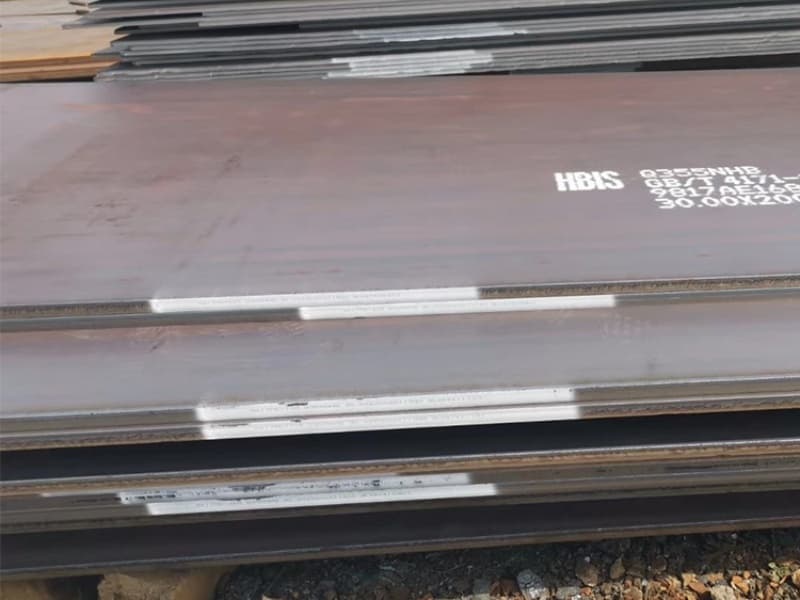
SPCC Steel Composition and Applications
SPCC represents a category of commercial quality cold-rolled steel primarily used in non-structural applications. The composition prioritizes formability over strength and toughness.
Carbon Content and Implications
SPCC steel1 has low carbon content3, typically below 0.12%. This low carbon level ensures excellent formability. The steel can be bent, drawn, and stamped easily. However, the low carbon limits strength capabilities. Yield strength typically ranges from 280 to 380 MPa. The composition suits applications requiring shaping rather than load carrying.
Manganese and Other Elements
Manganese content in SPCC is limited to 0.50% maximum. This low level supports good formability. Silicon is typically below 0.05% in killed steels. Phosphorus and sulfur are controlled below 0.035%. The simple composition focuses on manufacturability. The elements are balanced for cold working performance.
Comparison with Marine Steels
SPCC differs significantly from marine steels. Marine steels have higher manganese for toughness. Carbon levels are similar but controls are tighter. Phosphorus and sulfur limits are stricter in marine grades. Marine steels include additional elements for properties. The compositions reflect different application requirements.
Manufacturing Process Effects
SPCC undergoes cold rolling after hot rolling. The process increases strength through work hardening. Surface quality is excellent for painting or plating. The steel is supplied in various tempers. The composition supports these manufacturing process4es. Final properties depend on both composition and processing.
Application Limitations
SPCC is unsuitable for marine applications2. The toughness is inadequate for dynamic loads. Corrosion resistance is limited without protection. Weldability may be affected by composition. The steel serves well in its intended applications. Understanding limitations prevents misapplication.
Alternative Grades for Marine Use
Marine applications require different steel grades. AH36 provides adequate strength and toughness. DH36 offers enhanced low-temperature performance. EH36 serves arctic environment needs. These grades have controlled compositions for marine service. Proper selection ensures safety and reliability.
SPCC vs Marine Steel Composition
| Element | SPCC Steel | AH36 Marine Steel | Significance |
|---|---|---|---|
| Carbon | ≤0.12% | ≤0.18% | Strength difference |
| Manganese | ≤0.50% | 0.90-1.60% | Toughness variation |
| Phosphorus | ≤0.035% | ≤0.025% | Embrittlement control |
| Sulfur | ≤0.035% | ≤0.025% | Weldability effect |
| Silicon | ≤0.05% | ≤0.50% | Deoxidation method |
| Aluminum | Not specified | ≥0.015% | Grain refinement |
We help clients select appropriate steels for their applications. Understanding composition differences prevents material misapplication.
What is marine steel plate grade A?
A ship repair yard in Romania needed to understand steel grade classifications. The knowledge helped their repair material selection.
Marine steel plate Grade A is the basic classification society grade with 235 MPa yield strength, used for non-critical areas where high toughness isn’t required. It has simpler composition than higher grades and serves in less stressed locations, being largely superseded by AH36 in modern shipbuilding.
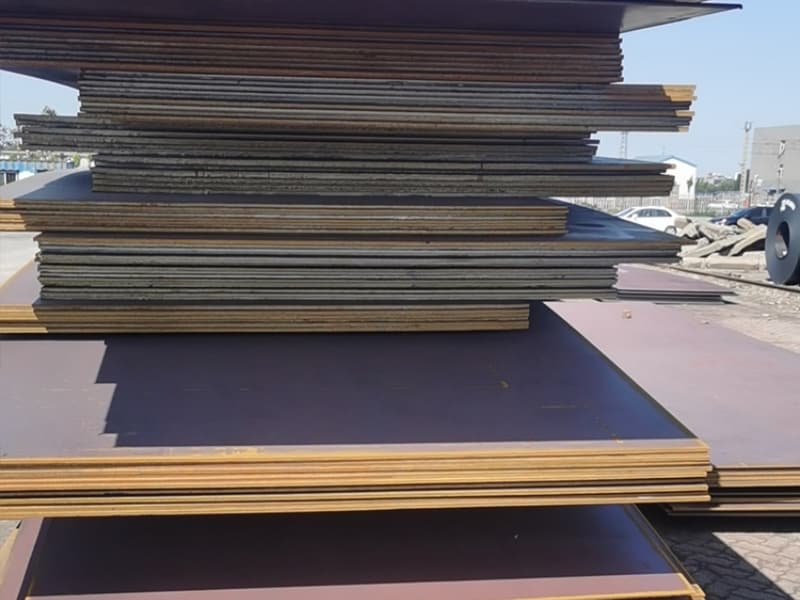
Grade A Marine Steel Characteristics
Grade A represents the entry level in marine steel classification systems. Understanding its properties and limitations helps in proper application and recognition of where higher grades are necessary.
Historical Context and Evolution
Grade A was widely used in older ship construction. The grade provided adequate performance for many applications. As ship sizes increased, higher strength grades became necessary. Grade A now serves limited applications in modern shipbuilding. Understanding its evolution helps in repair and maintenance decisions. Many existing vessels still contain Grade A steel.
Chemical Composition Requirements
Grade A has relatively simple composition requirements. Carbon is typically limited to 0.21% maximum. Manganese content ranges from 0.60% to 0.90%. Silicon is controlled below 0.35% for semi-killed steel. Phosphorus and sulfur are limited to 0.035% maximum. The composition ensures basic strength and fabricability without special toughness requirements.
Mechanical Property Specifications
Grade A offers 235 MPa minimum yield strength. Tensile strength ranges from 400 to 520 MPa. Elongation is typically 22% minimum in 50mm gauge length. Impact testing may not be required for all applications. The properties suit static loading conditions. Dynamic or impact loading requires higher grades.
Application Limitations and Considerations
Grade A serves in less critical ship areas. It works well for non-structural components. Secondary structures may use Grade A economically. The grade is unsuitable for hull plating in modern vessels. Low-temperature applications require higher grades. Understanding limitations prevents improper application.
Comparison with Higher Grades
AH36 has significantly better properties than Grade A. Yield strength is 355 MPa versus 235 MPa. Toughness requirements are more stringent in AH36. Composition controls are tighter for higher grades. Modern shipbuilding favors AH36 for most applications. Grade A usage has decreased substantially.
Repair and Replacement Considerations
Existing vessels may contain Grade A steel. Repair work should match original material grades. Understanding grade compatibility is important. Modern equivalents may offer better performance. Classification society rules guide repair material selection. Proper selection ensures structural integrity.
Grade A Steel Applications
| Application | Suitability | Modern Alternative | Considerations |
|---|---|---|---|
| Non-structural components | Good | AH36 | Cost optimization |
| Secondary structures | Limited | AH32 | Strength requirements |
| Hull plating | Not recommended | AH36 | Safety critical |
| Superstructure | Limited | AH32 | Weight optimization |
| Repair work | As original | Match original | Classification approval |
We supply appropriate steel grades for all applications. Understanding grade differences ensures proper material selection.
Conclusion
Marine steel plate composition is carefully controlled to achieve specific mechanical properties and performance characteristics. Understanding these compositions ensures proper material selection, fabrication success, and vessel safety in marine environments.
-
Explore this link to understand SPCC steel’s properties and its suitability for various applications. ↩ ↩ ↩ ↩ ↩
-
Find out which steel grades are suitable for marine environments and their specific properties. ↩ ↩ ↩
-
Learn how carbon content influences the strength and formability of steel, crucial for material selection. ↩ ↩
-
Understand how different manufacturing processes impact the final properties of steel. ↩ ↩
-
Understanding impurity controls is key to ensuring consistent performance and preventing failures in marine environments. ↩