
You need steel for a project and find a Chinese supplier. They quote you Q235B or Q355B. But your drawing specifies ASTM A36 or S355. Are they the same? Using the wrong equivalent can lead to structural failure and failed inspections.
Chinese steel grades like Q235, Q355 have similar yield strengths to international grades like ASTM A36 and S355, but they are not direct equivalents. Key differences exist in chemical composition, impact toughness requirements, and testing standards. For marine applications, you must use classification society grades (AH/DH/EH) instead of these general structural grades.
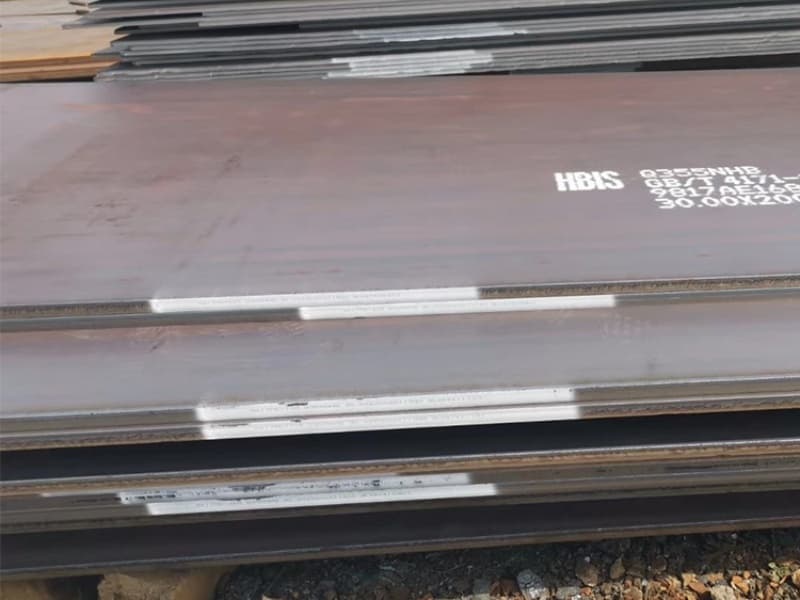
I work with Chinese mills and international buyers every day. I see the confusion over standards firsthand. A buyer might think they’re saving money with Q355B, only to learn it’s not accepted for their marine project. Let’s clarify the common comparisons and explain what you really need for shipbuilding.
What is the Chinese equivalent of ASTM A36?
Many buyers ask this because ASTM A36 is a common global standard. They want a Chinese alternative that is cheaper and easier to get. But "equivalent" is a tricky word. In terms of minimum yield strength, there is a match. In terms of guaranteed properties, there are important gaps.
The Chinese grade most similar to ASTM A36 in yield strength is Q235. Both have a minimum yield strength of 235 MPa. However, they are governed by different national standards (GB/T 700 for Q235 vs. ASTM A36). Their chemical composition and some mechanical requirements differ, so they are not direct substitutes without engineering approval.
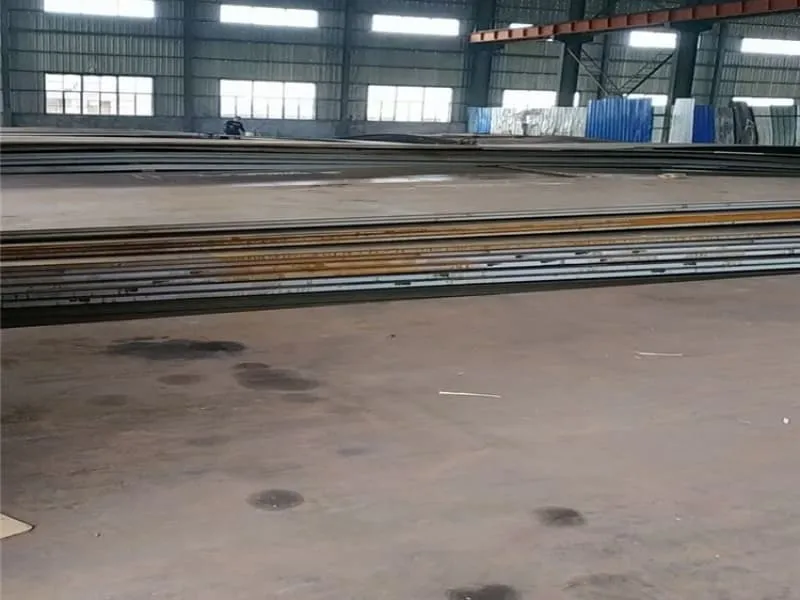
Why Q235 is Not a Simple Drop-in Replacement for A36
ASTM A36 and Q235 serve similar purposes in general construction. But for anything beyond basic, non-critical work, the details matter.
A Detailed Property Comparison
Looking at the numbers reveals where they align and where they diverge.
| Property | ASTM A36 (USA Standard) | Q235 (Chinese GB/T 700 Standard) | Key Difference |
|---|---|---|---|
| Yield Strength (Min) | 250 MPa (36 ksi) | 235 MPa for thickness ≤ 16mm. It decreases for thicker sections. | A36 maintains 250 MPa up to thicker sizes. Q235’s strength lowers as thickness increases. |
| Tensile Strength | 400-550 MPa | 375-500 MPa (for Q235A) | The ranges overlap but are not identical. |
| Chemical Composition | Has maximum limits for C, Mn, P, S. | Divided into subgrades A, B, C, D. Q235A has no Charpy impact requirement. Q235B/C/D have increasing impact toughness. | This is critical. Standard Q235A has no guaranteed impact toughness. A36 often does not either, but for dynamic loads, this is a major concern. |
| Primary Application | General structural purposes, bridges, buildings. | General structural purposes, frames, non-critical parts in China. | Both are for non-marine, non-specialized structural work. |
The Critical Missing Piece for Marine Use: Toughness
For shipbuilding or offshore structures, impact toughness is mandatory.
- ASTM A36: The standard itself does not require impact testing. If you need A36 with toughness, you must specify supplementary requirements (like Charpy testing) in your order. Many buyers forget to do this.
- Q235: Subgrades Q235B, C, and D do have impact test requirements at different temperatures (20°C, 0°C, -20°C). However, even Q235D is not accepted by marine classification societies for hull structures.
The Professional Approach for Buyers
If your project specification calls for ASTM A36, you have several options when sourcing from China.
- For Non-Critical, Non-Marine Use: You can potentially use Q235B after confirming with your project engineer that the lower yield strength at your thickness and the specific toughness are acceptable.
- For Projects Requiring Guaranteed Properties: Do not use "equivalent." Order steel produced to the ASTM A36 standard explicitly. Reputable Chinese mills can and do produce steel to ASTM standards for export. The mill test certificate will state "ASTM A36," not "Q235."
- For Marine Applications: This is clear. You must use marine grades like ABS AH36 or DNV NV A. These have guaranteed yield strength AND impact toughness. Do not consider A36 or Q235 for primary marine structures.
We are often asked to supply "A36 equivalent." Our first question is always about the end use. If it’s for a warehouse in Mexico, we might propose Q235B with proper certification. If it’s for any marine-related component, we immediately steer the conversation to the correct AH/DH grades. This prevents our clients from making a costly and dangerous specification error.
What is S275JR equivalent in China?
S275JR is a very common European standard for structural steel. Buyers from the Middle East, Africa, and Asia often have projects designed to EN standards. They want to know if they can source a Chinese grade to save cost.
The Chinese grade with similar yield strength to S275JR is Q235. Specifically, Q235B or Q235C can be considered comparable in strength. However, S275JR has specific impact toughness requirements at room temperature (the "JR" stands for 27J at +20°C), which must be matched by the chosen Q235 sub-grade (B or C).
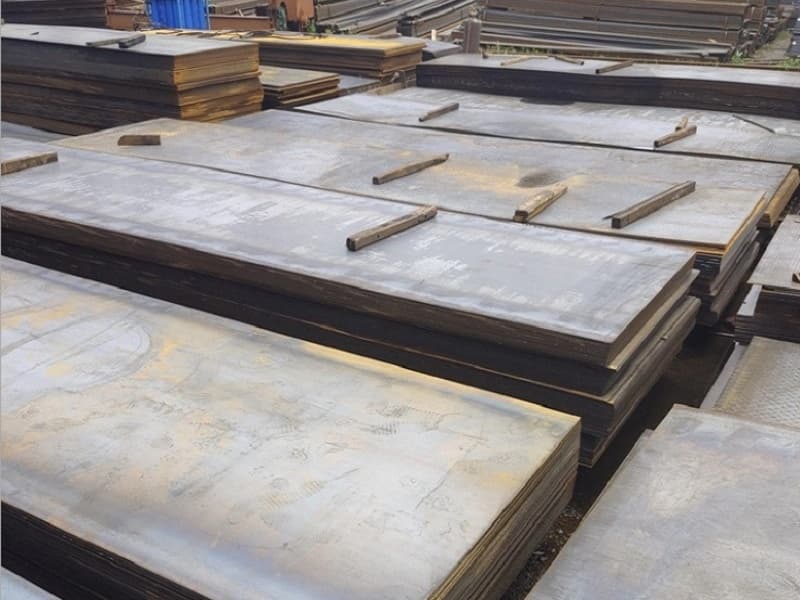
Matching European "J" Requirements with Chinese "Sub-Grades"
The EN 10025 standard uses designations like JR, J0, J2 to indicate impact energy. The Chinese GB/T 700 standard uses letters A, B, C, D for the same purpose. The mapping is not perfect but can be aligned.
Decoding the Toughness Designations
This is the most important part of finding a functional equivalent.
| Grade Designation | Impact Test Temperature | Minimum Impact Energy | Approximate Chinese GB/T 700 Equivalent |
|---|---|---|---|
| S275JR (EN 10025) | +20°C | 27 Joules | Q235B (Tested at +20°C, min 27J required) |
| S275J0 (EN 10025) | 0°C | 27 Joules | Q235C (Tested at 0°C, min 27J required) |
| S275J2 (EN 10025) | -20°C | 27 Joules | Q235D (Tested at -20°C, min 27J required) |
Key Considerations Beyond the Table
The table provides a guideline, but procurement requires more nuance.
- Yield Strength Verification: S275 has a minimum yield strength of 275 MPa for thicknesses up to 16mm. Q235’s yield strength is 235 MPa. This is a significant difference (40 MPa). For load-bearing designs, this may require recalculation. The closer Chinese grade in terms of yield strength is actually Q275, but this grade is less common than Q235/Q355.
- The Importance of the Mill Test Certificate: If you need to meet an S275JR specification, the safest method is to order steel produced to the EN 10025 standard from the Chinese mill. The mill will produce to that exact standard and provide an MTC stating "EN 10025 S275JR." This is common practice for export-oriented mills.
- Material Certification: Ensure the MTC for Q235B/C clearly states the impact test results and that they meet the required 27J at the correct temperature. Do not accept a certificate for plain "Q235A."
A Practical Scenario from Our Business
A client in Saudi Arabia was fabricating structural modules for a land-based plant. The design called for S275JR. They asked us for a Chinese equivalent. We explained the Q235B option with the toughness match but highlighted the yield strength difference. Their engineer reviewed it and approved the use of Q235B for that specific application. We then supplied Q235B steel from a mill, with MTCs explicitly showing impact energy >27J at +20°C. The key was transparent communication and proper documentation, not just claiming "equivalent."
What is the Chinese equivalent of s355?
S355 is the workhorse high-strength structural steel in Europe. It’s everywhere in heavy construction and industrial projects. When buyers look to China, they naturally seek a cost-effective alternative. The answer is better defined than for lower grades, but cautions still apply.
The direct Chinese equivalent of S355 (EN 10025) in terms of yield strength is Q3551, according to the GB/T 1591 standard. The sub-grades align for toughness: Q3551B is similar to S355JR2, Q3551C to S355J0, Q3551D to S355J2, and Q3551E to S355K2. However, chemical composition limits differ, which can affect weldability and through-thickness properties.
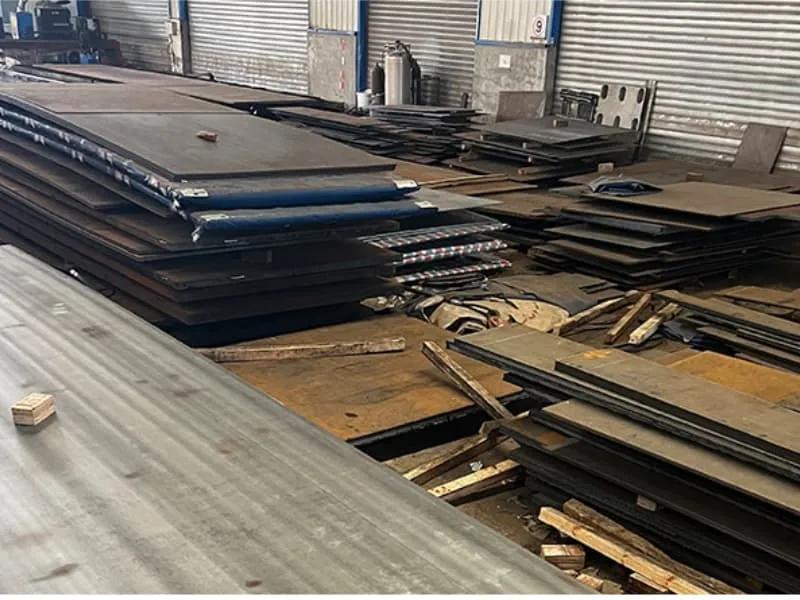
Navigating the Q3551 Family: The Successor to Q345
It’s important to know that China recently updated its standard. The old common grade Q345 is now largely replaced by Q3551 to align better with international standards like S355.
The Q3551 and S355 Comparison Matrix
This alignment makes sourcing more straightforward for many projects.
| International Grade (EN 10025) | Chinese Grade (GB/T 1591) | Minimum Yield Strength (≤16mm) | Impact Toughness Indicator |
|---|---|---|---|
| S355JR2 | Q3551B | 355 MPa | 27J at +20°C |
| S355J0 | Q3551C | 355 MPa | 27J at 0°C |
| S355J2 | Q3551D | 355 MPa | 27J at -20°C |
| S355K2 | Q3551E | 355 MPa | 27J at -40°C |
Crucial Differences You Cannot Ignore
Even with this good alignment, they are not the same standard. Your engineering team must review these points.
- Chemical Composition & Carbon Equivalent (CE)3: The allowed levels of elements like Carbon, Manganese, Phosphorus, and Sulfur differ between EN and GB standards. This affects the steel’s Carbon Equivalent, a key number for predicting weldability. A higher CE means a higher risk of welding cracks. This must be calculated and compared against your welding procedure specifications.
- Through-Thickness Properties (Z-direction)4: For thick plates in highly constrained welded joints, resistance to lamellar tearing is critical. The EN standard has specific designations (e.g., S355J2+N, S355J2G3+G4). The Chinese GB standard addresses this differently. If your design requires Z-grade steel, you must specify this very clearly and verify the mill can provide test certificates for through-thickness reduction of area.
- Production Process5: Both grades can be produced as normalized (N) or thermomechanically rolled (M). The certificate should state the delivery condition (e.g., Q3551D+N).
For Marine Applications: A Strong Warning
S355 and Q3551 are structural steels, not marine steels. This distinction is absolute.
- A ship’s hull requiring "S355" is almost certainly referring to a marine-grade6 like ABS AH36/DH36/EH36, DNV NV D, or LR Grade DH36. These marine grades have 355 MPa yield strength plus mandatory impact testing at low temperatures, stricter chemical controls, and classification society certification.
- You cannot substitute general structural Q3551B for marine-grade6 AH36. The mill, the production process, and the certification are entirely different systems.
We supply both Q3551 for industrial projects and AH/DH 36 for shipbuilding. The mills we use are different. When a client from Romania inquires about S355J2 for a bridge, we discuss Q3551D. When a shipyard in Vietnam asks for S355 for a hull, we immediately clarify they need ABS DH36. Knowing this boundary protects our clients from catastrophic specification errors.
What is Chinese steel grade Q235 equivalent to?
Q235 is China’s most common carbon structural steel. International buyers encounter it often. To understand what they’re buying, they need to map it to familiar standards like ASTM, EN, or JIS. But "equivalent" always depends on which property you prioritize.
Chinese steel grade Q235 is broadly equivalent to ASTM A36 (USA) in yield strength, and to S235JR (Europe) in both yield strength and basic toughness. The specific sub-grade (Q235A, B, C, D) determines its impact toughness, matching it closer to European grades with JR, J0, J2 designations. It is a general-purpose steel, not suitable for specialized applications like pressure vessels or ship hulls.
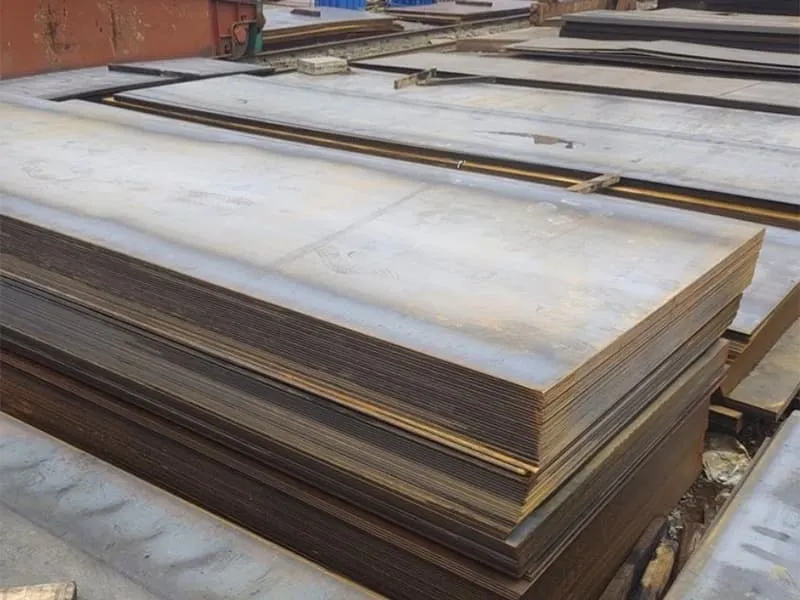
The Versatile Q235: Mapping Its Many Faces
Q235 is not one steel, but a family. The suffix letter defines its quality level, primarily based on impact toughness and deoxidation method.
The Q235 Family and International Cross-Reference
Here is a detailed breakdown to guide selection.
| Chinese Grade (GB/T 700) | Deoxidation Method | Impact Test Requirement | Closest International Equivalents (Functional) |
|---|---|---|---|
| Q235A | No requirement | No impact test required. | ASTM A36 (without supplementary impact), very basic structural work. |
| Q235B | Silicon killed or Aluminum killed | Impact test at +20°C. Min 27J. | ASTM A36 (with Charpy spec), S235JR (EN 10025), SS 400 (JIS). |
| Q235C | Aluminum killed | Impact test at 0°C. Min 27J. | S235J0 (EN 10025), used where low temperature is a concern. |
| Q235D | Special aluminum killed (Fine grain) | Impact test at -20°C. Min 27J. | S235J2 (EN 10025), for colder climate structures. |
Understanding the "Q" and Numbers
- Q: Stands for "Qu" (屈), meaning Yield point in Chinese.
- 235: Indicates the minimum yield strength in MPa for thickness ≤ 16mm. For thicker material, the minimum yield strength decreases (e.g., 225 MPa for 16-40mm, 215 MPa for 40-60mm).
- A, B, C, D: Indicate quality grade, with D being the highest with the best low-temperature toughness.
Procurement Advice: How to Specify Q235 Correctly
To avoid problems, be precise in your orders and expectations.
- Never Order Just "Q235": Always specify the sub-grade: Q235A, B, C, or D. If you don’t, you will likely receive Q235A by default, which has no toughness guarantee.
- Define the Standard: Your purchase order should state "GB/T 700 Q235B" (or C/D). This makes the applicable standard clear.
- Mandate Proper Certification: Require a Mill Test Certificate that confirms:
- The chemical composition meets GB/T 700 limits for the ordered sub-grade.
- The mechanical properties (Yield, Tensile, Elongation) are reported.
- For Q235B/C/D, the actual Charpy Impact test results at the required temperature are shown and meet the minimum 27J.
- Know Its Limitations: Q235 is mild steel. It is not "high-strength." It has fair weldability but is not for highly stressed, dynamic, or low-temperature marine applications. For those, you need the Q355 series or marine grades.
In our export business, Q235B is a frequently ordered product for general construction in markets like Southeast Asia and the Middle East. For a client like Gulf Metal Solutions, they might stock Q235B for non-marine fabrication projects. Our role is to ensure the steel we ship matches the exact sub-grade they ordered and is accompanied by a genuine, detailed MTC. This reliability in supplying even the most common grades is what builds a foundation for trust on more complex, high-value marine orders.
Conclusion
Understanding Chinese steel standards is key to sourcing correctly. Remember, strength grades like Q235/Q355 have international parallels, but for marine safety, you must use certified AH/DH/EH grades.
-
Explore this link to understand the properties and applications of Q355, the Chinese equivalent of S355. ↩ ↩ ↩ ↩ ↩ ↩ ↩ ↩ ↩ ↩ ↩ ↩ ↩ ↩ ↩ ↩ ↩
-
Learn about S355JR’s specifications and uses in construction and industrial projects. ↩ ↩
-
Discover how chemical composition impacts weldability and the importance of Carbon Equivalent in steel. ↩
-
Understand the significance of Z-direction properties in steel for structural integrity. ↩
-
Gain insights into how different production methods affect steel properties and applications. ↩
-
Explore the critical differences between structural and marine-grade steels to avoid costly mistakes. ↩ ↩