
Building multiple vessels at once? Plate delays and mix-ups can sink your budget and schedule.
You need a clear strategy to buy marine steel plates for several ships at the same time. This plan helps you save money, avoid delays, and keep each vessel’s steel separate from the start.
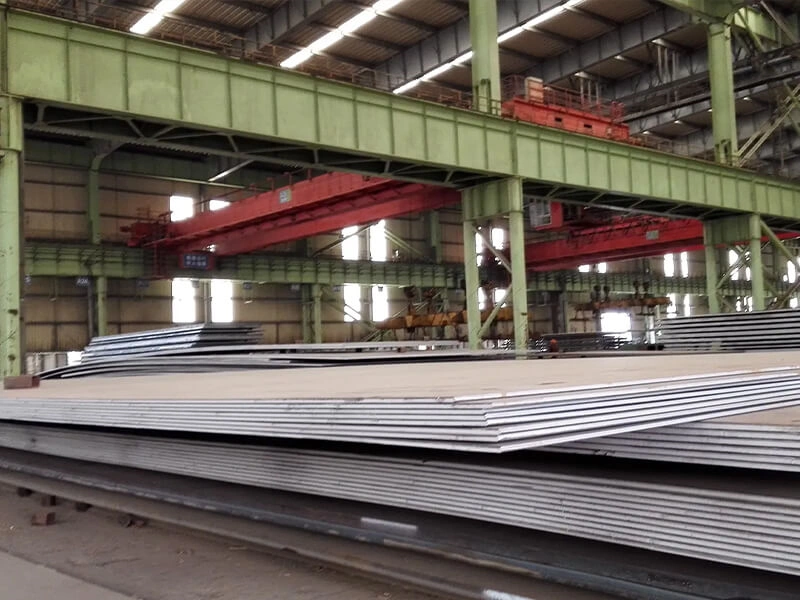
Let me share what I have learned from helping shipbuilders in Vietnam, Saudi Arabia, and the Philippines. They often ask me the same questions. I will answer them one by one.
How to Consolidate Plate Requirements Across Multiple Vessels for Bulk Ordering and Cost Savings?
You might order plates for each ship separately. That costs more and takes longer.
The answer is to list every plate you need for all vessels first. Then group the same sizes and grades together. This makes one big order. Mills give better prices for larger tonnage. For background on bulk steel plate buying and supplier consolidation, larger combined orders usually improve pricing and reduce unit cost.

Start with a master material take-off (MTO)
You cannot consolidate without a complete list. Ask your engineering team to give you the plate requirements for each vessel. Put everything into one spreadsheet. Include grade, thickness, width, length, and quantity.
For example, one bulk carrier might need 500 tons of AH36 plates. Another container ship might need 300 tons of the same grade. But you order them separately. The mill sees two small orders. They give you a higher price per ton. For bulk pricing context, see Buying Steel Plate in Bulk and How Much Does Steel Plate Cost: 2025?.
Now combine them. The total becomes 800 tons. You can ask for a volume discount. Many mills lower the price by 5% to 10% for orders above 500 tons. That is real money.
Use a simple table to find common plates
Create a table like this. It helps you see where to combine.
| Vessel Type | Grade | Thickness (mm) | Quantity (tons) | Combined Total |
|---|---|---|---|---|
| Bulk Carrier 1 | AH36 | 12 | 150 | 350 |
| Container Ship 2 | AH36 | 12 | 200 | 350 |
| Tanker 3 | DH36 | 15 | 100 | 250 |
| Bulk Carrier 1 | DH36 | 15 | 150 | 250 |
You can see the combined total for AH36 12mm is 350 tons. That is a good size for bulk ordering. Mills in China, like the ones we work with, can roll these plates in one production run. That saves setup time and reduces waste.
Negotiate better payment terms
A bigger order also helps you talk about payment. Small orders often need 100% T/T in advance or a high deposit. With a consolidated order, you can ask for 30% deposit and 70% against the bill of lading. Some mills even offer 60 days of credit if you are a regular buyer. Standard 30% deposit, 70% before shipment terms are common in international trade.
I once helped a client from Malaysia. He was buying plates for three tankers. He sent me three separate inquiries over two months. I asked him to wait and combine them. He saved $12,000 on the total mill price. He also saved freight because we shipped everything in one container breakbulk.
Watch out for different delivery dates
One risk of consolidation is that all plates arrive at the same time. That might fill your storage yard too fast. So you need to talk to the mill about phased delivery. I will cover that in the next section.
But for consolidation, the key is simple: make one list, find common sizes, and order as one batch. It works for large importers and for project contractors.
What Phased Delivery and Allocation Strategies Match Steel Arrival with Each Vessel’s Construction Schedule?
You order all plates together. Now they all arrive on the same ship. Your yard is full. Some plates sit outside for months and rust. For planning and phased delivery ideas, see Prefab Delivery Scheduling for Steel Projects and Construction Logistics Management Guide for Contractors.
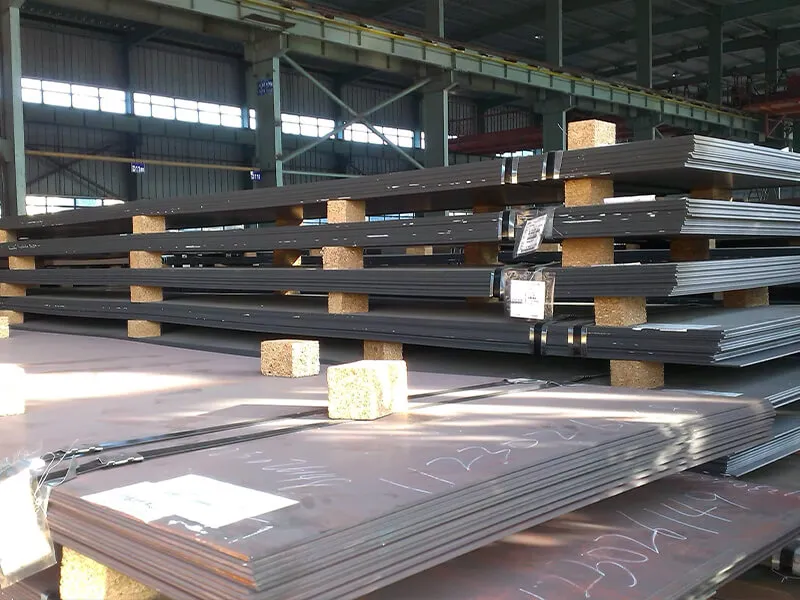
The answer is to split your order into delivery batches. Each batch matches one stage of construction for one vessel. Tell your mill to ship batch one first, then batch two after 30 days, and so on.
Use a delivery schedule table
Before you place the order, ask your production team for each vessel’s timeline. When does the hull need plates? When does the deck need plates? Write down the week numbers.
Then ask the mill if they can hold some plates in their warehouse. Many Chinese mills offer free storage for 30 to 60 days. After that, they charge a small fee. But that fee is lower than the cost of rust or space problems at your yard. For more on steel plate lead times and supply chain planning, see The Supply Chain of Steel Plate and construction logistics management.
Here is an example of a phased delivery plan.
| Vessel | Construction Stage | Plate Grade/Size | Required Week | Delivery Batch |
|---|---|---|---|---|
| Hull 1 | Bottom shell | AH36 15mm | Week 4 | Batch 1 (Week 3) |
| Hull 1 | Side shell | AH36 12mm | Week 6 | Batch 2 (Week 5) |
| Hull 2 | Bottom shell | AH36 15mm | Week 8 | Batch 3 (Week 7) |
| Hull 2 | Deck | DH36 20mm | Week 10 | Batch 4 (Week 9) |
You send this table to the mill. They plan their rolling schedule accordingly. Some mills can even cut the plates to your required sizes before delivery. That saves you cutting time and reduces scrap. For traceability and receiving controls, see color coding and marking for metals.
Allocate plates to each vessel clearly
When plates arrive, you need a system to know which vessel they belong to. Do not just stack them all together. Use color codes or labels.
I suggest painting the end of each plate with a color. For example, blue for vessel one, red for vessel two. You can also use stencils with the vessel name. Many steel suppliers, including us, can add these markings at the mill. It costs very little.
One customer in Mexico learned this the hard way. He received two batches of AH36 plates. One was for a tanker. One was for a bulk carrier. The plates looked the same. His workers cut the wrong plates first. They had to reorder 60 tons with air freight. That cost him three times more.
Keep buffer stock for delays
Construction schedules change. A vessel might be ahead or behind. So always keep a small buffer of common plates. For example, hold 10% of your total order as unallocated stock. When a vessel needs extra plates, you pull from the buffer.
You can also ask the mill to keep a buffer in their warehouse. We do this for regular buyers. They pay a small holding fee. But they get plates within two weeks.
I remember a buyer from Qatar. He was building five offshore supply vessels. One vessel had a design change. They needed extra 10mm DH36 plates. Because we kept buffer stock at our Liaocheng warehouse, we shipped them within 10 days. His original schedule was not affected.
How to Manage Common Plate Sizes and Grades Across Different Ship Designs to Reduce Inventory Complexity?
You have three vessel designs. Each design uses different plate sizes. But some sizes are the same. You still buy all of them. Your inventory becomes messy.
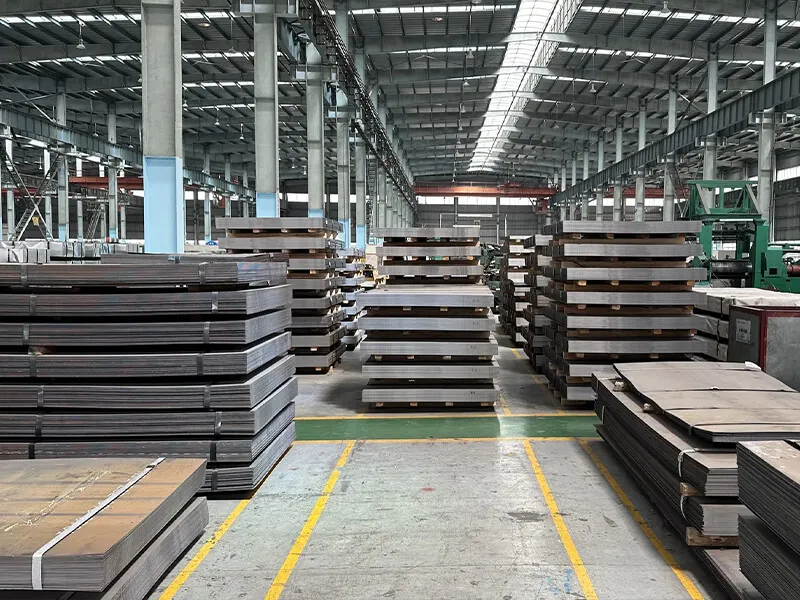
The answer is to design a common plate library. Choose a small set of sizes and grades that work for most parts of all vessels. Then buy more of those common plates. For special parts, order only what you need.
Identify the 80/20 plates
Look at your plate list for all vessels. You will see that 20% of the size-grade combinations cover 80% of the total tonnage. Those are your common plates.
For example, many ship designs use AH36 plates in 12mm, 15mm, and 20mm thickness. They also use DH36 in 25mm for high-stress areas. These four combinations might make up 70% of your total steel.
Focus on these common plates. Order them in larger quantities. Keep them in your central storage. When any vessel needs them, you pull from the same pile.
Use a standard cutting plan
Different vessels might need different shapes from the same plate size. A 12mm AH36 plate can become a bottom shell piece for vessel one or a bulkhead piece for vessel two.
Instead of cutting plates separately for each vessel, combine your nesting software. Put all the required shapes from all vessels into one cutting plan for the same plate size. This reduces scrap from 15% to maybe 8%.
I have seen shipyards in Vietnam save 200 tons of steel per year just by doing this. They were buying extra plates because of poor nesting. Once they started cutting across vessels, their scrap went down.
Keep a simple inventory board
Complexity kills efficiency. Do not use a complicated ERP system if your workers do not use it. Start with a whiteboard or a simple spreadsheet.
Here is an example of a good inventory board.
| Grade | Thickness (mm) | Total Stock (tons) | Allocated to Vessel 1 | Allocated to Vessel 2 | Free Stock |
|---|---|---|---|---|---|
| AH36 | 12 | 80 | 30 | 40 | 10 |
| AH36 | 15 | 120 | 50 | 50 | 20 |
| DH36 | 20 | 60 | 20 | 20 | 20 |
The free stock column is your buffer. When free stock goes below a limit, say 10 tons, you reorder. This works for many small and medium shipyards.
Train your workers to check common plates
Sometimes workers see a plate size they need. But they take it from the wrong vessel’s allocation. They think “steel is steel.” That causes problems later.
Teach your team to always check the common pool first. If a plate is in free stock, anyone can use it. If it is allocated to vessel one, do not touch it without approval.
We had a client in the Philippines. His workers took DH36 plates from vessel one’s pile to finish vessel two faster. Then vessel one had a delay because plates were missing. After that, he started using colored stickers and a sign-out sheet. The problem stopped.
What Tracking and Documentation Systems Prevent Cross‑Vessel Mix‑Ups During Storage and Cutting?
You stored plates carefully. But during cutting, your team grabs the wrong plate. Now vessel A has a piece meant for vessel B. That mistake is expensive.
The answer is a three-part system: clear plate markings, a cutting log, and a final check before welding. You need to track every plate from arrival to cutting. Proper steel plate marking and cross-docking style control can help keep plates aligned with the right vessel.
Mark each plate at the mill
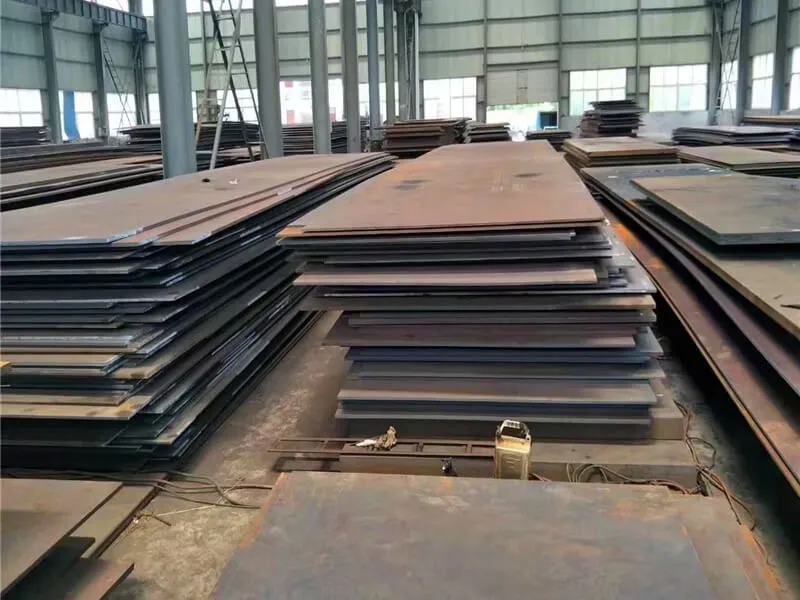
The best time to mark plates is before they leave the mill. Ask your supplier to stencil or paint the following information on every plate:
- Vessel ID (e.g., Hull 1)
- Plate number (match your MTO)
- Grade and size
- Heat number (for traceability)
We do this for many buyers. It costs about $0.50 per plate. That is nothing compared to the cost of a mix-up.
If the mill does not offer this, you can do it when plates arrive. But that takes labor. And your workers might forget. So I always recommend paying the small fee for mill marking.
Use a cutting log
Cutting is where mistakes happen. The plate is still whole. Then the worker uses a torch or a plasma cutter. They cut several pieces from one plate.
Create a cutting log sheet for each plate. The sheet should list:
- Plate ID
- Vessel allocated to
- List of cut pieces (piece number, dimensions, final location on vessel)
- Worker’s signature
The worker must fill this log before they start cutting. They cannot just cut and run. This sounds simple. But many shipyards skip it.
A contractor in Romania tried to save time by not using logs. He ended up with 40 cut pieces that did not fit any vessel. He had to scrap them. Then he paid for express shipping to get replacement plates. He now uses our cutting log template every day.
Do a post-cut check
After cutting but before welding, do a quick check. Match each cut piece to its drawing. Use a checklist.
Here is a sample checklist.
| Check Item | Pass | Fail | Action if Fail |
|---|---|---|---|
| Piece number matches drawing | ☐ | ☐ | Recut or reorder |
| Grade stamp visible and correct | ☐ | ☐ | Reject piece |
| Thickness measured (3 points) | ☐ | ☐ | Reject if out of spec |
| Vessel ID matches work order | ☐ | ☐ | Redo marking |
This check takes 10 minutes per plate. But it saves hours of rework later. One of our clients in Saudi Arabia reduced his rework cost by 60% just by adding this post-cut check.
Use digital tools for large projects
If you build more than five vessels at once, a whiteboard is not enough. You need a simple digital tracking tool. You do not need expensive ERP software. A shared Excel sheet on a tablet works.
Here is a basic tracking sheet.
| Arrival Date | Plate ID | Vessel | Grade | Size | Status | Cut Date | Location |
|---|---|---|---|---|---|---|---|
| 2025-06-01 | P1001 | Hull 1 | AH36 | 12x2000x8000 | Cut | 2025-06-10 | Bay A |
| 2025-06-01 | P1002 | Hull 1 | AH36 | 12x2000x8000 | Stored | – | Bay A |
| 2025-06-05 | P2001 | Hull 2 | DH36 | 20x2200x10000 | Not cut | – | Bay B |
Update this sheet every day. Share it with your cutting team. This way, everyone knows which plates are ready and which vessel they belong to.
I have seen this system work for a shipyard in Thailand. They were building eight fishing trawlers at the same time. After they started using the shared Excel sheet, cross-vessel mix-ups dropped to zero.
Conclusion
Consolidate your plate needs into one bulk order. Then phase deliveries to match each vessel’s schedule. Use common sizes to simplify stock. And track every plate with clear markings and logs.