
You are a marine steel supplier watching the energy market shift. Shipbuilding orders are steady, but a new demand center is emerging. Offshore wind farms are being planned in seas across the globe. Each project consumes thousands of tons of steel. If you are not paying attention to this sector, you are missing a major driver of future steel demand.
Offshore wind projects are significantly increasing the consumption of marine steel plates. Each large turbine requires hundreds of tons of steel for its foundation and tower. The global push for renewable energy means thousands of turbines will be installed in the coming decade. This creates a new, massive market for heavy steel plates with specific mechanical properties and corrosion resistance.
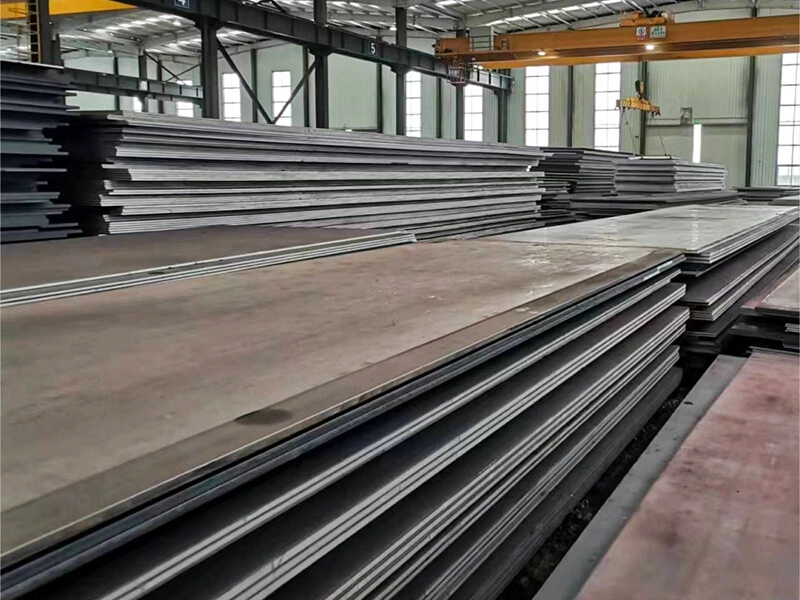
The connection between a wind turbine spinning in the sea and a steel mill in Shandong is more direct than you might think. To understand this new demand, we need to look at the numbers. How much steel does one turbine really use? Let’s start there.
How much steel is used in a wind turbine?
You are standing at the base of a 15-megawatt offshore wind turbine. It towers above you, taller than a skyscraper. The sheer scale is hard to grasp. That scale is built almost entirely from steel. Understanding the tonnage helps you see why this industry matters for anyone in the marine steel business.
A modern 15 MW offshore wind turbine uses approximately 220 tons of steel per MW1 of capacity [citation:5]. This means a single large turbine consumes over 3,300 tons of steel2 for its foundation and tower. For a wind farm with 100 turbines, the total steel requirement exceeds 330,000 tons3, with the vast majority being heavy steel plate used in monopile foundations and tower sections.
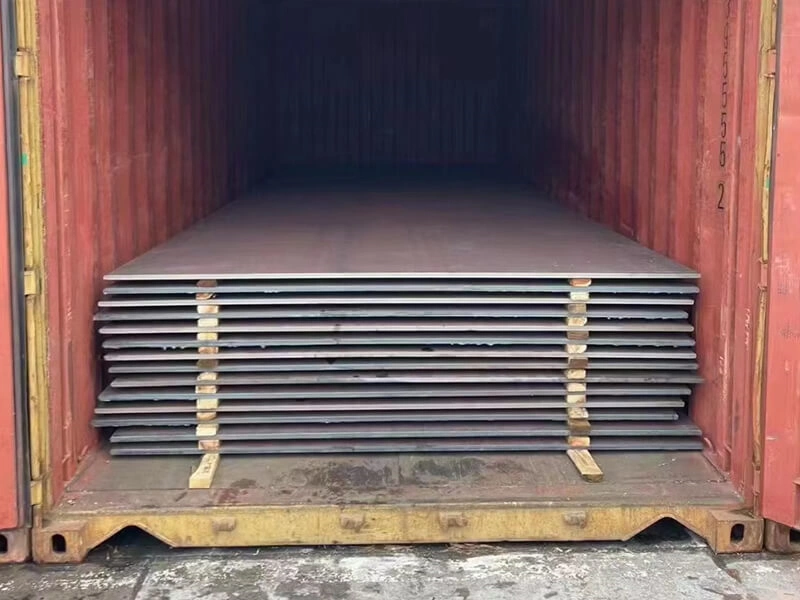
Breaking Down the Steel Consumption
The steel used in a wind turbine is not a single product. It is a combination of different components, each with specific requirements.
-
The Foundation (Monopile4): This is the largest steel component. A monopile is a massive steel tube driven deep into the seabed. For a 15 MW turbine in deep water, the monopile can be over 10 meters in diameter and weigh more than 1,500 tons. It requires thick steel plate, often up to 150mm thick, rolled and welded into a cylinder [citation:9]. The plate must have excellent weldability and toughness to withstand constant wave loading.
-
The Transition Piece: This connects the foundation to the tower. It is another large steel fabrication, often weighing several hundred tons.
-
The Tower Sections: The tower is typically built in three or four sections, each a tapered steel tube. These sections use heavy plate, though generally thinner than the foundation. A full tower can weigh 800 to 1,000 tons.
-
The Nacelle and Hub: The machine house at the top contains the gearbox, generator, and other components. Its frame is a heavy steel casting or fabrication, weighing over 100 tons.
-
The Blades: While blades are made of composites like fiberglass and carbon fiber, they attach to a steel hub [citation:4][citation:8].
The 90% Rule
Here is a striking statistic. For onshore wind, steel is about one-quarter of the total materials used. For offshore wind, steel represents 90% of all materials consumed per MW5 [citation:9]. This is because the marine environment requires massive, robust foundations to resist wave forces. The shift to offshore wind is fundamentally a shift to steel-intensive energy infrastructure.
My Insight from the Field
A project developer from Europe contacted us about a new offshore wind farm. They needed over 40,000 tons of heavy plate for monopile foundations. Their biggest challenge was not just finding steel, but finding mills capable of rolling plate up to 120mm thick with the required through-thickness properties. Many standard plate mills max out at 60mm. We connected them with our partner mills that have the heavy slab casting and rolling capacity for these extreme dimensions. This taught me that offshore wind is not just about more steel, but about specialized steel. It demands the same quality focus as shipbuilding, but with different geometries and certifications.
Do offshore wind turbines affect marine life?
You are sourcing steel for a wind farm project. Environmental groups are watching. Regulators are reviewing permits. The question of marine life impact1 is not just academic. It affects project timelines, construction methods, and public acceptance. You need to understand the real effects to anticipate supply chain requirements like noise mitigation measures2.
Offshore wind turbines do affect marine life, with both negative and positive impacts. Construction noise from pile driving can temporarily disturb marine mammals like porpoises and seals [citation:2][citation:6]. However, once operational, the turbine foundations act as artificial reefs3, attracting fish and increasing biodiversity [citation:2][citation:6]. Fishing exclusion zones within wind farms allow fish stocks to recover, creating new habitats [citation:6].
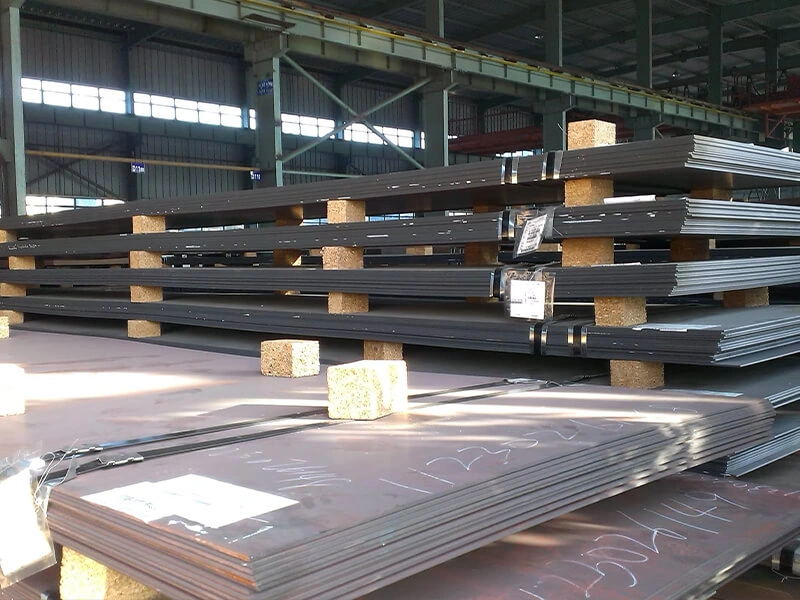
The Two Sides of the Story
Environmental impact is not simple. It happens in phases, with different effects at each stage.
1. The Construction Phase: Disturbance and Mitigation
This is the most disruptive period. Pile driving, where huge hammers drive the monopile into the seabed, creates intense underwater noise. Marine mammals like harbor porpoises and seals use sound for navigation and hunting. The noise can temporarily displace them from the area [citation:2][citation:6].
But the industry is responding with strict controls. In German waters, for example, noise limits are among the strictest in the world. At 750 meters from pile driving, the average noise level must be no louder than 160 decibels [citation:6]. To achieve this, developers use innovative systems:
- Bubble Curtains: A perforated hose is placed on the seabed around the pile. Compressed air rises, creating a curtain of bubbles that absorbs and scatters sound waves [citation:6].
- Double-Walled Steel Pipes: These attenuate sound directly at the source [citation:6].
- Research into New Methods: Anchored foundations or gravity-based structures that do not require pile driving are being explored [citation:6].
2. The Operational Phase: The Artificial Reef Effect
Once construction ends, the story changes. The hard surfaces of the foundation and the scour protection (rocks placed around the base to prevent erosion) become a new habitat. Researchers have documented remarkable results:
- Biodiversity Hotspots: Underwater drones have filmed anemones, starfish, mussels, and large crabs living and sheltering among the rocks [citation:2].
- Fish Recovery: Fish like pouting, horse mackerel, and cod congregate around the turbines. In wind farms off Germany, scientists found that cod from wind farms had a more varied diet than those caught outside, indicating a richer food supply [citation:6]. Plankton samples even suggested cod were spawning within the wind farm [citation:6].
- Porpoise Return: Long-term studies in the North Sea show that porpoise detection rates are significantly higher inside wind farms than in surrounding areas. The farms become refuges, free from fishing vessel traffic [citation:6].
- Bird Behavior: Contrary to the "bird chopper" myth, studies show most birds avoid the turbines or fly over them. Collision rates are extremely low. One two-year study in the UK recorded collisions during only 0.05% of flight movements [citation:6].
My Insight from the Field
We supplied steel for a project in the North Sea. The environmental permit required specific noise mitigation during installation. This added a layer of complexity to the construction schedule. The fabricators needed to coordinate with the installation vessels and the noise mitigation teams. It reminded me that our role as a steel supplier is part of a larger system. We cannot just deliver steel; we must understand that our delivery timing affects the entire environmental compliance plan. Missing a window for pile driving due to late steel could push the project past a seasonal environmental restriction. This is why our dedicated export reps stay in constant communication with clients, tracking not just production, but the project’s overall timeline.
How much rebar goes into the base of a wind turbine?
You see the massive steel monopile and think that is the only steel involved. But look closer at the construction sequence. Before the monopile is installed, there is another steel-intensive phase. For turbines on land, and for some offshore substations and gravity-based foundations1, concrete bases reinforced with steel rebar are essential. This is another steel demand stream you might overlook.
For a large onshore wind turbine or an offshore substation, the concrete foundation uses approximately 105 tonnes of steel rebar2 [citation:3]. This rebar is assembled into a reinforced cage3, which is then filled with around 1,700 tonnes of concrete [citation:3]. For offshore turbines using gravity-based foundations instead of monopiles, the rebar and concrete quantities are even larger.
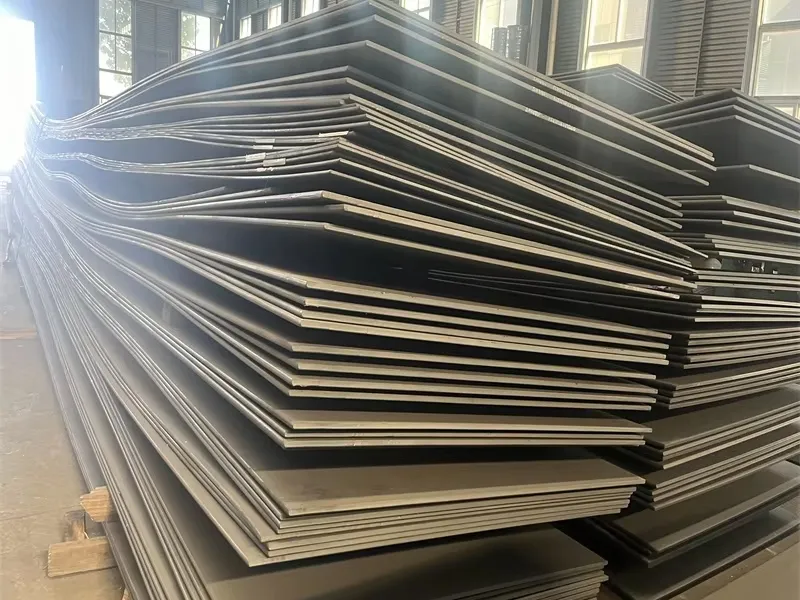
The Hidden Steel: Rebar Demand in Wind Projects
When people think of wind turbine steel, they think of the tower. But the foundation is a major consumer of steel in a different form: rebar.
1. Onshore and Gravity-Based Foundations
For onshore turbines, the foundation is a massive concrete block buried underground. Its job is to resist the enormous overturning forces from the tower and rotor. The concrete alone is not strong enough to handle tension. This is where rebar comes in.
- The Reinforcement Cage: Steel rebar is cut, bent, and tied into a complex three-dimensional cage [citation:3]. This cage is placed into the excavation, and concrete is poured continuously around it.
- Quantities: A typical onshore turbine foundation for a multi-megawatt machine uses around 105 tonnes of rebar and 1,700 tonnes of concrete [citation:3]. Some larger turbines or weaker soil conditions can require even more.
- High-Altitude Example: For a project in Tibet at 5,000 meters altitude, one turbine foundation required 60.7 tons of rebar and over 585 cubic meters of concrete [citation:7]. The rebar was produced and installed on site despite extreme conditions.
2. Offshore Gravity-Based Foundations
While monopiles are common, some offshore sites use gravity-based foundations1. These are massive concrete or steel structures that sit on the seabed, relying on their own weight for stability. They require enormous amounts of both rebar and concrete, often fabricated in a dry dock and then floated out to site.
3. Substations and Converter Platforms
Offshore wind farms also include electrical substation platforms4. These are essentially small offshore platforms, similar to oil and gas platforms, with steel jackets and concrete topsides. They consume significant quantities of both structural steel and rebar.
The Procurement Implication
For a steel supplier like us, this means the wind market has two distinct product needs:
- Heavy Plate: For monopiles, transition pieces, and towers.
- Rebar and Merchant Bars: For foundations and concrete reinforcement.
These are different supply chains. Plate comes from flat product mills. Rebar comes from long product mills. Understanding this helps us serve clients who may need both, coordinating procurement across different mill types.
My Insight from the Field
A contractor in Pakistan was building a wind farm and approached us for steel. They assumed we only supplied marine plate. When we asked about their rebar needs, they were surprised. We explained that through our network, we could also source high-quality rebar meeting international standards. They placed a combined order: heavy plate5 for the tower sections and rebar for the foundations. Managing one supplier for both simplified their logistics and documentation. This experience taught me that the wind industry’s steel demand is diverse. A supplier who understands the full picture—from foundation to nacelle—adds real value.
What materials are used in offshore wind turbines?
You are planning your material sourcing strategy for a wind farm project. Steel1 is dominant, but it is not the only material. Other components require specialized materials with different supply chains. If you only think about steel, you might miss coordination opportunities or misunderstand the full scope of the project’s procurement needs.
Offshore wind turbines use a variety of materials. Steel1 makes up the majority for foundations and towers. Composite materials2 like glass fiber and carbon fiber reinforced plastics are used for the long turbine blades [citation:4][citation:8]. Copper3 is used extensively in electrical cabling and generators. Protective coatings are critical for corrosion protection, often using glass flake reinforced polyester [citation:5]. Rare earth metals are used in some permanent magnet generators.
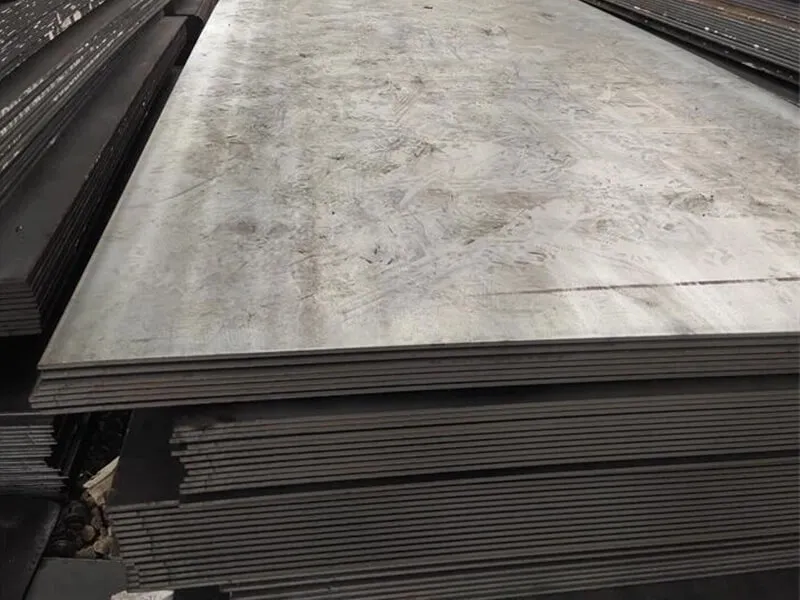
The Material Mix of a Modern Turbine
Each part of the turbine has specific material requirements driven by function and environment.
1. The Foundation and Tower (Steel1)
We have covered this. The key is the steel grade. For monopiles, S355 steel (European standard) is common, equivalent to A572 in the US [citation:9]. This is a high-strength structural steel, not a basic grade. For thicker plates (over 60mm), mills must have the capability to roll from thick slabs and maintain through-thickness properties [citation:9].
2. The Blades (Composites)
Blades are engineering marvels. They must be light, stiff, and durable.
- Fiber-Reinforced Composites4: Glass fiber reinforced plastic (GFRP) is common for smaller blades or blade shells [citation:8]. For longer blades (over 60 meters), carbon fiber composites are used to reduce weight while maintaining rigidity [citation:8].
- Core Materials: Inside the blade shell, materials like PET foam or balsa wood form a sandwich structure, providing stiffness without adding weight [citation:4]. These cores must have high compressive strength and be compatible with resin systems. Some are made from recycled PET, supporting sustainability goals [citation:4].
- Resins: Epoxy, polyester, or thermoplastic resins bind the fibers together. Thermoplastic resins offer the advantage of recyclability at end-of-life [citation:8].
3. The Nacelle (Steel1, Copper3, Rare Earths)
- Main Frame: A large steel casting or fabrication that holds the drivetrain.
- Generator: Contains vast quantities of copper windings. Some generators use permanent magnets made from rare earth elements like neodymium and dysprosium. This creates a separate supply chain concern, as rare earth production is concentrated in a few countries.
- Gearbox: High-strength alloy steels for gears and bearings.
4. Protective Coatings (Critical for Longevity)
The marine environment is unforgiving. Without protection, steel corrodes rapidly. The coating system is not an afterthought; it is a critical material.
- Splash Zone Protection: The area where waves constantly hit is the most aggressive. Glass flake reinforced polyester (GFRP) coatings are used here. They create a tough, impermeable barrier that can last for decades without maintenance [citation:5].
- Corrosion Allowance: Some designers add extra steel thickness as a "corrosion allowance." Reducing this allowance by just 1mm on a tower can save 50 tonnes of steel. For all turbines needed by 2030, that could save over 1.5 million tonnes of steel [citation:5]. This shows how coatings and material choice interact.
- Cathodic Protection5: Sacrificial anodes made of zinc or aluminum are attached to the foundation to prevent corrosion [citation:8].
5. Sustainability Trends6
The industry is pushing for lower-emission materials. Steel1 production accounts for about 8% of global CO2 emissions [citation:5]. Developers are starting to demand "green steel" with verified low carbon footprints, using scrap-based electric arc furnace (EAF) routes or hydrogen-based production [citation:9]. This will reshape sourcing strategies in the coming years.
My Insight from the Field
A European developer was sourcing steel for a new wind farm. They asked detailed questions about our mills’ carbon emissions and energy sources. They were planning for a "lowest lifecycle impact" project, not just lowest cost. We worked with them to provide mills that could offer EAF-produced plate with certified low-carbon footprints. The cost was slightly higher, but it met their sustainability commitment. This showed me that material selection for wind projects is increasingly complex. It is not just about grade and dimension. It is about carbon footprint, supply chain transparency, and alignment with the developer’s environmental, social, and governance (ESG) goals. As a supplier, we must be ready to answer these questions.
Conclusion
Offshore wind is transforming marine steel demand. It requires massive tonnages of heavy plate, specialized grades, and a deep understanding of material performance. For steel suppliers, this new market offers growth alongside traditional shipbuilding.
-
Explore the essential role of steel in offshore wind turbines, including its properties and applications in foundations and towers. ↩ ↩ ↩ ↩ ↩ ↩ ↩ ↩ ↩
-
Learn about the advantages of composite materials in turbine blades, enhancing performance and reducing weight. ↩ ↩ ↩ ↩
-
Discover the critical role of copper in electrical systems of wind turbines and its impact on efficiency. ↩ ↩ ↩ ↩ ↩
-
Explore the innovative use of fiber-reinforced composites in turbine blades for improved performance. ↩ ↩ ↩
-
Learn about cathodic protection methods that prevent corrosion in offshore wind turbine foundations. ↩ ↩ ↩
-
Stay updated on sustainability trends in wind turbine materials, focusing on reducing carbon footprints. ↩